Shownotes
Feeling overwhelmed by the pace of life and wishing you could just pause for a moment to breathe and reset?
In a world that constantly pushes us to do more, buy more, and be more, it’s easy to lose our sense of calm and connection. In this episode, Michael explores how mindfulness and microdose meditations can help you create space in your day—no yoga mat, incense, or hour-long retreat required. Discover how just a few minutes of intentional presence can reduce stress, calm your nervous system, and help you show up with more grace and resilience.
- Learn the philosophy behind Pause, Breathe, Reflect and how to integrate it into your daily life.
- Discover why meditation doesn’t have to be long or complicated to be meaningful.
- Experience a short, two-minute guided practice you can use anytime, anywhere to find your center.
Press play to experience a two-minute meditation and learn how microdose mindfulness can help you reclaim calm, strength, and clarity in your everyday life.
Receive one of my FREE Pause Breathe Reflect Stickers via this link sticker.
Sign up for My RIPPLE EFFECT newsletter by clicking Ripple Effect or finding me on Substack.
We can also connect on LinkedIn.
Download the Pause Breathe Reflect App with Microdose EQ by clicking App on your smartphone.
Subscribe to be sure you don’t miss any of the micro-meditations, wellness tips, and guidance that I publish every Monday, Wednesday, and Friday at 7:11 am.
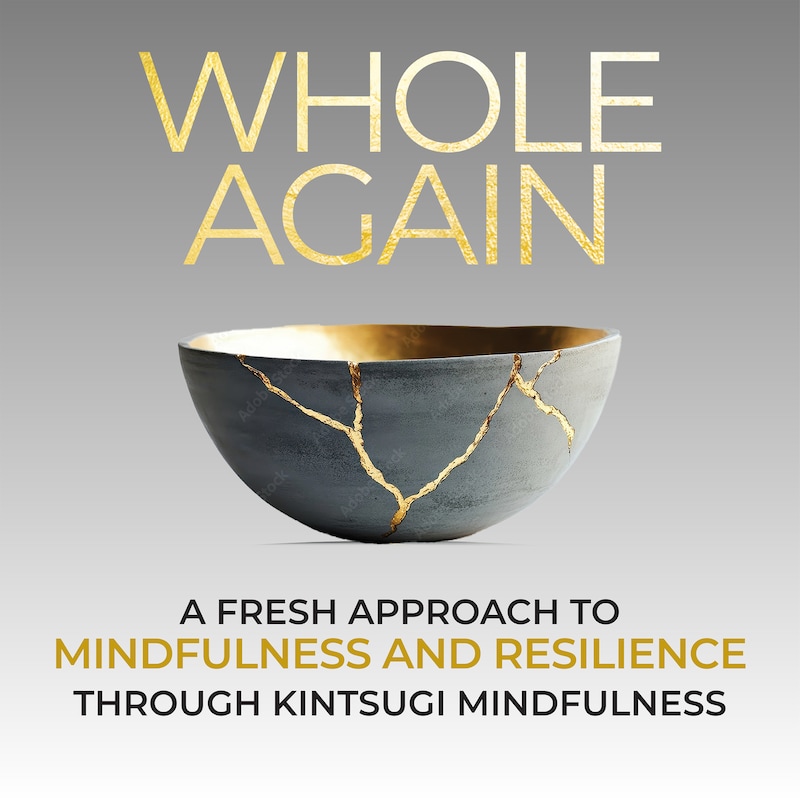
With Whole Again: A Fresh Approach to Healing, Growth & Resilience after Physical Trauma through Kintsugi Mindfulness, listeners explore resilience through personal stories of trauma, scars, and injury while learning to overcome PTSD, imposter syndrome, self-doubt, and perfectionism with self-compassion, self-love, and self-worth. Through insightful discussions on building resilience, fitness, and stress management, as well as mindfulness practices and digital wellness, the show offers practical tools such as breathwork, micro-dose meditation, grounding techniques, visualization, and daily affirmations for anxiety relief and stress reduction. Inspired by the art of kintsugi, the podcast embodies healing as a transformative process, encouraging a shift in perspective from worry and overwhelm to gratitude and personal growth. By exploring the mind-body connection, micro-dosing strategies for emotional well-being, and holistic approaches to self-care, this podcast empowers listeners to cultivate emotional resilience and live with greater balance and intention.
Transcripts
Hey there, it's Michael. Welcome to Whole again. A show about helping survivors a physical injury and trauma, reclaim their strength and resilience through the wisdom of
if you're listening to this. My guess is that you've been holding on to a lot. I think we all have. The times we live in are uncertain. They feel more chaotic, and maybe just maybe you haven't had a moment to simply be, you also might be new to this thing called meditation, or perhaps you've tried it once.
You didn't think it was your jam, so you moved on. And I will say contra to many of the gurus out there. Meditation isn't for everyone, but something brought you back here today. And before we drop in together for a short microdose meditation, I'd like to share more about the philosophy of pause, breathe, reflect with you.
Because in this world that's constantly asking us to do more, to purchase more, to be more, it's hard sometimes to find the energy or the space to navigate today with a bit more grace. So what is mindfulness? There are plenty of definitions out there. But when I started my practice to help me get through my recovery, it was all about creating space.
Space where I could be grateful or thoughtful so I could set my intentions on how I wanted to show up in the world that day. So when you think about pause, breathe, reflect, think about it as a way to create space. In your life and to do it, you don't need a special yoga mat or cushion or scented candles or to be on the next set for White Lotus.
You can do this practice anywhere and everywhere, and it doesn't have to be totally quiet. You can do this practice right in Times Square, right in the heart of New York City. Or maybe taking a walk on the beach, hearing the waves of the ocean come into shore. And it doesn't have to be a practice where you only focus on the breath because coming back to the breath, for some people can bring up past traumas.
That's why I always recommend. That you find a teacher, a guide that has trauma sensitivity, you can do this practice by hearing what's in the soundscape or through movement as I'm doing through my rehab currently, there are plenty of ways to practice meditation and mindfulness. It's not all about sitting cross-legged.
And solely focusing on your breath, and let's get this outta the way. It's not about making your mind go blank. It's paying attention to what's happening in the body, in your heart, and in your mind. You'll get distracted. That's all part of the practice when you get distracted from. Wherever you happen to be placing your attention, you simply notice and begin again.
That sequence of getting distracted and coming back and refocusing is mindfulness. It helps you build that muscle. So when you're really trying to focus on something that really matters to you, you have more strength to do so. And even in those moments where you might get distracted, you have now the ability to come back and focus in on maybe that friend or family member you're talking to or the task at hand at work, whatever it might be.
And your practice doesn't have to take hours a day and you don't have to go off on a five or seven day silent retreat. If you want to, that's great. And I know people who have, I've done it myself, but those experiences are not for everyone. You can simply do shorter practices. When I got trained, my practice was 45 minutes a day, and I noticed that people had a hard time staying with it.
And these are people who wanted to become teachers. So for most of us doing a 45 minute a day practice isn't feasible. It doesn't set us up for success, if you will. That's why when I created Pause, breathe, reflect, it was all about shorter practices that we could do frequently throughout the day, and we could do it consistently.
And the cool thing now is that the science has caught up with this theory. Science is now showing us that microdose meditations matter. Just two, three or five minutes a day can be meaningful in terms of creating space, calming our nervous system, reducing stress, and helping us build. The mindset of resilience, so you don't need a bunch of hours and you don't need to go off on a retreat.
I like to say if you don't have 10 or 20 minutes in the morning even to practice, I totally get you. This is your place because I have a hunch that you have about 10 times throughout the day where you could steal two minutes. If we do a little math, 10 times two is 20, so you can get 20 minutes of practice in throughout the day, and it doesn't have to be just at one time.
Actually weaving it in throughout the day helps you create more space throughout the day. You can take two minutes in the morning. Two minutes before your first meeting, or perhaps before you come home or right before bed, two minutes at a time allows you to create space, and it also allows you to be consistent.
So this practice becomes. A way of life, not something on your to-do list. You just naturally slide into a moment to pause, breathe, reflect, and I will also add this. If your day is so crazy, because some days are that crazy where you only have two minutes, those two minutes matter. So you don't have to get to 20, you can simply do two minutes, and that counts.
So if you're ready, let's take two minutes and do a practice together.
Wherever you happen to be, you can settle into a comfortable position knowing that you're always a choice here. You can close your eyes if you feel safe to do so. You can also leave them open and watch the world go by, or simply have a soft gaze looking down at the tip of your nose, and we'll begin with a deep breath in with.
And a slow releasing breath out
as we begin our practice.
And if you like, you can place your attention on the breath or perhaps on the soundscape or if you happen to be walking. This can be a movement practice for you.
And I'll invite you to rest your attention either on the breath, the sounds, or your body,
and if you happen to get distracted. Simply come back to your focal point and begin again.
Each time your attention gets pulled away, you can simply begin again.
All right. Nice job. See a simple two minutes. That didn't take long at all. And you can repeat a practice like this or another one that you know of or something on my app throughout the day. All in effort to create more space so you can approach life with more grace. And that will help you put a beautiful ripple into the world.
And if you would like to discover additional micro doses of mindfulness and wisdom, you can download my Pause, breathe, reflect app, and join us here every Monday, Wednesday, and Friday at seven 11. Eastern. Again, thanks for being here. I
appreciate you.