Shownotes
"Is natural building just for green hippie owner-builders?"
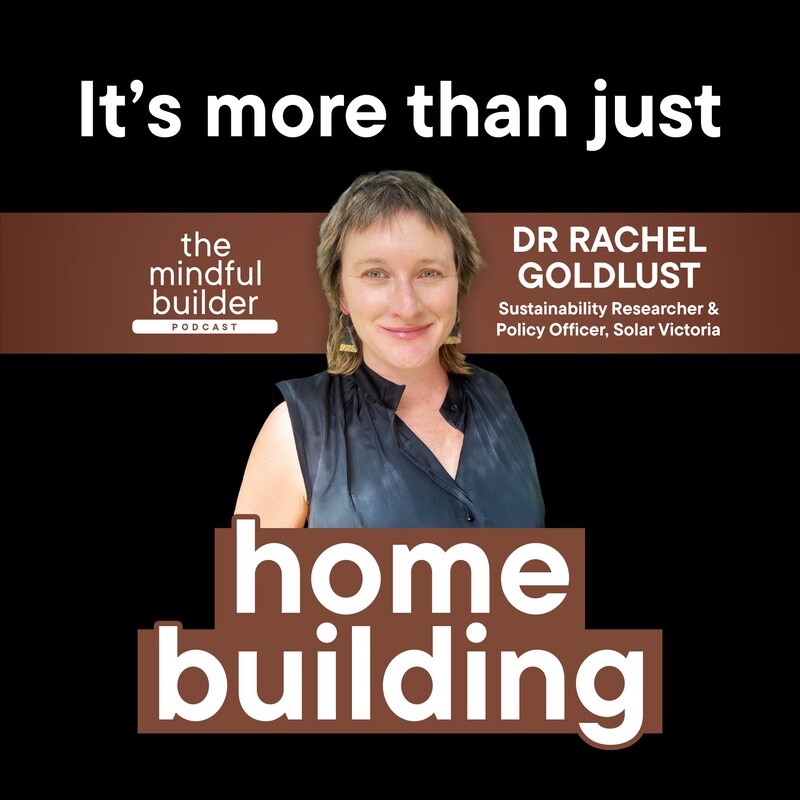
We sat down with Rachel from Natural Building Australia to tackle this question head-on. Rachel's academic background and hands-on experience reveal how natural building has evolved from 1990s counterculture to a professionalised industry attracting broader audiences. Thanks to hemp industry growth and increasing awareness of healthy building materials, natural building is becoming a legitimate mainstream option in Australian construction.
Rachel discusses the challenges facing natural building - building codes that don't recognise materials used successfully for centuries, labour shortages, and higher costs for bespoke approaches. But she's optimistic about the future, highlighting community workshop builds that attract diverse participants, including architects wanting to get their hands dirty and more women changing the traditionally blokey building site culture.
Natural building isn't just about sustainability - it's about health, community, skill building, and connection. Whether you're a builder, architect, or homeowner curious about alternatives to conventional construction, Rachel's insights demonstrate that natural building offers practical pathways for creating healthier homes and more connected communities.
👇 CHAPTER MARKERS 👇
00:00 Introduction to Natural Building
03:10 Defining Natural Building
04:53 Challenges and Misconceptions
05:13 Historical Context and Evolution
07:03 Mainstreaming Natural Building
09:08 Regulatory Hurdles and Performance
11:57 Labor and Cost Issues
21:07 Straw Bale Construction
24:59 Comfort and Performance in Natural Homes
28:06 Innovative Cooling Techniques in Passive Design
29:21 Balancing Comfort and Natural Building Methods
30:10 Client Expectations and Building Regulations
30:45 The Role of Architects and Builders in Sustainable Design
32:00 Challenges and Misconceptions in Natural Building
34:47 The Importance of Healthy Building Materials
35:38 Encouraging Curiosity and Innovation in Building
36:39 Resources and Community Support for Natural Building
44:01 Hands-On Involvement and Learning Opportunities
48:11 Integrating Natural Building into Apprenticeships
52:35 Conclusion and Final Thoughts
LINKS:
Natural Building Australia:
https://naturalbuildingaustralia.org/place/rachel-goldlust-natural-building-consultant/
Connect with us on Instagram: @themindfulbuilderpod
Connect with Hamish:
Instagram: @sanctumhomes
Website: www.yoursanctum.com.au/
Connect with Matt:
Instagram: @carlandconstructions
Website: www.carlandconstructions.com/
Transcripts
We've got Rachel from Natural Buildings Australia.
Speaker:I first met you.
Speaker:Oh, it'll be over a year ago.
Speaker:We were doing a Sustainable House Day webinar.
Speaker:I think it was, you were interviewing me.
Speaker:Yes, I.
Speaker:I think then you got to do it with Hamish this year, didn't you?
Speaker:We did.
Speaker:Yeah.
Speaker:But we both present, we both presented this year on natural building products.
Speaker:did you get any time to present after Hamish spoke?
Speaker:I feel like there's, uh, so much, um, collaboration that can happen across
Speaker:the industry that it's, uh, not about individual personalities, let's say
Speaker:No, no, no, it's not.
Speaker:It's just about us.
Speaker:Well, it's about you today.
Speaker:So
Speaker:apparently.
Speaker:yeah, so it's a pretty blunt question.
Speaker:Is natural building just for green hippie owner builders?
Speaker:I mean, I feel like, uh, in the nineties for sure.
Speaker:Um, have you, uh, ever come up with like your parents' friends or people
Speaker:who used to live in an old mud brick?
Speaker:I've lived in a city my whole life, so I am probably a little bit
Speaker:sheltered from that perspective.
Speaker:I'm gonna say yes because I grew up in Park Orchards and now live in Warren Diet.
Speaker:So pretty, pretty familiar with mud bricks and I guess that sort of Alistair
Speaker:Knox kind of vernacular out this way.
Speaker:So I, to answer your question, I am f very familiar with them.
Speaker:So I feel like if you know that Nexus and you know that part of the world
Speaker:and you know that that was a particular thing, I could talk for days about the
Speaker:war Eltham mud brick scene because I did a lot of work on that for my PhD.
Speaker:But that is a particular kind of, um.
Speaker:Niche, I guess.
Speaker:And it was part of the story of how a natural building has kind of evolved
Speaker:in Australia, but I would say now it has moved far beyond that, and that
Speaker:would probably be to do with this professionalization of the hemp industry
Speaker:and how that's kind of affected the way it's perceived and or the kind
Speaker:of clients that it now attracts.
Speaker:What, what would you define as natural building?
Speaker:So I talk about it as being, um, you know, alternative products, namely
Speaker:those that, uh, come from the land.
Speaker:And, you know, people always talk about timber as being the ultimate
Speaker:natural product, I guess, but it's also how you use it and then how
Speaker:it would fit into a sort of more.
Speaker:Um, symbiotic design and also, um, you know, the way the materials sort of work
Speaker:in terms of health benefits and things.
Speaker:So I talk about it being primarily earth.
Speaker:And then since, um, the nineties it's included, um, you know,
Speaker:straw bale and then it's included hemp and then it's included.
Speaker:You can talk about bamboo, you can talk about other products that
Speaker:sort of stick around that fringe.
Speaker:Part of what we would consider to be natural, though the word itself
Speaker:is, you know, fairly redundant in
Speaker:I actually like it.
Speaker:I think it's a good word because there's so many crappy
Speaker:greenwashed words at the moment.
Speaker:That natural almost doesn't feel like it.
Speaker:It's as part of that category.
Speaker:it can be used and abused, right?
Speaker:Like anything in the industry, you can use it to the, to the extent that you want to.
Speaker:And you know, my work and the sort of people that I've been dealing with for
Speaker:the last 15 years have very much kind of understood that there's a consensus
Speaker:around that, but that it's not exclusive.
Speaker:That it's not sort of like, you know.
Speaker:Don't touch concrete, you know, concrete has its, has
Speaker:its value and has its purposes.
Speaker:Like a lot of other materials.
Speaker:Some people are more fundamentalist about such things, other people are not.
Speaker:And so I'm not there to sort of draw a line around what I consider
Speaker:to be natural and therefore elite.
Speaker:You know, it's supposed to be about accessibility and it's about usability.
Speaker:whether it was Matt or you, Rachel brought up the term alternative
Speaker:products, and I can't help but see the irony in the fact that we're calling
Speaker:hemp straw, mud cob, mud brick, et cetera, as alternative products.
Speaker:Wouldn't it?
Speaker:Wouldn't these fit in quite the opposite category.
Speaker:I mean, it's funny you should say that because I've just been doing some writing
Speaker:on this exact topic in sort of Australian housing history and how we came to see,
Speaker:um, you know, prefabricated things.
Speaker:Um, as being superior.
Speaker:And when our sort of vision of that, of what is, um, usable building
Speaker:materials kind of shifted and evolved.
Speaker:And that was when, you know, fired brick and, you know, when steel
Speaker:entered the discussion and when our houses sort of shifted, when aluminum
Speaker:entered and that sort of, you know, forties, fifties, sixties post-war.
Speaker:But that's when our idea of what you should be using to
Speaker:build your house kind of.
Speaker:Radically shifted towards what we now consider to be
Speaker:conventional building materials.
Speaker:And away from that, which was what we had, you know, during times when
Speaker:there wasn't anything else other than timber and, um, you know, thatch
Speaker:and, you know, tin and various things that we could get our hands on.
Speaker:So, yeah, you're right.
Speaker:It wasn't.
Speaker:I mean, it was defacto for a long time and now it's considered alternative.
Speaker:And you're right back to Matt's question that was probably from the hippies and
Speaker:the greenies and the people who kind of made it into something that people
Speaker:might want and made it into a sort of desirable product as much as it's been
Speaker:pretty, um, fringe for most of its life.
Speaker:so you've been in this in like in this space for 15 years, which I mean, I think
Speaker:about how long I've been in the building industry for probably close to 20 now,
Speaker:and I kind of feel like my interest in.
Speaker:Let's call them natural products.
Speaker:I don't wanna call 'em alternative products, let's
Speaker:call them natural products.
Speaker:My interest is becoming a lot stronger now, I guess as my values become
Speaker:stronger and the, my aesthetic become stronger about what, you know, the,
Speaker:the homes that I want to build.
Speaker:How do you feel about, um, its popularity becoming, I guess, more mainstream now?
Speaker:Well, it was just a grand design.
Speaker:Episode on Earthships.
Speaker:Yeah.
Speaker:And have you seen that Zach Efron's building a massive hemp house?
Speaker:Like that's gonna do wonders for the profile of, of said industry and
Speaker:you know, I'm just waiting for the onslaught of visits to my website.
Speaker:But it's something that, you know, I've been passionate about as adv as a sort
Speaker:of advocate for more people to be able to DIY more of their homes and for more
Speaker:people to be able to access parts of the building industry that I feel have been
Speaker:kind of professionalized away from most.
Speaker:People, people in a sense that they feel that they can't tackle the
Speaker:very big task of building a home.
Speaker:And so the more people can see it, the more they can dream it
Speaker:and the more they can do it.
Speaker:So for me, having high profile or having mainstreaming much like, you
Speaker:know, the solar industry and batteries and those things were so bespoke.
Speaker:You know, 15, 20 years ago, no one had a battery, only.
Speaker:Weird, kooky, renewable nerds had batteries, you know, and now everyone and
Speaker:their dog's trying to get on the list.
Speaker:So it can only be a positive in terms of how people view something that was
Speaker:seen, as Matt pointed out, as being something just for hippies, as being
Speaker:something that could be desirable.
Speaker:If your values, you know, lead you towards it, because as you gentlemen would know,
Speaker:anything bespoke is gonna cost more and it's gonna have a higher price tag on it,
Speaker:and so therefore people are afraid of it and or because the standards don't exist
Speaker:in the b in the building code, to be able to give people that certainty that the
Speaker:product, if you wanna call it a product.
Speaker:I don't see natural materials as products per se, but if the products gonna
Speaker:perform in the way that you would expect.
Speaker:So it's sort of being asked to compete with conventional building
Speaker:You, you've just, you've just touched on two of my next questions actually.
Speaker:NCC, that's a good one.
Speaker:We have products that are natural, that have been used probably for
Speaker:hundreds, thousands of years.
Speaker:I was literally about to, I was literally about to go down this path
Speaker:of like thought, so take it away, Matt.
Speaker:Yeah.
Speaker:So yeah, you have products that have been around for thousands of years, yet the NCC
Speaker:doesn't allow these to exist in the code.
Speaker:The pathway, the pathway's difficult because it re
Speaker:requires a performance solution.
Speaker:Yeah.
Speaker:Performance solution, build mud bricks that were being used of years ago.
Speaker:Um.
Speaker:not, I'm not saying it's not a bad thing.
Speaker:I mean, and even if you'd like kind of just dwell on mud bricks for a second,
Speaker:I, I would probably argue, and Rach you can probably speak to this in much
Speaker:more detail than me, whether or not a mud brick home would actually meet
Speaker:seven star compliance, because I don't think it would meet the RR values that
Speaker:would be required to tick that box.
Speaker:No, and it's an, it's a very, I went to the, so a shout out to the, um, A
Speaker:BAA, the Earth Build Association of Australia, who have been an organization
Speaker:advocating mostly for mud, brick, and earth homes since the 1980s.
Speaker:And they still run an annual conference that I finally managed
Speaker:to get to earlier this year.
Speaker:And there was a talk on exactly this.
Speaker:And so a lot of those, um, call them early mud builders.
Speaker:Built their mud homes or rammed earth homes before 1991, before the NCC was
Speaker:sort of significantly altered to include the r values for installation materials.
Speaker:And they, one of them, um, has had a retrospective passive house
Speaker:certification put on his house.
Speaker:In terms of performance, I'm not.
Speaker:Building tech enough.
Speaker:I was sitting with someone who was, who kind of challenged the framework
Speaker:around that kind of activity because you can kind of get, um, modeling
Speaker:to do whatever you wanted to do if you put in the right things.
Speaker:But, you know, he wanted to be able to prove that his, yeah.
Speaker:Pre n CCC home.
Speaker:Would meet and match certain performance stands, which is not required to do.
Speaker:But yes, you're right for that exact purpose.
Speaker:And if you know anything about Alistair Knox Homes and the early mud brick homes,
Speaker:you know, not all of them were orientated.
Speaker:Great.
Speaker:Not all of them had particular, um, you know, they were very
Speaker:wood and dark, and I imagine, and Slate was very popular in that.
Speaker:Period.
Speaker:So a lot of them, uh, um, you know, are being retrofitted as you know,
Speaker:to increase their performance now.
Speaker:So I'm not saying that natural materials are the be all and end all, because of
Speaker:course it's design and citing and how you use it and all, and all of that.
Speaker:And, you know, mud bricks are still being made, people are still
Speaker:sharing mud, brick making machinery.
Speaker:I see it on the internet, but I wonder how many people and how they're getting those
Speaker:passed in terms of the kind of hoops that they have to do to get them to perform.
Speaker:it kind.
Speaker:This also then leads to the other question I had because the hard thing with a lot
Speaker:of these products, it's very manual labor intensive, and if anything we've learned.
Speaker:Through pricing projects in the last two years, one of the major reasons
Speaker:pricing has gone up is because of the amount of labor in a job and the cost
Speaker:of labor has dramatically increased.
Speaker:Um, which I'm imagine is now the biggest barrier.
Speaker:If you having a mainstream input other than say account planning and councils
Speaker:and probably inner city sites, make it a little bit difficult, but I'd say cost.
Speaker:And that's probably why you see a lot of owner builders going down this road
Speaker:and, um, you get all these communities coming in to help build a home.
Speaker:Is this the reason why it kind of still exists, but then
Speaker:also it's its own worst enemy?
Speaker:I mean, there's lots of reasons why the industry is struggling, you
Speaker:know, without the professionalization of the trades is one.
Speaker:You know, like if you look to the UK and you look at their kind of, because they
Speaker:have so much more heritage building, they have heritage trades and they
Speaker:have schools for heritage trades.
Speaker:And so that's sort of like half job done in the sense because you have
Speaker:a professionalization of part of the industry that's mostly rendering and you
Speaker:know, line work and line pointing and.
Speaker:That kind of brick work.
Speaker:It's not necessarily the building from scratch kind of things, but still
Speaker:they have an existing trade industry.
Speaker:Whereas what I hear from old school natural builders who are, you
Speaker:know, running perfectly profitable businesses on an oily rag, but they
Speaker:struggle to find labor and, and, you know, young labor that you know, is
Speaker:prepared to do that kind of work and is still very family business run.
Speaker:It's
Speaker:very physical labor too.
Speaker:It's not
Speaker:it's.
Speaker:light labor.
Speaker:But it tends to attract those people that are actually looking for
Speaker:something a bit different, you know, than conventional building sites.
Speaker:As you would know, for people who are looking for kind of more, you know,
Speaker:conscious, kind of thoughtful building with different kinds of building
Speaker:companies or people like yourself, there's a reason why people are
Speaker:looking for something a bit different.
Speaker:And yet I've been a part of what.
Speaker:You would call community workshop builds.
Speaker:So owner builders who subcontract to certain, you know, project managers
Speaker:who run the natural building part.
Speaker:And then we use volunteer labor and you know, some of those can attract, you
Speaker:know, 50, 60 people and a lot of them come from different, trade backgrounds,
Speaker:concreters, carpenters, architects.
Speaker:Boat loads of architects because they wanna get their hands dirty and they
Speaker:wanna understand what house building actually means and looks like.
Speaker:And so I've just been watching all of these people from adjacent trades
Speaker:who plasterers, who are just bored of doing really normal, boring, bloody
Speaker:plaster work and they're interested in like the different kind of atmosphere.
Speaker:And you know, there's a lot more chicks on these kind of builds as well,
Speaker:which definitely changes the kind of framework that you're working within
Speaker:because it's not a blokey building site.
Speaker:There's, there's definitely A much stronger connection to the home
Speaker:that's being built when you're actually using your hands to do the
Speaker:things that are in front of you.
Speaker:Like there's that really kind of tactile connection, whereas like.
Speaker:You know, I've got projects where, you know, I've got trusses and sips and stuff
Speaker:that are rocking up on a, on a, on a truck and then getting crane into site
Speaker:and there's kind of that disconnect.
Speaker:Whereas I know when we built the, um, well dis disconnect between
Speaker:what's actually going up and I guess that attachment to the home.
Speaker:Whereas, you know, the, I know the Hemp Creek house that we did.
Speaker:You know, the team are, are there, they're in there, they're,
Speaker:they're carrying buckets.
Speaker:They're mixing, they're using their hands to put, um, put all the hemp and
Speaker:stuff in the shattering and hoarding.
Speaker:And there's this, I, I can understand why it is, it's attracting, I
Speaker:guess these trades are just so sick of seeing that run of the mill.
Speaker:This is how we do things kind of.
Speaker:Every day in day out approach to like there's something new where
Speaker:I can actually, I guess, get in touch with that craft again.
Speaker:This is maybe a little kind of preamble into my next kind of question.
Speaker:Um, you do have a background in town planning, and I know it's not strictly
Speaker:related to NCC, but we did talk about pathways before and, uh, NCC pathways
Speaker:and, um, performance solutions.
Speaker:could you explain to the audience, I guess, what that looks like when we're
Speaker:talking about natural building materials?
Speaker:Just to put a bit more context around that.
Speaker:I mean, as far as I understand, and it's been a while since I've done
Speaker:this firsthand, but I've, you know, kept an eye on what is happening.
Speaker:in order to get a clear pathway through, um, the NCC requirements,
Speaker:it requires a standard, and the standard needs to be in the code.
Speaker:And at the moment, there is a very old standard that was in, in the
Speaker:eighties and nineties that is just.
Speaker:For Earth building.
Speaker:Um, so just earth and mostly Ramed Earth.
Speaker:I've forgotten the number, but it's, you know, it's sort of like
Speaker:folkloric in the earth building scene about this one standard that
Speaker:I can tell you the history of.
Speaker:But it came out through the sort of, um, forties, fifties, and
Speaker:sixties experimentation with Earth.
Speaker:And then as the NCC evolved, it sort of got stuck there and has
Speaker:lasted, has lasted the test of time.
Speaker:But that's the only reason why that exists in the NCC.
Speaker:And there hasn't been the funds and or the industry push because, you know,
Speaker:what you call a natural product isn't a product that is saleable, that has
Speaker:investment that requires, you know, 'cause it's stuff that you can source
Speaker:cheaply and easily from your side or your neighbor's ex dam or you know, the straw.
Speaker:The straw from.
Speaker:From the paddocks down there, it's not something that has a great
Speaker:monetary value to anyone else.
Speaker:So there hasn't been that push, but hemp has provided that push.
Speaker:So there's currently a move towards introducing a hemp standard, and I know
Speaker:Alvin Williams from Soft Architects is working closely with a lot of people
Speaker:on that and that that is going to, um, allow for there to be a standard
Speaker:in the code if it gets passed.
Speaker:Um, and I'm not necessarily the one to understand how the NCC does
Speaker:its workings, but if that can.
Speaker:Become an option then that will sort of alleviate the need to go and get a
Speaker:performance solution, which is what most people have to do to use alternative
Speaker:natural materials, which requires, a building engineer to be able to
Speaker:come and participate in the build.
Speaker:And it adds cost to the build, but.
Speaker:Through my business, through Natural Building Australia, I've found that
Speaker:there are businesses that are working in this, and that's what I've been
Speaker:trying to sort of collate so that people can easily find the people who've done
Speaker:jobs on this before and you can use a similar or existing performance solution.
Speaker:That for that particular, um, you know, taking, it's gotta take into account, you
Speaker:know, bushfire and it's gotta take into account water ingress and it's gotta take
Speaker:into account all of the things, but that you can use a lot of, instead of, you
Speaker:know, I think it's at least five grand for a performance solution so that you
Speaker:can, you can use some of that which has already exists and double up on someone
Speaker:else's build because theoretically you're using the same material to perform in the.
Speaker:Who, who signs off.
Speaker:So I want to go back two steps to go forward a bit here.
Speaker:So you're saying the NCC rules, we'll say the Australian sounds too,
Speaker:is due to big, large corporations getting certain things in the code.
Speaker:I mean, it's, uh, it's
Speaker:I'm being smart ass here.
Speaker:but it's definitely not something that's happened by accident.
Speaker:You know?
Speaker:It's definitely, it's
Speaker:the old BlueScope BlueScope steel rule that's been put in.
Speaker:BlueScope steel rule.
Speaker:I like that.
Speaker:and there, because there hasn't been, um, you know, a huge call for
Speaker:or need to, um, you know, get to bureaucratic with what had been a
Speaker:quite bespoke kind of, um, industry.
Speaker:There hadn't been, um, you know, that much call for it.
Speaker:And or the, the engineers and the surveyors who were working in the
Speaker:industry just get sort of handed around.
Speaker:Which is again, another reason why I wanted to set up a website
Speaker:to give people more visibility on the fact that there are people
Speaker:working across these industries and.
Speaker:Do you think, do you think maybe now that you, we we almost had to get a performance
Speaker:solution to get outta bed these days that like there's less of a barrier to, um,
Speaker:you know, to implement these products in our building anyway, like, yeah.
Speaker:Definitely if you talk to like, Kirsty from Shelter Building
Speaker:Design, who's a big advocate for hemp, she would say exactly that.
Speaker:She would say, it's not a big deal.
Speaker:It's not something, it'll add cost.
Speaker:It'll add this much and I can put it in the budget for your build for you,
Speaker:but it's not, uh, an insurmountable hurdle that will affect your project.
Speaker:And she's very keen on making sure that, that clients understand that
Speaker:from the get go and to sort of keep.
Speaker:Her pricing, she's a building designer, but to keep her pricing competitive
Speaker:and relatively competitive with other kind of, you know, architecturally
Speaker:designed homes, because we're not talking about mass produced
Speaker:Where
Speaker:any stretch of the imagination.
Speaker:So I, I want, I want to shift away from hemp because I feel like hemp gets all
Speaker:the attention and for good reasons.
Speaker:Um, but where have you seen the sort of the biggest success in natural
Speaker:building products other than hemp?
Speaker:I mean, straw is still the quiet achiever
Speaker:I love straw.
Speaker:I, I'm, the one thing I wanna do in a, as a building business
Speaker:is build a straw house.
Speaker:Anyone that wants to do one, especially in a city, I'd be very excited to do it.
Speaker:And I mean, there's other variants of, in terms of not using full bales.
Speaker:And you know, I know a company in Central Victoria where I'm, where I'm from,
Speaker:who do it more as a form work and they fill it with, um, straw and straws, the
Speaker:insulation layer, but they don't do it.
Speaker:Um, you know, 300 wide, as wide as a straw is, it's more like, you know.
Speaker:200. And it also makes it easier to render and it makes the whole process smoother.
Speaker:And they've sort of moved away from using straw bales.
Speaker:But anyone who lives in a straw bale is a complete devotee.
Speaker:If you talk to them about the performance of their home and you
Speaker:know, they're very high performing.
Speaker:And you know, I live in Central Victoria, gets very cold and you know, the straw be
Speaker:houses that I visit, you know, they don't have any input heating or cooling either,
Speaker:you know, and they can be built very well.
Speaker:So you know, and it's a readily available material, whereas hemp is
Speaker:still largely imported and the industry is still getting off the ground.
Speaker:So people who are straw belt advocates are very much straw belt advocates
Speaker:in the way that they see it as being the, the cheap and ready material.
Speaker:That, and of course, they're all post and beam, they're non load bearing.
Speaker:You know, they're all very sort of, um, let's say relatively straight up
Speaker:so let, let me challenge that for a second.
Speaker:I, I seem to recall a nursery rhyme when I was growing up as a
Speaker:kid called the Three Little Pigs.
Speaker:So tell me like, how is straw a good building product then?
Speaker:Wouldn't it just blow away and blow down?
Speaker:A big bad wolf's gonna come and huff and puff and blow it away,
Speaker:big, big.
Speaker:not
Speaker:by the hair of my chin.
Speaker:Jean gin.
Speaker:I know that Envi text had a bit of a play on their words for their,
Speaker:uh, in, um, Huff and Puff House.
Speaker:That is a very high end house and it's a very beautiful house.
Speaker:It's beautiful home.
Speaker:The, you know, the question of strapping, um, to me, from what I understand, um,
Speaker:I haven't had that much access in the straw barrel industry, to be honest.
Speaker:But from what I understand, the question of strapping, um, to strap or not to strap
Speaker:in terms of the cross bracing, um, but across both sides of the straw barrel is
Speaker:very much part of how the industry works.
Speaker:There are some people who don't believe you need to strap.
Speaker:Once you, Have the initial compression of the bales in under your form.
Speaker:Um, and other people would say so, and I guess that that depends on your engineer
Speaker:and what they're comfortable with.
Speaker:But you know, the, the classic adage for natural building is, you know, good hat.
Speaker:Good boots, you know, if you've got your, you've got, usually
Speaker:they're built on a slab or at least you know, a strip footing.
Speaker:Um, and then you've got an awning.
Speaker:So often you don't do straw bale when it's wet and rainy in the wintertime,
Speaker:or you put your roof up first and so you've got protection for the straw
Speaker:so it doesn't take in water because you don't want water inside your bales
Speaker:'cause you don't want 'em to mold.
Speaker:So yes, there's timing.
Speaker:Issues with the way straw bas get built often get built over summer when it's
Speaker:dry, just to make sure that they're as dry as possible before you, you know,
Speaker:close them up and, and you render them.
Speaker:Won't it burn down if there's a flyer?
Speaker:or a
Speaker:I mean, it's, it's it's the same as any other rendered home.
Speaker:so, so you mostly
Speaker:Uh, so just, just so you know, Rachel, I know all the answers to these
Speaker:questions.
Speaker:I'm just, I'm, I'm.
Speaker:I expected nothing
Speaker:Um, so, so a lot of, a lot of these products rely on an external and internal
Speaker:render of, and of lime specifically, can't be acrylic or anything like that.
Speaker:It can be clay though.
Speaker:yeah.
Speaker:Yeah.
Speaker:So anything that can, or loosely use
Speaker:the
Speaker:word breathe or there's vapor
Speaker:permeable.
Speaker:not not cementitious,
Speaker:Yeah, you want something
Speaker:not
Speaker:cementitious.
Speaker:yeah, you want something vapor permeable, essentially that can
Speaker:move, move through the structure.
Speaker:I wanna go back to, you said heating and cooling.
Speaker:Now we build passive houses.
Speaker:I think every home still needs heating and cooling because no home,
Speaker:will have a zero heating demand.
Speaker:Does that make sense?
Speaker:Like zero?
Speaker:Like isn't that.
Speaker:Scientifically proven.
Speaker:you gotta come up and visit some houses.
Speaker:Like, you know, the, the, the potential is there for a home.
Speaker:I mean, you know, maybe this doesn't fit the criteria of what a passive
Speaker:house is trying to, um, obtain.
Speaker:But when a house can function relatively well, 95% of the year, for me, that
Speaker:is, that is job done like that is about as efficient as you can get in
Speaker:terms of, yes, sometimes they need a boost and they sometimes use, you
Speaker:know, in the old days it would've been gas as a boost and now, you know,
Speaker:I've seen like rocket stove boosts.
Speaker:So like, um, you know, tweaks and bloody sticks that, you know, that,
Speaker:that heat up a, a thermal mass.
Speaker:Of some description and so you are heating up something inside the
Speaker:dwelling, but then it's so, so tightly sealed that whatever heat you introduce
Speaker:from inside is gonna retain inside.
Speaker:And so, yes, the people I know who are kind of quite hardcore about it
Speaker:are very much like, you know, there are some days when it's been gray
Speaker:for a long period of time and the sun doesn't come in and heat up the slab.
Speaker:Then, you know, it needs a boost
Speaker:I also point out too, I mean Matt, you know, it's no secret that Matt
Speaker:and I kind of sit in that passive house, high performance space, and I
Speaker:guess what we're referring to is that.
Speaker:So sit within the comfortable temperature band of 20 to 25 degrees.
Speaker:You need, I mean, I'm using inverted com here.
Speaker:You need heating and cooling, but if you are someone that doesn't mind
Speaker:it going a little bit colder or a little bit hotter, you could actually.
Speaker:Still live in a passive house or a, or a strawberry house or a hemp house with
Speaker:no heating or cooling, and accept that it might go down to 16 or 17 in winter
Speaker:and might go up to 28, 29 in summer and actually not use any heating and cooling.
Speaker:So you are probably right, Rach, like you arguably couldn't
Speaker:are greater.
Speaker:Your your band, your band of comfort.
Speaker:But then I, but then I go back to the question of like, well, what is comfort
Speaker:like is com and, and this is where I'm gonna, you said heating but cooling.
Speaker:Like when we gotta require.
Speaker:I was about, I think we were about to go down the same path,
Speaker:Matt, like it's all personal.
Speaker:Like, you know, we're, we're saying that our homes perform within this band, but
Speaker:you need a bit of heating and cooling.
Speaker:Whereas Rachel, some of your clients might just be totally cool
Speaker:with the fact of, for 90, 95% of the year it's super comfortable.
Speaker:And then if it's hot and summer, we'll open a window and I'll put a t-shirt on.
Speaker:Like it's not a big deal.
Speaker:I mean, I'm interested in where you began that comfort band to begin with.
Speaker:Because when I started in this business, and sure enough, I
Speaker:started on the Radical Fringe with Earthships, but that band was 16 to 21.
Speaker:Yep.
Speaker:Expect that was the expected performance band, not 20 was 16.
Speaker:So, you know, from, from the way that I've always spoken about, um, you
Speaker:know, optimal living temperatures,
Speaker:To get upwards of 29 and 30, this pushing way beyond what I would've been sping
Speaker:as the comfortable bandwidth for what is acceptable for the way that the design.
Speaker:But again.
Speaker:Passively designed in the same sense that you know, a lot of those, that
Speaker:particular kind of house, like the one on grand designs, they use cooling tubes.
Speaker:As, as ventilation.
Speaker:And so you're drawing in cold air through the ground and up through the
Speaker:building and it ventilates out the top through whatever clear story windows or
Speaker:whatever you've got going out the top.
Speaker:And that's, that's your air con, like that's, that's your cooling.
Speaker:And so it's, you know, of course it's gonna fluctuate and it's
Speaker:gonna be something that's gonna be.
Speaker:You know, as, as the, you know, nighttime temperature drops and then
Speaker:the temp ground temperature drops.
Speaker:So it is very much more of a hands-on, whereas, you know, my understanding of
Speaker:passive houses is, it's like once you put in your heat recovery, it's hands off.
Speaker:the machine does the work.
Speaker:any old school mud builder, I mean, that also came up at
Speaker:the Earth Building Conference.
Speaker:Any old school mud builder would be like, they're just of that generation
Speaker:that's like, put on a jacket.
Speaker:You know, like that's,
Speaker:Yeah.
Speaker:Yeah.
Speaker:And precious, they're not as precious.
Speaker:Yeah.
Speaker:And that's why say 16 degrees to me, still quite cold.
Speaker:To put, and, and, and I always, I also go the, the, on the flip side, like a lot
Speaker:of these houses, they're not inner city.
Speaker:So you're, you're out, you are out in rural Victoria or rural Australia
Speaker:where the temperature can grow well beyond 40 and then also can
Speaker:be hot, quite humid and sticky.
Speaker:So then I go on the comfort criteria back that way and go, I, and, and not
Speaker:disrespecting what natural building does.
Speaker:Then I'm like, well, sure.
Speaker:He still at least put in a cooling system to.
Speaker:To alleviate that level of comfort.
Speaker:think it just comes down to the person that's building the home.
Speaker:Like, you know, like our clients are coming to us for, like
Speaker:a solution and that's fine.
Speaker:Whereas, you know, if someone wants to build a store, a mud brick home,
Speaker:and they're happy with 16 degrees in the middle of winter and it's
Speaker:like minus three outside, like that's still comfortable in my mind.
Speaker:If someone wants to build a two star house, is that okay?
Speaker:Like we, we all like, I'm just being facetious here, but.
Speaker:I mean, you know, the, the aim, the aim of what I understand as
Speaker:being like why we have regulations to ensure thermal comfort, but
Speaker:you know, we all know how the.
Speaker:CC is gained, and we all know how, how sort of meaningless it has become
Speaker:in terms of understanding what is performance and how you can get around
Speaker:what you can do to alleviate the need to use better materials and to just.
Speaker:Build better houses.
Speaker:So you're right, it is, it does come down to the clients, but
Speaker:I mean, it's a chicken and egg.
Speaker:Like a lot of clients are gonna be driven by those that they consult and
Speaker:those that they consult have values.
Speaker:And you know, there's a, you know, all of the good architects out there, I know
Speaker:all of the good architects out there, but they're such a small proportion of those
Speaker:who are having the conversation about.
Speaker:How can we do this better?
Speaker:How can we do this differently?
Speaker:That gives you a similar outcome, not necessarily the outcome you walked
Speaker:in here thinking that you were gonna achieve, but how can we match that
Speaker:expectation how can we skin the cat a bit differently and possibly use things?
Speaker:And so is it only gonna be driven by the client?
Speaker:Is the client the one that has to come to you and go, Hey,
Speaker:I'm thinking about doing hemp.
Speaker:Which is why your question earlier about like the profile.
Speaker:If that's the conversation starter, then then you are gonna find builders,
Speaker:or you're gonna find designers, or you're gonna find people to support
Speaker:you because you've got that, you know much, much like passive house.
Speaker:If people come to you and go, I've heard of this thing.
Speaker:Are you the bright people to talk about?
Speaker:Then you go, yeah, I can talk to you about that.
Speaker:Let's have a conversation about it.
Speaker:But who starts the conversation?
Speaker:Is it the per, is it the professional or is it the client?
Speaker:And is it the client going, I think I wanna achieve
Speaker:this, or these are my values,
Speaker:But I think the hard part is a lot of time when a client reaches out to
Speaker:someone is they, they now flick through this thing called Instagram and look
Speaker:at the final product of the build.
Speaker:So then they go to someone they like, and then the advice on there can be
Speaker:quite, poor because they might've been had a bad ex, uh, situation
Speaker:with speaking to a hemp supplier, or they've been turned off due to some.
Speaker:Stupid price they were given that wasn't actually quite factual.
Speaker:So their, their perceived ideas can be quite negative and then
Speaker:turn that client very quickly away from what they're asking.
Speaker:And we've seen that a lot in passive house, but it's like, oh no, no, we had
Speaker:that price once and it was so expensive.
Speaker:But was it expensive or was it design?
Speaker:Like there's so many and, and I feel natural building is one of
Speaker:these things because it goes back and like we live in a bubble.
Speaker:We're in the same little bubble here.
Speaker:We do things a little bit differently.
Speaker:we agree on 99% of the things.
Speaker:It's just that 1% is quite.
Speaker:Argumentative.
Speaker:I feel that it's on us as builders, build architects, building designers
Speaker:to be open-minded when a client comes to us and not just dismiss the client.
Speaker:Is that sort of what you're getting at?
Speaker:you know, I'm obviously driven to, to be a sort of, to provide conversation starters
Speaker:and resources and support for people who are interested in this, but a lot of it
Speaker:does come down to how driven they are.
Speaker:And it's very hard to convince a client that this is something that
Speaker:they should prioritize and want.
Speaker:And so I just look at the finished product and I think, you know, the
Speaker:sort of, um, growing interest in and success of Sustainable House Day
Speaker:is to me a testament to showcasing not just the houses themselves,
Speaker:but the stories of the people who.
Speaker:Built them because I went to a hemp build the Glen Lyon Hemp Build this
Speaker:year for Sustainable House Day.
Speaker:And I participated in the tour.
Speaker:I was interested in the house.
Speaker:It was an owner builder.
Speaker:They'd done a, you know, small footprint, two story that were retired, you know,
Speaker:classic owner builder story, but they gave you all of their trials and tribulations
Speaker:and the, you know, the things that happened, the things, but you know, the
Speaker:house was so incredibly high performing.
Speaker:You didn't, you didn't, you just had to step in it.
Speaker:To feel, and that's what that sort of experience is really good
Speaker:for, is to get people to feel it.
Speaker:And then, if that's one way to get people to be motivated and driven
Speaker:to care a little bit more about the textures of their walls or how high
Speaker:performing different materials are compared to others, then that's great.
Speaker:But like you can't, you can't tell people that that's what they should care about.
Speaker:So,
Speaker:I think.
Speaker:I think that was it.
Speaker:That was a alter eco design project, wasn't it?
Speaker:I think it was, yeah, yeah,
Speaker:That wasn't there line, was it Lionville or Glen Lyon.
Speaker:Glen Lyon.
Speaker:Oh,
Speaker:Lionville.
Speaker:Yeah.
Speaker:Yeah, yeah,
Speaker:Yeah.
Speaker:Yeah,
Speaker:Um, so one of the other things that, um, we haven't actually touched on,
Speaker:which seems to be very topical these days, is the health of buildings.
Speaker:And if we think about, like, let's not call 'em m alternative products,
Speaker:we'll call 'em natural products.
Speaker:Like there's not a huge amount of bad things that are, that
Speaker:are in a, a bale of hay.
Speaker:Or in a pile of hemp that's in your wall, like this is all natural stuff.
Speaker:So if we're, if we're truly serious about building healthy homes, then the
Speaker:natural building pathway is a really great pathway to actually, um, deliver that.
Speaker:So I actually think more builders should be curious about
Speaker:this stuff and have an open.
Speaker:Mind about this stuff when clients come to them and not completely shut it down.
Speaker:We, we had a, a friend of mine on this podcast called, um, Ben Cooper, and he's
Speaker:a chef and he kind of said something to us, which just stuck with me for so
Speaker:long, and he's like eternally curious.
Speaker:And I think as builders, we need to be eternally curious when it
Speaker:comes to this kind of stuff because.
Speaker:You never know.
Speaker:You might get absolutely hooked.
Speaker:'cause for when my client for the hemp crease house came to me and
Speaker:said, I wanna build a passive house.
Speaker:I want it to be out of hemp.
Speaker:I'm like, you're mad.
Speaker:We can do it this way.
Speaker:And this is easier.
Speaker:I'll tell you what, I'm so glad that he kept pushing and pushing because we will
Speaker:eventually build a hemp creed house at our own home because of that project.
Speaker:And I've got an exciting, hopefully exciting project next year using hemp
Speaker:blocks and clinker fill underneath the, underneath the slab for insulation.
Speaker:this stuff's great.
Speaker:You know, we should be using it.
Speaker:Uh, we should be curious about these things and not completely shut it down.
Speaker:I mean again, but like if you are.
Speaker:You know, a project manager, a builder, and you like yourself, get approached
Speaker:with a particular thing and you want to try and pursue it, you've gotta then
Speaker:have the resources at your disposal to follow through with that and say,
Speaker:okay, I can see how we can make this.
Speaker:Possible.
Speaker:But if you don't have anywhere to start, and you know, again, plug
Speaker:for my business, this is why I try, I wanted to try and capture all of
Speaker:the experience, the knowledge, the networks, and all of the people who've
Speaker:been doing this for 30, 40, 50 years.
Speaker:I'm not reinventing any wheels here, like this is all existing knowledge.
Speaker:Um, you know, this works better in this condition or this is how you, you
Speaker:know, get better at line plastering or earth clustering or whatever it is.
Speaker:Or this is how you build an earth floor, if that's something
Speaker:that the client's interested in.
Speaker:You know, those are all things that people are doing, and I want it to be able to
Speaker:share that so that people don't get.
Speaker:You know, the remove at least another barrier to it.
Speaker:If it's not the cost barrier.
Speaker:If it's not the motivation barrier, then it's the accessibility of
Speaker:resources barrier or the, um, the, um, building code barrier.
Speaker:You know, like there's enough barriers here to stop people from pursuing it,
Speaker:which is why, back to your original question, stayed in the margins.
Speaker:And is, is very much driven by those who are passionate for their values.
Speaker:But yes, Hamish, back to your health question for sure.
Speaker:And it's something that we probably are only just coming around to, in terms
Speaker:of recognizing the value of having, you know, healthy walls and non-toxic paints.
Speaker:And I know that that's been sort of, you know, seeping into the
Speaker:broader industry in terms of.
Speaker:Being a bit more conscious about the kinds of materials, but once you start down a
Speaker:sort of more puritan pathway, you tend to get hooked with more puritan responses
Speaker:to the things which is, you know, there's natural ways to do everything.
Speaker:I was gonna say, I mean like this whole healthy movement is something
Speaker:that's existed in your space forever.
Speaker:Hmm.
Speaker:Arguably hundreds of years of construction, of, of healthy homes.
Speaker:Yeah.
Speaker:And yet back to Matt's question before, why is it still so hard and why is it
Speaker:still so kind of, um, heavily fought yet?
Speaker:You know, it's a part of our traditions in terms of understanding
Speaker:the basics of home building.
Speaker:but we've just been told that, you know, there's better, cheaper, quicker.
Speaker:Ways of doing things.
Speaker:And I guess that comes down to me to, you know, you asked before
Speaker:about like, when people wanna access these kinds of projects, they're
Speaker:doing it for different reasons.
Speaker:And for me, you know, the owner builder home building kind of
Speaker:project is more than home building.
Speaker:You know, it's community building, it's skill building, it's
Speaker:understanding, it's connection.
Speaker:It's all those things that we're crying out for in so many parts of our lives.
Speaker:So why don't we look at our home project as the same thing that
Speaker:we're trying to achieve out of our social life or out of our work life
Speaker:or, you know, those kind of things.
Speaker:And go, it's actually, you gotta look at it as a different,
Speaker:it's, it's a different thing.
Speaker:I've just written down.
Speaker:It's more than just a shelter.
Speaker:it kind of links into really well to my next question.
Speaker:So we spoke about earlier that these, uh, natural building is
Speaker:generally used for sort of rural,
Speaker:I know you're probably right on that, but I would challenge you on that
Speaker:because I think more and more there are infiltrations into the cities, especially
Speaker:if you wanna go down the Ramed earth
Speaker:Well, this is, this is where I was getting at.
Speaker:So what can the average sort of inner city.
Speaker:A person do to introduce natural buildings, uh,
Speaker:materials into their projects?
Speaker:Or what, what could you look at?
Speaker:So I use lime paint for my own house.
Speaker:Uh, we, we just practically come in packets and you mix it with water and
Speaker:there's your paint, how it's how we used to paint thousands of years ago.
Speaker:the hard thing is something like where I see rammed earth like amazing, but
Speaker:for example, and I'll use my project for example, um, I'm seven meters wide.
Speaker:I start using Rand Dearth, I've all of a sudden lost a fair bit of
Speaker:footprint on my small, tiny block.
Speaker:that's what I mean.
Speaker:Maybe the more inner city project, how do we get the, that small town,
Speaker:like I always refer to it like the Carlton Townhouse type of project.
Speaker:How do we get those products into those projects?
Speaker:you know, anything with formwork, it can be doable.
Speaker:Okay.
Speaker:those walls aren't necessarily any thicker than double brick walls or
Speaker:you know, far bit for me to understand what the convention is these days.
Speaker:But like anything with formwork that can be used to shutter, so that's
Speaker:Ram Earth or that's, um, hemp.
Speaker:Um, you know, it can be used in situ. Really, it depends on, you know, whether
Speaker:or not like I'm planning on doing a hemp extension to my place, and so my
Speaker:house will be a hybrid of sorts, and so I, but I, again, I have a bigger block.
Speaker:So, you know, that kind of space challenge is not, not that concern to me.
Speaker:But I hear you, but I, I think about, you know, I know you are
Speaker:inner city focused, but I think about how big our blocks are generally.
Speaker:And they're more than big enough.
Speaker:I mean, yes, the, the newer blocks come with a sacrifice of no outdoor space,
Speaker:but like the, you know, the space issue to me isn't the, the biggest
Speaker:concern, you know, if you're willing to downsize your footprint slightly
Speaker:as any good building designer would tell, should tell a client, if you wanna make
Speaker:it cheaper, make your footprint smaller.
Speaker:Think about the spaces, think about the way you're using your home.
Speaker:Like think about all of these things.
Speaker:If this is a value to you and the cost is a prohibitive value, then you've gotta
Speaker:look at footprint and you've gotta look at how you could double up on using.
Speaker:Your, your space is differently
Speaker:the project we're looking.
Speaker:At, um, next year is a great example of, a client staying really true to her values.
Speaker:She's got, she's got a budget.
Speaker:She's, there's only a couple of them living in the home, so it's.
Speaker:25 square meter footprint, including a little upstairs area, and she's like,
Speaker:no, I'm not getting rid of the hemp and I'm not getting rid of the clinker.
Speaker:I want that, I'll, I'll sacrifice other things in the home.
Speaker:So we actually need people
Speaker:to, we, we need people to actually build or, or really drive these examples
Speaker:of what a house could be in these smaller block scenarios to then show
Speaker:that it is possible to other people.
Speaker:you know, it's never gonna tick all of the boxes.
Speaker:I hear what you're saying, Matt.
Speaker:It's like, you know, what's the applicability to those who are looking at
Speaker:doing, you know, bits of, or are hybrids of, I'm obviously passionate about natural
Speaker:materials, but I'm also just passionate about, you know, good house design and
Speaker:like utilizing space well and utilizing, you know, natural features, orientation
Speaker:and you know, all of the things to sort of maximize the performance of what
Speaker:you've got before you then start to go, all right, how can I, how can I bring
Speaker:in a more natural, um, kind of material into the actual, structure of the home?
Speaker:But like you said, you can start with.
Speaker:You know, porters lime wash and you can start with, finding different,
Speaker:um, aspects of natural materials.
Speaker:Like there's a really high performing hemp house out my way that use these
Speaker:really great, I think it was like thatch or some kind of like ceiling inserts
Speaker:you've obviously got this company, is it company, organization, what do we call it?
Speaker:Organization.
Speaker:Company.
Speaker:Yep.
Speaker:a business.
Speaker:Yeah.
Speaker:Business.
Speaker:Yep.
Speaker:Could you maybe talk a little bit about some of the events, products,
Speaker:um, information that is available on your website and you know,
Speaker:how people can get more involved?
Speaker:And when I say involved, as in like hands-on, involved in
Speaker:the natural building space.
Speaker:why I set myself up as a business was that I wanted to be able to, kind of showcase
Speaker:and support the industry as a whole.
Speaker:Whole.
Speaker:So I don't necessarily offer products myself.
Speaker:There is a bit of resources there, and I do offer myself up as a consultant,
Speaker:but I'm not the product, the product is to, to get on our directory.
Speaker:And the reason why I promote people to get on our directory if they work
Speaker:in and around natural materials.
Speaker:So I'm not being exclusive about it, but I, you know, I'm sort of selecting
Speaker:people who, um, sort of support similar values that I have in terms
Speaker:of the way that they're operating.
Speaker:Their business or the way that they're selecting the materials
Speaker:that they use is to really give people a chance to find them.
Speaker:And so I've got a bunch of architects and designers, engineers, surveyors,
Speaker:you know, solar specialists, water specialists, plasterers like people who
Speaker:are working around the whole industry to really kind of showcase the fact
Speaker:that these people do wanna support you.
Speaker:So if you're a client particularly.
Speaker:And you are looking for, you know, and you don't have anywhere to start
Speaker:and you are looking for people to have a conversation with about like
Speaker:developing your ideas or whatever, that there is a resource for you there.
Speaker:So I would encourage anyone, particularly plasters, always short on good plasters.
Speaker:So anyone that's working across that industry who
Speaker:wants to get on the directory.
Speaker:So we've just opened up this sort of helping hands aspect.
Speaker:So the idea being that if you wanna get more involved in projects, like you wanna
Speaker:develop, you wanna do a little bit of hemp just to see what it's all about.
Speaker:Or you wanna, you know, like you said, if you wanna do it on your weekends or on the
Speaker:holidays to get a bit of extra experience, the aim is that private clients.
Speaker:Or builders or those who run projects can put up the projects that they're doing.
Speaker:And if they're looking for labor, they can say, Hey, we're gonna be doing this
Speaker:straw house in torque for two weeks.
Speaker:We're looking for extra labor.
Speaker:Come and help us out.
Speaker:So that's an aspect that I've noticed is sort of missing.
Speaker:There's always need for labor, and there's also people who are always
Speaker:looking for like, you know, options or just to get a bit of work.
Speaker:Sometimes they're backpackers, sometimes they're people with.
Speaker:You know who are doing the apprenticeships, who just wanna do
Speaker:something a little bit different.
Speaker:And so the aim is to be able to sort of connect A to B and kind of go great
Speaker:and, and or there's some people there who just want a bit of general help.
Speaker:Like if you are not skilled, you can also find opportunities in there
Speaker:to just sort of offer your labor
Speaker:and these are posted on your website or, or how do, how do
Speaker:And
Speaker:yeah, website.
Speaker:The Helping Hands has just launched like this week.
Speaker:Um, but you can also put up your business on our directory, and you can also
Speaker:run events through our di through our directory, which is on our website.
Speaker:And I also run everything through my socials.
Speaker:So once you're up on my website, it goes through my socials and then
Speaker:hopefully gets out to a bigger audience.
Speaker:Um, I am Victorian based, but I'm trying to be nationally focused, so I
Speaker:am trying to, I get a lot of inquiries ever since I launched my website from
Speaker:people from the northern rivers, from people from Southeast Queensland, from
Speaker:people from, you know, south Australia, and they're like, I'm looking for.
Speaker:A guy to fix up my, you know, old mud brick or I'm looking for people to come
Speaker:and help me do this straw bale here and it's, you know, it's gonna take some
Speaker:time for me to build up the network, but the aim is to bring everyone out
Speaker:of the margins because there's so much resources in our communities of
Speaker:people who have done a bit of this or have done a bit of that and who
Speaker:are looking for work or not looking.
Speaker:You know, right now, but might be looking down the line.
Speaker:We've got a lot of that capacity in our network already, so I'm just trying
Speaker:to kind of organize it and showcase it
Speaker:A natural, a natural building.
Speaker:yeah,
Speaker:so
Speaker:I mean, you know, I've, I've seen plenty of relationships
Speaker:grow, um, over a mud pile.
Speaker:yes.
Speaker:So Ra?
Speaker:Yeah, Rachel.
Speaker:We have a segment on this podcast called The Mindful Moment, and
Speaker:it is brought to you by MEGT Australia's apprenticeship experts.
Speaker:So they have helped over 1.5 Australians into apprenticeships since 1982, and
Speaker:they're a huge driver into filling this whole skills issue that we currently
Speaker:have in getting people onto site now.
Speaker:I wanna ask you part, we usually give a bit of a suggestion each, each episode
Speaker:on what some advice to apprentices.
Speaker:But I want to actually ask the question to you today because how do
Speaker:we encourage the current apprenticeship stock or anyone looking to go into the
Speaker:apprenticeship, maybe to think laterally and look at doing some form of, um,
Speaker:natural building, or how do we bring natural building into these existing
Speaker:apprentices that are currently learning?
Speaker:So we're upskilling them along the way.
Speaker:What advice would you have around that and any, uh, of your sort of professional
Speaker:opinion on those sort of topics?
Speaker:I mean, you know, it's, when I started up my business, it was a dream to think
Speaker:about setting up a, a cert four, you know, in some kind of natural building.
Speaker:Like that would be a dream.
Speaker:And anyone who wants to get in touch with me about how do we can
Speaker:start to work towards making that a reality, I'm more than happy to chat.
Speaker:I feel like, without that it is about, like you said, Hamish, it's
Speaker:about staying curious and it is about thinking, is this it, is this all
Speaker:I wanna be doing in my professional life, or is there possibly more that
Speaker:I could be, um, getting out of this?
Speaker:Because we all know, you know, sometimes we're driven by the dollar and sometimes
Speaker:we realize that that might not.
Speaker:Satisfy all of the things that we are looking for in our professional life.
Speaker:And therefore you've gotta, you know, ask the questions and take a chance in
Speaker:terms of, you know, these are obviously fledgling professions and they're not
Speaker:gonna be competitive in terms of offering.
Speaker:The kind of consistency of work or the, um, you know, pathway towards, you know,
Speaker:forever building a certain type of house.
Speaker:But it's definitely something that if you're attracted to it, you can find it
Speaker:and it's definitely gonna be rewarding.
Speaker:Yeah, I'd really hope that, say for example, the brick laying apprenticeships,
Speaker:they're able to introduce the introduction of say, hemp blocks or
Speaker:mud bricks, and you've got plasterers.
Speaker:We've looked at using wood fiber and lime plaster over in Europe.
Speaker:I'd ha I, I'd be able to, everyone could do it here.
Speaker:I can't even find anyone that's even heard of it.
Speaker:like I would love them to start to introduce these components
Speaker:just into the course to make the traits familiar with them.
Speaker:Um, carpentry, look at stuff like straw bale frames.
Speaker:I think there's a huge opportunity to even introduce a, a component into the
Speaker:cons into those courses because reality is, those courses are super outdated.
Speaker:Um, they're still, they
Speaker:We need ex, we need, we need excursions.
Speaker:I kind of feel
Speaker:like, um, you
Speaker:Sleepovers.
Speaker:at the mud brick house.
Speaker:like we, we, we, we send out, we send our, you know, apprentices off to
Speaker:tafe and they're, they're learning.
Speaker:A system that's been, that's existed for the past 20 or 30
Speaker:years, like it's so outdated.
Speaker:And then they go back to building the way that they're building on the, on the
Speaker:one building site they're involved in.
Speaker:We need to be opening their eyes and, and I think in cert three, it's not
Speaker:about focusing on one thing, it's actually about opening their eyes up
Speaker:to that there are other options out there and not just, you know, this
Speaker:couple of boxes that we've gotta tick for you to get your certificate.
Speaker:Three.
Speaker:that's where your certificate four comes in because you do your cert three and
Speaker:then you're like, bang, you know what I, I, I saw this great thing called mum
Speaker:brick or cob or hemp or, or straw bale.
Speaker:I wanna go and learn steel frames, still frame cob.
Speaker:Um, I'll go and do one cert for a natural building.
Speaker:Oh my God.
Speaker:Imagine, I mean, I should, I should put that in my list of goals, is
Speaker:that I wanna see that as, as a, as a reality because I think the
Speaker:industry would be better off for it.
Speaker:And I should do a shout out to, um, some of my members who are part of this
Speaker:movement in New South Wales, that they got a grant to do what's called the fast slow.
Speaker:So they're mud Tech.
Speaker:They built, um, earth homes in the Central coast and they're doing
Speaker:incredible work to try and sort of bring this whole thing more into an
Speaker:in, uh, industry kind of context.
Speaker:And they bring it in through an architecture department.
Speaker:So they're getting a lot of traction through that vehicle, but through
Speaker:the trades, , would be the next step.
Speaker:So I'm gonna throw the challenge out to MEGT because I do know
Speaker:they listen to this podcast.
Speaker:Um, reach out to Rachel, please.
Speaker:I, I'd really think that'd be, there's a great collaboration that you guys could
Speaker:at least get the conversation rolling.
Speaker:You, there might be an idea or two that you get on.
Speaker:It might take 5, 6, 7, 10 years to get rolling, but every, every
Speaker:great idea starts somewhere.
Speaker:Um, but Rachel, thank you for coming on today.
Speaker:We've been talking about getting on for a while.
Speaker:It's just been one of those things.
Speaker:lovely to to chat with you both and
Speaker:thank you for your excellent questions.
Speaker:before I go, don't forget that.
Speaker:Um, we do have an events calendar on the Sustainable Bills Alliance
Speaker:website, so please remember that.
Speaker:Reach out to Jeremy.
Speaker:You can just post your, and that goes to anyone who's got events around Australia.
Speaker:You can jump onto www.thesba.com, go through to events, and then
Speaker:there's a calendar there where you can actually request to have your
Speaker:event on the events calendar there.
Speaker:So please, uh, definitely, um, utilize that resource.
