Shownotes
Today, we’re diving deep into the often overlooked yet essential topic of shadow work and the darker aspects of the human experience.
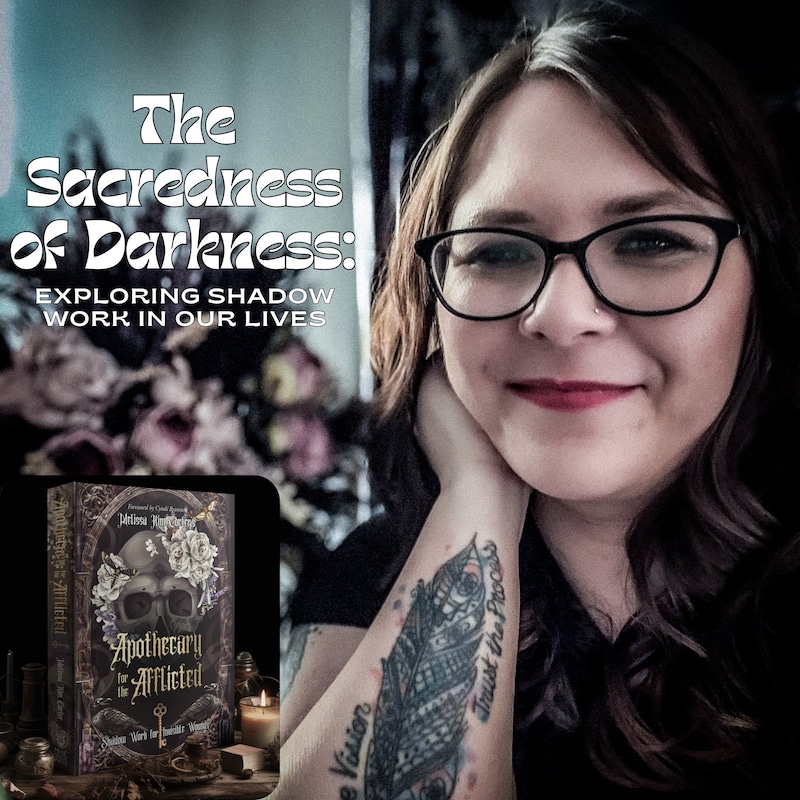
Our guest, Melissa Kim Corter, is a certified death investigator with a wealth of knowledge on navigating the complexities of the psyche, particularly through her unique approach that blends psychology, fairy tales, and forensics.
Throughout our conversation, we explore how embracing our shadow side—not shying away from it—can lead to true healing and understanding. Melissa shares her journey of being drawn to the darker elements of life and how this fascination has shaped her work and writing, including her book, "Apothecary for the Afflicted."
By the end of this episode, we hope to inspire listeners to confront their own shadows with empathy and curiosity, recognizing that there’s much to learn from the depths of our experiences.
Takeaways:
- Melissa Kim Corter's journey into death investigation combines her psychological training with a deep exploration of the human psyche, particularly the shadow self.
- Her book, 'Apothecary for the Afflicted,' creatively blends fairy tales with psychological insights, offering a unique approach to understanding trauma and healing.
- The conversation emphasizes the importance of facing our shadow side, suggesting that true healing occurs only when we confront and integrate these darker aspects of our lives.
- Melissa highlights how understanding darkness can lead to compassion and empathy, transforming our perception of what is traditionally viewed as negative or macabre.
Links referenced in this episode:
You can connect with Melissa on her website:
http://www.melissacorter.com
Or on her social media platforms:
YT: www.youtube.com/c/MelissaKimCorter
FB: facebook.com/melissakcorter
Instagram: @ melissakimcorter
LinkedIn: www.linkedin.com/in/melissa-kim-corter-7bb661199
The music in this video is copyrighted and used with permission from Raquel & The Joshua 1:8 project © 2025 All Rights Reserved. All rights to the music are owned by Raquel & The Joshua 1:8 project © 2025 All Rights Reserved. You can contact Raquel at https://YourGPSForSuccess.Net
Transcripts
Welcome back to another episode of A Warrior Spirit, brought to you by Praxis33.
Speaker A:I'm your host, Darrel Snow.
Speaker A:Let's dive in.
Speaker A:Melissa Kim Corder is a certified death investigator and is trained in traditional Jungian shadow work, the root of shadow studies.
Speaker A:Her decades of experience include working closely with the dark night of the soul and encounters with darkness.
Speaker A:These themes deeply embed her writing as a highly empathetic.
Speaker A:Excuse me, as a highly empathetic and intuitive child, you'd think I never spoke before.
Speaker A:Melissa was fascinated with other people's basements.
Speaker A:Dark, unexplored spaces enthralled her, and her insatiable curiosity towards the hidden dimensions of the mind led to decades of exploring the shadow dynamics within the human psyche.
Speaker A:She's the author of Apothecary for the Afflicted, Shadow work for Invisible Wounds, a creative approach to shadow work through the analysts of dark fairy tales.
Speaker A:Her unique writing styles blend psychology with symbolic forms found in film, fairy tales, and forensics.
Speaker A:And, Melissa, I am going to apologize for that butchered thing.
Speaker A:You think after 160 episodes I could get a recording?
Speaker A:Right?
Speaker A:But I might actually go back and just redo that when you're not on, so I don't embarrass myself.
Speaker A:But thank you for joining me.
Speaker A:I appreciate this.
Speaker A:I'm always fascinated by people who.
Speaker A:My master's is in psychology, and I know your background is in the psychological, so I'm always fascinated by people who are in that realm.
Speaker A:Your intrigue in it is even deeper than mine.
Speaker A:I go into the spiritual realm and the.
Speaker A:And the way our minds connect with the universe, but you actually take it deeper into the shadow side of our.
Speaker A:Of our world.
Speaker A:And, you know, as a.
Speaker A:What, a certified death investigator?
Speaker A:What.
Speaker A:What does that entail?
Speaker B:It's pretty intense, so it's great, great way to begin.
Speaker B:First of all, thank you, Darrell, for having me back.
Speaker B:It's really a joy to.
Speaker B:To be back here with you, and thank you for being open to discussing these topics because I know a lot of times they're a little unsettling or curious for people, and a lot of people tend to avoid going into the depths, into the shadow.
Speaker B:So I really appreciate the opportunity to talk about it.
Speaker B:A death investigator.
Speaker B:So, yeah, it was this crazy sort of like.
Speaker B:I don't want to say it was an impulsive decision because it'd been in the background of my mind for quite some time to get into that side of things, things with law enforcement and forensics.
Speaker B:And I did it from a psychological perspective and When I first started early, actually my very first college courses were psychology and forensics.
Speaker B:And I just couldn't shake it.
Speaker B:I couldn't shake it.
Speaker B:I just was fascinated by the process, by the collecting of evidence by crime scenes and all of these things.
Speaker B:And I also had a deep appreciation for the fact that that was someone's last moment of life.
Speaker B:And I felt like we need more of that.
Speaker B:We need more people who respect and honor people in those transitional experiences.
Speaker B:Some people call that morbid and a bit dark.
Speaker B:I feel like it's just another way to honor the sacredness and in our experiences through tragedy as well.
Speaker B:And so I felt called to become a death investigator.
Speaker B:I'm not.
Speaker B:It wasn't something to do for a job.
Speaker B:It wasn't where I felt like to go through this process and go work for some agency or anything like that.
Speaker B:I wanted an understanding of the material, the experience and the perspectives that come along with that.
Speaker B:And so it was probably one of the most difficult types of training I've ever gone through.
Speaker B:You are basically, you're learning all the different ways that someone dies, you know, at the hands of another, through accidents, through just really tragic experiences.
Speaker B:And you need to know what the body goes through and what it looks like during these different stages of decomposition of the elements, nature, water, indoors, outdoors, accidental, you know, death, suicide.
Speaker B:Like there's, you have to know all of these different things.
Speaker B:And so the training itself is, is quite overwhelming because you're subjected to a lot of material that can be deeply disturbing.
Speaker B:But somebody has to look at that, right?
Speaker B:Somebody has to look at that in order to bring justice or be an advocate for the people that no longer have a voice in those situations.
Speaker B:And I was drawn to it because I no longer offer intuitive readings or mediumship or that type of work.
Speaker B:But I did for over 20 years.
Speaker B:And so that part of me never went away.
Speaker B:I just wanted to see what it would be like to have the knowledge and mix it with the intuitive, the impressions and the sensations and the things I would feel and to, to kind of just go through that process.
Speaker B:So it's about a year long program, but it's never ending because you still have to go deeper into the material and specialize in certain segments of it.
Speaker B:But that in itself, it was, was just the wildest crazy experience.
Speaker B:Now a death investigator themselves, it's weird territory because a lot of people, this is kind of confusing, they feel like, well, doesn't law enforcement handle that?
Speaker B:And so the death investigator actually falls underneath the pathology department.
Speaker B:So the medical, the Pathologist, they're going to be the ones that would employ or have the death investigator.
Speaker B:The way that I kind of explain it to people is that when there is an incident, a situation, whether it's a natural death or otherwise, the law enforcement is responsible for the scene to kind of figure out what went on and who's responsible.
Speaker B:But the medical office, the pathologist is responsible for the body, the care and the nature of tending to that body in a respectful way.
Speaker B:So they're the ones that are going to determine the manner of someone's death.
Speaker B:The law enforcement might look at more of the cause as far as, again, who was involved, what happened.
Speaker B:But it's more of the medical side and putting together the pieces and patterns of the situation to kind of understand what's happening with the body, what stage it's in, what could have happened.
Speaker B:So you have to study ballistics, you have to study blood spatter analysis.
Speaker B:You have to study all of these really interesting things, even the environmental factors.
Speaker B:You have to study the.
Speaker B:The process of.
Speaker B:Even, like, nature and its involvement.
Speaker B:I don't want to go too deep into the specifics because it's a little intense, but it was one of the most difficult and rewarding experiences.
Speaker B:I don't.
Speaker B:I feel like those things don't scare me or make me uncomfortable.
Speaker B:I have an ability to kind of take really difficult, disturbing things and look a little closer, to find some kind of patterns, connections, and understanding in it.
Speaker B:And I feel like once we do that, you bring the sacred back in.
Speaker B:If we just kind of stop at the surface, we don't really get a good understanding of what's happening.
Speaker B:And I think that's really symbolic for a lot of the other work I also do.
Speaker B:But the death investigator process taught me a lot about the value of having people in this world that are not afraid to look closer, that can show up when things are horrific, circumstances, tragic.
Speaker B:And how can you bring warmth and compassion in?
Speaker B:And I think that's important for those of us that consider ourselves to be light workers and healers.
Speaker B:We have a responsibility to go into territory that is uncomfortable.
Speaker B:Because when we do that, and you have to do it in that way, of course you're going to then be that much more of a resource to your clients.
Speaker B:Because if you're afraid, if you're nervous, if you're uncomfortable, you should be.
Speaker B:But being able to kind of walk through that and become more understanding of it, you receive more information, you start to see more, sense more, feel more, and get in touch with deeper elements that we might miss that could be extremely valuable for our clients.
Speaker B:But if we turn away and say, I don't work with that, or I'm too uncomfortable with this.
Speaker B:There's a difference between a boundary and our own limitations of fear.
Speaker B:And I don't know why, but my entire life I have just been placed into those situations and circumstances in ways that I never would have imagined or chosen for myself.
Speaker A:I think it's important for any.
Speaker A:I've been a coach for a very long time.
Speaker A:I've helped people, you know, overcome their whatever and move into their passion and their purpose.
Speaker A:But over the years, and the more I've healed myself, the more I understand that it goes hand in hand with our shadow side.
Speaker A:You can do sub surface level healing.
Speaker A:You can explore your traumas or your things that have caused you the pain to create your perception of the world and the filters you look at.
Speaker A:But it's my experience and the experience I've seen around me.
Speaker A:Until you go into the shadow side, into the dark side, I don't think true healing really occurs in us anymore because we skate over it, we look at it and we acknowledge it and we understand why we are hurt or why we're triggered or why we have these things, but we never go and repair them.
Speaker A:Until we really sit with that dark shadow side and really become friends with it is kind of a weird concept for people.
Speaker A:But to really embrace what has happened and how it no longer empowers you because now you've addressed it, it's like turning a light into your darkness.
Speaker A:You can't, you can't be controlled by it anymore when it's brought forth.
Speaker A:And I think it's really important for people to really get over this aversion to what they view as the macabre.
Speaker A:Because I have a very strong faith in God.
Speaker A:I have a very close bond.
Speaker A:I'm not religious, but I am spiritual and I have my own walk.
Speaker A:But anyone who even has that closeness of God understands that there is good and evil, there is light and darkness.
Speaker A:You know, not to get into the religious side, but Satan didn't come to this earth because he manifested from below, he fell from above, he lost sight with his light and his connection, and he tried to overcome.
Speaker A:And if we don't address that, it becomes problematic.
Speaker A:In our entire life and you've worked in this area, you know, you've explored the darkness, you've seen this firsthand.
Speaker A:It isn't macabre.
Speaker A:It's an understanding of our shadow.
Speaker A:Do you agree with half of that?
Speaker B:Yeah, yeah.
Speaker B:I do.
Speaker B:I know.
Speaker B:That's really great, actually.
Speaker B:I think you articulated that really well.
Speaker B:I think I would just add that even the dualistic nature can be a little tricky, right?
Speaker B:Because even shadow isn't negative or bad.
Speaker B:So even though if we use the example of just some of the things I was kind of talking about, like tragedy and death and, you know, someone losing their life at the hands of another person, it's very normal and easy for us to label those things.
Speaker B:Not only tragic, but to say there was some type of evil or some type of, you know, malevolency going on there.
Speaker B:But really, shadow is a vessel.
Speaker B:It's not even a negative thing.
Speaker B:So the way I like to kind of explain it to people is think of darkness on a spectrum.
Speaker B:You know, there's darkness like the night sky and the stillness of those moments.
Speaker B:If you've ever had that opportunity, whether just even sitting by a window, you know, where all the lights are out in the house and the moon is maybe shining a little, or maybe not.
Speaker B:Maybe it's a dark moon, right?
Speaker B:A new moon.
Speaker B:And it just.
Speaker B:Everything is so peaceful and still and quiet.
Speaker B:And there's a sacredness in that.
Speaker B:And it certainly isn't malevolent or evil or terrible.
Speaker B:But what I do believe, though, is in those moments when we're not dealing with things or if we're not spending time contemplating, reflecting, slowing down, we could, in those moments, all of a sudden have anxiety or fear rise up, which is why some people have a challenging time sitting in stillness, meditating.
Speaker B:It isn't so much that the dark contains these things.
Speaker B:It's sometimes just that we are busy, active, running around, avoiding, you know, dismissing whatever it might be.
Speaker B:And so when we finally slow down and sit in those moments, other stuff starts to come up.
Speaker B:That's one sort of way I position it.
Speaker B:But then darkness is on a spectrum.
Speaker B:So not all of the things that we experience of shadow are horrific and terrible.
Speaker B:Because the other thing that's important about shadow, and I should preface this to say I. I speak about shadow through a very Jungian perspective, which may or may not resonate.
Speaker B:And so if it doesn't resonate, just leave it.
Speaker B:Ignore everything I'm about to say.
Speaker B:But through that lens, it's very specific that the shadow is not a negative force.
Speaker B:It is not about evil.
Speaker B:It isn't about terrible things.
Speaker B:It's this vessel, this containing part of us.
Speaker B:And the only reason it's called shadow is because it's beneath our conscious awareness.
Speaker B:So all of the amazing gifts, skills, talents, Aha.
Speaker B:Moments.
Speaker B:Cool, intuitive insights.
Speaker B:All the things you have yet to realize are sitting in shadow.
Speaker B:So let's say six months from now you have this amazing idea.
Speaker B:You're like, why have I never thought about this before?
Speaker B:You know, I.
Speaker B:It's always kind of been there in the background.
Speaker B:How did this just come to being in this moment?
Speaker B:Those things were kind of percolating in shadow.
Speaker B:So I think that's helpful for those that are nervous or uncomfortable about the.
Speaker B:The language.
Speaker B:Right.
Speaker B:Because when we say darkness and shadow, there's a lot of associations with that, a lot of terminology.
Speaker B:And what I believe is we're often projecting a lot of our unconscious fears and desires.
Speaker B:You know, again, not just good and bad, but a little bit everything onto these experiences.
Speaker B:And so just even talking about the idea of evil, I had this life changing experience that made me see that word and that entire concept radically different than I had before.
Speaker B:And again, I'm not saying that everybody should feel this way or if this is not their relationship to the symbols and the terms and the ideas.
Speaker B:You know, I think we all can just kind of share from our personal experience.
Speaker B:But I was at school and I was kind of given this assignment which was I was working on my dissertation and I'm in this beautiful place.
Speaker B:The campus is just.
Speaker B:There's flowers and it's like perfect weather and it's Santa Barbara and everything is like magical and amazing.
Speaker B:And I'm writing about psychopathy in the shadow.
Speaker B:So I'm like wandering around this beautiful garden.
Speaker B:Like, talk about duality, right?
Speaker B:And my professor had given me a little bit of a nudge to kind of gain more clarity on what it was that I was shaping up for this dissertation.
Speaker B:So I'm sitting outside with my notebook, I'm doing a little bit of free writing, surrounded by the birds.
Speaker B:There's a water fountain.
Speaker B:And I write the word evil on a piece of paper.
Speaker B:And when I look at that word, my intuition sometimes does this.
Speaker B:This might sound a little weird with those of you that have this happen, you'll probably, you know what I'm saying?
Speaker B:The letters kind of rearrange themselves on the page in this strange, intuitive kind of way where I'm not saying it literally happened, but it, like, for a minute it's what it looked like happened.
Speaker B:And I saw the word veil and I went, oh my gosh.
Speaker B:And something came over me in a beautiful way, which is kind of weird how.
Speaker B:How can we talk about evil and beautiful in the same sense?
Speaker B:Right?
Speaker B:Doesn't make sense.
Speaker B:And I think that's the point.
Speaker B:It's not supposed to their experiences.
Speaker B:But when I saw the word veil, everything that I started to kind of revisit in my mind, concepts, theories, people, circumstances that I might have labeled evil in the past, I could see my projection.
Speaker B:I could see a collective projection.
Speaker B:I could see where a bunch of us, myself included, I'm guilty of this, too, would unknowingly take our deepest fears about situations and things and put them on that target canvas, whatever you want to call it.
Speaker B:And what that does for us is it immediately gives us a sense of safety and distancing from the thing that we're judging or identifying or observing.
Speaker B:And so that challenged me to even think about the word evil in a different way.
Speaker B:And I think part of that is also informed by my research and psychopathy and narcissism and serial killers and these really interesting parts of shadow.
Speaker B:We would say it's one end of the spectrum for sure.
Speaker B:And what I've learned is so much about disconnect and how deeply disconnected someone could be to respond in a certain way.
Speaker B:And that, I think, is what we are terrified of, that we could become so separate, in a sense, from what we identify as the soul, our higher self, whatever you want to call that.
Speaker B:And we recognize that in someone else, and it scares us.
Speaker B:So instead of saying it in that way and really feeling the range of confusion and feeling and what it's stirring within us, we go, that's evil.
Speaker B:Because then I can be over here.
Speaker B:I can feel separate from that.
Speaker B:I don't let that into my life.
Speaker B:I don't.
Speaker B:Whatever, right.
Speaker B:And it's really kind of interesting to think of it in another way of what really is scaring me about this situation.
Speaker B:This is it the disconnect?
Speaker B:Is it the, you know, the.
Speaker B:The.
Speaker B:The lack of knowledge or information I have that then makes me think this thing looks a certain way when maybe it's not.
Speaker B:So working with shadow and darkness isn't about focusing on the negative necessarily.
Speaker B:It's more about sinking deeper into this idea of understanding what more is here?
Speaker B:What more can I learn?
Speaker B:Is there something more for me to see?
Speaker B:Now, I also have boundaries when I do this work.
Speaker B:I don't glorify these individuals.
Speaker B:I'm not saying that I represent some type of weird side of the true crime world that is amplifying these terrible things, because in doing that work, it's always in the back of my mind that lives were lost for us to learn about this side of humanity.
Speaker B:But there's enormous value in that.
Speaker B:So Anyway, sorry, it's a really long answer to what you were saying, but I think it's interesting to remember that the shadow is many different things to many people.
Speaker B:And it is kind of like a mirror.
Speaker B:So what we bring toward it is a bit of what we get back.
Speaker B:And if we become more open to exploring that reflection, we'll learn more about ourselves through what we think is someone else's terrible action, attitude, belief, or even position on something.
Speaker B:And I think that's something that is not to get political or any of that, but I think that's something that we are seeing brewing, especially in the United States during this time.
Speaker B:There's a lot of energy, there's a lot of displacement, there's a lot of miscommunication, there's a lot of intolerance, there's a lot of projection, there's a lot of denial.
Speaker B:And we all collectively have responsibility in assimilating this type of shadow material that is unfolding before us.
Speaker B:So we're getting a master class in shadow right now.
Speaker B:I feel like.
Speaker A:Well, I like the imagery that you projected.
Speaker A:That shadow is just the hidden because it is the unknown.
Speaker A:And if it is hidden, it is in the darkness and then, therefore, shadow.
Speaker A:And throughout human history, people have wanted to label and mislabel things they don't understand.
Speaker A:Human nature for our entire creation has been to fear what we don't understand and thereby label it.
Speaker A:And oftentimes we label it as evil or dark or bad because we don't have an understanding of it.
Speaker A:And once you bring it out of the shadow into the light and create an understanding of it, you're less fearful of it, you're less bothered by it, and you're more able to.
Speaker A:Even if you don't agree with it, you're still able to at least find some empathy or compassion or understanding of that which before was misunderstood by you.
Speaker B:Yeah.
Speaker B:Yeah.
Speaker B:That's actually really a really beautiful way to say that.
Speaker B:It's.
Speaker B:You know, we.
Speaker B:We all have these experiences of the unknown in different forms.
Speaker B:And I know for myself personally, there's moments when that has triggered the crap out of me where I might not respond as my soulful, grounded, connected self that might show up in a session with a client or, you know, when I'm feeling safe in my environment and safe in my body.
Speaker B:And so not to judge myself necessarily for those moments, but to say we never know what something is going to trigger and how we're going to respond.
Speaker B:But knowing that potential, I think, allows us to give ourselves a little bit of Grace, when we do notice something being activated and triggered.
Speaker B:And I found that curiosity is such a wonderful way to navigate that whether it's something deeply disturbing and difficult or tragic or something amazing and wonderful that we want to bring more of right into our lives.
Speaker B:Whether it's, you know, something as simple as not simple, but a.
Speaker B:A desire to become more courageous or adventurous or something, those different aspects of your being that can hold that experience are in shadow.
Speaker B:And curiosity is a really wonderful way to break down some of the barriers, to release some of the fear, to settle some of that.
Speaker B:The ego's defenses.
Speaker B:When it.
Speaker B:Because that's really what's happening, is the ego is employing some type of defense.
Speaker B:So when we get nervous, scared, or whether it's conscious or not, we will have some type of defense mechanism.
Speaker B:And so projection happens.
Speaker B:We all do it, you know, in different ways.
Speaker B:We all have some level of maybe denial or, you know, there's a lot of different defenses.
Speaker B:But we can also do it in positive ways too.
Speaker B:Like if you admire someone and you watch them speak and you're like, oh, my gosh, I wish I could just articulate things that way.
Speaker B:I wish I could show up that way.
Speaker B:And you're.
Speaker B:You're projecting onto that person the skills, the things that you wish you had, which means they're there because you're drawn to seeing it in someone else.
Speaker B:It's there for you to develop now, maybe differently than how that person's done it.
Speaker B:And that goes same for, like, some of the really darker shadow qualities.
Speaker B:It doesn't mean that we are manifesting and doing things in a way that is identical to the way someone else is maybe expressing, but there is something there for us to learn.
Speaker B:And if we can become a bit more gracious in our understanding that we all do this, not only can we spot it more in other people by discovering it in ourselves, but that's where I think some of the power comes from in this work is if we think that by focusing on these things and looking at these things that we're creating more of them, then that might be true for that person.
Speaker B:I have never been one to want necessarily to go into some of the things that I do.
Speaker B:And I have.
Speaker B:I was led there.
Speaker B:And that changed everything in my perspective around these darker matters and circumstances.
Speaker B:And what I've kind of learned is that some of us are truth tellers.
Speaker B:And so we don't necessarily want to go explore tragedy or whatever.
Speaker B:But I know a lot of people that are drawn to this work that go, I can't tell you why, but I'll just be driving down the freeway and I just all of a sudden will find myself at an accident while someone's dying.
Speaker B:Or I'll find myself in the situation where I'm in a restroom and a stranger is just pouring out their heart and soul to me.
Speaker B:And I've never seen or met them before, and they're just unburdening their soul.
Speaker B:There's situations and circumstances where we are placed where we're meant to be.
Speaker B:And I think that we undervalue that.
Speaker B:And we.
Speaker B:We seem to kind of glorify it when it comes to this.
Speaker B:The positive, spiritual side of things.
Speaker B:Like, you know, like, for example, helping somebody heal something or shift something or some kind of magical, beautiful thing.
Speaker B:But we don't necessarily value those of us that are placed in circumstances and situations that are deeply disturbing and unsettling, because we, too, have something of value to offer.
Speaker B:And sometimes it's your presence that makes a difference.
Speaker B:And so my life, my perspective, everything shifted when I started to look back at my history.
Speaker B:Because I used to think.
Speaker B:I used to call it my burden of consciousness.
Speaker B:I didn't want to see so much.
Speaker B:I didn't want to feel so much.
Speaker B:I didn't want to know so much about people.
Speaker B:I just did.
Speaker B:I spent many years trying to figure out what was wrong with me.
Speaker B:Because my intuition would tell me and show me and reveal these things that didn't make logical sense until they did later.
Speaker B:And I thought that was meant there was something wrong.
Speaker B:And what I've learned from working with Shadow and accepting more of that part of myself is that I feel so grateful that I've been placed in these difficult, tragic, terrible circumstances so that I could, on some level, make a difference.
Speaker B:Even if it's to bring comfort for 30 seconds before someone passes away so that you're the last face they see so that they're not afraid you might not be able to stop the circumstance of what happened.
Speaker B:But when we really focus on only love and light and we stay away from this whole other dimension of humanity, we're missing out on a whole other level of service that we could be providing.
Speaker B:Now, I'm not saying everybody should work in hospice or law enforcement or be a mortician or.
Speaker B:But there's sacred roles, too.
Speaker B:You know, whether it's in the military, the FBI, whatever, there's.
Speaker B:The sacred isn't everything.
Speaker B:And it's one of the reasons I say that darkness also has invisible light for those of us that are willing to stay with it.
Speaker B:Just long enough for it to reveal itself.
Speaker B:We will find the sacred in the most disturbing and unsettling things.
Speaker B:And again, I'm mindful to say that I'm not trying to find meaning out of tragedy.
Speaker B:I'm not saying that we'll understand and find the silver lining when something terrible has happened, injustice, you know, on all levels.
Speaker B:And I'm not saying that.
Speaker B:I'm saying, though, that despite that, you can be with it in a way that provides other things, create other things.
Speaker B:So maybe through that, a sense of advocacy is birthed right from the tension of the chaos or something of that nature.
Speaker B:So it's not to negate the struggles and the tragedies or to say that we all need to just only focus on those things.
Speaker B:But I feel like we're really lopsided in our culture.
Speaker B:And I.
Speaker B:When I say our culture, I don't mean just you and I, I mean culture of like Western, you know, United States specifically.
Speaker B:We're lopsided in the things that we focus on.
Speaker B:Love and light, only positive thinking.
Speaker B:If any of these things show up, it means you're attracting it because you're not doing your best to think positive thoughts.
Speaker B:And that's extremely damaging.
Speaker B:That type of perspective caused a lot of pain, unnecessary struggle in my life.
Speaker B:When I learned that my gifts, my skills, my talents are just different than what I wanted them to be.
Speaker B:I was able to find the benefit and the value of that.
Speaker B:And they don't need to make sense to other people.
Speaker B:But when I embraced them, I then was able to find the divine even in the darkness.
Speaker B:And it is.
Speaker B:It's changed everything.
Speaker B:It's how, how I see all of that has shifted.
Speaker B:That doesn't mean that I won't suffer or I won't wish it away or have moments of human struggle that are just deeply unsettling and painful.
Speaker B:But that's part of life.
Speaker B:And I feel like when I give myself permission to have those moments, that season of life where things just are collapsing and falling apart, and I don't try to make it my fault or I attracted this or I did it wrong or it's the astrological star placement of whatever, I just get in touch with my humanity.
Speaker B:I feel the presence of the sacred in a different way than when I try to rush out of it, push it away, get rid of it.
Speaker B:And I think a lot of times in the spiritual world of things, in personal development world, we're treating these surface level ways of trying to escape our humanity with fluffy language.
Speaker B:And yeah, so I didn't feel like I belonged in those realms for very long, which is why I just kind of kept following my own path.
Speaker B:And so now it's my intention to create spaces for people like myself that never really fit in to those narratives.
Speaker B:Maybe there's bits and pieces of, you know, spiritual ideas and concepts that I align with and I absolutely believe and love, and they resonate for me.
Speaker B:But there's other things that resonate with me as well in shadow and working with this idea of the spectrum of shadow that don't fit into those narratives.
Speaker B:And it's important that we have places for all of us that value that instead of trying to heal it out of us or make it go away or something else.
Speaker B:So.
Speaker A:But what you've described is a.
Speaker A:What you've described is an actual gift that has been given to you by spirit, God, whatever word, entity, ideation, someone can connect with.
Speaker A:It wasn't just something you studied and became.
Speaker A:It was intuitively inside you, and now you're learning to embrace.
Speaker A:And even in death or darkness, there has to be compassion and understanding.
Speaker A:And thereby there needs to be beings on this earth who have compassion, empathy, and understanding that can work alongside those and bring them, even in death, bring them to the other side in a sense of peace and calm.
Speaker A:There has to be someone who can sit with the macabre and not be, I don't want to say bothered, but not be bothered by it as much as those who are emotionally in it so that there can be some understanding of it.
Speaker A:Our emotions overcloud our judgment.
Speaker A:Our emotions overcloud our rationality or overcloud our thinking.
Speaker A:And so somebody has to be the logic within the emotion to bring clarity and unity into the situation.
Speaker A:And that means people like you and others that I know who work in that realm have to exist.
Speaker A:And they don't just pick up a book to exist.
Speaker A:They are gifted that ability through the grace of God, so that grace and understanding and mercy can happen in all situations.
Speaker A:Not just in the rainbows and unicorns, but in all of the situations.
Speaker B:Beautiful way to say that.
Speaker B:And I do believe that.
Speaker B:I believe that wholeheartedly, that there are roles and identities and skills that on the surface maybe don't look like a gift or a skill or something that you would even want, but they're there.
Speaker B:And you're right about that, too.
Speaker B:Because even though I did choose at a later time to kind of more officially study these things and go to school and, you know, at different stages of my life, different types of education or training or what have You.
Speaker B:I felt the same way very clearly at 5, 6, 7 years old.
Speaker B:And I don't.
Speaker B:I don't know if I shared this story.
Speaker B:I apologize.
Speaker B:So please let me know if I already shared this on the first episode, because it's been a while now, and I can't quite recall, but I remember I was just such, like, a weird little kid.
Speaker B:And I would.
Speaker B:I don't say weird.
Speaker B:And now when I say weird, I mean in a.
Speaker B:In a good way.
Speaker B:Like, strange is beautiful.
Speaker B:And I love all of that.
Speaker B:But I was always drawn to these things, even in my, like, earliest memories.
Speaker B:I remember my father, my.
Speaker B:My mother.
Speaker B:Oh, my gosh, my mother got so mad at my father because he would let me watch, like, psychological thrillers and horror movies and stuff.
Speaker B:And I think the first time I saw the Shining, I think I was, like, five years old, and I was obsessed with, like, Carol Ann from Poltergeist.
Speaker B:And I was drawn to these movies that also had this otherworldly sort of quality to them with children that had abilities or gifts, but they had this burden to them.
Speaker B:And that's how it was often portrayed in these movies.
Speaker B:And I deeply resonated with them.
Speaker B:But I would do things as a child.
Speaker B:Now when I look back, I'm like, was that something I overheard heard, or was that something I intuited?
Speaker B:Right.
Speaker B:Sometimes I. I don't know, but I remember playing this game where I would.
Speaker B:I loved the woods.
Speaker B:My house was surrounded by woods where I grew up.
Speaker B:It also happens to be one of the most haunted roads in the entire country, where they've done movies and films and all sorts of, like, you know, articles and things about this area that I grew up in.
Speaker B:And even now, years later, the research that I'm doing, I'm finding out more and more.
Speaker B:There was this really famous case of this mafia hitman guy called the Iceman back in the 80s or whatever.
Speaker B:And he had.
Speaker B:He had actually killed over 200 people.
Speaker B:And one of the people that he had killed was a friend, my mother's friend's brother.
Speaker B:And so I know that conversation had happened in our house.
Speaker B:I knew that, like, then one of the other victims was found just, like, a mile from where I grew up in the house that I lived in in the woods.
Speaker B:So there's these very dark, difficult, crazy, tragic things.
Speaker B:And a lot of them.
Speaker B:And I would get in trouble because I.
Speaker B:There's one memory.
Speaker B:It's really kind of when I look back, I'm like, what was I thinking?
Speaker B:But I brought an article into school because we used to do show and tell.
Speaker B:And I got in trouble because I wanted.
Speaker B:Like, everybody's talking about their dog or their pet or, you know, my father's this.
Speaker B:My mother's a teacher and show and tell.
Speaker B:And I have this article about how they found a leg in the river down the street from my house.
Speaker B:And I didn't really think about it, but my.
Speaker B:My mother, teacher must have called my mother because I, you know, she had to sit me down and talk to me and tell me these aren't appropriate things for school.
Speaker B:Where did I even get this article?
Speaker B:And I cut it out of a newspaper.
Speaker B:I don't even know how it happened.
Speaker B:I don't remember it that well.
Speaker B:But I remember feeling bad.
Speaker B:I remember feeling like I was wrong.
Speaker B:I remember feeling like I did something that made other people uncomfortable.
Speaker B:And even though my logical mind as an adult now recognizes like that was just a really bizarre manifestation of your interest, not everybody's going to understand them.
Speaker B:That's for you to pursue.
Speaker B:And not everybody has to appreciate that side of life or things.
Speaker B:But it's really damaging when we shut it down ourselves, when we make ourselves wrong or feel bad because other people's responses are showing us that we're making them uncomfortable.
Speaker B:That's another theme around this work that I love to work with and help people recognize there's nothing wrong with.
Speaker B:Your sensitivity is a gift, and it will feel like a burden at times.
Speaker B:It will sometimes make people so uncomfortable that they will create problems and distance themselves from you because of what you're reflecting in them.
Speaker B:It scares them.
Speaker B:And so I felt like there was something wrong with me for a long time because I would do.
Speaker B:I would just say things.
Speaker B:I would be around people and I wouldn't think about what I was saying.
Speaker B:Something would just come out of my mouth.
Speaker B:And I had no idea that I was telling their secrets.
Speaker B:I had no idea that I was exposing some deep, dark thing they were trying to hide.
Speaker B:I just was like this little.
Speaker B:Like this little lantern walking around, holding it up and like, revealing things.
Speaker B:And so it's taken me a lot of years to recognize that as much as we need that, because here's the other thing I think about shadow.
Speaker B:It is a containing vessel.
Speaker B:And the things that are in there want to come to consciousness.
Speaker B:And so there are people like us who help facilitate that, whether we know it or not.
Speaker B:And it's not always comfortable or beautiful.
Speaker B:Sometimes it's painful to say something very honestly and bluntly and not realize, like that other person on the receiving end of that wasn't prepared, wasn't ready, didn't want the world to know that maybe they didn't want to see that or recognize it within themselves.
Speaker B:And so you can also come off like the problem child or the black sheep, right?
Speaker B:I call them the mystical misfits.
Speaker B:There's a lot of us that just also have not felt like we've had a place or a fit in because we have a really hard time sweeping things under the rug.
Speaker B:I have this conversation with my husband all the time.
Speaker B:I have struggled with friendships and different types of relationships and connections throughout the years because I don't do well with secrets.
Speaker B:I don't like them.
Speaker B:I don't.
Speaker B:I have a hard time lying about something because it's on my face.
Speaker B:Like, it just shows, right?
Speaker B:And so authenticity and honesty are my core values.
Speaker B:And the people closest to me, I can be really hard on them because I'm not good at letting things slip by.
Speaker B:I'm not good at going, wait, what was that?
Speaker B:What does that mean?
Speaker B:Like, I'm not someone who can't analyze.
Speaker B:I always read deeper, I always think deeper, whether I want to or not.
Speaker B:And I finally just have accepted that.
Speaker B:And it's changed everything.
Speaker B:Everything.
Speaker B:It has made me a better mother, a better partner to my husband, a better writer, a better friend.
Speaker B:And although it brings all these challenges, it also makes these relationships so rich and connected and safe.
Speaker B:And I think that's something else that is undervalued by those of us who we're not really running around trying to start problems.
Speaker B:We're just not good at letting things stay concealed, if that makes sense.
Speaker A:So absolutely.
Speaker A:And I do have to unconceal this brief commercial break.
Speaker A:So we'll be back in just another moment with Melissa.
Speaker B:I make art as a way of paying attention to change, to resilience and what rises after the storm.
Speaker B:Each pore and mark is a meditation on transformation and survival, reflecting the quiet strength we all carry.
Speaker B:The desert teaches me to endure, adapt and bloom where it seems impossible, where nature meets the cosmos and light finds its way through.
Speaker B:That's where I live.
Speaker B:Explore my [email protected] welcome back.
Speaker A:We're speaking with Melissa Corder and we're today in talking about the darker shadow side of life and all that that entails.
Speaker A:And I am so glad to have a person like you be willing to come on and talk about this part of our journey.
Speaker A:I do want to kind of guide you towards.
Speaker A:This is a book you wrote, Apocrypha.
Speaker A:Did I say it Right.
Speaker B:Apothecary for the afflicted.
Speaker A:Apothecary, yeah, apothecary for the afflicted.
Speaker A:And tell me what this book is about and describe what apothecary means, since I can't say it.
Speaker B:Sure, no worries.
Speaker B:So apothecary.
Speaker B:So it's apothecary for the afflicted, shadow work for invisible wounds.
Speaker B:And the entire book is all about different ways of working with the shadow.
Speaker B:There's personal stories, there's examples, there's journal prompts.
Speaker B:There's a lot of the different perspectives and things I've been sharing here.
Speaker B:You know, today are also, you know, the concepts and things that I wrote about in this book.
Speaker B:But one of the other unique things about this book is every chapter has a old school dark fairy tale associated with it.
Speaker B:And I teach people how to symbolically analyze these fairy tales so that they can find themselves within the narrative, within the experience.
Speaker B:And this has brought so much connection and healing and understanding to my clients by.
Speaker B:By being able to have a creative way to work with the shadow, to work with the parts of themselves that they're not comfortable with, that they are learning to embrace.
Speaker B:And so the dark fairy tales, when you learn how to read them and kind of walk through the different stories and symbols, will help reflect qualities within yourself and help to bring them to consciousness.
Speaker B:And so by, by doing it in this way, we're actually working with that ide projection in a healthy way by projecting ourselves onto the fairy tale with the protagonist, or it might be the creature, like the wolf in the story or something else.
Speaker B:And as we do that, we learn more about ourselves.
Speaker B:We have intuitive impressions that come through.
Speaker B:We have memories that pop up and surface.
Speaker B:We have new ways of seeing things.
Speaker B:And that's part of shadow work, is bringing things to consciousness, but also in a way that helps us to break things down.
Speaker B:Obstacles, barriers, resistance, you know, traumatic moments and events.
Speaker B:We start to assimilate all of those things that sit in shadow.
Speaker B:And sometimes they are our obstacles and our blocks, and other times, their talents and skills, things like that, that this energy that wants to be liberated so that we can use it.
Speaker B:And so the dark fairy tales are a wonderful way to work with this energy creatively and safely.
Speaker B:And so I chose my.
Speaker B:Some of my favorite tales, I did a retelling of them so that they have the intensity in.
Speaker B:And I also teach people in this book how to write a darkness journal or how to use a darkness journal.
Speaker B:It's really important that we have this container for ourselves that helps us hold Things that are really difficult and intense because we all have intrusive thoughts, we all have some type of compulsion, we all have dreams or nightmares or things we don't understand.
Speaker B:And we're not taught in our, again, Western culture, specifically in the United States, we're not taught how to hold these experiences.
Speaker B:We're taught that they are pathological and that we need to medicate them away.
Speaker B:And so my perspective is these are experiences that we get to work with creatively and intuitively so that we can learn something about ourselves.
Speaker B:And.
Speaker B:And usually as we do, that there is this amazing freedom, this liberation that comes with it.
Speaker B:And you no longer feel like there's something wrong with you.
Speaker B:Instead, you realize these are opportunities for you to tap very deeply into this creative well of potential and use that energy, which is really your inner power, and to use it differently.
Speaker B:And so this entire book, that's what it's all about.
Speaker B:With, again, snippets of my personal stories, client experiences and journal prompts, exercises, things that you can use right away and you can go as deeply into it as you wish, or you can kind of stay on the surface a little bit and feel more comfortable, but to revisit it over and over and over again.
Speaker B:And I'm very proud of this book, really, really proud of this book and the people it's helping.
Speaker B:And I'm so grateful for Dr. Cindy Brennan for writing a foreword, and Dr. Stacey Shelby also wrote a foreword.
Speaker B:And just amazing women supporting me on this journey.
Speaker B:So I'm incredibly grateful for that.
Speaker A:Anytime we can find that what we once considered a detriment to our lives is now actually helping many other people in their own lives.
Speaker A:It brings great joy and peace and comfort into our soul.
Speaker A:Because you are not wrong, many people who have any type of gift that looks outside the norm of what society says you should have try to hide it, try to downplay it, try to consider it a why.
Speaker A:Why me?
Speaker A:Why me?
Speaker A:Why is this?
Speaker A:Why am I the one carrying this burden when in fact it's preparation for helping so many others in the future?
Speaker A:And you did that as well.
Speaker A:My beautiful darkness.
Speaker A:Gifts from the Dark Goddess.
Speaker A:I know that you're sort of filled up with this already, but I do know that it will come out again in 2027 and beyond.
Speaker A:So explain what this is or was.
Speaker B:Sure.
Speaker B:So this is something I do.
Speaker B:It's an annual offering, and every year it's a little different.
Speaker B:I add some more to it.
Speaker B:But it's basically you fill out a questionnaire.
Speaker B:So first, when you purchase the product, it's a customized analysis, and it's being able to work with darkness and shadow in a beautiful way, but it's tailored to you.
Speaker B:So once you fill out the questionnaire, which gives me certain information to work with, I'm able to then take that information and which includes some of the ways that you answered questions, some of the core intentions you have, your birthday, different elements that I then sit with.
Speaker B:And I choose a dark fairy tale for you to work with for the year.
Speaker B:I choose a dark goddess for you to work with for the year.
Speaker B:And then I provide other pieces of information in there.
Speaker B:So there might be, like, different shadow aspects, things to look out for, things to work with, the potential of that.
Speaker B:And then what I do, there's different levels to this offering.
Speaker B:So the first one is basically a PDF that you receive with all of that information, and I type it all in there.
Speaker B:So this isn't automated.
Speaker B:This is not like a AI thing.
Speaker B:This is me doing the work, the analysis myself and putting it together for you.
Speaker B:And then you receive that.
Speaker B:The second level, or the second offering is you get the same thing.
Speaker B:You get the analysis and the.
Speaker B:And the report, but then you get an additional recording where I also go through a different.
Speaker B:Every month of the year, I'll go through and kind of give you a brief overview of what that looks like with different cards that I pull for you for each month that tie into your analysis and how to kind of bring your analysis throughout the year.
Speaker B:And then the third opportunity, which I don't know if I'm going to keep this or not next year, in 27, when I do it is all of those things, plus a private phone call with me to kind of go deeper into exploring these topics.
Speaker B:If you have questions, you know, we talk through things, things of that nature.
Speaker B:So, yeah, that offering is closed for 2026.
Speaker B:I will have it again for 2027.
Speaker B:I usually open it around the month of November, October, November of that year, for the coming year, because it takes me some time.
Speaker B:So if people purchase it in October, November, I have it ready for them by January 1st.
Speaker B:And it's really been an amazing and fun experience.
Speaker B:It's deep, but it's creative.
Speaker B:And I've gotten so much feedback from a lot of the people that have purchased it.
Speaker B:They were just shocked.
Speaker B:Like, some of the things I had chosen for them, how aligned it was.
Speaker B:I give them different retellings of the fairy tales or the dark goddesses, but then I show them the patterns, the qualities of that.
Speaker B:In fact, something I'm really proud of.
Speaker B:I haven't told anybody really.
Speaker B:I haven't put this out there yet, but that the path of the Dark Goddess work is.
Speaker B:It's something I've been working with for a long time in different ways and I just had it approved where now it's going to become a course with the SHIFT Network.
Speaker B:And so I am going to be doing a Dark Goddess program with the Shift Network in March.
Speaker B:So we haven't advertised it yet.
Speaker B:We're still kind of going through the putting the pieces together.
Speaker B:But I'm really excited about that because my last program with SHIFT was incredible.
Speaker B:We did the Alchemy of Fairy Tales, which this book is exactly what that program was all about.
Speaker B:And now we're going to be doing the Dark Goddesses for this next Shift Work Shift Network program.
Speaker B:And I'm also in conversation with some other, let's just say, amazing organizations just like SHIFT that might be taking this on as well in 2026 and 2027.
Speaker B:I can only share more once we have that finalized, but I love this work.
Speaker B:It's life changing.
Speaker B:It's creative and fun.
Speaker B:So it is a. I know it sounds kind of strange to say that something can be creative and fun when there's also trauma, tragedy, impact.
Speaker B:But again, I don't think we can necessarily always stop everything we're going to go through in this life experience.
Speaker B:But I do think we can work through it in creative ways that allow us to process and assimilate without it always having to be re traumatizing or intense in that way.
Speaker B:There's a different type of intensity that comes from the creative part by looking at things as symbols instead of only symptoms.
Speaker B:And that's a big part of the way that I apply shadow work as well when I work with these experiences and programs.
Speaker B:And everything I'm doing really is kind of centered around that using creativity as a tool to help people navigate these things.
Speaker B:Whether it's something you've gone through or you're drawn to this material too.
Speaker B:And maybe one of your biggest struggles is embracing these this side of you and letting it be what it needs to be.
Speaker B:It doesn't have to be your career, you don't have to be an entrepreneur, but you might just be drawn to these things and feel bad and guilty about it.
Speaker B:And yet it's interesting because statistics are showing that women are the largest consumers of true crime content and material.
Speaker B:But women now are also becoming a higher percentage of women in these fringe sort of roles like law enforcement, FBI, medical, like all of these areas because they can bring their empathy, their intuition, their compassion, their warmth into these places.
Speaker B:And one of my reasons for using the dark fairy tales is that is exactly why I think a lot of us are drawn to true crime, because they are our modern day dark fairy tales.
Speaker B:And there's a danger in stripping away all of the humanity from our stories when we take out the death and the dismemberment and the tragedy and the.
Speaker B:From all of those stories.
Speaker B:And we like, sanitize them in this weird way.
Speaker B:We're missing this other dimension of life and all of us intuitively sense this.
Speaker B:And so we look to the real life stories now that are unfolding because we know we're meant to have all these ranges of experience, not just positive, not just love and light, but this other dimension of experience.
Speaker B:And when we hold all of that with compassion, we.
Speaker B:We can bring more understanding and resolution into those depths of experience instead of just trying to wish them away or to act like they don't exist or talk people out of focusing on those things.
Speaker B:So it's important that we learn to those of us that do feel called, because again, I think we all have different types of gifts.
Speaker B:And if you don't resonate with this, that doesn't mean you're doing something wrong or that you're denying it.
Speaker B:You just may not feel called to explore that.
Speaker B:And that's actually really beautiful.
Speaker B:But if there's resistance there, that's something to explore.
Speaker B:And that's kind of how I usually tell the difference.
Speaker A:So let me ask you, because we're coming up on the hour.
Speaker A:Let me ask you, what do you want Melissa Quarter's legacy to be?
Speaker B:Hmm.
Speaker B:Yeah.
Speaker B:You know, it's such a.
Speaker B:There's so many things.
Speaker B:There's so many things.
Speaker B:What do I want my legacy to be?
Speaker B:You know, I think it's what's coming to me is to share one little statement that my professor gave me that ended up leading my entire dissertation process and a lot of the work I'm doing and a lot of the uncomfortable, challenging aspects of it all.
Speaker B:And his statement was encouraging, and it was, melissa, deepen, don't solve.
Speaker B:And I just, I feel like I want people to kind of recognize that we don't need to fix everything, we don't need to solve everything.
Speaker B:But if you deepen, if you let yourself kind of sink a little deeper into whatever it is that's happening and become more curious, it'll change your life.
Speaker B:It'll change the way you see things, how you relate to them.
Speaker B:It's also reframing intimacy in a different way.
Speaker B:And I think, and that's really important to me too, because I feel like a lot of people, they hear that word and they think of this intimate relationship or sexuality or something like that.
Speaker B:And although that can be a piece of it, of course, shadow work is intimacy work.
Speaker B:It means I'm going into these places, into these experiences and being really vulnerable, really seen, exposed, open beginner's mind, letting go of what I know, letting go of certainty.
Speaker B:And that is frightening, which is why intimacy is so scary for people, because you're so vulnerable in and seeing into another, whether for better, for worse, or different types of experience.
Speaker B:But if you can do that and trust that the sacred is in that as well, it'll change the way you view everything.
Speaker B:So if I could somehow attach all of that to my legacy in any form, I would be very proud.
Speaker B:I am very proud if it's helped just one person.
Speaker B:Like, my job is done.
Speaker B:So I feel like I've done that because I help myself with it.
Speaker B:And so if that helps others as well, even better.
Speaker A:Well, I appreciate you coming back and sharing this side of your journey and your story with me.
Speaker A:I'm always fascinated by it and I'm sure down the road there'll be more opportunity for us to do it again.
Speaker A:So I appreciate you.
Speaker B:Thank you.
Speaker B:And I appreciate you and thank you for having me back and thank you for the work that you do in the world, too, because we need more truth tellers and storytellers and people with these platforms that are helping those of us get out into the world and share.
Speaker B:It's really important work.
Speaker A:I appreciate that.
Speaker A:And if you'd like to get in contact with Melissa, you can do so on her her website, melissacorder.com and also on her social platforms, YouTube, Facebook, Instagram and LinkedIn.
Speaker A:And as always, thank you for joining us on this edition of A Warrior Spirit.
Speaker A:Be sure to like or subscribe so you catch all the episodes.
Speaker A:You can tune in on all the major platforms as well as on Roku via the Prospera TV app.
Speaker A:And remember, the journey is sacred.
Speaker A:The warrior is you.
Speaker A:So be inspired, be empowered, and embrace the spirit of the warrior within.





