Shownotes
What happens when the interviewer becomes the interviewee?
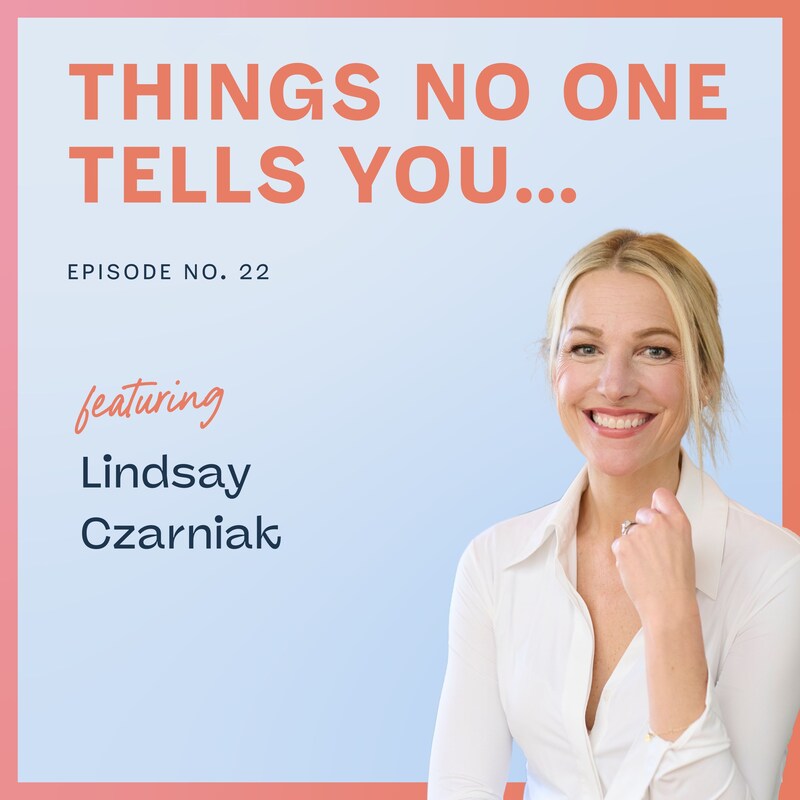
In this behind-the-scenes episode, Things No One Tells You producer Ashley Dickson-Ellison turns the mic toward me for a candid Q&A. Ashley asks me some audience questions including how the concept of TNOTY came to be, who the women are behind it, and what imposter syndrome really feels like when the cameras stop rolling.
From the Super Bowl to family life, Ashley asks me audience questions about the moments that have had an impact on me. I share a little bit about what I’ve learned about confidence: it isn’t pretending to belong. It’s daring to ask.
What You’ll Hear:
- How Things No One Tells You was born (03:25)
- Lessons from women supporting women in media (08:10)
- Why asking questions is a superpower (14:00)
- Parenthood, purpose, and giving back (24:30)
- What’s next for TNOTY (24:30)
- 3 things no one knows about me (52:12)
If you’ve ever wondered how this podcast comes together, or needed a reminder that confidence grows one question at a time, this one’s for you.
Subscribe wherever you listen, and catch full video episodes on YouTube.
You can watch this interview on YouTube: https://youtu.be/P-GRUk7gpdg
For a full transcript and more, check out our blog post: https://www.lindsaycz.com/show-notes/behind-the-scenes-tnoty-22
Connect with the TNOTY team:
Connect with podcast producer and strategist Ashley Dickson-Ellison on LinkedIn or Instagram, check out her Unabridged podcast, or learn more about Unabridged Digital Media Solutions through Ashley’s website ashleydicksonellison.com.
Connect with brand manager and strategist Sarah Walsh on LinkedIn or Instagram, follow her on Substack, or learn more about Next Era Influence through Sarah’s website nexterainfluence.com.
Connect with audio engineer and video editor Samantha Archuleta on LinkedIn or Instagram, check out Something More Human, or learn more about Sam’s audiobook narration and production services here.
Transcripts
[00:00:24] And that's where we were gonna pull them aside. And I vividly have this. Memory of going into this event where it was all these general managers from different teams, and I just felt like I was a fish out of water. I wanna belong here. I don't know that I do like I'm wearing a suit, probably, but I'm not, I don't know.
[:[00:01:07] And this week it's gonna be a little bit different 'cause we're taking you behind the scenes, and I'm so excited. You guys have been so great about sending in some really interesting questions about things No One Tells You. What is the story behind it, et cetera? So we thought, you know what? Maybe we just do an episode dedicated to a little Q&A.
[:[00:01:47] So, a reminder to subscribe so you get to listen to all of those, but. I also wanted to note that this weekend was really special. What I wanted to share was that we went down to Washington, D.C. Most of you probably know I'm from Virginia, so that's basically where I consider home. I lived there for several years, covered sports there, and we went back to the Blue Hope Bash, and it was.
[:[00:02:30] I decided to honor Melvin and myself, which was so kind and amazing to be in that room. But we had our kids there with us, and it's the first time that we've ever received an award together, which was awesome, but that our kids were able to kind of see something like that and understand, I think, the power of the ability to give back and working to give back and what that can look like.
[:[00:03:09] You know, and it's a big deal at this age. But it really made an impact on them, and I thought that was really cool. And I'm hopeful that maybe one day, when they look back, that will be one of the memories that they have that helps 'em realize, like, Hey, I can do that too. So there's that. Okay.
[:[00:03:43] So today you guys are gonna meet Ashley Dixon Ellison. She is amazing. She has her own podcast. It's called Unabridged, a book podcast, which is actually celebrating its 300th. Episode in November. So the girl knows something about podcasting in a real way. She runs her own podcast production and strategy business, which is so awesome, on a Bridge Digital Media solution.
[:[00:04:25] And Ashley, by the way, is a terrific interviewer. No shock. She has her own podcast, but I hope you enjoy this Q&A. Thanks for your questions. Enjoy.
[:[00:04:36] Lindsay: That sounds nice. You're good at that.
[:[00:04:47] We are so excited to talk with our beloved host of things. No One Tells You or TNOTY, as we like to call it. Yes, Lindsay Czarniak
[:[00:05:15] And accomplished podcasts are on your own, in your own right. I love learning from you, so.
[:[00:05:21] Lindsay: Woo-hoo.
[:[00:05:38] So we have some questions from the audience, and just wanted to open up this way of doing things, and this won't be our only one. So if you are listening today and you're like, oh, we have questions, go ahead and send 'em to us because we would love to hold on to them for our next Q&A
[:[00:06:06] Ashley: I love that idea.
[:[00:06:29] But I think that's been really cool. And it's been really awesome to get to know everyone because we are from all different areas of the country, too. So I joke that I feel like I've known Ashley forever and that maybe we should really be living on the same street. But she's in South Carolina.
[:[00:06:50] We are both moms. Our kids are very similarly aged, and so we've been getting to do a lot of those milestones together, which means a lot. It is very helpful.
[:[00:07:02] Ashley: Yes. How random, and they're both in sixth grade this year. So we have, yeah,
[:[00:07:06] Ashley: We crossed the middle school, John. So shout out to Bridget Ura, who just did the last episode, but I was behind the scenes on that one. But taking avid notes while she was sharing different things to do with our middle schoolers. So
[:[00:07:21] Ashley: Lots to learn there. So one of the questions is, what is the story behind?
[:[00:07:32] Lindsay: Oh, that's a good question. Right out of the gate. So, somewhere along the line started realizing, you know, there are all these things, and covering sports, I think, is probably where I first started realizing it. But certainly just through life experiences, you know, like talking to athletes and getting to know their stories sometimes, whether it was like in prep that I was doing for sideline reporting or sports center days, or really whatever it is, when you have an opportunity to get too a deep dive into someone and their story.
[:[00:08:25] Oh yeah, it was great. I took this job. But listen, the thing no one tells you is that dot dot dot or, you know, oh, we, we went here for a trip. The thing no one tells you, though, is da. Like, you can apply that phrase to so many different things. And I think, what are we really saying when we're saying the thing no one tells you is the real story that no one's necessarily gonna talk about is, and the real story.
[:[00:09:19] No matter what, there are these things that feel hard to talk about because maybe we're embarrassed to bring them to the surface because for whatever reason. And so I really think trying to have those conversations is so powerful and can just open doors if we do it in. A thoughtful manner, you know, like what are we scared of?
[:[00:10:01] And she was such a wonderful, safe space and person to talk to about it because she was so honest. And I just found from that conversation and then subsequently others on other topics that. Usually, those are the kinds of talks where people are like, Ohh yeah, let me, you know, so really long way of saying, I think that when we connect about the things no one tells you, it's a go.
[:[00:10:39] Ashley: Yes. Yes. I think it's been so interesting to see the guests come and share because what we have found on the backend of things is that there are a lot of through lines that we did not anticipate, of what people share from different industries, connecting to just life experience and being human, and how those things kind of transcend some of these different industries.
[:[00:11:23] How do you break through that once you know that, imposter syndrome?
[:[00:11:46] Because I think you're right. That is something that's come up surprisingly often in our conversations you've had with people so far.
[:[00:12:07] You can and should always ask questions. And what I mean by that is like when I think back to my very first imposter syndrome that I can remember in my career, and it's funny because now that I've interviewed a ton of people about this, some people say they don't experience it or didn't experience it at a debilitating level until they really made it to the place where they wanted to be.
[:[00:12:48] I was covering the Miami Dolphins in Miami, Florida, and we were at the Super Bowl. One year, our team, which I worked with, was basically embedded with the Dolphins because our station was partnered with the Dolphins. So that was an awesome setup to have, and actually,y people that are looking for like career advice, I always say if you have an opportunity and if you're going to look at local stations, if there are sports partnerships, it's amazing.
[:[00:13:35] And it was just because I still felt so new. And that's. Space. You know, I've told people before that I started in news, and so going to sports, I had people in Miami that were like, we know that your background's news. Come here, and we're gonna teach you everything you need to know. We're gonna give you the lay of the land.
[:[00:14:18] And sometimes when you feel, and you know that you are in the middle of, big opportunity, but you're not prepared to meet that opportunity, right? Like that's always something that I'm like, okay, preparation is so key just because. If you do the best you can to be ready for a given situation, then really all you can control is just being in that situation and letting it ride and letting God do the work.
[:[00:15:10] But I really think what I've learned along the way that's helped me most is. Finding and not being scared to ask questions. Like, Hey, there's, there's an art to it. Like, if it's something that, you know, when I transitioned to sports, it was like, I feel like I should know a lot of these things that I'm asking, if I'm at the level where I am right now in sports.
[:[00:15:48] I think otherwise it's just like, you know, certain times when you're given a big opportunity and I'm like sitting on a desk somewhere and you're anchoring or talking to someone who's whatever type of hall of famer and you're like, okay, this is so amazing and you're trying not to, you know, pinch yourself, but then you're like, do I really belong?
[:[00:16:12] Ashley: Yes. I love that, and I think it really connects to, first two things that are coming up for me. Yeah. One is what you just said about the things everyone tells you, and I think that what I love about what you're doing in the interviews is just that it lowers those barriers and makes it so that people feel more connected.
[:[00:16:47] And I think that's really comforting for people, and inspiring. So I love that. But it's also the other thing I was remembering is when you and I first met in person, Lindsay. The first day we got together, we were at a conference and we had not signed up for this awards show because we weren't sure if we weren't.
[:[00:17:17] We like didn't follow the procedures. And you were like, let's just go see. And I love that we went up to the table, and you were so kind, but you were also like, I'm so sorry we did not follow the proper procedures. But I'm just wondering, is there any way that we could get in and hear some of these? Yes.
[:[00:17:54] Ask the question. Yeah, say the thing, give it a go. And I think. By doing that, we got to do something really cool that we otherwise would've missed.
[:[00:18:02] Ashley: The worst that could have happened was they would've said, No, I'm sorry you didn't register. And so that moment of like, what were the stakes there?
[:[00:18:10] Lindsay: You're right. And there was a lot that came out of that, watching that award show, because I remember vividly the man who stood up, and he was like talking about his wife and his family, and I don't know. So yeah, there were things that I still think about. But what's funny about that is.
[:[00:18:44] But it's like if you, all you can do is really right. Be your authentic self and just, Hey, here's what I would like to do. And also that sort of goes back to some of the practices that it takes in journalism in general. It's like you're trying to get to. Story you're trying to, you know, Hey, could we, you know, it's, it is interesting that part of it, but yeah.
[:[00:19:23] Ashley: Yeah. And I do think, like you said, I mean, I, it is not that I, same, I don't promote like not following the guidelines.
[:[00:19:50] I mean that even just like the actual physical. Part of being present for someone is powerful. Well, but then also that mental part of just like, you can't be in the room. If you don't ask the questions, you're never gonna have those opportunities.
[:[00:20:17] Something that I've loved for a long time, like I love that part of the craft. But what you're saying there about, ke, sort of not being scared to ask a thing, also in the profession of journalism, it's like sometimes I'll find myself in those situations where you're like, oh my God, this is a golden opportunity.
[:[00:20:53] You know, like I still call my dad. About stuff like that all the time. Like, 'll be like, Hey, because my dad is in the same industry, he was a journalist who covered sports. And it's like, is this okay if I show up here, and what if I, you know, so I know that's a little bit in the weeds, but it's interesting to me that, yeah, you kind of always have that inner voice.
[:[00:21:46] Ashley: It's a balance, right? It is a balance.
[:[00:21:50] Ashley: And being human first. And so there is like chasing the story but also caring about the person. And so, yeah, I think that is a fine line walk. And in fact, that brings me to another question here, which is, you're so good at this. What do you love about being a journalist and interviewing people?
[:[00:22:07] Lindsay: I, that's a good question. Whoever sent that in, I really. Love the live aspect of things. I've also realized that, and when I keep saying that, it's like, I do think for so long you're in it and you're, you know, I came up through local news and then sports. So it's like you're always sort of in this mindset that, like, if you're driven, that it's like, okay, I'm gonna keep going.
[:[00:22:55] Here are the stakes. We're showing you the behind-the-scenes shots. Other than that, type of like, broadcasting piece of it, I love, I really love the reporting, like I love talking to the folks involved in whatever this, whatever the scenario is. And I've also discovered that it doesn't just have to mean sports.
[:[00:23:30] You know, it's sort of like a balance thing. And by the way, when I was at ES PN, we worked with this interviewing, John Sawatsky who I adore because he puts you through this like a day seminar, and his method is just really smart and it works. And I think about him in that all the time because.
[:[00:24:04] And I really like that. And I think the reason I love that is because of why we're doing this podcast. It really is. It's like I'm genuinely interested in those things. So I think you know that. This is like natural, I don't know. When I was on a panel earlier this week, my job was to interview Nicole Lynn, who is a powerhouse sports agent.
[:[00:24:44] I was like, I don't have to do much, 'cause her story is so good. But the one thing that I found that I could add value with was like when she would start telling a story, I'd be like, hold on, 'cause I know your book. And don't leave this part out. Like, back up and tell them this. I'm like, Ooh, that's interesting.
[:[00:25:15] or it can be a podcast or a live podcast, you know? That was such a long answer. This is my problem. I've become long-winded and I
[:[00:25:30] Because I think a lot of times, for audience members, that is what we want to know. And so then having an interviewer who is able to say, Wait, hold on, and then ask those questions is just really powerful. Because, like you said, I think it gets people to the deeper place that sometimes is hard for them in their own.
[:[00:25:56] Lindsay: Well, the art of interviewing, that man John would tell us that, you know, the real beauty is when you can conduct an interview that has an arc, nd he's more talking about if you've got like 15, 20 minutes.
[:[00:26:26] Then what? That's like oftentimes that yields the gold. Like, this is nerdy, but I'm telling you, I am so into the art of the interview. Like whhe, just in case anyone cares. The thing is like when someone. Starts by sort of raising what their expectation of whatever they're talking about was. That's when you're getting them to share their authentic story.
[:[00:27:07] Thing that you hear and then you're like, wait a minute, tell me more about that. And then, I don't know, it's just, it really blew my mind when we did that. And not to say it works every time.
[:[00:27:23] Yeah, and asking that question can really unlock a lot of powerful responses.
[:[00:27:43] But John, I remember when I was getting ready to do one interview on SportsCenter. It was two baseball players who were playing in the All-Star game, and he's like, Good luck with this. I was like, What do you mean? And he's like, they're gonna want you to ask all these questions to check the boxes that you would ask one of those guys on SportsCenter.
[:[00:28:25] We're talking. Really, that became so challenging because you're not really talking a lot about Pearl Jam. Do you know what I mean? But I'm like, I wanna, right. So it's, anyway, I don't know. There are a million ways to skin a cat. I just, do think that's really interesting, and I think at the end of the day.
[:[00:29:00] Ashley: Yes, a hundred percent.
[:[00:29:18] And I think that is where, when you bring in more people, yeah, you get this like more, more three-dimensional view of somebody who might have talked many times about their own thing. But we don't always get to see them talk about Right. All the other parts of them as a person.
[:[00:29:35] Ashley: I wanted to, there, there are so many questions that people have here. Anotherr question is, what is something that no one tells you about being a woman in a male-dominated field?
[:[00:30:07] The less, I think, daunting any of it seems. And look, like now you turn on a television and there are so many women there with the men, except on certain pregame shows. That still drives me crazy. Can I say that? I just said that I, but anyway, I think,
[:[00:30:26] Lindsay: That seriously. We're like, where?
[:[00:30:34] Ashley: It's been shifting. The dynamics are definitely shifting, but I still think it's a valid question. I like, yeah, well yeah.
[:[00:30:44] You are getting into it, but because you have a lot to say, because you know your stuff, and because you really also have a unique sensibility about maybe what someone is going through, because that's. A thing no one tells you about being a woman in a male-dominated field is that it becomes part of your superpower.
[:[00:31:27] And they don't have to be doing the same thing that you're doing. They don't have to be, if you're a reporter, they don't have to be a reporter. It could be an executive, it could be a producer, it could be an associate producer, whatever. A writer, you know, I just think connecting with those people is what helps you both learn from each other's experiences.
[:[00:32:05] A Sponsor is someone who gets in the rooms, like gets in the rooms where the decisions are being made, and can advocate for you when you're not there. And she made a point about making sure that a sponsor and probably also a mentor that you have is someone who is not just more. Really pro company sponsor, and you don't want them to obviously be down in on the company that they're working for or working with, but you want to just be able to have the confidence that someone is going to really look out for your best interest.
[:[00:32:58] You know, you're loving the thrill of the job, like when you're, whether it was sideline reporting or traveling on the go, you know, and doing, hosting where it's like there's something that. Is stressful is sort of, really heavy on my mind. And there was one experience where I remember being in a stadium and a friend of mine, a girlfriend, was there, and I was able to ask her this one question about something that was really stressing me out.
[:[00:33:45] And I'm hoping that in the entertainment sports industry, things are shifting still in a way where it's like the competition between women kind of gets erased. But I've learned a lot about that piece of it, it's like. There are times when it can feel like women are even pitted against each other because there are only limited spots, and you're both great at what you do.
[:[00:34:40] Yeah. I don't know if you feel like that in your line of work, in what you've done.
[:[00:34:59] Yeah. And I think I have really loved that, but I agree with you that it is not always like that. I am happiest and feel best in my professional space, and just as in my space as a human when I'm doing that with other people. But it isn't always; we're not always trained to do that. So I think it is, yeah, trusting that there is enough opportunity for everyone that we all have our own unique and special.
[:[00:35:40] To a certain extent, that is necessary, but how can you pave your way without, you know, hurting other people or just feeling that you have to be disconnected from them? I think that makes a lot of sense. Yeah. So yeah, I really love that idea of just that in our industries, the better we all do, the more space we make for ourselves, not just like one person, but.
[:[00:36:18] And so when I can just stay in that space that it really works well. But that leads me to another. Work-life thing that I know comes up for both of us a lot, which is that we are both moms. Yeah. And so, someone also asked about, I, and I hesitate to even say this phrase, but the like work life family balance, which I know I, I question whether, I don't even like the word balance, but how do you navigate, let's put it this way, on your day to day, how do you navigate or not?
[:[00:36:58] Lindsay: I am horrible at it, and I
[:[00:37:13] Lindsay: I, I love, I just genuinely love.
[:[00:37:47] Getting systems in place and prioritizing my son and making sure that it was good. And I felt like at some point, a couple weeks in, I was like, oh my God, I fell off. Like I'm not, I don't have this connection right now with like, what I, it used to be this like, happy sunny little elementary school, let's pop in and do library duty and all that stuff.
[:[00:38:37] You know, weekend day trips into the city, 'cause Washington is right there from Virginia. So we would just hop on the metro and go. And I, so like that's kind of what I saw modeled, and that is what I kind of, I don't wanna say like set the bar, but. I love doing that kind of stuff with my kids. And sometimes I also think like you have to just give yourself grace, and like it becomes that you're just sticking all that in and you're trying to do all the things.
[:[00:39:40] It then becomes a lot easier for me to get all the other stuff done around it. And I don't really know why that is. I bet a lot of people are like that. I think, you know, when I would be sideline reporting and then when I would end up having downtime for like an hour or tw,o and you're in a hotel room, I could crank out the stuff I needed to get done for my kids.
[:[00:40:14] So I'm like, I. I need to create a structure for myself. I have been very upset with myself recently, and I mean like for two days now, because I'm like, there are three things in my life that are really important to like my Lindsay happiness that I was doing the past year, and they are three things that I have cut out completely for the first few weeks of happening, and I'm just basically a no-show.
[:[00:41:01] Here's the broadcasting side, here's the home stuff, and I also might be doing a certain project elsewhere, right? So it's like, oh my God, I find that it's difficult and I realize, oh my gosh. I have just started playing tennis, is the thing. And then this, I've told you before, I love doing this improv thing, and it's just because I love to stretch that muscle, because it feels like hard work to me.
[:[00:41:38] I say that because also sometimes you're making the choice that like, no, it's more important to be present for this child at this event. Therefore, I can't be there, or, no, this evening is more important because we've got this middle school homework that is a little trickier now, and it's better for me to not be in the class, but I think I could do a better job of speaking up and also leaning on.
[:[00:42:23] And this is probably why I ended up crying in my car in the garage today. So there's that, you know?
[:[00:42:44] I think often we feel, and I think this is true for parents and many other people, that somebody is being let down. Like I can't do all the things, but I want to do all the things, a nd it's hard to choose which thing, and sometimes I just have to remind myself, like. Not a, there's no right choice.
[:[00:43:05] Ashley: I just can't, I can't duplicate myself. I can't be at all of it at once. And so, you know, how can I make space for that? And I have been having the same struggles with the schedule. In fact, I am embarrassed to say, but things no one tells you. I have spent a lot of time yesterday trying to talk with a.
[:[00:43:29] Lindsay: You mean about your schedule?
[:[00:43:47] I think it's also that we have different seasons in our lives, and so. Sometimes it's just trying to make space for the fact that it is chaotic or, you know,
[:[00:44:06] Yeah, maybe that's actually what this kind of comes down to, is like, ca, I, can we work on this together? Here are some things I'm feeling. What can we do? And really, it's about being transparent. And also like, I think I should just say, because this could be maybe. I'm just gonna get something off my chest here.
[:[00:44:43] And they are like, besides my immediate family, like they're the most important things to me. And so now. I need to go back and apologize. And I'm also wondering if there are tips for doing that. Like, what is the best honest thing, right? And not that we turn this into a therapy session, but maybe there's a lesson in that for someone like me, you know, just not letting it get to the point of chaos where you're like flying off the wall.
[:[00:45:21] Ashley: Yes. I think that is exactly in an effort to do all the things for all the people, sometimes there is not enough.
[:[00:45:32] Lindsay: I know.
[:[00:45:46] Functioning, so that you don't fly off the handle, which I certainly, yeah. You had your car incident. Mine was in the closet last weekend. It's fine.
[:[00:45:58] Ashley: And it was not a time everyone was away from the house, unfortunately, but you know,
[:[00:46:04] Ashley: Eventually, my husband finally comes in, and he is like.
[:[00:46:32] Any tips or not about ways that you all handle that as a family?
[:[00:46:55] Although I've realized that's really something that I can do more proactively is like, get it set. So he. He sees it in front of his face because what people don't realize the thing no one tells you, he's talked about this, is like the amount of stuff that he deals with when he gets into work. It is impossible for anyone to keep up with it.
[:[00:47:31] So we do that in the prep, and then we really try to prioritize dinner time together as much as we can with our whole family. And we're, you know, it's just like anyone that tries to do that, of course, there are nights where we just can't, and one kid is flying off to some activity and vice versa. But we really try, and even though sometimes it feels like you're just sitting there and you're not talking specifically about anything, or it's not like we're sitting there asking like, okay, what's your high and your low?
[:[00:48:21] You know, to get away is a little foursome, but then also seeing family, because one other thing that I think is hard is that our families both live away. So it, you know, that can be tricky because you obviously really wanna see family, so yeah.
[:[00:48:42] Lindsay: Thanks for asking. My kids during COVID, and we were homeschooling, and I would really try, like in the morning, to get them into this school routine. And we were actually like given really good direction, on like, hey, here's what we want you to be doing with the kids, et cetera. And, I feel like I started to sneak in a joke of the day so that they would pay attention to me.
[:[00:49:18] And so I tried it again, and then it sort of became this like collective thing that I was like, oh, this is interesting. This community is. Is Intuit. Maybe it was just a way for people to all sort of connect, which I thought was really cool. You know?
[:[00:49:34] Lindsay: Ooh, that's a good question.
[:[00:50:02] I'm also a massive Patrick Ewing fan, so I, it's, you know, can I say three? I just did, but so that's kind of where we are, but we're, we love watching the NBA together, and especially since both my kids play basketball, so that's been really fun.
[:[00:50:24] One more rapid fire. Lots of people have questions about everything related to makeup. Do you have just one tip, person? Anything that you could share that maybe inspires you, or like a trick you've learned that you like?
[:[00:50:55] Well. A makeup artist named Deb who works for the Today Show, who I love, who if I've ever gone in to co-host that show or been on the third hour with Melvin, like she's, she just has all these tricks of the trade. And I've worked with a ton of makeup artists and I've loved, like I Ds, pn. They were so good.
[:[00:51:33] My grandma, who's no longer with us, but she would always talk about, like, rolling your face back up. And her skin looked so good. Like for so long. She was in her nineties, and I really value that. I think it's like if you can put some cold on your face, he, you know, you really can help control that.
[:[00:51:55] Ashley: I would love. I would love it. Okay. I'm like, I have this roller that I have never done anything with, and I feel like it's one of those things where somebody said Oh, you should get this, and I got it, and I have never used it, Lindsay, so I will be putting mine in the fridge.
[:[00:52:12] Lindsay: Oh my God. Okay. Three things. No one knows about me. Ohh, this is so tricky. I am a morning person. I love mornings. Like I love a sunrise and an opportunity to just be up before anyone is up. I don't always succeed at it, but in terms of time of day, that's my favorite time of day.
[:[00:52:56] I do not like them if they have bread crumbs in them. Don't like it, don't need it, don't want it. Like, that's just me. I specifically also like Turkey meatballs, so I. I just like that it is baseline. That's it. And also, let's see, a third thing no one knows about me is, I was cut, did not make my high school soccer team.
[:[00:53:42] I really wanted to make it. And when I look back on that experience, I was like, I really wanted to make it, but I didn't want it badly enough to really prep myself in the way that I really should have. So I'm saying that to say, I realized what it feels like if you're resting on your laurels. And that was a scenario where I felt like I was really good at like the rec soccer or whatever, did this, did that, and then I went in for it and I was like, what?
[:[00:54:08] Ashley: I love that. I think, yes, it's good for people to know the times we did not make it. Thank you. Thank you all so much for joining us today. We will be doing this again with Lindsay, so if you're thinking of questions, please go ahead and send them.
[:[00:54:32] Lindsay: Thanks. You're so good at this. This was fun.
[:[00:54:37] Lindsay: Well, that just felt like some free therapy for me, so I hope that didn't, I hope I didn't share too much. But actually, I find it's always helpful to go back, and like when people ask you questions and you're answering, isn't that funny how that self-reflection can really.
[:[00:55:09] Sarah Walsh is our brand manager who supports TNOTY through her business Next Era Influence. Funny story, I have a really great friend who's a sportscaster named Sarah Walsh. So I have to decipher between the two of them on my phone. Also, Samantha Archuleta, we call her Sam Sam is our editing wizard.
[:[00:55:42] My joke of the day. Why did the headphones blush?
[:[00:55:59] Ashley: I actually love that one.
[:[00:56:13] See you next week. Thanks so much for joining me. I can't wait to see you back here next week. Please don't forget, follow, and subscribe to Things No One Tells You. And of course, if you're listening on Apple Podcasts, don't forget to leave a five-star review because that's really what helps people get more.
[:



