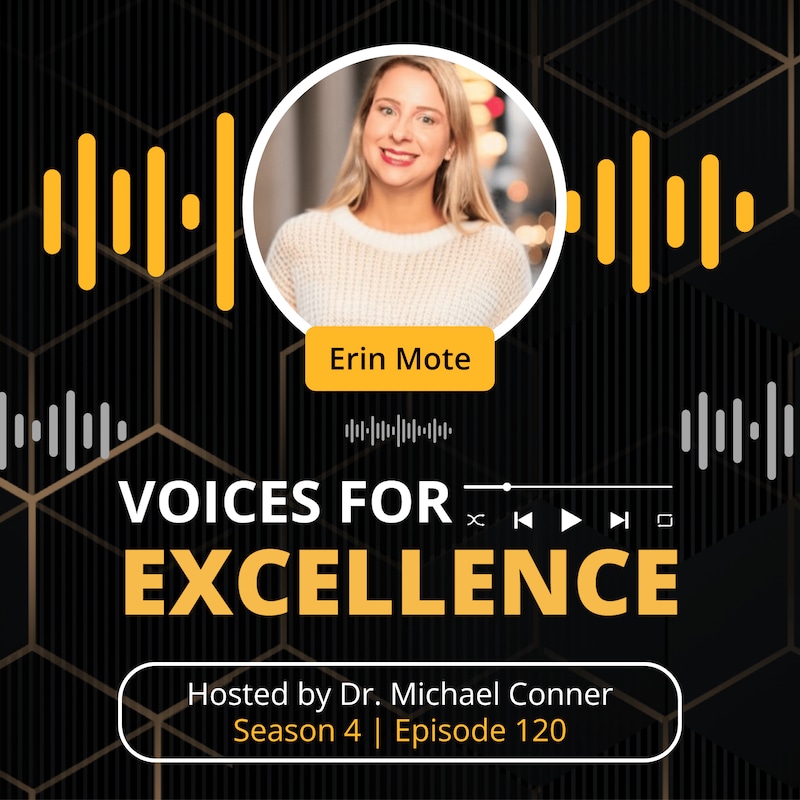
Shownotes
What if AI isn't trying to fit into your classroom — but to rebuild it entirely?
Erin Mote, CEO and founder of InnovateEDU, explores what it means to navigate an arrival technology, one that doesn't fit into existing systems but fundamentally reorders them. Erin leads national and international work on AI literacy, including National AI Literacy Day (March 27th), and she's not here to hype or fear-monger. She's a scout: someone managing both the promise and the peril.
What You'll Learn:
- The difference between arrival technologies (AI, electricity, internet) and adoption technologies (crypto, VR)
- Why AI literacy is as critical in English and science as it is in computer science
- Real examples of AI reducing bias, optimizing bus routes, and screening for dyslexia
- How National AI Literacy Day (March 27) is calling in parents, students, and communities
- Why "do something" is the only response that matters
- Erin's two-word challenge: Do something
- Her song choice: Happy (balancing promise and peril)
Transcripts
Michael Conner: Yes, we brought her on to VFE, we secured her with her busy schedule. It is such an honor to have Ms. Erin, Mote, CEO, and Founder of Innovate, innovate Edu, I'm sorry, innovate edu. And then of course, leading national and international work around artificial intelligence. She's probably on everybody's task force, everybody's advisory board.
Michael Conner: So I [:Michael Conner: And to my audience, please celebrate National AI Literacy Day. Erin's gonna get into a deeper context with that day, but it is gonna be Friday, this Friday coming up March 27th. So without further ado, Erin, how are you?
Erin Mote: Hi Michael. You are first of all, way too kind. I should be starting with gratitude for you and all the work that you're doing in leading conversations, vital conversations in our ecosystem, and I think really doing a calling in of, of folks from across many different silos.
al AI Literacy Day. That's a [:Erin Mote: So mutual gratitude and also that's a lot of hype. I'll just, I'll bring you with me when I go places. How about that?
Michael Conner: Absolutely. And to my audience, I remember when I first met Erin a couple years ago, we were in New York City, Erin. And I'm gonna be honest with you, I was fanboying you, but you would have never known.
Erin Mote: That's so kind,
Michael Conner: man. But Erin, I, like I said, I admire the work that you're doing. You know, a lot of the guidance, a lot of the information that's coming out of Washington, across the country, across the world. Uh, I look to you to get that information. So again, like I said, please, you know, we're gonna just kind of unpack.
Erin Mote: Yeah, let's jump in,
ut National AI Literacy Day. [:Erin Mote: You know. I, it depends what hour it is, to be honest. I mean, 'cause I think when we talk about ai, we're talking about the promise and the peril of this technology. And I think, you know, one of the things, Michael, when I, when I think about sort of where we're at in these conversations is, you know, there's folks who.
promise and the peril. Not a [:Erin Mote: That work. And so maybe I would go with like happy as my song because I think I am happy to see our space responding and leadering in this urgent call to, to really think about what's the future we want. What, what are the types of learning experiences we want young people to have? How do we even expand that conversation to the types of learning experiences, access and opportunity that we know folks are gonna need who might be being displaced by AI right now in the job market?
d this work. But again, it's [:Michael Conner: Absolutely. Erin, I'm glad that you said the song Happy. Right, and, and I always say this to everybody, whether it be domestically or or internationally. I'm happy that. The conversation is happening about ai, the conversation of being able to look at the model differently and to integrate, to attempt to integrate strategically.
n, alpha and generation beta.[:Michael Conner: We can't continue the legacy. We can't continue the archaic model, where now we're living in this technological driven world. I always like to say the 22nd century, but your work at Innovate Edu and many other national roles really is defining AI policy structure. Content awareness capabilities. Now, first, can you walk us through the story and the continued work of Innovate Edu?
Michael Conner: And then second, can you couple this where, how is your nonprofit addressing specific gaps within this educational ecosystem to really transform the learning trajectory for generation Alpha and Beta?
e team we have and what rock [:Erin Mote: You know, I, I think at Innovate Edu, which. You know, we deliberately structured as a house of brands, not a branded house. So folks know our alliances, they know Project Unicorn, they know the Pathways Alliance, they know Ed Safe, ai, and we've deliberately built the organization to have those different brands because what we are looking for at Innovate, EDU is how do we find common ground to work together?
Erin Mote: We have a whole manifesto on the Innovate EDU website around finding the 80% common. Which means like in Uncommon Alliances, which is what we build, you're not usually, it's very rare to get a hundred percent agreement. I'm not saying we haven't ever gotten there, but it's, it's, you know, the number of times I can say we got to a hundred percent agreement across all of our stakeholders is probably, I could count it.
e don't strive for a hundred [:Erin Mote: Um, how do we really think about building trust? Between actors who don't usually sit at the same table, how do we architect experiences to build that trust across policy, technology, development, and practice? And so that's everything from communities of practice that we learn, uh, like we sort of learn and build together with the ecosystem.
Erin Mote: Two things like the ED Safe AI Industry Council to the board that you're sitting on for National AI Literacy Day, which has higher ed and workforce and students and industry. It really is this idea that, you know, we gotta build this connective tissue in order to move the ecosystem forward. And that's a lot of silo bus.
really an organization that [:Erin Mote: So, you know, it's, it's not a common thing to see Josh Hawley and Chris Murphy sitting together and advocating for the same thing. And I think those are places where, uh, we believe we have far more in common in terms of sort of what we need to advance in terms of kids' safety and data privacy. Then what separates us?
Erin Mote: And so how do we find, how do we find that common ground? How do we build that trust? And then, you know. I think we are trying to push people to interrogate the system that we have right now. I just wrote a piece, maybe we can put it in the show notes for EdTech Digest about the difference between an arrival technology and an adoption technology.
Erin Mote: And I find this [:Erin Mote: A hundred years ago. And so that's, you know, this is the type of things that we need to really think about. But arrival technologies also, um, are maximally disruptive to existing systems. Your ability to have access to an arrival technology is often defined by your access to wealth or economic opportunity.
n an existing system. AI is. [:Erin Mote: And so that's something that as we think about the experiences for generation Alpha and generation beta, I think we really need to interrogate the types of learning experiences that we're creating for young people. Um. What does that look like? What does that feel like? How do we think about nurturing and metacognition?
Erin Mote: How do we think about nurturing the ability to work in multifunctional teams? We're one of those teammates is ai, and that's the way I think we need to be thinking about learning experiences. And I just wanna draw for your listeners the distinction that they don't hear me saying schooling experiences.
ersations about learning and [:Erin Mote: And so what does that look like? Um, how do we, how do we think about this idea where we're moving from? What you know to, what can you create with what you know?
Michael Conner: Erin, that right there is probably a five minute keynote response that I think everybody needs to play back. Erin, to my audience, Erin, we use this as a professional learning tool, a synchronous mechanism for them to be able to go back, really customize, personalized to their practices.
artificial intelligence and [:Michael Conner: We got ai. I am like, well, you know. AI is supposed to change the fundamental experience, change the fundamental systems of how the operating model operationalizes itself. Moreover, it's supposed to, as you stated, eliminate those silos to be able to create dynamic expertise amongst organization or stakeholders.
w we're looking at how we're [: th,:Michael Conner: And again, thank you for identifying me as an advisor. I was like, why isn't Erin picking me? Me? I'm not worthy, right? But Erin, you know, I really wanna first enhance my audience capacity so they can join National AI Day, this AI literacy Day, this Friday that's coming up. But first. At his foundational or, uh, his basic level, the rudiments of it, what is National AI Literacy Day?
districts and classrooms can [:Erin Mote: Yeah, I mean we started National AI Literacy Day three years ago and, and it hasn't shifted in the sense that we're still have a lot of communities who have questions around what is AI at the core, and so this is really a day that is part of our larger movement.
Erin Mote: To build AI literacy, um, not just in our classrooms, but really in our communities. So with over a hundred supporting partners, with over 80 events happening across the country in local communities and some signature events, professional development, it really is meant to be an entry point for those conversations around what is AI and how do we build basic AI literacy.
tudents. And I think when I, [:Erin Mote: So there's tons of activities on the National AI Literacy Day website for educators where you. Don't have to touch a computer, you don't have to touch ai. You can think about things like categorization, but it really is about how do we create a day that gives folks an anchor point to a larger movement around AI literacy in our communities.
y, to equip yourself to be a [:Erin Mote: To be using AI in your classroom, you want to be using ai, um, in your schools for the types of learning experiences you wanna create. Again, promise and peril. We're not accelerationist, we're not, we're not doomers. We're really in this scout. We want everyone to be a scout about this technology, to be able to interrogate the promise and peril, and so.
classrooms, and, and we need [:Erin Mote: We need to be doing the same thing with our parents and the same thing with our students. I'm gonna say a hard thing here. I don't think we've, we did that well in social media. We're paying the consequences right now. So I want us to wake up and say on this, we're gonna do it differently and we're gonna do something.
Erin Mote: And that something can be a 15 minute activity in a classroom. It can be joining a professional development, it can be signing up to spread the word about National AI Literacy Day. It's not too late to get engaged, even though it's this Friday. You can still get engaged. You can still be part of this movement.
ay up all year round, and so [:Erin Mote: Infuse this type of learning experience into my classroom.
Michael Conner: Well stated. Right. And I remember, you know, participating in multiple advisory board meetings and that was one of the critical underpinnings that we focused on, that it is a movement. It's not. One day event where we celebrate AI literacy, right?
Michael Conner: But it is a movement, this continuous movement that really catches synergy, catches energy around the country to create coherence. Erin, I really love what you stated, right? And we had multiple discussion points at our advisory meeting with regards to having entry points. For AI literacy around the multiple tiers of the stakeholders within the education ecosystem.
r: IE policymakers, parents, [:Michael Conner: Erin, I really loved how you defined AI literacy, right? It's multi-tenant, it's multifunctional, and it's different from every stakeholder group, but the same, under the same auspice, to create that coherence again, using that word intentionally. Movement, not a day. But Erin, you know, you're, like I said, I, your resume just speaks for itself.
ught leader for now, this is [:Michael Conner: And then two. How are your perspectives from the Forbes Nonprofit Council? Closing gaps from Ideation to Implementation?
e's a lot for your listeners [:Erin Mote: I'll name a couple. Um, and there's some pieces that follow. One is this distinction between schooling and learning experiences. I think if we're really gonna do that, we have to have a calling in, not just of the K 12 and higher ed community, but our workforce colleagues to really think through, you know, what do we want?
Erin Mote: Not just learning experiences to look like, but how do we equip our young people with the types of, sort of continuous opportunities to re-skill retrain and to be like. Lifelong learners. So, and, and that's not just a word, but like what are the systems and structures means and methods that we have to support folks in doing that.
ng to navigate choices in my [:Erin Mote: And so I don't have all the answers and, and you know, in some of my pieces I just wrote a piece, chicken nuggets to chatbots. I talk about the conversations I'm having, you know, with. Boardrooms and with policymakers, and then how I'm having to have those conversations with my own kids. 10 and eight and, and just for folks, I think one of the things about AI is like sometimes people don't wanna say like, I don't know, or I'm uncertain.
and that's the nature of an [:Erin Mote: You know, I think comfortable in that unknown, um, and humble enough to say that. And so I'm really trying to both bring expertise and humility in those conversations. And then the last thing I'll say about that work is, you know. I think it's really important in the space of humility, and I actually just wrote about this, that, um, you know, if you make a mistake or if you don't know something, you live in the spirit of radical candor.
Erin Mote: It's a core value at Innovate edu People often laugh at me that I wrote it into our, our core values like culture of thrift radical candor is right there, but you know, I think. We're gonna make some mistakes in navigating this technology. We're gonna try things because we're brave and we're courageous, and they're not gonna work.
s every sector, and trust is [:Erin Mote: And so those are very human things to say, but I think, you know, we come to this work as humans who are deeply anchored in building trust, building relationships, and that's the way we build those uncommon alliances.
Michael Conner: Yeah. Objectively and subjectively, Erin, one of the best solutionist strategists and technologists in the world.
g to use arrival adoption of [: is gonna have to re-skill by: nce and technologies and the [:Michael Conner: Innovate edu but innovate our ecosystem strategically. And Erin, you know, I, I know you, you go across the world, you know. With policy makers, uh, uh, legislators, educators, students, you know, really leveraging national AI literacy day. But Erin, can you just give my audience some examples of successful integration when it comes to technology and AI within the learning ecosystems so that now we're very intentional to interrogate.
ful integration within their [:Erin Mote: Yeah, I mean, I think the, the thing that I would say is that we are just at the very beginning thinking through what this is going to look like and even the foundational models are, are learning about what it means to learn. So. I also wanna name that, you know, many of the foundational AI models right now are built around task replacement.
Erin Mote: They're not built around learning. And so that's a shift we have to make in our space. And I already see folks leaning in from the foundational models in order to interrogate their own processes and their own. Question. So I wanna draw that distinction for your audience real quick. 'cause I think it's really important.
learning. I want them to be [:Erin Mote: If folks are using ai. To dive deep into a different subject. And so we have some work to do around architecting the technology, the models, and the experiences that we need to have. But let me talk about some of the promising signs. So for, I'm gonna give, I'm gonna give three examples. One, I'm not gonna name the district 'cause I don't have their permission to name them.
ict was leading to selection [:Erin Mote: From humans and they had an educated hypothesis that it's important to keep those humans in the loop and allow teachers and educators and principals to recommend students for those opportunities, but also to potentially look at data. Um. That was, that was masking gender and race and other dimensions of student identity and to say, is this student capable of doing this level of work?
ded from these opportunities.[:Erin Mote: And it was selection bias. And, and then when these educators were confronted with the raw data and had to interrogate their own biases within the system, they dramatically expanded the aperture of who had access to new opportunities. So that's taking an arrival technology and harnessing it for good. So that's one example.
Erin Mote: The second example. Is, you know, a school district who's using this technology in order to be able to, um, make it easier for parents to get their kids to school. So, you know, it, this is a techno, this is a use of AI that is not touching students or, or educators in any way. It's only for administrators, but it's chewing and looking at bus routes to see and traffic patterns and other types of asymmetrical data.
nd um, we're able to be more [:Erin Mote: And then the last one I'm gonna talk about, which I think is really important is, uh, something that's deeply meaningful to me. So our colleagues out of University of Buffalo, in partnership with the National Science Foundation and the Institute of Education Sciences are rolling out a set of tools that will allow every classroom in this country to use AI to universally screen for dyslexia.
Erin Mote: My son, Robert, who's 10, has dyslexia and it took me three years to get him diagnosed, and I am a fierce advocate. Activist educator, you know, like I know all this, I know the system, and it still took me three years to navigate to get him from diagnosis to appropriate scaffold. So I can't imagine what it would be for a parent.
look like if we could use AI [:Erin Mote: It can screen a classroom in less than 30 minutes, and then it invites a human in the loop to. It over identifies kids 'cause dyslexia and, and reading disabilities can manifest in lots of different ways. So it's, so the AI says, we think there's something here, and then a and then an educator comes back in and, and screens those students who the system flagged.
mately I think, will help us [:Erin Mote: And I think that's the type of system approaches that we need to be taking on hope. Those are three good examples that resonate with your audience.
Michael Conner: Beautiful, Erin, because I, I, I think you gave, and, and why I say this intentionally is because we've been, UI we've been seeing, and universally you've seen it, Erin, that equity has been polarized, right.
Michael Conner: And politicized in this context. But the three examples that you provided, roots. It, it, it grounds the word equity obsolete. This polarization or this politicization that Now we're seeing how that word is being utilized into my audience. Those three varying examples define equity without politics, right?
ner: Creates opportunity and [:Michael Conner: And then at the outset, right, the really creating this level set around foundational models where, what I loved, where now we need to really focus on how we're augmenting the learning, how we're scaffolding intentionally within our classrooms. You brought in research around the learning sciences really undergird a lot of my work with regards to the learning sciences and try to integrate that with the system science system sciences as well.
Michael Conner: Erin opportunity and access and what you, what what really got me, whoever that district is, I would love to meet that superintendent. Eliminating selection biases.
Erin Mote: Yeah.
ichael Conner: Woo. That is, [:Erin Mote: That's right. And actually I think there's a vision around this technology that's incredibly bipartisan, so maybe it would surprise some of your listeners to hear that.
Erin Mote: Probably one of the biggest advocates right now, equity. And consequential decision making is Governor DeSantis in Florida who has put forward some of the most well-meaning legislation around making sure that on consequential decisions, whether you have access to a loan, a mortgage, a. Admission to a college or university, that's not a decision that should solely be made by an algorithm.
tunity, we need to be asking [:Erin Mote: To get access in this country to a great education, unfortunately is still, you know, the purview of your zip code in most circumstances. We gotta break that.
Michael Conner: Absolutely. And access an opportunity how we're breaking that resource. Resource allocation. Erin profiled absolutely profound with that last response now.
National AI Literacy Day on [:Michael Conner: Strategic thinking for technology and AI integration in the AC stage of education.
Erin Mote: I'm gonna do it in two
Michael Conner: oh oh oh this. Look, Erin. Erin, you are a true disruptor. I've done this for four years, four seasons. Nobody has done it in two words.
Erin Mote: Yeah, do something.
Michael Conner: Yeah. There we go. Erin, that's a mic drop. Do.
Michael Conner: Something. Absolutely. Just please just elaborate on that.
onal AI literacy. Download a [:Erin Mote: Have this conversation at your kitchen table with your kids or on the softball field with your friends. Do something.
Michael Conner: I love it, Erin, to my audience. Do something. Mic drop. I should just end the episode right now. Erin, thank you so much for coming on VFE.
Michael Conner: Thanks
Erin Mote: for having me
Michael Conner: providing my audience with everything.
Michael Conner: Now, Erin, if anybody wants to get in contact with Innovate edu uh, uh, underscore uh, or download any of your papers that you're writing or just now we're roughly about. Five days away, four days away from National AI Literacy Day, how will we be able to obtain that information?
Erin Mote: Go to ai literacy day.org.
ng in your community, so you [:Erin Mote: There's eight right now. Um, there's 80 events. There'll be more, but. But again, AI literacy day.org. If you wanna get in touch with the work we're doing on, um, ed Safe and Ed safe ai, the alliance that advocates for the safe, accountable, fair, transparent, and efficacious use in education, um, you can check that out on either by going to the ed safe website, you can just Google it or you know, you can.
Erin Mote: Access some of the resources that we're putting out there for school districts and states in particular by going to ai policy lab.org. Uh, there you can get information policies. You should see those as starter dough. Don't copy paste. Really use those as starter dough, but tons of resources for you. Not just around like thought papers, but then like how do you actually use them?
nd then I try really hard to [:Erin Mote: We try really hard to not just share information from us, but share information from this community, this big tent we've built, um, in terms of movement building for AI literacy and beyond.
Michael Conner: Erin, I read a lot of your work, receive a lot of information and updates from your social media pages, what you generate for, you know, the, for Forbes, all of that.
ase. You know, you're really [:Michael Conner: Ideas, interpretations, and creating an intentional equilibrium around AI within the United States and more broadly internationally. So Erin, thank you for coming on VFE.
Erin Mote: Thanks so much. And again, thank you for all of your work on the National AI Literacy Day Advisory Board. We're so grateful to have folks like you who make us smarter about the work we're doing.
Michael Conner: So Erin, what I'm gonna do is take that little piece in the whole, in the whole episode and just use that for the whole. Erin, thank you so much.
Erin Mote: Yeah, absolutely.
Michael Conner: Bottom of my heart. And on that note, everybody onward and upward. Have a great evening.