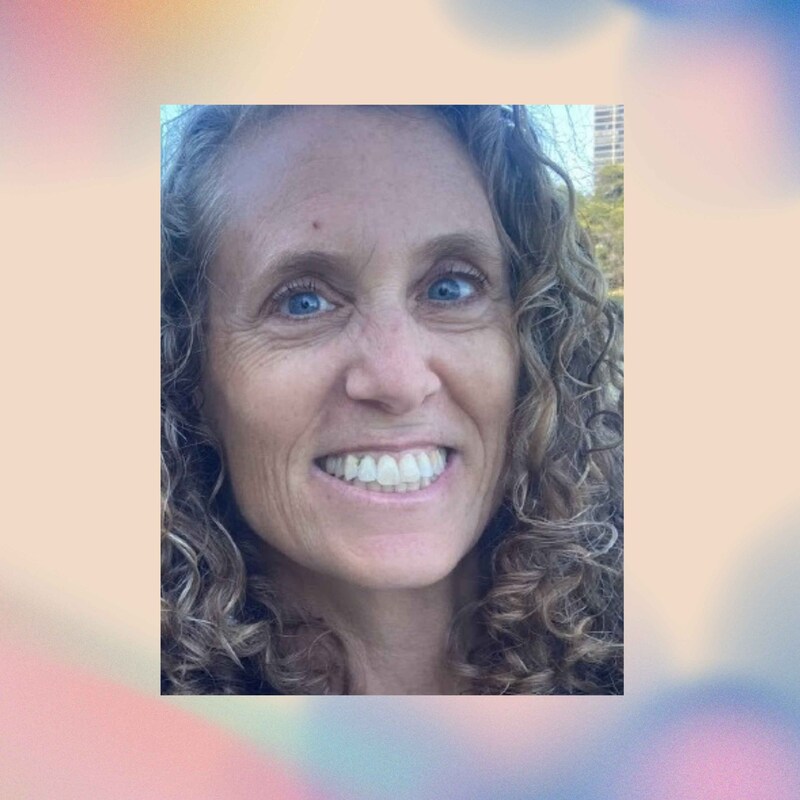
Shownotes
Today's conversation dives deep into the transformative power of anger with our guest, Bronwyn Schweigerdt, a licensed psychotherapist and author of the podcast "Angry at the Right Time, at the Right Things." Bronwyn challenges the stigma surrounding anger, emphasizing its role as a vital emotion that can lead to healing and resilience when expressed authentically. Through her personal journey, she illustrates how suppressing anger can contribute to mental health struggles, revealing that acknowledging and understanding this emotion can prevent the onset of depression and anxiety. We explore the importance of distinguishing between healthy and reactive anger and how this awareness can empower us to navigate our relationships and personal histories. Join us as we uncover insights that encourage us to embrace our emotions, particularly the ones we often shy away from, and learn to build bridges within ourselves and with others.
Exploring the intricate relationship between our emotions and mental health, Bronwyn Schweigerdt, a seasoned psychotherapist and author, delves deep into the underappreciated realm of anger in this enlightening podcast episode. The conversation begins with a heartfelt narrative from Bronwyn about her journey into therapy, spurred by her own experiences with depression and the realization that unexpressed anger can lead to mental health struggles. She emphasizes the importance of recognizing anger not as a negative force but as a necessary emotion that can guide us towards action and self-advocacy. We share anecdotes about how society often stigmatizes anger, urging listeners to reconsider their perceptions and embrace this emotion as a vital part of the human experience. Bronwyn offers practical insights, such as the notion of anger acting as a warning signal, akin to a dashboard light indicating something is amiss, inviting us to heed our emotional cues rather than suppress them. As we navigate through Bronwyn's therapeutic techniques, we touch on the transformative power of expressing anger healthily, which can lead to healing and resilience, empowering individuals to reclaim their narratives while fostering healthier relationships. This episode serves as a call to action, encouraging listeners to confront their feelings and engage with their anger constructively, ultimately paving the way for personal growth and emotional well-being.
Takeaways:
- The podcast emphasizes the importance of reconnecting with our anger as a form of healing, urging us to view it not as a threat, but as a vital signal for self-awareness and boundary-setting.
- Brownwyn Schweigerdt shares her personal journey from depression to becoming a therapist, highlighting how suppressed anger can manifest into mental health challenges and how acknowledging it can lead to resilience.
- Listeners are encouraged to externalize their feelings, especially those related to trauma and shame, through creative exercises like writing letters to their past selves or those who have wronged them.
- The discussion stresses that feelings of anger and shame are God-given emotions meant to elicit movement towards healthier choices, reminding us that it's okay to feel and express these emotions without guilt.
- The episode dives into the concept of healthy versus reactive anger, explaining how understanding our triggers can help us respond more appropriately in relationships and avoid projecting past wounds onto others.
- Lastly, it points out that the path to healing often involves listening to our bodies and integrating our emotional experiences, leading to a more authentic and fulfilled life.
Links referenced in this episode:
Transcripts
Welcome to Becoming Bridge Builders, the podcast where we explore stories and ideas that connect and challenge us and inspire us to build bridges in our lives and communities. I am your host, Keith Haney. Today we have truly thought provoking guest Brownwyn Schweigert.
Brownwyn is a licensed psychotherapist, author and host of the podcast Angry at the Right Time, at the Right Things. Her work focused on helping people reconnect with their anger in healthy ways, transforming shame and isolation into healing and resilience.
We welcome her to the podcast. How you doing today?
Bronwyn Schweigerdt:I'm good, thank you, Keith.
Keith Haney:It's good to have you on. Looking forward to this. We all need to deal with our issues, so I hope you can, you can fix us in this.
In this 35 minutes we're going to have together.
Bronwyn Schweigerdt:If only.
Keith Haney:No pressure.
Bronwyn Schweigerdt:Yeah.
Keith Haney:So I'm going to ask you my favorite question to kind of get us started. What's the best piece of advice you've ever received?
Bronwyn Schweigerdt:Yeah, I appreciate that question. I would have to say, and there's a story here, so maybe we could just embark on this whole story.
But years and years ago, you know, my late 20s, I'm in my mid-50s, I had a coworker, she knew of a conflict I was in. I was really struggling. And she just said, you need to be true to yourself.
And at that time, you know, I'm a person of faith and this coworker was not, but she was a really good person. And I was like, is that in line with like what I believe? But it sounds really good and it sounds right and then it sounds intuitive.
And I really struggled. And I thought, well, God gave me my intuition.
But I just didn't know what to do with like, be true to yourself really until about maybe a decade later, I kind of hit bottom in my life. And that's kind of the beginning of my story as becoming a therapist, a psychotherapist.
I ended up falling into a depression so profound that I wasn't functional at all. I was physically sick. I couldn't keep food down at times. I was vomiting, um, you know, involuntarily at random times.
And I was gaining also, ironically, a lot of weight. Cause I couldn't stop eating at the same time. So it was really a difficult period of my life, to say the least.
And I went to a lot of different therapists at the time. Everyone who knew me is like, you need to go to therapy. So I went to several.
And I remember sitting on the couch, you know, talking to them, and I thought to Myself, every single time. You know, Bronwyn, even though you are barely functioning right now, I still believe you would make a better therapist than this person.
And so that is actually what I galvanized me to go back to school and to become a licensed therapist.
And, you know, that was kind of me being true to myself in a way, because I couldn't find anyone who was helping me make sense of myself, helping me understand myself, helping me. So I embarked on that journey for myself. And boy, did I ever subsequently, about two years after that.
So I got better for a period of time, much better. But then about two years later, I fell into another very, very severe depressive episode that lasted years, actually.
And, you know, once I finally pulled out of that years later and I went back to work.
Cause I couldn't work actually, during the second one and became a therapist and started, you know, seeing my clients, I started putting together these dots, connecting these dots because their experiences of depression, their experiences of anxiety, their ocd, their adhd, all of their mental illness, and a lot of somatic illness, meaning gut disorders, headaches, autoimmune disorders. I realized the common denominator is suppressed anger. And that was the same for me.
And I looked back on my depressed depressive episodes, and I was able to see if I had had the constitution at those times to feel anger and go, you know what? It's okay to be angry. And that anger wants you to be assertive right now and say, hey, this isn't okay.
And not just cower and give in to this person who's asking you to do something that is not okay. I wouldn't have had those depressive episodes. And so that was kind of, you know, the beginning of my, you know, learning trajectory.
And that is why now I'm an anger expert and I have my podcast is I want people to see that as we learn to connect with our anger, we learn to see it not as something that is dangerous, but as something that our body is saying, you know what? Something's off. It's kind of like the warning light on our car on our dashboard saying, hey, check under the engine.
Something is off, and it needs to be attended to. And that's how anger works. It's not something to be afraid of or to be ashamed of, but to.
To move towards and say, what is this anger I feel in my body, in my chest right now? What does it need? Does it need to hold someone accountable? Does it need a boundary? What does it need?
And then as we do that, we circumvent the Mental illness. And we set things right in our lives and in other people's lives too. We bring order to the world around us.
Keith Haney:Oh, that's very helpful to give that backstory to that. I love that. Thank you.
So you describe yourself as an evocative therapist, Someone who doesn't fix people's messes, but really helps them to express their feelings. You kind of talked about that a little bit. Like the feelings people are most ashamed of. Hatred, anger, rage.
Why do you believe those feelings are so critical to healing? You kind of touched on a little bit, but let's dig a little deeper into that.
Bronwyn Schweigerdt:Yeah, they are very necessary to feel. So, um, again, you know, we tend to really have all kinds of judgments about anger, but really about the word hate.
You know, a lot of people even say the H word. I can't say it. But you know what I believe? Hate and anger are both God given emotions. And here's the definition of emotion.
Emotions are there to elicit motion, as in move us towards action. So hate is the same, it's one in the same emotion as disgust.
So when we, you know, let's say we're walking with our young child down the road and we see roadkill, you don't have to tell that young child to stay away because they will say, ew, roadkill. And that makes them naturally inclined to not go pick up that roadkill. Right? And that's what disgust, slash hatred does for us. It sustains away.
And if we can heed that wisdom, if we can see that emotion there to give us wisdom. Now, fostering hatred intentionally, like, ooh, I'm gonna really, I really want to nurse this hatred and I want to work towards getting revenge.
You know, I believe that is wrong. But that is very different from just noticing, ooh, my body, I feel it right in my gut.
Like this person doesn't feel like a safe person and I need to stay away. So those are different. But that is what hatred's there for. And if we bypass our body warning us, we will get hurt because those people are unsafe.
And if we trust them, if we, you know, are taking seriously what they're saying and they're being manipulative or they're shaming us, they're making us feel ashamed when it's not legitimate, we will get sick.
Keith Haney:When I was in the parish, we used to sometimes use the term kind of following off. Following off, Jesus. Righteous anger.
And sometimes we use that as an excuse to kind of confuse righteous anger like you just described a little bit to just anger in General. So how do you, as you're walking people through this, is an okay emotion, how do you recognize what is good?
Righteous anger, so to speak, versus dangerous, problematic anger.
Bronwyn Schweigerdt:Yeah, that's a great question. So I would say there's healthy anger and then there's reactive anger. Okay? And we all do both because we're all human.
But healthy anger is kind of what I alluded to before. Like, if. Let's say we were scheduled to meet at 9am My time today, and you show up at. You just cruise on in at 9:15.
And I've been waiting, you know, I'm gonna feel annoyed, which is a type of anger. And I might feel it in my chest. And so if I can pay attention and go, okay, it's. It's okay to feel annoyed.
I don't need to talk myself out of that feeling, which is what we usually do. And I say, keith, you know what? I'm just checking in on why you were 15 minutes late. Is everything okay? That's me expressing that anger.
Now, do you sense it as anger? No, you express it as maybe me showing concern, but I am angry and I am externalizing it.
First, I'm gonna check in, and if you're like, I wasn't late, then I'm gonna feel some more anger and I'm gonna say, yeah, actually, you were right. So that's me being responsible with my anger, and that's a healthy anger, however, reactive anger.
So I'll give you an example of my own, you know, struggle with reactive anger. You know, in my life, reactive anger is a trigger that I come with way before I meet you, okay?
And it gets activated in our relationship, in our dynamic, because you're a human, I'm a human, but it doesn't belong to you, it belongs to me. It's my trigger. And our triggers only belong to us, and we are only responsible for our trigger.
So my trigger historically, has been people who look away while I'm talking to them. And my husband does that, you know, a lot.
And so, you know, I've been really working on this, but that is my trigger because I grew up with a mom who never made eye contact with me. And it was. And I have a lot of anger at her. And that anger is also valid. But if I get activated with you, it's not valid towards you, Right?
And it's going to be disproportionate to the current situation because it's old, comes from an old wound. And so I need to be responsible for my reactive anger. And I need to tell myself, bronwyn, this isn't Keith's fault. This is.
This anger really belongs to our mom. And I need to do work on that. I need to work on my own anger to. To really direct it towards the true source.
And, you know, we can get into how to do that because that is what so much therapy is, is how to deal with our anger of our parents. So we can get into that. But that is my trigger, and I need to be responsible for that. And I need to have the awareness of.
That's not my anger at you, Keith, and I can't allow that to be outleted on you.
Keith Haney:So let's dig into it. I'm kind of curious about that.
Let's dig into the anger from our parents, because I'm sure all of us, as a parent, no matter how perfect I think I am, I'm sure that I have done things to anger my children. So let's. Let's kind of explore that more.
Bronwyn Schweigerdt:Yeah, I'm a parent, too, and. Boy. Yeah. So, yeah, I mean, I see parenting as, you know, the toughest job you'll ever love.
To quote, you know, I think they used to say that about the Peace Corps. But, you know, it. It. It's tough because our children are truth tellers. And it's hard. It is hard to hear some things that no one else.
I mean, kind of like, you know, being married, no one else is going to tell you this. Well, if you thought you heard it all, once you have a kid, oh, no, there's even more. Right.
And it is very humbling and not to say they're always right, but we can definitely hear their perspective and where they're coming from. So, yeah, so our own parents, of course they're going to hurt us because they're human, just like we're going to, of course, mess up with our kids.
Of course, there's no way around that. There's no humanly way to do that.
So, however, you know, what matters with children is not what we call the rupture in a relationship, but the repair. So if my daughter says to me, and she's, you know, 21 right now, you know, mom, it really bugs me when you do that.
You've always done that and, you know, whatever. And if I really listen to her and I say, you know, I can hear where you're coming from, I can defend myself. But you know what?
I can also hear where you're coming from and how you feel. And that makes sense to me. And I want to apologize that. That's hurt you. Right. So that's the repair.
And that teaches a kid this is a safe relationship because it teaches kids at all ages that healthy relationships are one where you apologize, where you make mistakes, where you can be human, and that creates this freedom. Oh, I can be human and I can mess up. And what I do when I mess up is I listen and maybe I apologize if, you know, I feel like, you know, it's.
It's needed, which is, you know, often. So that's a safe parenting relationship. But most of us have parents who don't do that, you know, who aren't safe people to confront.
Or if you confront.
Keith Haney:You mean when our parents say, rub dirt on and get over it, that's probably not helpful.
Bronwyn Schweigerdt:What's that? Say that again.
Keith Haney:When they say rub dirt on and get over it, that's probably not the most helpful response.
Bronwyn Schweigerdt:Yeah, yeah, exactly.
So if we have a parent who's not a safe person, who's going to listen and say, you know, Bronwyn, you're right that I really messed up when you were a teenager, and I'm really sorry, you know, if we don't have that, then we are holding that anger in our body, whether we want to acknowledge it with our brain. This is where our adult, adult self lives, but our inner child lives in our body.
And we need for our own mental health to integrate our brain with our body, because if there's a disconnect between the two, it's only going to hurt us. So if I can just know. Yeah, of course. When a parent messes up and they don't take accountability, they don't do better, they don't change.
I'm going to have a lot of anger still in my body, and I need to be responsible for that anger. So what if I have a parent who won't listen to me, who won't apologize? I don't have.
The good news is we don't have to have that repair with the parent for us to heal. And that is the good news.
What we can do, what is very therapeutic, is we can write a fantasy letter and we can express everything we feel in fantasy, raw and uncensored, to that parent. And we could externalize those feelings and out of our body, because now those. That anger isn't trapped within us, making us sick, but it's in words.
And once we put it in words, whether it's through speaking the words or writing the words, it is now externalized and not making me depressed or making me anxious.
We can also, like, share that Letter with someone we trust and they can validate it and go, you know, Bronwyn, that makes a lot of sense that you feel very hurt about him doing that and not apologizing. So that's how we get well. We don't have to have the perfect repair with the parent.
Keith Haney:I want to talk a little bit about mental illness and some.
And breaking free from that, because I think you do a lot of work with that, and you've helped people overcome depression and anxiety and even psychosis by connecting them to that anger. And people would say that's probably a bold claim that you can get. Can fix all those different mental issues by doing that.
What do you think the work that you do, how is it different from traditional therapy? You talked about your frustration of going to a therapist and feeling like you could have done this better.
How is your method different than maybe the people you worked with before?
Bronwyn Schweigerdt:Yeah, so I find a lot of therapists are very invalidating of our anger. They don't realize that really the goal is to remove it from our body.
And we do that by moving towards it and admitting it and speaking it out and putting it into words and expressing it. That is what heals. And a lot of therapists will say, well, look at the other. Look at his side of things. You know, it could have been worse.
Focus on the positive. And that actually is really invalidating. And that actually makes it worse because now that anger is still stuck inside of me. So.
Or they'll say, you know, let's do some deep breathing, let's meditate, you know, and then that anger still stuck inside of me. So if we see anger as problematic, I mean, anger is there to speak truth. It's saying something was off or is off.
And this anger needs to be moved in a healthy way. And if we don't realize that, if we don't have that paradigm, you know, those people are gonna stay in unhealthy relationships.
They're not gonna have the boundaries or the assertiveness that they need, or they're gonna feel invalidated and they're gonna still feel depressed. Cause the anger's still stagnant inside of us.
Keith Haney:I love that. That kind of leads me up to the next part of what I wanna talk about, and that's the idea of trauma. I love your phrase. Shareable is bearable.
And you believe trauma is when you go through it alone. How do you reverse? Especially in today's society, so many people are dealing with trauma, so many people are dealing with isolation.
How do you help people move and deal with the trauma by sharing, like you just talked a little bit about sharing that part of them that they're holding back.
Bronwyn Schweigerdt:Yeah. So I really believe trauma comes from two things. So we don't have, like, a hard and fast definition of trauma.
What is traumatic to one person might not be traumatic to another. There's, you know, all kinds of, you know, variables.
But I would say what all trauma has in common is anger that's still stagnant inside the body, that has not been expressed out of the body, and shame. There's. Shame is another feeling that comes from trauma. So if I still. If I have shame from something.
So if I was sexually assaulted, I'm going to have a lot of shame, you know, because my body was violated. Even if my brain says it wasn't my fault, I didn't do anything wrong, my body doesn't feel that.
My body is disconnected with that, and it feels violated. So let's talk about the shame piece. My. I need to now dislodge that shame from my body, and that is how I heal from trauma.
Just like with the anger, I need to dislodge the anger by using words to express it. With the shame, I need to dislodge it. And I have found the best way to do that.
And I do this on my podcast for my listeners because I want them to be able to just appropriate this and do it for themselves, and we can all do this for ourselves at home, but to imagine the traumatic event, whatever that was. So I'll give you an example of what I did for myself. So years ago, um, all of a sudden, this just spontaneously occurred to me.
But I pictured little Bronwyn at age 10 at the dining room table where her father every night would belittle her and humiliate her throughout the dinner.
And I imagine my adult self entering that memory, going to little Bronwyn, getting down on her level, looking her in the eyes and saying, you know what, Bronwyn? I see how much shame you feel as a result of his ridicule every night.
This makes complete sense to me why you would feel so defective when this is what's happening. But you know what we're going to do?
We're going to take all the shame that he's giving you right now, and we're going to put it in this cardboard box, and we're going to give it back to our dad, and we're going to say, here you go, pops. You know what? Turns out this was never mine. This was always yours. And so we're going to give it back to you. Return to owner.
And so that is part of what I call an integration exercise, where we're integrating with that inner child. But it could have been someone.
It could have been myself from two weeks ago if I experienced something that was very triggering or traumatic for me where. Where we're just in our imagination, putting that shame in the box and returning it to the person who shamed us.
Keith Haney:I've talked to a lot of therapists on my show about trauma, and they say that it doesn't matter the size of the trauma or the event, that your body all processes the same way.
And so I find that interesting that we not to minimize, no matter what that trauma is, because we don't know how big it was, but the body takes it all the same, no matter what it was.
Bronwyn Schweigerdt:Yeah. And so we have to remember our body isn't logical, our brain is.
And we will talk ourselves out of things that are traumatic, and we'll say, oh, it wasn't that big of a deal. And that's when we're now having this division within us where we are becoming what I call disintegrated.
And the goal of human health is to be integral. It's to be whole. And so when we can just go, you know what, Maybe it doesn't make sense logically, but this is how my body felt. It's emotion.
It's not based on, you know, my prefrontal cortex. And then we can just outsource that, you know, shame or speak out what our body needs to say to that person in fantasy, too. So I.
Maybe I needed to look my dad in the eyes and just say, you're the shameful one here, not me. Right. So that is very therapeutic. And again, we don't need to confront the actual person that traumatized us ever.
Keith Haney:Okay, so you have a podcast, Angry at the Right Things. What inspired you to start your podcast?
Bronwyn Schweigerdt:Yeah, this is kind of crazy, but it was about almost three years ago.
I was in church one Sunday, and this guy, I didn't really know him that well, but I was talking to he and his fiance about something, and he goes, bronwyn, you need to start a podcast. And I was like, actually, that would be really fun. You know, I thought of that in my mind.
And then I went to sit down and I looked at my phone, and I had just gotten an email like, two minutes prior that, from this random, you know, thing that I'm a donor towards and nonprofit.
And it said, hey, we're looking for people who Want to start podcasts, and we're going to train them and if you, you know, the money you give us will go to our nonprofit. And I was like, what are the odds? Like, I've. They've never asked that before and they never asked us since.
So I was like, maybe it is time for me to start a podcast. So honestly, I never thought I wanted to do anything like this. But I really want to get these principles out to more than just my clients.
I want everyone to. I don't think we need to go to therapy necessarily. I want people to be able to heal on their own.
Keith Haney:What role as a believer, what role does faith play in your therapy?
Bronwyn Schweigerdt:Yeah, I mean, to me, how humans are naturally wired towards healing. Just like if we cut our leg and if we're healthy, a healthy person doesn't need any, like, intervention to heal the leg.
We don't need anyone to put anything in the leg. We do need to protect the, the wound and, and we need to keep it free from, you know, pathological bacteria by keeping it clean.
But we can trust that the body just has this natural. I believe it's God given, you know, mechanism that just wants to heal. And I believe humans naturally want to heal and be whole on their own.
And we can support that. Really, instead of doing all this intervention.
A lot of therapists are like, we're going to do this intervention, this intervention, this intervention. And I'm like, just let them talk about what they.
Their body needs to be heard and needs to have someone share their feelings with them and hear them and validate them, trust that person, that they have it within them to heal and they just need us to support. Just like the wound will heal on its own. Does that make sense?
Keith Haney:It does make sense.
Bronwyn Schweigerdt:Yeah.
Keith Haney:Yeah. So what are you excited about in this season of your life?
Bronwyn Schweigerdt:Right now? I am starting a. I'm starting to do trainings for other therapists.
And so I have a website and I'm going to start putting together trainings where other therapists can get continuing education. So I really want to get these principles now to the public, but also really to other therapists.
And hopefully that'll have like a trickle effect to get to more of the public.
Keith Haney:Is there a book on the horizon for you?
Bronwyn Schweigerdt:Probably, yeah.
Keith Haney:That's great. So I really enjoyed this conversation, but I want to ask you my other favorite question. What legacy do you want to be remembered for?
Bronwyn Schweigerdt:Yeah, I saw that question. I will come back to what the first question was. The answer to the first question was to be true. To ourselves.
And again, um, I no longer believe that is a questionable or a selfish thing to say, because I really believe that as human beings trust themselves. I believe our gut, our intuition is the image of God, part of us that we can come back to that we can trust.
And as we start to trust ourselves and do right by ourselves, we start to flourish. And I have two trees in my backyard that are about 100ft tall. And a flourishing tree creates shade. It creates habitat for thousands of creatures.
It even creates food, you know, some of them for creatures and for humans. And so there's nothing selfish about that tree. Flourishing, it creates a better world. Flourish for a lot of other organisms.
So when we flourish as humans, we create a world that is more closer to Eden, how that the world's supposed to be. And so that is legacy I want to pass on. That was told to me many years ago was, we can trust ourselves. We can do right by ourselves.
Keith Haney:I love that. So on season six, we have a new thing for the guests. And that is a surprise question. Pick a number between one and eight for your surprise question.
Bronwyn Schweigerdt:One and eight, wow. Okay. How about eight?
Keith Haney:All right. If you got stuck in an elevator and were forced to listen to only one song, what song would you pick?
Bronwyn Schweigerdt:Oh, that's a crazy question. Oh, man. Yeah, there's a song I really like by Mute Math. And what is the name of it?
Now, I have to remember that I'm probably gonna forget the name, but, yeah, there's a band called Mute Meth that I really, really love and I seem to never get sick of. So that would be the song.
Keith Haney:That's good. So once again, where can people find you and connect with you on social media?
Bronwyn Schweigerdt:Yeah, so I have a YouTube channel. It's angry at the Right Things. My podcast is Angry at the Right Things. And. And then I'm on LinkedIn, Facebook, Instagram, all that.
Keith Haney:Well, Brown, thank you so much for sharing your wisdom and challenging us to rethink how we relate to anger and trauma.
For those who want to learn more, please check out her podcast and her website, and all the links will be in the show notes below and her work as a therapist and speaker to our listeners. If you enjoyed this conversation, please subscribe, share and leave a review.
Until next time, keep building bridges and embracing the feelings that make us human. Thanks so much, Brown, for being a guest on the show.
Bronwyn Schweigerdt:You are welcome. Thank you, Keith.






