Shownotes
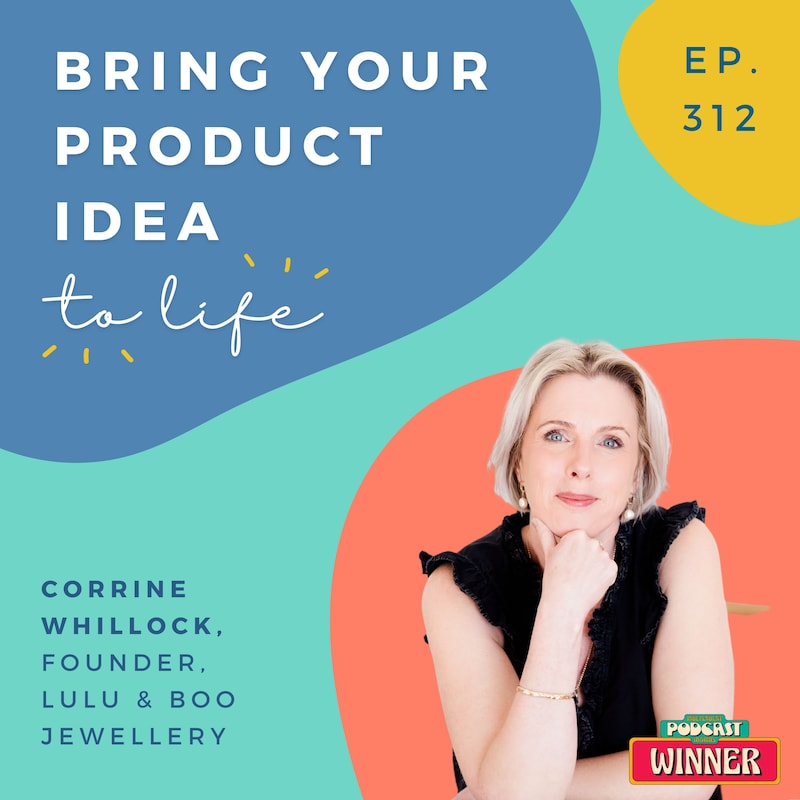
In this inspiring episode, Vicki chats with Corinne Whillock, founder of Lulu and Boo Jewellery, about how she swapped a 20-year career as a midwife for life as an award-winning jewellery designer.
If you’ve ever dreamed of doing something completely different or wondered if it’s too late to start again, this conversation will leave you feeling motivated and reassured that it never is.
Corinne shares how a chance encounter with a friend led her to an evening jewellery class that changed everything – and how she’s built a business rooted in quality, sustainability and authenticity.
You’ll hear:
How Corinne created a brand centred on recycled gold and silver that’s designed to last a lifetime.
Why staying true to your values and “your lane” can help you stand out – even in a competitive market.
The power of being authentic online and letting people see the person behind your brand.
Practical tips on funding, choosing e-commerce platforms, and balancing sustainability with profit.
Corinne’s experience with celebrity endorsements (including Claudia Winkleman!) – and what really drives long-term growth.
Why it’s absolutely not too late to start something new – and how midlife creativity can become your superpower.
This is such an uplifting conversation about courage, craftsmanship and connection. Whether you’re a product creator, maker, or e-commerce business owner, you’ll walk away with ideas, encouragement and the reminder that your business can reflect your values and evolve alongside you.
USEFUL RESOURCES
Lulu And Boo Website: https://luluandboojewellery.co.uk/
Lulu And Boo Facebook https://www.facebook.com/people/Lulu-Boo-Sustainable-Jeweller/100082407024540/
Lulu And Boo Instagram https://www.instagram.com/luluandboosustainablejeweller
Corrine Whillock LinkedIn https://www.linkedin.com/in/corinne-whillock-5784292a7/?originalSubdomain=uk
LET’S CONNECT
Join my free Facebook group for product makers and creators
Buy My Book: Bring Your Product Idea To Life
If you enjoy this podcast, and you’d like to leave a tip, you can do so here: https://bring-your-product-idea.captivate.fm/support
Mentioned in this episode:
Amazon Made Easy is now open
My membership, Amazon Made Easy is now open. It’s a membership for people who are selling on Amazon (or planning to) and want regular access to support, somewhere to ask questions and talk things through, and a bit of structure and accountability as they grow. Inside, there are live Q&A calls, optional co-working sessions and a small, supportive community. Find out more: https://vickiweinberg.com/membership
Transcripts
Welcome to the bring your product idea to life podcast. This is the podcast for you if you're getting started selling products or if you'd like to create your own product to sell.
I'm Vicki Weinberg, a product creation coach and Amazon expert. Every week I share friendly practical advice as well as inspirational stories from small businesses. Let's get started. Today on the podcast, I'm speaking with Corinne Whillock for founder of sustainable jewellery. Brand Lulu and Boo.
Corinne is passionate about creating distinctive but classic pieces that work hard for women. Her designs are beautiful, versatile, wearable and will last a lifetime.
By using only recycled silver and gold, Corinne ensures her jewelry is as responsible and sustainable as possible. We had a really great conversation about how Careen started her business.
After working for more than 20 years as a midwife, Corrine shares why it's never too late to start, how she got into jewellery in the first place and how she's grown her business by. Staying in her own lane. This is a brilliant conversation and I would love now to introduce you to Corinne.
Corinne Whillock:Hi there. Hi. Thank you for having me.
Vicki Weinberg:So can we please start with you? Give an introduction to yourself, your business and what you sell.
Corinne Whillock:So I founded Lulu and Boo Sustainable Jewellery. So my business is. I make handmade jewelry. I make, I use all recycled silver and gold, which I'm sure we'll talk more about to.
I wanted to create a brand that was really wearable for women. There was a bit of a gap in the market, I felt, or not a gap in the market, just I couldn't find what I wanted to wear.
I wanted something that really works hard for women. I put my jewelry on and leave it on, I never take it off.
So it needs to be sort of versatile, it needs to look great in the daytime, in the evening needs to be, be hard working. So it needs to be very sort of robust and great quality. And also I don't.
I was spending a lot of money on plated jewelry which was just wearing off and I was just sort of really. It became sort of disposable but was quite expensive. So I, I wanted to sort of learn to make jewellery, to make things for me really.
And I only use solid silver and gold so as it never, it never sort of tarnishes it and never, it never, you know, it's forever jewellery. So, so that's the sort of fundamental basis of why I, I set Lulu Boo up.
Vicki Weinberg:Amazing. Thank you. So tell me a little bit about how and why you started.
So you explained, you explained the why, but maybe talk a little bit about what you were doing prior to that, because I think it's a really interesting story.
Corinne Whillock:Yeah. So I. I had my children when I was quite young, 22 and 23. Three, the boys. And I've got subsequently when I was 30, Lulu.
Lulu is my daughter and Boo is my whippet who's snoring next to me now, so hopefully that's not too loud. I was a midwife. I went back to university when they. The boys were 1 and 2. Having the boys really inspired me to become a midwife.
So I was actually a midwife for nearly 20 years, partly in the NHS and partly when I was living in Germany with my husband in the army. So I did eight years in Germany working for the British army.
And, yeah, so completely, completely different career, but, you know, a brilliant career. I absolutely loved it.
I loved making a difference to women and their families and, you know, caring for them through, you know, such an important phase of their life. So that was incredible.
I decided to leave in:And Covid came along. We weren't able to walk dogs, so there was another career swerve.
And I ended up working for Public Health England through somebody that I knew, they needed people to work for them during the pandemic. So I ended up working on Covid as a project manager during COVID But concurrent to that, I started to learn to make jewellery.
And that's sort of how, you know, the jewellery journey began. I'll tell you more about that. It was just a chance meeting of a friend in the street, an old school friend, and she had a really pretty bracelet on.
This was in:I don't know where I thought jewelry came from. Factories, pixies and fairies, I don't know. So I started to do the evening class that she did and then I just got completely hooked.
So I kept learning and all through Covid, when we could, we were going back to sort of the evening classes when we were allowed to, and I was doing more and more stuff at home and then posting it on my social media and then people were asking me where they could buy it. And so that was a complete revelation to me.
Because I really only started to make jewelry so I could make things, as I said earlier, to sort of fill the gap that I was finding with buying jewellery out on the high street. And so, yeah, people, people. And they weren't people I knew, they were asking, do I have a shop?
So that's when I sort of took that jump and when Lulu and Boo was born. Really?
Vicki Weinberg:Well, that's amazing. What year was that then when you actually turned Lulu in Boo into a business?
Corinne Whillock: January: Vicki Weinberg:So it's still relatively new, really.
Corinne Whillock:Yeah, it's about three and a half years old. Yeah. So it's been a complete roller coaster of a journey. Huge learning experience. I had no experience of running a product based business before.
I had no experience of E commerce, marketing. All of those things that, you know, the dog walking business is a very different business.
It's a very simple piece of software where you, you know, administrate your bookings and then you just go out and walk. This is a very, very different beast. And, and you know, so much to learn.
But I've alongside learning to make jewellery, I've really, really loved the learning to run a business side of things.
Vicki Weinberg:That's amazing and what a story. I have to be honest, I didn't even know, and this sounds really silly now but I will admit it anyway.
I didn't even know that you could go to evening school and learn how to make jewellery. I don't know how. I thought you learn but that wasn't it.
Corinne Whillock:I mean there's so many different journeys. Some people will come out of school and go to uni and do a jewelry design course. There's so many different avenues within it.
You know, you can do very traditional jewellery making. There's a lot of computer aided design in jewellery making now.
So people can learn how to design jewellery on a computer and then have like a 3D print done of that and a mould made of that print. And so there's all sorts of different exciting avenues to follow in jewellery making.
You can be a stone setter for example, so you could have a specific ta, a specific role within jewellery making or you know, be a jewellery designer. So I sort of do a bit of all of it really.
I sort of learn but my jewellery is quite specific so I stay in my lane and I'm good at some things and I'm not good at other things. So I'm really happy to outsource to people to help me. So, for example, I don't set my own stones because I just hate it.
I've tried and failed and it's just not for me. So I send it off to a stone setter. So as I know the stones are, you know, nicely set and will be nice and secure. So, yeah, it's a.
It's a vast industry really, and quite exciting for young people, quite excited for anyone to get into.
Vicki Weinberg:And do you need a lot of specialist equipment? So is it like, do you have to buy an equipment or is there some way you can go and do this?
I know, sorry for all of these really basic questions, but for anyone listening who's like, oh, that sounds really interesting. It's a lot of unknowns.
Corinne Whillock:Yeah, there is quite a lot of equipment. It depends the jewelry that you make, what equipment you need.
I have sort of just built it up as I've gone along, so as I've learned a new skill and I've needed a new piece of equipment, I've. I've bought it.
I also teach, so I do little workshops where people can come and make their own jewelry, so rings or bangles, and they are amazingly popular. They always just sell out. They're. They're fantastic. So, of course then I needed sort of four of everything.
So I've really just sort of built everything up as I've gone along.
You can go to jewellery studios and it's called bench hire, so you can hire a bench for the day that would be set up with all of the equipment that you need.
So that's a really good way for somebody that perhaps doesn't want to invest loads of money and loads of tools to get into, you know, just getting started and then, you know, making sure that they're 100% sure before they invest.
There's great little starter kits that you can buy, like student kits for sort of a couple of hundred pounds, which has everything in that you would need to just sort of get started at your kitchen table.
Vicki Weinberg:Well, that's brilliant because that was the question I wanted to ask actually is how do you fund like a business like this in the early days, because obviously you're needing to buy materials and a craft equipment. How easy is that to do?
Corinne Whillock:Yeah, it's been quite organic. I mean, obviously we. I've. I've invested little bits of my own money when I've needed to and. But it's been quite organic, the sales.
I'm really fortunate in people, women really connected with my designs and my sales have been really strong, which I'M you know, so incredibly grateful for. But that has meant that the sales have been able to fund the growth really. So it's been quite organic.
I haven't had any investment as such, formal investment as such. I do take advantage of things like Shopify loans. So my website is on Shopify and Shopify will enter offer you a loan depending on your sales.
So they used to offer me sort of quite little loans and maybe I would take it out at Christmas just to fund sort of Christmas stock and then as your turnover gets bigger the loans become bigger and then those. There's obviously a cost implication but it helps with cash flow.
The money is taken back directly from your sales so you haven't got to sort of worry about another direct debit or something. It comes straight out at source. So that's been really helpful as a just a little sort of leg up funding wise.
But otherwise it's been organic which I've been you know, really, really lucky to be able to do.
Vicki Weinberg:Yeah, thank you for sharing that. I'd never heard of the Shopify line so that's really interesting. That makes a lot.
And that makes a lot of sense as well if that's the platform that you're using. Yeah, that seems, that seems like a good solution just to bridge a gap maybe.
Corinne Whillock:Yeah.
If anybody's thinking about you know Wix, Chess, Squarespace, different, different platforms and E commerce platforms I would a million percent recommend Shopify. It's really user friendly.
I have my website built for me but I can do the backend by myself now so I can add products and you know, write blogs and change things if I need to. It's really, really user friendly. It needs to be because I'm not technical person and it's very. The interface with other products are very good.
So if you need like plugins for maybe like a pop up to you know offer like a 10% discount or email marketing. So Klaviyo really feeds well into. It's just, it's just set up to work well for E commerce and I would highly, highly recommend Shopify.
Vicki Weinberg:Oh that's brilliant. Well thank you so much for the recommendation. I really like Shopify as well I have to say.
I just think it's as you've said, so easy to use, so easy to customize and actually I think most of us without any external help could probably get on there and get some sort of website up. Even if it was very basic.
Corinne Whillock:Yeah, yeah, yeah, 100%.
Vicki Weinberg:So I'd like to talk a little bit about when you did sort of start as a business because obviously jewellery is so competitive. Were there any challenges starting out in. In an industry where, you know, there is, you know, there's a lot of competition and. Yeah, was.
Was that hard? Were there any challenges related to that?
Corinne Whillock:I mean, I think it is. It. It would be really hard if I thought about it, which I try not to. I. This was sort of never meant to happen.
As I said, I. I started designing jewelry to wear myself and then people wanted to buy it, so I just was grateful for that and started, you know, to make more designs around some of the. The style that I use, which is very, sort of molten, very organic. And so there was never a game plan, it was never.
So I never really worried about the competition because I just was going with the flow. And to be honest, I sort of still am.
And somebody spoke to me the other day, I did a trade fair called the Jewelry show, which is a really big Olympia in London, a really big event and quite a big event for a small jeweler like me. But I'm trying to sort of push myself out there a bit more into wholesale and things, so.
And somebody said to me, gosh, you know, this is amazing that you're sort of just small jeweler, but putting yourself out there amongst this, in this hugely competitive market. I just try to stay in my lane. I try not to really look what else is going on and just keep. I've got a really fundamental.
Because I know how much women have connected with my jewelry and I've got about a 60, up to 60% returning customer rate against an industry average of about 25 to 30%. So that's really incredible and I'm hugely proud of that.
So I just sort of think, keep doing what you're doing and try not to look and think about, gosh, I'm just such a tiny fish in a big sea. I just try not to think about that.
I just have a belief about my jewellery and about my product and my beliefs and what my business stands for, that I just keep going in my lane and just try and stay a bit blinkered. Otherwise I think you would feel a bit overwhelmed, definitely.
Vicki Weinberg:And I think that's a really great mindset. And as you've said, so while jewellery is a really competitive market, there's lots and jewelers out there. Every jeweller is also really different.
So there'll be some people who will absolutely love your jewellery and, you know, just want it all. And there'll be some people and it's just not for them. And that goes for every brand out there.
So I think that's something that is nice that, as you said, you'll, you know what your style is, you know what your jewelry is about, and then for the people who like that style of jewelry, they're automatically going to be drawn to you because that's what you do.
I think it's harder when you see brands, maybe more high street brands, and they sort of do a bit of everything and I think that must be a harder place to compete from, actually.
Corinne Whillock:Yeah. And I think, you know, jewelry's really personal and people tend to connect with a jewellery brand, I think.
And like you say, it's, it's so individual. Some people just, my jewelry won't be their bag. And that's great, you know, that's absolutely fine. I had some really.
I listened to a podcast really early on in my journey and it was another jeweler who said, just make what you love and your people will find you.
Don't make what you think is going to be commercial or sell, because we could all make love heart pendants with babies names stamped on the back of them. You know, that's. And they're beautiful and special to people.
But then, you know, that's maybe what you would make if you thought, right, well, I want to sell loads of jewelry and be terribly commercial, but actually just stick to what you love and what you are passionate about and.
Vicki Weinberg:Then.
Corinne Whillock:Let your people find you. And they have, that's the amazing thing they have.
So, yeah, it's, it's, it's not just trying to appeal to everybody, it's sticking to what you feel passionate about and then that shines through, I think.
Vicki Weinberg:Yeah, I think so. And I think that's really good advice. And actually, you're right.
The brands that we connect with, Maze, certainly for me, are the ones where I absolutely know what I'm getting from that brand.
Corinne Whillock:Yeah. And I think the other thing I've done, which is again is purely accidental, is I've.
I've sort of created a brand that I'm quite central to on social media, for example, and I've told my story on the website and I've been very, very authentic.
So I will rock up on Instagram in my pajamas in the workshop, making a piece of jewellery, 7am for somebody or for an event, and I've mucked it up and I will be very, very authentic about that.
So I think people have really connected with that authenticity that actually I don't just sort of stick a face of makeup on and show up Pristine all the time. And face to camera is a big one actually.
I can remember a friend saying to me, you've got to get on, stick the camera and you've got to be front and center. And I didn't want to do it and now you can't stop me. Now I just don't care. I'll rock up with like I say, whatever, you know, just this.
But that authenticity I think is really connected with people because they don't want the shiny polished.
They're used to that all the time that they want real, they want to get to know you to understand, you know, a little bit how about what, what you do in your life. And, and because it's a really trust based purchase, you know, some of, because I work in a lot of real gold, the pieces are an investment.
So people need to really sort of get to know you and trust you before they, they'll invest.
Vicki Weinberg:I think that's all brilliant advice. Thank you. And I agree it's so hard to put your face to camera, particularly when you sell products because I think that can be a tendency.
Not when I say hide behind your products, I mean that in a respectful way but it can be because I used to have a product business and I, for me it, my social media was all about the products, the products, products. There was very little about me, my story because I was just too scared to put myself in front of it.
But had I done that because I didn't do that, I really feel like as you said, more people would have connected because they have, they'd know the.
Corinne Whillock:Story and the background and the why.
Vicki Weinberg:And I think it's, it's important when I think about the small businesses that I buy from again and again. It's because it's more to do with the story I think and the person.
Corinne Whillock:And the product sometimes. Yeah.
And I think, you know, the, the fact that they've sort of connected with me and connected with the jewellery has created a really lovely business. And I've also been really honest about my experience with the perimenopause.
I really struggled and when I was working at Public Health England I was becoming more and more unwell really as a result of that and not getting the medication right. And it was really affecting my self confidence, my belief in my, you know, I had terrible brain fog, terrible.
I didn't think that I could do things, people would give me a task and I just go into outright panic. So I've been very vocal about how finding my sort of creativity and, and building a business that I'm proud of has really, really given me back me.
And so that's been a huge. A huge part of my journey.
And, you know, on my About Me page on the website, I talk about that and I'm very open about that because I think actually it's a really difficult time in women's lives and if I can just, you know, empower a woman or some women to think, you know what, I am going to switch it up a bit and I am going to sort of learn to do something, taking a hobby and then actually maybe that will take me onto something, a different path in my life. So I, you know, I. I like to talk about that as well, which I think has been a nice connection with my customers and other businesses.
Vicki Weinberg:Yeah, I think that's really. I think that's really nice. And as you say, it's just like, nice to have points of connection with people because it makes it a bit more personal.
And just choosing where you spend your money is actually a really big decision.
Corinne Whillock:Yeah, yeah.
Vicki Weinberg:So let's change tax slightly, if that's okay, Corinne, and talk about sustainability, because you mentioned right in the introduction that sustainability is important to you. So can you share some of the choices you've made to make sure that your products live up to that?
Corinne Whillock:Yeah, so I just felt when I was sort of creating the business, it was really important to do it as responsibly as possible. So I only use recycled silver and gold.
So all of the gold and silver that I make my jewellery from has been either jewellery before or it might have been in mobile phones, it might have been cutlery, it might have been in X rays. So they're actually refining silver out of medical X rays because they're not needed anymore. It's all digital.
So all of the X rays are either being stored or going to landfill as and when they become old enough to go to landfill.
And so actually there are refiners out there that are buying one particular one that is buying the X ray films and refining the photographic silver out of it. So there's precious metals all around us. So I feel quite strongly that there's no need to dig any more up.
We've got plenty and all the environmental damage that comes with mining. So I like. Well, I use 100% recycled gold and silver. I use where I can, very traceable gemstones.
For example, this year I went to visit a mine in Sri Lanka that I used to buy my sapphires from.
So you get the most beautiful array of sapphires aren't just Blue, they're pink and green and yellow and white and just all the colours of the rainbow. And so I went to visit the mine.
It's a very small sort of artisan mine where the miners are looked after, paid equitably for what they find, not just paid a sort of flat rate. So that's really important to me. All of my. So I. I can't keep up with making all of the jewellery myself now. Sorry, my alarm just went on.
I. I can't keep up with making all of the jewelry by myself now. So I do get some help. But all of that help is from really skilled artisan jewelers within the uk. So my production will always be in the uk.
So again, I think that sort of feeds into the sustainability picture. So sort of carbon footprint wise.
And actually I am working towards having my carbon footprint assessed so as I could sort of tell people around their piece of jewellery that the carbon footprint was really low. And then also just my designs, my designs are quite distinctive, so you could probably look at a piece and say, oh, that, that's Lulu and Boo.
le, this will look as good in:It's an heirloom, you know, because it's solid gold and silver, they can be passed on. So it's about sort of not just feeding into trends, so not going like, oh, what's on the.
For example, London Fashion Week this week, not just feeding into what's hot now, it's actually just doing things that are a little bit different, but actually very classic that will last people a lifetime. So. So it's not disposable fast fashion. It's designed to be bought, worn every day, loved, treasured and passed on.
And the quality is such that that would, you know, it's made to last people to be worn and really enjoyed and last people.
So all of those things are what I sort of package up as my commitment to sustainability, but also asking questions all the time, is this the right thing to do? Am I. Is there another way of doing this better? So it's an. It's an. It's an open dialogue because this.
A lot of greenwashing out there and within the industry, some of the things can be quite controversial. So it's about constantly, sort of. I go to some seminars in London around sustainability.
I'm sort of part of a few groups, so constantly re evaluating all the time. Is this the best I can do? And what could I Do a little bit better.
Vicki Weinberg:That's brilliant.
So how easy is it, and I hope you don't mind me asking, is how easy is it to balance sustainability and with profit, with profitability, if that makes sense.
Corinne Whillock:It's okay. Recycled metals have become a lot mainstream within the industry, so that's fairly.
There's not a huge cost implication with going recycled over virgin mined. Obviously I could say to an Indian, many, many jewellery companies have their jewellery produced when they have to outsource.
They have their jewelry produced in India, China and that is cheaper, but it's cheaper for a reason, you know, that the labor is cheaper, that there's, you know, so I just, I'm not prepared to go down that route.
So there is a cost implication for using, you know, jewellers in the uk, but to be honest, by the time you paid shipping and customs and all of that nonsense, it's not so. But I think it's really important and I think people value handmade, they value made in the uk, they value quality, they value sustainability.
Responsible shopping far less, I think keen to just sort of buy, buy, buy. We're much more considered now, I think with our shopping and things that we choose for ourselves. So I, it's, it's okay, it's okay.
It's, it's, I think, I think it's important to just price yourself. Pricing is complex, but price yourself so as you're, you can still be profitable but you can remain true to your values.
Vicki Weinberg:That makes a lot of sense and I think you're right and particularly for a purchase like jewellery, which is often a more expensive purchase and it's also quite sentimental, often a sentimental purchase. I think that people do want to look at the bigger picture and it's not. Price isn't the deciding factor often I think for that kind of purchase, yeah.
Corinne Whillock:Price is important, but it's not everything anymore. People, people don't want to keep spending £300 on something that's only going to last them 18 months, for example.
They're more considered and thinking, okay, well this is a little, this is a, this is a bigger investment, but it is an investment and actually I'm going to get a lifetime of wear out of it. And that's important to people.
Vicki Weinberg:I definitely think so. So Lulu and Boo is now a award winning business. You've got lots of celebrity fans. How did all of this come about?
Corinne Whillock:So, I mean we've been, the awards have been absolutely amazing. So I've won the Muddy Stiletto's best Women's accessories and lifestyle store for two years in a row which has been incredible.
That's voted for by my customers and so, so that's been fantastic.
I've won a couple of business awards and I'm actually, which is just mind blowingly bonkers on the 7th of October going to a very swanky event in London which is a national jewellery award, so very well respected award. So all of the big jewellers will be there and I'm in the finalist in the best newcomer category. So that's, yeah, that's a huge.
I'm really, really blown away and proud of that. So it's going to be. Just to be in the final is, is quite something for me.
So, so that's, that's fantastic and particularly with the business only being really three and a half years old, that's a huge achievement for me. So that's exciting. The celebrities. I've been really lucky. Claudia Winkleman wore one of my rings on where is it this one?
So it's a beautiful sort of chunky, chunky gold molten ring. So she wore this one on Strictly Come Dancing last year. I actually reached out to her stylist on Instagram.
I had Covid at the time and I was in bed, it was late at night on a Sunday night and I was just sort of scrolling through Instagram and her stylist had put up that she was wearing some jewelry on, on Strictly. And it was a brand that I know very well but it was a bland that was plated.
And I just messaged the stylist and said it would be really lovely if Claudia could wear something that was more sustainable, more artisan.
Didn't think, you know, for one second she would get back to me and she got back to me straight away and she got back to me having had a look at my website and she sent me a picture of that ring and the saddle ring which is this ring which I originally carved them both actually carved from wax and she. So she sent me a picture of those two and said I'd love to work with you. Dropped me an email in the morning so I didn't sleep much that night.
So dropped her an email and then yeah, I sent both of those rings and Claudia chose the molten one and wore it on Strictly Come Dancing which was quite a moment. That girl moves fast. Trying to like follow her around the, the, the telly with an iPhone is not easy. So yeah, that was nice.
And you know, obviously, you know, got some sort of uplifting followers from that but also my, my sort of really loyal followers Were really, really blown away by that. So that was nice. Everyone was like, oh, my God, Claudia Winklesman, Claudia Winkle's wearing your. Your jewelry. So that's been great.
I've had a few other influencers on, on Instagram wearing the jewelry, and there's one lady in particular, Caroline Circuit. So she's a really big sort of fitness influencer. She just had a policy in Women's Health this month, and she wears my saddle ring always.
So she absolutely loves it, wears it all the time when she's working out. So she's a great advocate for the brand as well. So it's just, it's just sort of fun. But it's not a golden ticket.
It's, you know, I would say that to everyone. Think carefully before you maybe gift or agree to work with somebody, because there's often a cost implication.
And you, you sort of get really excited about these things and think, like, I was going to change my world. And, and actually, I don't think there is a golden ticket out there.
I don't know if Kate Middleton wore the saddle ring, it might change my life, but it might not. It's really, really difficult to pin down what you. What is going to work. I would say don't focus too much on that.
I've possibly learned the hard way a couple of times. And it's about just being consistent, showing up all the time, being consistent, appreciating that growth is going to be slow and that there.
And maybe chasing these sort of golden bullets. Golden tickets is not the way. You know, you can't say. You can't say never.
Claudia, for example, has worn jumpers on traitors and their brand has just absolutely blown up. But it's, it's. Yeah, it's. It's a tricky, tricky one to navigate.
Vicki Weinberg:Thank you. Thank you for being so transparent about that. Because I think you're right that it could be easy to think, oh, if this person were to wear my.
Use my product, or, you know, it depends on what the product is, or show it on their Instagram, you know, every, you know, it will change my life. And I know brands that. Where they've had a big uptake in followers or maybe they've had a spike in sales because of something like that.
But then equally, I do know of people who say, actually nothing really happened. Maybe they got a few more followers and that was sort of it. So it's interesting. I think you're right.
I think to do well needs to be a combination of different things, including just keeping going but with that in mind, what would you say if you look back, has made the biggest difference to your brand's growth?
Corinne Whillock:I think, I think it is just being consistent. It's hard work, it's being open to change. So, you know, you can't just have one sort of path and not deviate from that.
You've got to be responsive, reactive, seize opportunities as they come up, evaluate opportunities they come up. But I think that there isn't a golden ticket. And so there hasn't been a moment. You know, I've been really lucky to have some lovely pr.
We've had a little thing in vogue, we've, you know, done Claudia and all of those things. But actually I think what's made the biggest difference is showing up and being consistent. So I post on social media most days.
Very unusual that I don't, that's a big job in itself. And just thinking, like, what am I going to say? Tomorrow is a lot.
But just putting stuff out there, it doesn't have to be polished, it doesn't have to be. People get quite hit up and think, oh, it's not right. I don't, I can't put that out. It doesn't have to be like that.
And I've really learned that actually.
Just remaining consistent, prioritizing social media, prioritizing email marketing, just remaining present in people's minds, not being pushy, just being there and showing them what you're up to. Because with a lot of things, particularly jewelry, it can be the long game.
You know, they say seven points of contact for somebody to buy your product and I think that's fine for a pair of socks or a scented candle, but I think for jewelry you might need 70 points of contact or more before, before people.
So it's just, I would say the biggest difference to my, I built my business on Instagram, So I would 100% say commit to your social media and be consistent. That is my best advice really. There hasn't been a golden moment.
Vicki Weinberg:That's brilliant advice. Thank you.
And speaking of advice, I was reflecting on the fact that you had a long career as a midwife before you then pivoted to your dog walking business and then you started this business.
What advice would you give to someone who's listening and thinking, well, I'd quite like to do something, but it's too late for me, either because I've been in the same career for a long time or I feel like I'm too old to do something new. I think we can all give ourselves reasons why it's too late. What would you say to someone who's thinking about that?
Corinne Whillock:It's absolutely not too late. I think there's a statistic out there that the highest proportion of female founded businesses are started at about the age of 48, either 48 or 50.
This is our time. You know, for a lot of us, we've had a career, we've brought up children and this is our time now. We've got so much to give.
We've got so much life experience, wisdom, creativity, we're resourceful, we're good at, you know, keeping balls in the air. So, yeah, I'm always really, really happy if anybody wants to reach out to me on Instagram. My Instagram is Lulu and Boo Sustainable Jeweler.
So I'm always happy to support other women if you want to reach out and, you know, ask a question. I'm really happy to share ideas and I, I talk to a lot of other jewelry businesses on, on Instagram and give them advice.
I think, you know, there's plenty of room for all of us. And so it's, it's, it's about being, sharing what you've learned and sharing your wins and sharing your advice about maybe don't do that.
So, yeah, very, very happy if anybody wants to reach out and ask any questions. But it's absolutely not too late. This is our time, so do it.
Vicki Weinberg:Thank you for the advice and thank you for that kind offer as well. And obviously all of your social links will be in the show notes for the episodes, people, and just go and find you really, really easily.
So thank you so much for that.
So if it's okay, Corinne, I have one final question before we finish, and this is one I ask everybody, and that is, what would your number one piece of advice be for other product businesses?
Corinne Whillock:I think if you believe in your product, be authentic and stay in your. Do what I talked about earlier. Stay in your lane.
Don't be overwhelmed by what's going on around you and the market and the industry that you're trying to enter. I don't really have a big game plan about where I want Lulu and Boo to end up. I have a belief about where it could end up. But I.
That's a very, that's a tunnel for me. It's not this huge sort of threatening vista of what's around me. It's just staying in my tunnel and staying in my lane and going.
I believe in my product. I believe in the way that it connects with people.
I will continue to work hard and I will continue to be consistent and I will continue to prioritize quality and sustainability and excellent customer service. And if you can just stay true to all of those things, people will come to you because they will. That shines through.
People can see very quickly through things that aren't authentic. So yeah, I think just, just stay, stay true to your beliefs and believe in your product, believe in your ethos and just keep going.
Vicki Weinberg:That's brilliant. Thank you so much Karine and thank you for everything you shared with us.
Corinne Whillock:You're welcome. Thank you so much for having me.
Vicki Weinberg:Thank you so much for listening right to the end of this episode.
Do remember that you can get the full back catalogue and lots of free resources on my website vickyweinberg.com Please do remember to rate and review this episode if you've enjoyed it and also also share it with a friend who you think might find it useful. Thank you again and see you next week.



