Shownotes
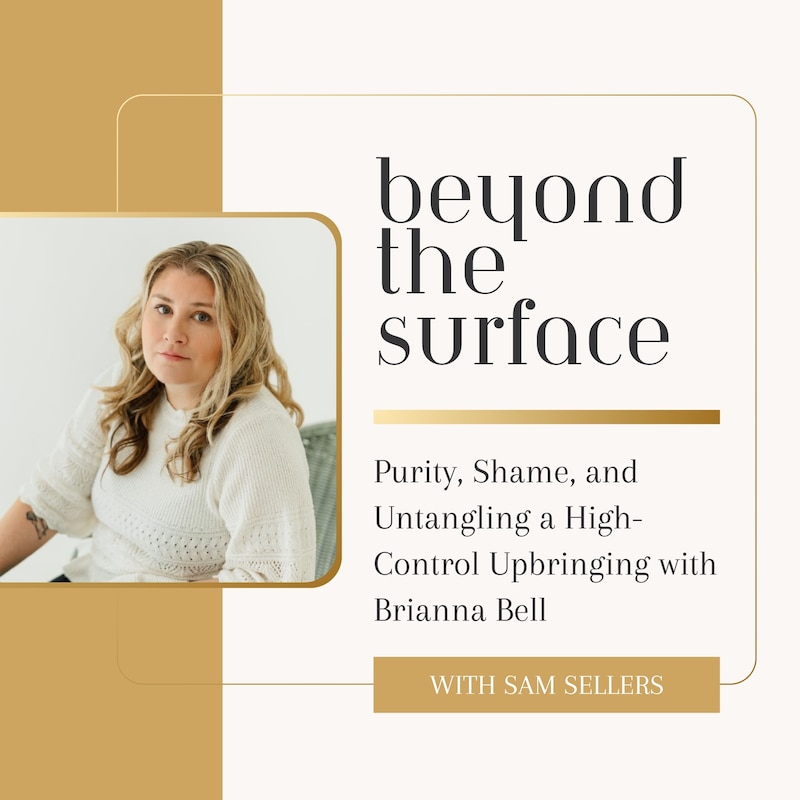
In this episode, Brianna shares her journey growing up in a high-control religious environment and the impact of her mother leaving a restrictive sect while pregnant. She reflects on the effects of purity culture, shame around sexuality, and years of believing she had a sex addiction. Brianna discusses reclaiming her identity, separating her beliefs from her upbringing, and finding empowerment. The episode closes with a message of hope, emphasising the importance of self-discovery and the value of personal stories.
Who Is Brianna?
Brianna Bell is a Canadian journalist and essayist whose work has been featured in The New York Times, The Guardian, The Globe & Mail, CBC, and more. Brianna's memoir, God Lover, will be published by Toronto's Dundurn Press in 2027.
Connect
- Brianna's Website - https://www.briannabellwriter.com/
- Connect on socials - Substack, Threads, or Instagram
- You can find out more about Sam on her website - www.anchoredcounsellingservices.com.au
- To connect with Sam on Instagram - @anchoredcounsellingservices
- Want to contact with Sam about the podcast or therapy? Use this contact form.
- Also check out The Religious Trauma Collective
Transcripts
I would like to begin by acknowledging the traditional custodians of the land on which I live and work, the Gundagara land and people. I pay my respects to their elders, past, present and emerging, and extend that respect to all Aboriginal and Torres Strait Islander people.
I also want to acknowledge the traditional custodians of the lands on which you, our listeners, are joining us from today.
I recognize the deep connection that first nations people have to this land, their enduring culture and their commitment to the preservation and care for their country. This land was never ceded and it always was and always will be Aboriginal land. Welcome to beyond the Surface.
This is a space for conversations that sit at the edges of faith, identity, power and recovery, especially for those of us who have been shaped so stretched or harmed by fundamental religion or high control systems. Some episodes are personal, some are reflective, some are educational or curious or quietly disruptive.
All of them are grounded in lived experience and a deep respect for the complexity of leaving, questioning and rebuilding meaning.
We will be talking about religious trauma, various forms of abuse, cult dynamics, queerness and recovery, not in answers, but in honest conversations. In listening to these conversations, some parts might be heavy or activating for you.
Please take care of yourself while listening and feel free to pause or step away if you need to. I'm Sam and I'm really glad that you're here with us.
Sam:Welcome.
Sam:Brianna, thanks for joining me.
Brianna:Thank you for having me.
Sam:Sam, to kick things off, where in the world are you? At the moment?
Brianna:I live in Canada and I live in particular in Guelph, which is a nice little green city in southwestern Ontario and it's on the traditional territory of the Mississaugas of the Credit First Nation. And I've lived here for the last 10 years.
Sam:Beautiful. Canada is in probably the top five of places that I would like to go to.
My mum went there years and years and years ago, back when they had the Olympics, which I think was a very long time ago. I was quite young and she said it is just one of the most beautiful places that she's ever been.
So I hope to one day venture into your land over there. So apparently it's.
Brianna:Well, likewise, I'd love to come over where you are, but it's just so far. Was she in Vancouver then when she came?
Sam:I think so, yes. Yeah. Yeah. So maybe we need to do what they did on the holiday and do a house swap.
I've always wondered and thought that those things should actually exist because it just sounds fun. I mean, it's a recipe for disaster. But it sounds fun.
Brianna:I'm down for that. Yes.
Sam:I like to start these episodes with a big, broad question, which is where does your story start?
Brianna:Okay, so my story started, I would say, probably when my mom left my dad when she was seven months pregnant with me.
I think that that was a pivotal moment in my life and in her life, and it's something that really kind of marked who I would eventually become, because if she had stayed, I think my life would look very, very different. And so. So my mom, you know, she.
She walked away from her marriage to my father, and she really made that decision for me, I believe, because she loved my dad, but she just knew it wasn't a home to raise a child in. And so. And so that's kind of where my story began. And it's. It's. Yeah, it's a big part of who I am today as well.
Sam:Why do you describe that as being the pivotal moment?
Brianna:Yeah, I think just knowing what my life could have looked like if she had made a different choice and just knowing, like, you know, we are all of these, like, seemingly small. I mean, it is a big decision. But, you know, these. These decisions that we make in our lives really do influence us for a lifetime.
And so I think that that really set me off on a path of. First of all, I was raised by a single mother for my whole life, and I didn't have much of a relationship with my father.
But because of that, I also was very separated from a sect called the Two by Twos, which my father's family was in and is in. And so I was kind of freed from that in a way because my mother made the choice that she made. And, I mean, it still impacted me.
And of course, like, you know, not having a father in my life. Definitely still have daddy issues today, but really set me on a different path, I think.
And it made me also a lot stronger to see, you know, my mother and her independence.
Sam:Yeah.
Sam:I mean, and knowing that that's the space that she left, that's a huge. A huge thing. Like, that is nothing short of, you know, an immense amount of courage and bravery to leave a sect of that level of control as well.
So that's huge.
Brianna:Yeah. I mean, so my dad wasn't in the religion at the time. He had a. He. He had his own demons that he was battling and I think directly related to the.
The group. But I think leaving somebody who you love and who, you know, that's a powerful move in and of itself. And.
Yeah, so I think that that was a Big moment for sure. For. For us.
Sam:Yeah. Did your mom still ascribe, like, as you were growing up, did she still ascribe to the belief system of the true, the two by twos?
Brianna:No. So my mom was raised Catholic, and she never, like, converted to the two by twos.
And so I was raised very independently and wasn't really pushed into any kind of faith as a young child, which really helped me. I was exposed to all different kinds of sects of Christianity, I would say. So.
I mean, Catholicism was the big one, but my mom wasn't like a devout Catholic or anything, and then as well as the two by twos. But eventually I actually decided to become a Baptist on my own. When I was 11, I went to like a. They call them VBS here, vacation Bible school.
And so I went to one of those and I prayed, like, the sinner's prayer and everything, and I started attending church on my own. And so my mom was kind of, like, weirded out by it. It. But I felt like a belonging there that I hadn't found before.
Sam:Yeah. What. I mean, what was it?
And I probably know this already because I feel like it's a thread that comes up in everybody's story at this point, which is, you know, what led them there. But what was it that you found there that you didn't feel like you were getting elsewhere?
Brianna:I think for me, I always craved the nuclear family and, like, the traditional family, because I was raised in the 90s, and I was made to feel like my family was like a shell of what should have existed. And so, you know, I grew up on TV shows that kind of showed, you know, this nuclear family that you want to aspire to. And I really.
I wanted a father and I wanted siblings, and I just wanted this life that I didn't have. And when I went to this Baptist church, they were filled with those types of kind of cookie cutter families on the outside.
And I. I wanted that for myself. And they really kind of described God as this father figure. And I think they kind of latched onto my, you know, my desire for that. And so I wanted.
I wanted this rescuing and this family that felt like the family that I had been craving.
Sam:Yeah.
Sam:As someone who I also. I didn't grow up with my dad. He came into the picture when I was about nine years old.
And so I remember something similar in the sense that when you are presented by whoever it is that's telling you about the faith with this unconditional love from a father, when you don't have an earthly father present at the time or not emotionally present.
Sam:It's pretty enticing, right?
Sam:To a young child.
Brianna:Yeah. Yeah.
And even, like, at the time, I mean, it's so creepy now, but like, the way that you would pray to God, like, they would encourage you to, like, write letters to Daddy and like, call him Father God. And I liked that because it was. It filled a gap that I really needed at the time.
And so, yeah, I latched on to that kind of language that I definitely cringe at now.
Sam:Yeah, same. There is. There was a song called Good, Good Father that, like, really got me when I was a teenager.
And I was like, oh, that's now, like, the cringiest song that I've ever heard. But I mean, during that time period, like, who was God to you? Who were you relating to and who were you being taught that he was?
Brianna:Yeah, I mean, to me he was like the Savior and, you know, Jesus came down. He was God and he was God's son. And that was confusing to understand, but I, you know, kind of pretended I got it.
And to me, like, God was this all loving, all knowing, all forgiving father. But it was really important that I accepted him into my heart and obeyed him as best as I could.
And I knew, you know, grace was really important and forgiveness was really important.
But the fact that I was, you know, following him in particular and, you know, the Christian God was what ensured that I was saved and I wasn't going to hell. And so I think for me, he was. He was a loving father. But you still. You had to be in active relationship with him to receive the benefit of salvation.
Sam:Yeah, I think in. Even in here in Australia, Baptist means different things to different people.
And it's like we have ultra conservative fundamental Baptists and we have really progressive Baptists as well. And so what sort of flavor of Baptist did you fall into?
Brianna:Yeah, in Canada, it's a. It's similar. Maybe not quite as, like, broad as that. Like, there's definitely the conservative version and then the less conservative version.
I don't know that they're on, like, a huge spectrum, but I attended the more conservative Baptist church. And so they would say, like, a man has to be a pastor. You know, men have to be elders and men are heads of the home and all of that.
So it was definitely more traditional and more conservative than, you know, maybe more liberal branches.
Sam:Yeah.
Sam:How did that land for you being in a conservative space with, like, probably, I imagine in their eyes, a non Christian mother, because, you know, I imagine they had the belief that Catholics are not real Christians, like most, like, Protestant faiths do.
And so, like, what was that like in terms of like, you're getting presented with this very, like gender binary and hierarchy, but you're being raised by a single mom.
Brianna:Yeah.
Sam:Yeah.
Brianna:I feel like I was like, treated as like this kind of special, unique child that came from a broken home and wasn't being guided in the way that I deserved, I guess.
And so their focus was more so on me than on my mom, I would say, and, you know, making sure that I could get a drive to, you know, whatever the youth event was and taking me out for lunch after and. And I felt very special because of that.
And I would, you know, I'd share my testimony and it was a really good kind of like, affirmation that I, that I had there that I probably hadn't ever had in my life. From my perspective, I really wanted my mom to be as passionate about God as I was.
And so that was a really big struggle for us was I was constantly praying that she would, you know, be as zealous as I was. And that just didn't happen.
Sam:Yeah, I mean, yeah. What was it like at home then? Because I imagine it's, it's. I mean, I also, I didn't have a religious mum.
I was also the person that put, you know, keep the Christ and Christmas signs up over Christmas. And she didn't give two shits about it, to be fair, and thought I was batshit crazy.
But like, how did it impact your relationship with your mum that you were this like, really zealous Christian and she didn't want to have a bar of it?
Brianna:I think for the most part it was okay, except for I think I could be condescending and I was this little like, you know, condescending 11 year old, which was probably super annoying for her.
Sam:Yeah.
Brianna:But I do remember, like one time at youth group, we were talking about secular music, which is like basically anything that wasn't Christian music. And they encouraged us to throw out our secular CDs. And I didn't really own my own CDs, but my mom had a bunch and I threw a bunch of her CDs out.
And this is like her music from the 70s, like, not like Super Tramp and like CCR and stuff like that. And so anyways, I threw out her CDs and she was livid, of course, because, you know, she, like anybody would be, but especially for us.
We didn't have a lot of money and. And so, yeah, she was really upset about that. And I know she said, you know, sometimes there can be too much of a good thing. And she was quite upset.
Sam:And.
Brianna:And I don't know, whatever happened. Did we get the CDs back? Did we not? I'm not really sure. But, yeah, that was a big moment for us, for sure.
And I just felt like my mom didn't understand me, and it was almost like it was like a satanic attack. Like I was doing the right thing and my mom wasn't, you know, living for God.
So it must be, you know, the opposite, which is the devil kind of infiltrating and moving through her. Yeah.
Sam:Did it feel like you were being tested in terms of, like, that sort of, like, spiritual warfare, like, that this was a test for you to navigate so that you didn't get pulled in the other direction that you stood firm in, in your faith at the time?
Brianna:Yeah, I definitely think I would have felt that way. Like, that was definitely the language that would have been used, and a lot of, like, you know, demons and things like that.
And even I used to love Harry Potter. And my mom actually brought this up recently where she said, like, I spent, like, 35 on this Harry Potter book for you. And then she's like.
And then you wouldn't read it because you. They told you that, like, it was sinful or whatever. So she was still mad about that. But, yeah, like, just things like that that would.
I mean, like, she was my parent. Right. And they were almost interfering in the way that I was being raised and the values that I had. And.
Yeah, I didn't see that at the time, obviously.
Sam:Yeah.
Sam:Would you have felt a little bit like your. Like, your church family was more family than your biological family at the time?
Brianna:Yeah. Yeah. Because, like, they're the people that I'm spending, like, eternity in heaven with. Right. So, yeah, they would have been, definitely.
And I mean, if I had stuck with, you know, being, like, a Jesus freak for it, like, later into my teens, I could have seen myself, like, leaving home and then living with a church family, because there were times when it was really difficult and I felt really unseen at home. And so I think that I definitely craved being more with. With these other people, for sure. Yeah.
Sam:And so I am always curious when someone spends any part of their teenage years in any sort of, like, conservative or fundamental church. Did you spend your teenage years at this church in particular, just before I asked the.
Brianna:Kind of. So I. I became, like, a Baptist, we'll say, when I was 11, and I was, you know, Very, very, like, on fire for God up until about the 10th grade.
So when I was about 15, I got a. I. I started dating a guy and he was older than me, and I was still involved in, like, he was a Christian, so, like, you know, we were. Still had the same values. He had a very, like, strong Christian family.
So, you know, I wanted to spend time with them and, you know, dreamed of one day being like them.
And so I definitely, up until I would say about the age of 16, I was quite involved because of that, but I was definitely doing other things at the time that was. I wouldn't have approved of when I was younger, let's just say.
Sam:Okay. Yeah. Because, I mean, the question that I was going to ask was, like, at what point did purity culture get its claws in?
Because, like, any person who spends any sort of, like, time as a teenager in those spaces typically gets taught purity culture messaging.
Brianna:Yeah. So I would say, like, purity culture entered in quite early. I would.
Because I would have been in junior high from the beginning, and that's when you're already getting those messages. And so it was pretty much right away that I was, you know, learning about what it means to save yourself for marriage. And I didn't.
I didn't come from that background, so I didn't know much about that. It was all new to me.
And I definitely, like, I. I took, like, the purity pledge and I think I bought myself a purity ring and like, did all those things because I didn't have a dad to do to buy me a purity ring. So I did it all on my own and. And committed to that independently because my mom probably would have thought it was crazy.
And so I was very committed to it. And then I got a boyfriend and I was horny and I was like, oh, I actually suck at being pure, basically.
And so I would say I was very different from, like, the typical Christian girls because I didn't have the same rules. So it was. It's easier to, you know, mess up or whatever when your mom works all the time and doesn't have that.
Do you know, I mean, like, doesn't have those same parameters in place. And so I, Yeah, I. I had sex before marriage. Like, I lost my virginity at 15. And this is.
This is a big part of my book that will be coming out in 2027, and it's called God Lover, which I think some people might think means something different, but it's heavy on the word lover. Yeah. And so I became sexually active quite young, and I. It's like Once it happened, it was like impossible to undo.
Even though, like, you know, you can pray to have your virginity restored, which I did all the time, and then just unrestored it right after.
But it was a lot, there was a lot of shame associated, especially at the beginning, like when I was with a Christian partner, there was a lot of shame associated with it. And I know other Christians had similar experiences, like my peers, where, you know, they're trying to avoid temptation and all of that.
And I don't think anybody was quite as extreme as I was in the path that I, I went down. But it was a struggle and nobody was as pure as they said they were.
But, and then there was so much shame and secrecy and you couldn't get the support or help you needed if something happened and you, you didn't feel comfortable with it because you were afraid to tell someone.
Sam:Yeah, I mean, what impact did that sort of, you know, it sounds like it was just like this ever present cycle of guilt and shame where you would have sexual repent, you know, seek forgiveness and then have sex again. And yet like it, because of the purity messaging, it just leaves you in this cycle of like guilt and shame about yourself. What impact did that have?
Brianna:Yeah, it had a huge impact because already the church had laid this foundation of you are a sinner and you need to, you know, confess your sin and accept Jesus and then follow his path for you. And so I had done that.
But it felt like this sexual sin as, as they would call it was like taking a hold of me and like, you know, it was like a demon spirit and I couldn't move past it. And so, you know, the idea is that you are continually becoming better and improving. And this was an area that I couldn't see, seemed to improve on.
And so it just made me feel so much shame. It made me feel dirty, made me feel embarrassed. And I didn't know how to fix it because I, I clearly couldn't because I, I continued that cycle.
So it was like, what do I do to, to change? Yeah.
Sam:How did that cycle that you were sort of almost like trapped in, how did that impact how you related to who God was at the time to you? Like, how did it impact your faith?
Brianna:I think at the beginning, like, I just kept praying that I would be better.
And I think eventually I felt so ashamed that it's what kind of led me to distance myself from God because I didn't want to keep thinking about God, like watching through the people all the time. So I was just like, I, it was Just too much and I couldn't, I couldn't keep going down that path.
And so I, I definitely distanced myself and, and I went through cycles as a Christian because I walked away from Christianity in my teens, but then I went back in my university years and the presence of this like sexual sin and what would eventually become what I believed was a sex addiction, but was like a driving force between this like up and down relationship I had with God as well.
Sam:What was it that brought you back in your, like in your 20s, I'm assuming when you sort of said that you walked away and then you came back? Because I like. And I'm sort of asking that, going like I also have that, I call it my two year rebellion.
But what, like, what was it that brought you back as a young adult?
Brianna:Yeah, so I went to university quite young because my birthday is late.
So I went to university when I was 17 and I moved away and I had no family and like I just lived in a dorm and I was super out of control and I just like had sex with everybody and like, I don't know. At this point I was very sexually liberated and like, I was just like woo. Like this is the best thing ever.
But then I just started to feel like a lot of guilt and shame and I just so happened to have a roommate that was super Christian.
So like, yeah, like literally the worst possible situation that could happen for both of us because here's this like innocent young girl who's never like probably experienced anything and then here's me like probably exposing her to all kinds of horrific things.
And then I, on the flip side was like, I can't deal with this, but I ended up going to a campus for Christ meeting with her, which I don't know if they have that in Australia, but it's like a, like a college ministry type thing and like.
Sam:Similar to like Campus Crusades.
Brianna:Yeah, Campus Crusades. They've changed their name so many times I don't even know what their name is right now. But yeah, I think they are like worldwide.
And so I joined, I joined that group and then they adopted me because I was like this like rabid sex fiend that they were gonna like convert. And so that was like really exciting for them. Yeah. And so, and then I was getting that attention again, right?
Like the positive attention that I had when I was younger.
So, so I kind of went back to it, but it was really hard because again I now I had like a full blown sex addiction and it was really hard to recover from that. Yeah.
Sam:Do you still now refer to it as that?
Brianna:No. I've done some research on, like, whether or not, like, sex addictions exist. Yeah. And I. I don't think they do. Like, I don't think.
I definitely do not believe I had a sex addiction. Yeah. But even in the grand scheme of things, like, does a sex addiction even exist? I don't think it does. I think it's a symptom of something else.
And for me, it was, like, deep religious trauma and sexual trauma because I had been abused as a young child. And so I think it was that. And then also, like, I enjoyed sex. So it's like just like, a mix of a lot of different things. Yeah.
I didn't understand healthy boundaries. I didn't understand consent or, like, bodily autonomy. So I got into, like, difficult situations, and I didn't know how to say no.
But again, like, I think even if I had had, like, a healthy sexual history or. Or just any, you know, history as a child, I think I would have still been, you know, I don't know, sexually active. Yeah. Yeah, yeah, yeah.
Sam:I mean, and we're jumping around in time here a bit, but I don't really ascribe to chronological order of things.
But, like, was it tricky or, like, what was it like for you to sort of, like, realize that maybe something that you had held so much guilt and shame over was actually either part trauma, but also just, like, part human. Like, human sexuality as well?
Brianna:Yeah, that's something that I've been untangling, like, in the last couple of years, in my 30s, I would say it took a long time because I think I.
Even though, like, I had a lot of guilt and shame around, like, my sexual history, I. I knew, like, there was sexual trauma in there, but I still felt shame. And so it's. It's kind of been, you know, like, a slow review of. Of my past and. And what it all means.
And I'm just now getting to the point where I'm like, okay, I know I wasn't a sex addict. I don't believe in sex addiction anymore. Like, that's pretty new for me, I would say in the last year, even, and.
And just, like, releasing a lot of that shame even is fairly new. Yeah.
Sam:Yeah. Okay. I'm not going to ask any more questions based on that because I know that it's fairly new. And, like, it's. You know, because it is such a big.
It's such a big process to start changing that language and releasing some of those, you know, very, like, deeply entrenched emotions around some of that. But I am curious what sort of impact, you know, because, like, at the time you thought. Thought that you had a sex addiction.
And so I am curious what that impact that had in terms of, like, I know that you are married, and so, like, how did that impact relationships and eventually finding the person that you married.
Brianna:Yeah, so I really, like, I never went to like, Sex Addicts Anonymous or anything like that because also, as a woman, I feel like that would have been really hard considering, like, the types of people and like a young woman, like, I was like a teenager. I'm very, very glad that I never did that because I think that would have been really awful.
But I did go online and I did a lot of, like, online chats and things like that. And I fell into, you know, the fundamentalist evangelical rabbit hole, particularly Mark Driscoll.
He was like a big person that I really followed because he talked a lot about sex and marriage. And so all of a sudden I was realizing, oh, like, I can continue the way that I am. I just need to get married.
And so that was a big thing for me when I was around 19 and I just so happened to meet somebody who, like, wasn't disgusted by, like, my past sexual history, which is hard to find in, like, a Christian guy who believes in sexual purity. Like, to find someone who's like, you know, having one or two boyfriends, that's bad enough. But, like, my history was very colorful.
And so to have somebody who didn't judge me, that was a huge thing. And so I met my husband and he didn't care at all. And.
And then we went down our own path of, like, you know, having sex and then asking for forgiveness and then, you know, rinse and repeat kind of thing. We went through that. And so then we got married very, very young at 21. And I think not.
I think I know because I literally wanted to have sex so badly. I even, like, I didn't have dancing at my wedding. Like, I had an afternoon wedding and. And everybody was gone by like 5:30.
And literally I did that because I just wanted to go back to the hotel room. Like, when I think about it, like, because I was like, I was practically a teenager. Like, this is where my brain was. Like, I was.
This is my maturity level as like a young bride. It's all I really was interested in. It wasn't that I was like, wanting to, like, create a family or anything.
It was like, now I can do this whenever I want, like, guilt free. Shame.
Sam:Yes.
Sam:I'm like, in my brain, I'm going, like, you've also just found what I imagine to you felt like the ultimate answer to what you had so far been struggling with. And, like, struggling in inverted commas.
But, like, you know that now you had this answer of, like, once I get to this point, once I seal marriage, and then, great, I'm good. I'm good. We can go for gold.
Brianna:And.
Sam:And I don't have to feel the guilt and shame attached to it now. I know as a therapist that's not that black and white.
So, like, did it just feel like it magically went away, or was it a bit more complicated than that?
Brianna:Yeah, it was a lot more complicated because I. I don't know what happened, but I got married, and then I didn't really want to have sex anymore, and it was like, now it's a chore. And. Well, I mean, a big part of that was I got pregnant very quickly because I didn't believe in birth control, so I wasn't on birth control.
And so I got pregnant four months after I got married. And so now, you know, I'm pregnant, and then I have a baby. And so my life changed, and sex became something that was on the back burner.
Sam:Yeah.
Brianna:But it was also something that I had to do in order to make sure that my husband was satisfied. And so I think for me, sex turned into, like, a coercion.
And so coming from my history, feeling like I was being coerced into something, even if my husband was never saying that. And it wasn't an agreement that we had. It was just this system in this church that we were a part of. It may.
It just made my body kind of shut down, and it was like, I. I don't want to do this if. If I have to do this. Yeah. Yeah.
Sam:I mean, it sounds like you've moved from, like, sex liberation to sex shame to sex coercion. And so, like, at what point. And again, I'm probably jumping steps here, but at what point did you actually get to enjoy sex again?
Did you get to go back to that liberation without the side of guilt and shame attached to it?
Brianna:Yeah, I think. I mean, I. I've been married 15 years, and I have three kids. And, like, I'm now figuring out, like, how.
Like, how to have sex when you have teenagers that stay up really late. And, like, these are my dilemmas now. These are my problems. But I. I hope my kids don't. Don't watch this.
But, yeah, like, I. I've definitely, you know, uncovered a Lot and. And dug through a lot of this. This pain. And it's not a coerced thing anymore in my mind. And I think I'm getting there to.
To it being a liberated thing. And it's going to. It will take time because it's still, you know, we're still.
We're still working through it, but I have like, you know, gone leaps ahead of where I was. And I'm really glad because I, you know, I'm 36 and I feel like the best is yet to come. For sure.
Sam:Yeah. For every person the. That just heard that who was an exhilar song, the Best is Yet to Come as a Brian Houston favorite.
So they've all probably just cringed, but I totally understand what you mean. I am curious.
He sort of said that you went down the, like, the fundamental evangelical hole in terms of like, you know, March school, sex talks and, and things like that. Did you go down that path in terms of anything else that you believed or did it feel like solely like sex specific?
Brianna:No. So my husband became a pastor, much to my encouragement. He was becoming a teacher.
And I freaking kick myself for being so dumb that I, like, discouraged him from becoming a teacher, which would have been a great career, and he became a pastor instead. And. And that led us down a path of a whole new can of worms. But I was, I was a trad wife.
I believed, you know, in raising daughters to be, like, meek and humble. And, you know, I was submissive to my husband. And so, yeah, there was.
There was a period of my life where I was very, very conservative and fundamentalist and it wrecked havoc on my mental. My mental health for a few years. And luckily, like, my husband was never really. He kind of just went along with everything.
And when I was like, I don't think I believe this, he was like, yeah, works for me. So we kind of just did our own thing. Yeah. So what was the question again?
Sam:Oh, I just sort of asked if, like, the fundamental conservative sort of evangelical beliefs was sex specific, but it sounds like they broadened out into sort of like other, like, spaces in how you ran the family, all of those sorts of things. I think there is a lot of opinions in terms of what. And some are wildly inaccurate thanks to good old social media.
But in terms of what a trad wife is and what that looks like, what did that look like for you and for your home? Who were you as a mum and a wife?
Brianna:Yeah, so for me, as a trad wife, I was. I basically was in like, a prison that I was Put in based off of my own ideology.
And that meant I had kids very young because I didn't believe in birth control.
And I had kids, I mean, not as close together as some trad wives, but you know, by 27 I had three kids and we were living in poverty because my husband was a youth pastor, which is like the bottom of the barrel pastor, worst paid, overworked. And so we, we lived in a basement apartment.
I didn't drive and I think a lot of that had to do with my belief that my husband just, he could control all that stuff. I didn't need to do any of that. And so I didn't drive. I was very isolated. I lived in this basement apartment. We didn't have a lot of money.
And so I, I've written a lot about tradwives for different publications and I have a very strong belief that the trad wife lifestyle that you see on social media is not the real tradwife lifestyle. It's not aesthetically pleasing and it's very, very isolating.
And yeah, and you're not wearing like, you know, cute anthropology dresses, like you can barely afford anything. And so yeah, I, I was, I would say we were definitely in an extreme situation because we were living on one very, very small salary.
But it was very challenging and there was really no way out of it because my husband was in ministry, so it's not like he can work harder and get a promotion. What could I do? Like, I couldn't work. And so you like there's no way out of, out of your situation?
Sam:Yeah. And what impact does that have on like your sense of self? Because that's like.
I will talk a lot about like feeling trapped by an ideology, but you might not. Like sometimes you are physically trapped, but sometimes you are psychologically and ideologically trapped as well.
And so what does that impact, like, what impact does that have on your sort of your sense of self?
Brianna:I think for me, I was always like a high performer and high capacity person and I was so like ideologically self contained and that I just, I wasn't reaching any of my potential and it was so difficult and it made me like not a great mother, it made me not a great wife.
And it just overall and like, maybe more most importantly, it made me like not, I didn't show up for myself and it was just really, really challenging.
And I was so young and, and I was trying to follow, you know, these women who had gone before me and lived in these big beautiful houses and, and had, you know, a very different lifestyle. From me and very different resources than I had.
And I was trying to fit myself into that, those parameters and I was really struggling while also having this drive and this ambition that I wasn't able to tap into.
Sam:Yeah, I mean, I know now presently you are an accomplished writer and you are not living where you are, where you were back then. And so what changed? Like you sort of said that you felt like there was no way out and there what didn't? Like there wasn't really at the time.
And so what changed for you?
Brianna:Yeah, a lot of different things changed. I, my husband got a job at a church that was a bit more progressive and it took many years because you have to kind of deprogram yourself.
So I had to almost like deprogram.
And then you're this 20 something year old with no work experience and all these children and you're almost stuck because you can't afford daycare for all these kids and you have no work experience and no resume. So how are you supposed to get a job?
And so for a little bit I was really stuck because I just didn't know how to get into the workforce even if I wanted to. But eventually I started writing and I realized, oh, like I can write and I can do this at home while the kids nap.
And that really helped in the process of deprogramming because I wasn't impacting my kids by, by doing this. Right, by working while they napped or whatever. And so I was able to, to build a resume that way as well.
And when the pandemic happened, it of course was a terrible thing. But for me, I was able to get a job remotely.
And that really helped because in terms of like childcare and just the logistics and all of that, I was able to work full time while not having to figure out how to pay for all of this childcare. And so that's how I entered into like my career. And now I work full time in tech and I'm by far the breadwinner in our family.
You know, we were able to buy a house and all of that.
And I still do a lot of writing and I'm writing a book and all of that, but that's my side gig and I, my full time work is like, you know, in the corporate world and all of that. And yeah, my life looks very different, but I'm glad, like I have three daughters and I'm showing them that you can do this.
And even when you start off a little rough, you can still figure it out.
Sam:Yeah, what has it been like for you to sort of like untangle all of the ideology though, because, you know, that's a whole different kettle of fish. Right.
Brianna:I think in some ways it's like a lifelong process. Like maybe some people can untangle it faster than I have.
I know, like, I started, I started like digging through my faith and figuring out what I believe, like quite a few years ago. And I still feel like I'm still in that process. And even like the term deconstruction, like, I don't think that was a term when I started and I'm.
And I don't use that term because it's not my favorite and I'm still like deconstructing or whatever. And I think for me, like, I, I have to just be okay in the unknown, which is a big thing for me.
And so, yeah, I think it's going to take a long time for me, for me personally.
Sam:Yeah.
Sam:And I mean, I think, you know, I also personally don't love the term deconstruction, but it's shared language and people tend to know what I'm talking about when I use it.
But David Haywood, who is the like on social media, has the naked pastor, he, in the interview that I did with him a couple of years ago, he said that for him, deconstruction is a way of life. Like, it's not something that has an end point. And I would tend to agree.
I think, you know, and once you start untangling, deconstructing whatever language you want to use for one space, it tends to trickle out into other spaces and you start deconstructing faith. But then you start deconstructing, you know, monogamy.
And then you start deconstructing marriage and patriarchy and misogyny and like colonialism and like all of these other sorts of things that are all interconnected. So. Yeah.
Brianna:Oh, I was just gonna say, I think for me, I'm trying to look at it as like a rebuilding because it's hard to feel like you're deconstructing for like seven or eight years. Right. Because you, it's like this like never ending project. Like your house is being built and when is it ever going to be built or unbuilt.
But yeah, but I just feel like I'm, I'm rebuilding this, this new way of thinking and I don't ever want to be a person that stagnates and thinks this is the way it is. This is, you know, I've arrived and this is how, this is what I believe. And it's always going to be like this.
And I think that's where I went wrong in the past. And so I don't want to get there again.
And so I think for me, I'm just trying to look at it as I'm constantly growing and figuring out what I believe and figuring out that I don't know what I believe. And that's okay, too.
Sam:Yeah. I will often say to people, and particularly in the work that I do as well, landing in a place of being able to say, I don't know.
And for that to not instill immediate panic or feel fear or shame is such a freeing place for you to be able to then just be curious about things, which is a really lovely, expansive space to be in. I am curious.
Pun like word not intended there, but, like, I am curious what it was like for you growing up and as an adult, learning about, I guess, the. The sect that your dad was a part of and the life that you could have had had your mum stayed in the two by twos.
Brianna:Yeah. Yeah. I was thinking. I haven't said anything about that either. Yeah, I. I feel like I was raised on the two by twos, even though I wasn't in it.
And I was always the black sheep of the family, and in a lot of ways, because I was a Baptist. And so I actually, I had this faith, but it wasn't. It didn't fit into the right mold.
And so I think that caused even more harsh rejection in some ways because it was like, I was so close because. But not quite. And so my family, they were just constantly trying to convert me my whole life, and it was very, very difficult.
And it was also difficult seeing the ways that a high control religion with a sexual abuse problem impacted everybody around me. And I saw that in my dad and I saw that in, you know, my aunt and my brothers, because I had two brothers from my father's first marriage.
And so I saw the way that this sect impacted people, even people who walked away from was just deeply traumatizing. And it was.
A big part of that was the rejection and the expulsion from being included in this family, because in order to be included and embraced fully, like, you had to follow the. The two. The two by twos. And. And that was really hard for me because I wanted them to see me and I wanted them.
I wanted them to be proud, I think, even of the faith that I did have when I was younger. Like, I was like, look at me, like, I'm. I'm doing this thing. And they were like, no, that's, that's not the right thing.
Like, we don't believe in that. That's, that's demonic or whatever. And so that was really hard for me.
And eventually as I got older, I realized the two by two system and this high control religion has been impacting people in the same ways that it impacted my family all over the world.
And I already, I would say, knew that, but I didn't have any kind of like real concrete evidence of it until a couple years ago when people started coming forward on Facebook. There was this group and people started sharing their stories and it was just like reading the same stories over and over again.
And of course these are very individual stories and intimate stories, but it just showed the systemic impact of this sect. And I was abused within the sect, so I am a survivor within the sect even though I was never a member.
And so that's always been hard too because it's like I, I feel like I'm like not, you know. Yeah, exactly.
And so it's really, and it's hard to explain too because even like at the beginning of our conversation, like trying to explain like, oh no, my mom was never raised in it and my dad wasn't really part of it when I was younger but, but I was deeply impacted. And like, how do you explain that in like five seconds? It's not possible. And so it's been, it's been a challenge.
And just I would say in the last three years or so I have really been realizing how I have been deeply impacted by the two by two sections. And, and I've been working really hard at getting like the truth out about what's been going on as well.
Sam:Yeah, I think I, I mean I asked the question out of curiosity, but I also asked the question understanding, I guess, you know, intergenerational trauma is not as black and white and as clear cut as what we think it is. And you know, we understand that it comes through epigenetics and DNA and all sorts of different things and, and we can directly in.
But it doesn't mean we're not impacted or affected by, by that community and that space still. So. But yes, I imagine it would be difficult and tricky to, to put language to.
Brianna:Yeah, yeah, yeah. And I agree with everything you said there.
And I like, I have been doing a lot of like research into my family history and into my DNA and just seeing the trickle down effect of the patriarchy, I think is the first thing. And then also the, in the influence of the two by twos. It's It's. It's big, and it's. It's important to recognize, I think, to.
To pursue healing, for sure.
Sam:Yeah. How do you look back on your mum's decision now to. To leave that space? Like, is it, like, what emotions come up for you when you think about that?
Brianna:Yeah, I am.
I. I'm in awe of her because I think the inner strength it would have taken to walk away, particularly when you're expecting a child, that's such a vulnerable position to be in and a dangerous position for women as well, who are in an unstable relationship. And so I think it was a big risk for her in many ways, and it paid off, but it was a risk for sure.
And so I am in awe because I think, even for me, like, I mean, I'm still married and I'm happily married, but there were times when I wasn't happily married and I wasn't in a good situation, and I never felt that I could leave, and I never did leave, obviously, and so I made different choices, and, you know, in the end, it's worked out for us. But I think that she's in some. Well, in lots of ways, stronger than me because she.
She chose herself from the very beginning, and she chose her child from the very beginning. And. And I see that now, for sure.
Sam:Yeah. And I. I'm asking this question on a vague piece of information, I think, from your social media.
So if I'm wrong, please tell me, is your husband still a pastor?
Brianna:Yeah.
Sam:What is that like for you?
Brianna:So he.
It's really hard because, first of all, I pushed him into being a pastor, and that, you know, I mean, that was a different version of myself, but that. It became his passion, first of all, and then it becomes the thing you're stuck with, because his whole career is being a pastor.
And who else, like, who wants to hire a pastor? Like, literally nobody. That's not, like, a very exciting resume for anybody else.
And so he has tried really hard to find other jobs outside of ministry. And we got to a point where he.
I was like, I have these kind of, like, parameters of, like, they have to be LGBTQ inclusive, like, no questions asked. They have to be, you know, they have to be accepting of women. They have to be okay with me not going to the church.
And so there, you know, I had some. Some rules in there. I don't want us to call them rules, but, you know, like, yeah, there we go. Boundaries.
And so he went out and looked for a job based off of those, and he feels the same Way, like, he doesn't want to work for a church that isn't inclusive either. And so that does limit where you can work, for sure. And so it took time and he did find a job and he is now a pastor in a, like, a local community.
But they. This community serves, I think it's 55,000 meals a year to the unhoused population.
And they are like a totally different kind of church than you could ever imagine. And so I, I highly support where he is and I have attended church a couple of times. He started a year ago, I have attended a couple of times.
I actually just met yesterday with, like, the. One of the pastors there and my husband, and I was basically like, look, I tried. I can't do it. Like, I just can't. And they were like, that's fine.
Like, we totally get it. And so there's no pressure for me to show up in any way. And that's the most important thing.
And he can, he can do what he wants to do because he loves it. And we do need people like him who want to change the church. And yeah, it's. It's not easy, like, and it's also not easy being a parent who raised.
Like, I raised my children to be Christians and now their mom is like, I don't want to go to church. Like, that's confusing for kids. And so, yeah, it's not like, cut and dry. It's not simple, but, like, that's the reality of where we're at. Yeah.
Sam:And I mean, I think even just having, like, language to be able to acknowledge that it's not cut and dry and that it's not simple and to almost, like, embrace how messy it is actually just allows us to not suppress any emotions, but to actually just deal with the reality of what it is and hopefully honour and acknowledge where everybody is at whilst we do it. Because I can't imagine that there is any world where it would be simple to technically be a pastor's wife but not to attend the church.
Church in which your husband passed is, I imagine that internally that's a strange scenario and a messy scenario for you to have to navigate on a multitude of different levels.
Brianna:So, yeah, yeah, and I think it's. It's definitely messy.
But, like, one thing I was saying, because my husband was talking to someone and they were like, you could totally get a job as a cop. Like, they would love to hire you. And I was like, look, I can manage being married to a pastor, but I will never be able to be married to A cop.
So that's my line.
Sam:Yeah.
Brianna:And, like, he doesn't want to be a cop either. But I think, you know, we all have our lines and sometimes they move.
But for me, like, I've definitely set my boundaries, like you said, with being married to a pastor and what that means for me, and. And we're still figuring it out, and I don't know what the next five years will look like, but, yeah, we're okay where we are right now. So.
Sam:Yeah. Does it impact in any way?
And it might not in terms of, like, your own, you know, detangling, deconstruction, or just, like, working out where you land spiritually? Does it impact that in any way?
Or do you feel like he's able to give you the space that you can just freely explore and be curious and that about the world and spirituality and things like that?
Brianna:I think we've gotten to a place where we are respectful of each other for the most part. Definitely. It's been hard because it's like, I. I changed a lot in 15 years, and. And he's changed a lot, too, but he still maintained his faith.
And so I think we're. We're in a much, much better place in respecting our boundaries, I would say, like, for some reason this year, Christmas music really triggered me.
And I don't think it. It has in the past. And so, like, every time he would put it on, I was like, I can't. I can't do this.
And I think, you know, that was a bit of a frustration because I think he just wanted to listen to Christmas music every time I was like, okay, we gotta turn this off. And so I think that's, you know, that there's little things like that that come up.
I ordered, like, tarot cards for myself for Christmas, and he made, like, a little remark, and at first I was like, oh, he's just being silly. And then I had to, like, say, you know what? Like, I want to explore this, and I don't want any shame around it.
So even if you're going to make a joke about it, like, it's not helpful to me. And so we had that conversation, and I think he's. He's better about it now, but, like, it's hard.
Like, we used to think that tarot cards were demonic and that looking at these cards are like, I'm gonna freaking be hit by lightning just looking at them. So it's a huge change. And sometimes I do have to, like, be firm about where I am because I'm. I'm Constantly growing.
So he also doesn't know where I am one day from the next. So.
Sam:Yeah.
Brianna:Though it's just a constant kind of conversation. Yeah.
Sam:And like you said, it changes so frequently. I think that's the part, you know, I. I have people all the time ask me what I believe and I go.
It depends on the day and what time of the day it is and, you know, my mood and, you know, all sorts of different things because it changes. I. I agree with the tarot thing. I remember the first time I even thought about purchasing a tarot deck, I had a full blown panic attack.
And that was before I even purchased it. That was just considering purchasing it. And so there are little things like that, but it's such beautiful.
They're such beautiful ways to like, reclaim that autonomy and agency that you just didn't have up until that point. So.
Brianna:Yeah. Yeah. I feel like the tarot thing is a huge thing and I'm sure a lot of people can relate to that because I felt the same way.
And I feel like I had to do like exposure therapy with it.
Like, it took time to get comfortable and even, like, still I'm like, am I just like falling into like another like, weird thing that is not, you know, like a spiritualism that is commodified and not, you know, whatever? And so I battle with that too. But I just ask myself, like, is this providing value to my life?
And am I like, I'm not telling everybody they have to do their tarot cards or whatever? Like.
Sam:Yeah.
Brianna:So, yeah, it. I feel like I probably overthink everything all the time, but that's kind of part of, I guess, untangling all this stuff.
Sam:Yeah. And I mean, I wonder whether part of that feels a little bit like.
Like it's so easy to move out of one fundamental space and to just be fundamental about something different. Whether that be, you know, tarot or a different religion or something completely, you know, secular or whatever it is. But it's.
Or I've seen pretty fundamental deconstruction people online as well. And so I think it's really easy when you've existed in a fundamental space to be like hyper conscious almost, to not fall into that space again.
Brianna:Yeah, I think that you've definitely hit it on the head because I. I know I have a tendency to that all or nothing mentality. And I. And my whole life I've kind of gone through that in various stages.
And I am, like you said, like, even the, the deconstruction space, like, I'm very Hesitant to engage and anything that can feel like it's going to try to control me and what I think and stifle like my freedom makes me nervous.
Sam:Yeah.
Sam:Yeah, absolutely. Yeah.
I mean, and I think, I think that's a natural human instinct for that to make you nervous in the sense that like when you've come from a coercive, controlling fundamental space, you don't want to repeat those cycles again and once you realize that that's the cycle that it was, you don't want to do that. So. Yeah. What would you, if you had the opportunity, what would you say to little 11 year old Brianna if you could?
Brianna:That's so hard because I think I needed to do what I did and go through what I did go through to get to where I am.
Sam:Yeah.
Brianna:So I think I would just remind myself that I had power and I should tap into my inner power and instincts and just know that adults don't necessarily know any more than I did at that age and that it's okay to be curious and ask questions and trust your own instincts.
Sam:Yeah.
Brianna:More than anything else. Yeah.
Sam:And I, I actually love that you said that and I'm gonna pick up on what you said at the beginning because I think a lot of people think like if I could go back in time, you know, I would do everything different.
But I like you needed what I needed at the exact time that I, you know, chose to join the group that I did and, and I actually wouldn't have changed that. I'd probably say something different to maybe like 17, 18, 19 year old me.
But like for me it was 12 and so yeah, I think it's important for people to sort of hear that like actually there is nuance there that maybe you needed what it was at the time, but maybe we can put a different angle on it so that we don't lose ourselves in the same, in the same cycle.
Brianna:Yeah, I think that's perfect. Yeah.
Sam:I like to finish these episodes with some encouragement for people and so I like you to sort of just. What would you say to somebody who is sort of like doing their own untangling?
They are sort of, you know, wherever they are at, because everybody is at different spaces. But what would you say to someone who is doing their own untangling?
Brianna:I would probably say something similar to what I would say to my 11 year old self.
That trust your own instincts and intuition and I mean it's okay to follow other guides and, and find other ways of doing things, but it's also important to, to kind of find that confidence and comfort in yourself.
And so I would, I would recommend they, they dig deep inside of themselves more than, you know, the exterior, which I think we can sometimes try to do that versus going inwards.
Sam:Yeah. Beautiful. Thank you so much for joining me.
Brianna:Thank you. Thank you for having me. This was a great conversation.
Sam:And for anyone who picked up, obviously you have a book coming out in 2027.
Once there are any new details about that, I will edit the show notes so people can, wherever or whenever you are listening to this, keep an eye on that. So I'm excited about it. I'm excited to read it.
Brianna:Thank you. Thanks so much.
Sam:Thanks for listening.
To be on the surface, if this episode resonated, challenged you or named something you've struggled to put words to, I'm really glad you found your way here. You'll find ways to connect, learn more and explore further in the show notes. As always, you are good.
You have always been good and your story matters always.
