Shownotes
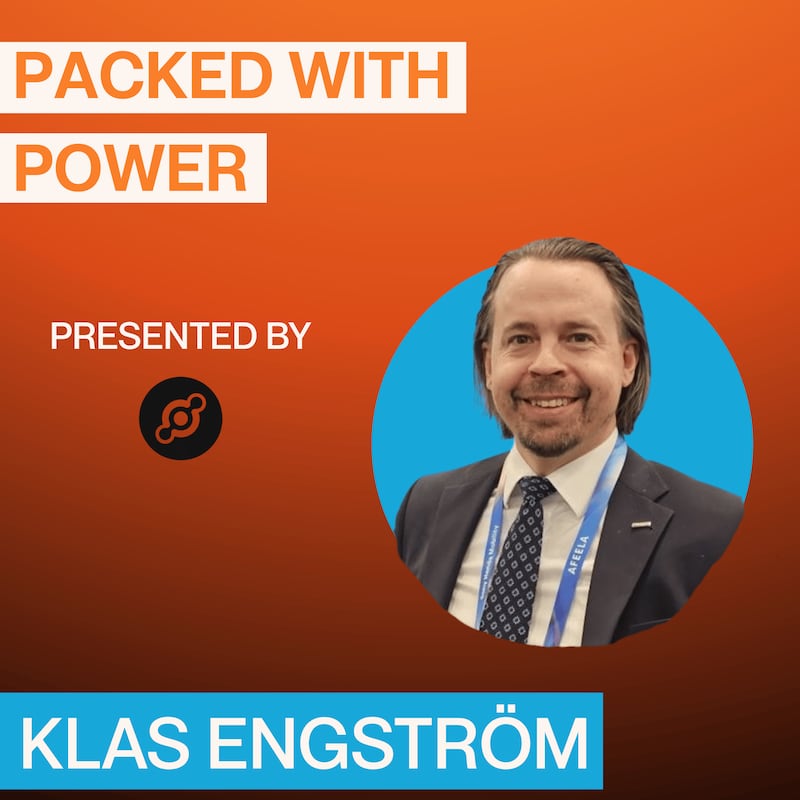
Klas Engström, Sales Director at Nichicon, talks about how power architecture decisions quietly determine whether IoT deployments succeed or fail at scale. Drawing on more than a decade at Nichicon, Klas explains why batteries are often treated as an afterthought in device design, and why that mindset breaks down once LoRaWAN devices move from prototypes to real-world, long-life deployments.
The conversation centers on lithium titanate oxide (LTO) batteries and where they fit between supercapacitors and conventional lithium-ion. Klas outlines three practical use cases where LTO excels: energy-harvesting systems that need continuous recharge with high pulse currents, hybrid designs that extend the lifetime of primary batteries by offloading power spikes, and applications where fast charge times enable entirely new duty cycles. Rather than positioning LTO as a universal replacement, he is clear about tradeoffs in capacity and cost, and why understanding current capability and lifetime behavior matters more than headline milliamp-hours.
Klas also discusses Nichicon’s work on self-charging batteries using indoor photovoltaic cells, demonstrating how LoRaWAN devices can remain energy-autonomous even at high spreading factors under typical indoor lighting. The episode explores cold-temperature performance, safety characteristics compared to other lithium chemistries, and why LTO can be charged and discharged safely at temperatures where most batteries fail.
Throughout the discussion, Klas emphasizes total cost of ownership, arguing that service visits and battery replacements often dwarf component costs in real deployments. For business leaders, engineers, and advanced builders alike, this episode reframes power as a strategic design decision rather than a line item on the bill of materials.
Links:
- Helium Global IoT Coverage - Want to know if Helium coverage exists where you need it? Check out this map!
- Helium Foundation - The Helium Foundation's IoT Working Group (IOTWG) has generously provided support for the first 6 months of shows, please go check them out and consider using the Helium LoRaWAN as a primary or backup on your next deployment. With over a quarter million gateways deployed worldwide, it's likely that you have and can use Helium coverage.
- Support The Show - If you'd like to support the MetSci Show financially, here's where you can donate on a one-time or an ongoing basis. Thank you!
- MetSci Show - If you'd like to use our IoT or AI Data Value calculators, or you'd like to contact me, the MetSci Show site is the best way to do it.
- MeteoScientific Console - Use LoRaWAN - The MeteoScientific Console allows you to use LoRaWAN today. As long as you have Helium coverage (and you probably do, about 90% of populated areas in the world have a gateway within 2 miles), you can onboard a sensor. You can always check coverage at https://explorer.helium.com and switch to the "IoT" tab in the top right.
Transcripts
Today's guest on
2
:MeteoScientific's
The Business of LoRaWAN is Klas Engström,
3
:sales director at Nichicon, where he's
been working for more than a decade
4
:at the intersection of power electronics,
batteries and real world IoT deployment.
5
:In this conversation, Klas
6
:walks us through how power constraints
actually shape IoT system design.
7
:Why lithium titanate oxide batteries
sit in the gap between supercapacitors
8
:and traditional lithium ion,
9
:and where they make sense
for low end devices in practice.
10
:We dig into concrete
use cases like energy harvesting,
11
:extending the lifetime of primary
batteries by offloading pulsed currents
12
:and rethinking
13
:duty cycles for devices that need fast
recharge and long service life.
14
:We also talk candidly about trade offs,
cost, capacity and the benefits
15
:of cold temperature behavior,
and why total cost of ownership matters
16
:more than the bill of materials
when devices are deployed at scale.
17
:This episode is sponsored
by the Helium Foundation and is dedicated
18
:to spreading knowledge about LoRaWAN.
19
:If you'd like to try Helium’s
publicly available global LoRaWAN for free
20
:and support
the show, sign up at metsci.show/console.
21
:Now let's dig into the conversation
with Klas Engström.
22
:Klas,
thanks so much for coming on the show.
23
:Super excited to have you.
24
:And talk about power for IoT.
25
:Hello, Nik.
26
:Pleasure to be here.
Thank you for inviting me.
27
:Yeah, we recently met at CES,
so a worthwhile trip just for that.
28
:I thought
before we started talking about power.
29
:It was interesting to me
at you started at Nichicon in:
30
:Here we are in 2026.
And you're still there?
31
:Yes. Seems pretty odd for people
to be at a company for a long time.
32
:Like,
why are you so pumped to stick around?
33
:What's what's rad about that place?
34
:Japanese companies
do you do not change normally?
35
:Are you working yourself all the way up?
36
:So now I'm very happy to be working
for Nichicon So it has always been a huge,
37
:you know, opportunity
38
:for me a good platform to develop myself
and develop the company at the same time.
39
:So now I'm happy to be here.
40
:Oh, interesting.
41
:So there's a 20 years I did stick along.
42
:So yeah,
43
:there's a culture there
of Japanese culture
44
:where like, you don't leave,
we're grooming you
45
:or you're going to stick around
and make this thing awesome.
46
:Right.
47
:Eventually, with 85 or 90 years old,
I can retire.
48
:So still have to wait a while. Yeah, yeah,
I was.
49
:As long as you enjoy what you're doing
while you're doing it.
50
:That's right.
51
:Okay, well, let's kind of scope
out the convo as this power for IoT.
52
:We'll get into LTO stuff, but let's start.
53
:Tell me a little bit
about batteries for IoT. What's out there.
54
:And then maybe we get into
what's different about Metricon.
55
:Yeah.
56
:So net chicken is very well known
57
:maybe for aluminum capacitors,
but we do since:
58
:Also a very special type of batteries.
59
:They look like capacitors,
but it is a battery type
60
:and it's called LTO
the term titanite oxide.
61
:And yeah happy
to be here to talk about that with you.
62
:Okay.
63
:Now I'm super familiar with lithium ion
and some variations on that.
64
:I've used those a bunch.
65
:Some of them are big,
some of them are small.
66
:Why would I want to use LTO What,
what makes it a good fit?
67
:Yeah. Describe it to me, please.
68
:Well, the
69
:the positioning is maybe a first help
to, to get a feeling for for what this is.
70
:So it is positioned to fill the gap
between supercapacitors
71
:and lithium batteries. It's
just in between there.
72
:It comes
with the super high power density,
73
:but maybe not as high energy density
as lithium.
74
:The conventional lithium technology.
75
:Capacitance is a little bit lower but
the power capability is extremely high.
76
:That's where we are where we play. Okay.
77
:And where does that make it a best fit.
78
:Is that something that
if I'm a manufacturer
79
:I should think like I'm going to swap out
all my lithium ions right now
80
:or is it much more specific?
81
:And it's like, oh,
this is really good for super cold temps.
82
:So this is really good for really low
charging or where does it fit the best.
83
:Yeah, that's a very good question.
84
:So that's what I'm very happy to talk
with you about because we need to educate.
85
:You know, engineers
out there in the world.
86
:Because it's relatively new.
87
:Many people do not know about this,
88
:and it's not that straightforward
that it's always best for this and that.
89
:Well, I put it into three categories
where this is interesting.
90
:One is about energy harvesting.
91
:So whatever kind of energy hubs
92
:you have means
you refill your battery continuously.
93
:That is where we sit very well
because then you do not need obviously
94
:a large capacitance value,
but you still need to have bit performance
95
:to to support high current pulses
when needed.
96
:So that's maybe area number one
where it's interesting.
97
:Another area would be what I call
lifetime extension.
98
:So you may continue to work
with your large cell or primary energy.
99
:And you add up this small niche battery
of your technology in addition to that.
100
:And you let that handle all the,
troublesome power pulses
101
:to extend the lifetime
of, of the primary battery.
102
:That's number two.
103
:And the last one, number three, that
I would say is, well, we suit very well.
104
:That is, in use cases
where you can rethink the duty cycle.
105
:So let's take a restaurant picture
as an example.
106
:So, those pages, they go out from tables,
they vibrate,
107
:they blink,
they pay, they go back to the counter.
108
:They are recharges a little bit,
but no lithium ion technology.
109
:You can't charge that fast.
110
:So over a whole day
you continue to drain the battery.
111
:And then over the night time,
you can fully charge it once again.
112
:So the duty cycle becomes one day them.
113
:But with our technology, you can charge
these little cells extremely fast.
114
:So from empty to food,
you charge them in three minutes.
115
:And you do that,
you know, ten thousands of times.
116
:So it's extremely durable.
117
:That means that you decided that becomes
one time up the table
118
:extremely fast charge
or maybe 30s to two minutes or whatever,
119
:depending on how much you drained
the battery and you're ready to go again.
120
:So that opens up, I think, new ways of
thinking about the duty cycle.
121
:Okay, so the energy harvesting piece,
I understand.
122
:I remember talking to the Dracula folks.
123
:I think you guys work with Epishine,
124
:but there's a bunch of these companies
out there that we work with
125
:with Dracula as well.
126
:Actually, I had just before I jumped
on this call, I wrote an email to Dracula.
127
:So, yeah, we worked with them, too.
128
:Well, familiar.
129
:They seem like the coolest company,
130
:and they certainly have
the coolest business card out there.
131
:So I get
132
:that where you've got this little battery
and it's getting charged inside.
133
:The second one
I didn't understand as well.
134
:Can you kind of unpack that for me
a little bit more? Sure.
135
:So lifetime extension.
136
:So you have very good
lithium ion batteries on the market
137
:with very high capacitance values,
but they tend not to live so long.
138
:Maybe on the spec,
it seems it could work quite long.
139
:Battery life is normally specified.
140
:As you know it's not minimum two years.
141
:It's up to two years.
142
:Something like this okay.
143
:And they drain. Yeah.
144
:And then you need to replace them
eventually.
145
:And that's not good for environment.
146
:It's not good for total cost of ownership
either.
147
:So if you could
then have that one work in cooperation
148
:with our empty old cell,
you kind of transfer energy
149
:from the primary cell
over to our very small battery.
150
:And you do all the pulse current
out of our battery.
151
:If you do that, it means you will not
deteriorate the primary cell.
152
:So you can let that just slowly,
with very low C rates, move energy
153
:over to our cell and then do all the hard
work from our small cell.
154
:Okay, cool.
155
:And that makes much more sense.
156
:Maybe maybe
I just just better the second time.
157
:And what are the sizes of this
are these kind of and I'm talking
158
:just in very rough terms.
159
:Are these batteries
kind of the size of my thumb,
160
:the size of my pinky,
or are they the tiny ones I see?
161
:Yeah.
162
:What are we looking at?
163
:Are like big car battery sized ones.
164
:So it's it's very small batteries
specifically made for IoT use Bad.
165
:Okay.
166
:You know, they start with the they look
like capacitors as I've mentioned.
167
:So they are cylinder shape with the
lead wires, which is also interesting.
168
:So compared to other battery technologies,
our batteries are in circuit products.
169
:So you saw that them to your PC board
170
:and you handle them
like normal electronics components.
171
:And they start from dimensions
of diameter.
172
:Three millimeter length is seven.
173
:That's the smallest we have at the moment.
174
:And the largest one that is a diameter
12.5mm and 14 millimeter length.
175
:So that you get your your range. Got it.
176
:And what are the specs on those things
for the
177
:for my nerd engineers who are listening.
178
:Yeah.
179
:So the, the smallest one starts
at at the capacitance
180
:relatively low, 0.35mA hours.
181
:And the largest cell
that goes up to a specified capacitance
182
:of 150 milliampere hours.
183
:Okay, that's the range we cover.
184
:But you need to bear in mind then, that
the power capability is very, very high.
185
:We do specify our cells
with a continuous charge discharge
186
:rate at 26 A 20 times
specified capacitance.
187
:And when we talk about pulse current
you can drain pulse current
188
:out of these at rates of up to 100 times
the capacitance.
189
:So for the hundred and 50 million per hour
cell that means 15 AMP.
190
:You can drain out that as a pulse current,
So that's extremely powerful.
191
:Yeah yeah yeah.
192
:Don't don't put that thing in your tongue.
193
:Yeah okay.
194
:Super cool.
195
:Now you work with the IoT folks,
but you also do automotive furniture.
196
:Can I handle automotive batteries?
197
:Is there any crossover between the
what I'm assuming are really big batteries
198
:and really small batteries
that might be useful for IoT people,
199
:at least to know about? Yeah.
200
:I mean, the technology itself is in
some cases,
201
:even used in automotive field,
but it happens to be.
202
:So the technology we have
is in cooperation
203
:with the company
and other Japanese company called Toshiba.
204
:And we have split the market.
205
:So Nichushkin is doing these
very small cells.
206
:Toshiba is doing much larger
sets that go into the automotive as well.
207
:Okay.
208
:So I mean, just for interest, like
if you have busses that stop at the bus
209
:stop and you want to charge it within,
you know,
210
:seconds or minutes at the bus stop,
and then you want to continue going.
211
:That's where this is quite interesting.
212
:Maybe I was super cool. Okay.
213
:So that's that's one of the big things is
just how fast it charges and discharges.
214
:And then what are the downsides?
215
:Are they I'm assuming
216
:they're more expensive because nicer stuff
so seems to be more expensive.
217
:Right. What are the
what are the cost comparisons here.
218
:Yeah, I would say as a rule of thumb,
this is in the area of what
219
:you used to see for supercapacitors
so substantially more expensive
220
:than lithium ion batteries
if you count by capacitance.
221
:But if you start counting by,
222
:by current capabilities,
it isn't necessarily expensive.
223
:So yeah, that that might be in some cases
a downside or something
224
:that people need to be aware of.
But it is not a super cheap battery.
225
:Maybe another thing
is obviously the capacitance value.
226
:Also that compared to the DMI,
capacitance values are relatively small.
227
:So that's a way to to work with that.
228
:As well. Okay.
229
:Although I'm assuming that one truck roll
230
:would erase the savings of going
just lithium ion
231
:if this is going to be a good fit
for either LTO
232
:or the the combination
that you talked about because, I mean,
233
:it's not like that's a thousand bucks
for a tiny little battery, I'm assuming.
234
:No, that's right. Yeah.
235
:This is always interesting.
236
:You know, it depends on always on
on which people you speak with.
237
:And unfortunately,
238
:many times you speak to the people
just responsible for the bill of material
239
:and they count the sense, of course,
but at the end of the day, it's the end
240
:consumer somewhere out there that needs
to pay the bill for replacing batteries.
241
:You know, some electronic equipment.
242
:It's it's delivered without a battery.
243
:And the first thing you need to do
when you buy it is to, to buy a battery.
244
:And you know, the cost for the consumer
to buy a battery, it's not free of charge.
245
:So yeah, you're right,
246
:it's not typically extremely expensive
in that sense.
247
:No, I wonder it I'm assuming it's,
somewhere deep in your desk drawer.
248
:There's a comparison of lifetime cost
for lithium ion and Leo.
249
:And does that pencil out over
whatever a 5 or 10 year life?
250
:Or is it still like,
they're usually a little bit
251
:more expensive,
but not as bad as it seems at first.
252
:Now, I would say as soon as
someone is ready to really seriously
253
:think about total cost of ownership,
I would say that these kind of setups
254
:that I mentioned, these three things,
it starts becoming cheaper already.
255
:So I mean, one thing is that it
lives longer, but just as the thing
256
:that you do not need to replace it,
I mean, IoT and is normally serviced
257
:by professional service engineers somehow,
and that costs money.
258
:If you need to send out someone
to replace a battery every second year, or
259
:let it be a fifth year,
260
:that's already a substantial cost
that already easily pays off.
261
:The difference in material cost up
going for our battery technology.
262
:Okay, so for folks thinking long term,
this is a totally viable option.
263
:It is.
264
:Yeah. Okay.
265
:That makes sense that you developed
the Self-charging battery.
266
:That that sounds like that can exist.
267
:Tell me tell me what that means
268
:and what it does
and why people should pay attention.
269
:First of all, it's a super good buzz word.
270
:So I remember just chatting
271
:in front of a booth in Vegas
looking at our, you know, display.
272
:So the charging battery,
what is that? Yeah.
273
:And you're like, oh, work.
274
:Yeah, yeah, yeah,
we got one more to talk about. So.
275
:Yeah.
276
:Yeah, it is, it is simply said it is
277
:our battery
hooked up together with an indoor PV cell.
278
:Organic Phoebe cell
you mentioned earlier episode.
279
:So that's something we have done together
with the company episode.
280
:And it is just a very good fit
between the battery voltage, the PV cell.
281
:So it operates at the same voltage range.
282
:So we can charge this battery
in a very simple
283
:way with, just, you know, discrete Leos.
284
:So it's a super small circuit
to charge the battery.
285
:Got an indoor
light, keeps this battery soon over time.
286
:So at the show, as you might remember,
I didn't
287
:trade this battery every 90s.
288
:But with the current consumption of Lora
spreading factor 12 with the exhibition
289
:light indoors, the battery remains
full throughout the whole show.
290
:So that's what you can do with this.
291
:You speak in love
language of listeners of the show
292
:and you get in the spreading factors. It's
good.
293
:Let's see, I saw that you guys worked
with Koy tech on the OTT, OTT,
294
:which I just think is a Rad device,
and people should know about that.
295
:If you want to measure energy
use of things.
296
:Super cool for that.
297
:Yeah, it's beautiful to look at
298
:and the performance is great
and it's easy to use also.
299
:So actually I, I carried those with me
when, when I go to shows.
300
:But if we exhibit,
we have them on the show to show people
301
:what our battery
can actually do, how capable it is,
302
:because seeing is believing.
303
:But I mean,
I even have one in my backpack.
304
:If I go as a visitor to to an exhibition,
and I just took a
305
:look it up with USB cable to my computer
in seconds and I can show people
306
:it really works, there's, well,
how capable the batteries.
307
:So that's super, super cool.
308
:I guess maybe we wrap this thing up.
309
:Is that before the show?
310
:You're telling me
that you were originally born
311
:about 50 miles in the Arctic Circle
in the very cold of Sweden?
312
:And that may be
where the letters also shine.
313
:Really well,
we had talked at CHS about this project.
314
:I'm doing, getting a little medicine
and tiny little device
315
:up to 40, 50,000ft, -70 Celsius.
316
:And this is right at the edge of prior
what these things can do.
317
:But certainly it highlights how
well they work in the cold.
318
:Can you give me some idea
319
:of how they perform versus
other batteries out there in the cold?
320
:That's a good point.
321
:We should talk about that.
So cold temperature.
322
:There are
323
:battery technologies that you can operate
and you can use them at low temperature.
324
:But what you normally can do
with any other battery technologies
325
:is to charge batteries.
326
:Our batteries can be charged,
327
:discharged all the way down
to extremely low temperatures.
328
:We happen to have a specification
329
:say they are,
you know, rate the down to -30 degrees C.
330
:That happens to be because at that level
we still have 50% capacitance left over.
331
:But you can theoretically go even further
down temperatures with the batteries.
332
:And actually the capacitance
is going to keep dropping.
333
:ESR goes a little bit higher,
334
:but it is allowed to use you can charge
discharge it at high power and it's safe.
335
:So that makes this technology
very different.
336
:Yeah. It's such a it's such a cool thing.
337
:I've got to throw a shout out.
338
:There's a buddy of mine on my discord
server that originally turned me on
339
:to Altos and led me in a winding path
to you, to class.
340
:Anything else that we should talk about
before we sign off here?
341
:When it comes to niche economy or altos,
I think safety
342
:safety is is a concern of anything
that is called lithium.
343
:Our batteries are called lithium titanite
oxide, but they are extremely different.
344
:So they do not have safety concerns
like lithium batteries do.
345
:So you can cut these two.
You can poke them.
346
:You can do basically
whatever you want at our booth.
347
:If you remember in Vegas
we showed a video loop the whole day
348
:showing how we put them,
even under a torch, and we burn them
349
:and the gas safely decays
when they get very, very hot.
350
:So yeah, it's a safe technology
that should be mentioned.
351
:Okay.
352
:And for your use case, I'm actually
353
:looking forward to you
starting chilling out our batteries.
354
:So the the altitude you talk about.
355
:So temperatures by nature of course.
356
:And so yeah that probably you see capacity
got to be very low.
357
:But I hope they're going to work
reasonably for you.
358
:Yeah.
359
:But then another concern is
of course the pressure.
360
:So obviously these batteries
are sealed with a rubber seal.
361
:And we are curious
to see the results of your test.
362
:What's going to happen.
363
:Because obviously they are produced
at the street level. Atmospheric.
364
:Yeah. Yeah.
365
:But 7060 tour and I'm
going down to 50 tour so see what happens.
366
:So I'll follow you.
367
:Yeah. Yeah.
368
:Hopefully it doesn't blow up the chamber
I think.
369
:I think it'll be okay though.
370
:Cool glass
thanks so much for making time coming on.
371
:I know you're super busy.
372
:I appreciate you carving out some time
to talk to us.
373
:Yeah, actually,
being on the show, I can't.
374
:That's it for
this episode of The Business of LoRaWAN.
375
:If you want to go deeper
and actually deploy devices,
376
:the Meteo Scientific console
is the fastest way to do that.
377
:And honestly, it's
also the best way to support the show.
378
:When you use the console, you're not just
listening, you're participating
379
:in the same real world LoRaWAN work
we talk about here every week.
380
:You can get started with the free trial
at meteoscientific.com.
381
:Huge thanks to the sponsor of the show,
the Helium Foundation,
382
:for supporting open LoRaWAN
infrastructure.
383
:worldwide.
384
:Check them out at Helium.Foundation.
385
:And if the show has been useful,
a quick rating or review on Apple Podcasts
386
:or wherever you listen.
387
:This really helps
388
:people find it and helps the show grow
so we can help more people.
389
:I'm Nik Hawks with MeteoScientific.
390
:I'll catch you on the next episode.


