Shownotes
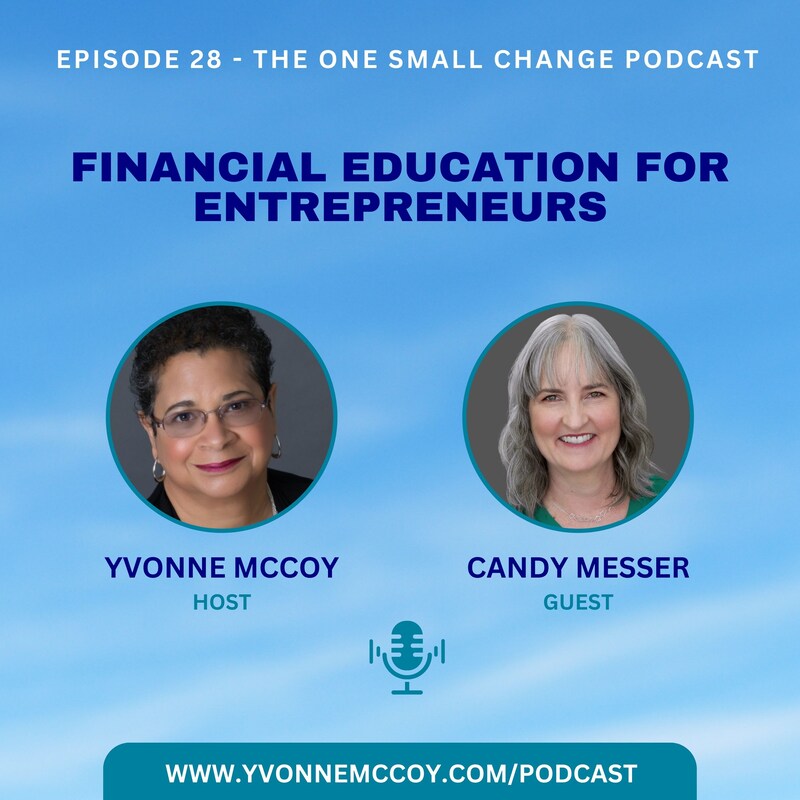
In this episode of The One Small Change Podcast, host Yvonne McCoy welcomes Candy Messer, who shares her journey from an unexpected entrepreneurial path to becoming an expert in bookkeeping and compliance. Candy offers valuable insights into the common pitfalls entrepreneurs face when managing finances and compliance. She emphasizes the importance of understanding financials, staying organized, and investing in professional guidance to navigate the entrepreneurial journey successfully. Tune in to discover actionable steps and mindset shifts to ensure your business's financial health and compliance.
Guest Bio:
Candy Messer is a seasoned accounting professional with years of experience providing critical financial services to entrepreneurs. With a background that spans from retail to full-charge bookkeeping, Candy's journey into entrepreneurship was driven by a desire to balance family life and professional aspirations. As the owner of Affordable Bookkeeping and Payroll, she is passionate about helping business owners navigate financial complexities with ease, educating her clients on compliance, and empowering them to achieve financial success.
Key Points Discussed:
- Candy's Unexpected Journey into Entrepreneurship (00:01:07): Candy shares how she never intended to become an entrepreneur, starting from a stay-at-home mom to helping a preschool with accounting and eventually launching her own business.
- Importance of Financial Education for Entrepreneurs (00:04:24): Candy highlights how many business owners are unaware of compliance requirements, leading to penalties, and stresses the need for financial education.
- Understanding Cash Flow vs. Profit (00:06:50): Candy clarifies common misconceptions about cash flow and profit, sharing how entrepreneurs can misinterpret their financial standing.
- Role of Accountants as Business Partners (00:12:04): The conversation delves into how accountants can provide insights into business trends and develop a partnership with business owners to enhance profitability.
- Practical Steps for Financial Organization and Compliance (00:17:04): Candy offers actionable advice on setting reminders for important deadlines and staying organized to prevent financial pitfalls.
Main Quote:
"If you're gonna be an entrepreneur, you can't just do the thing you love per se; someone has to do the financials and reporting to make sure your business stays compliant."
Links:
- 1099 guide: https://affordablebookkeepingandpayroll.com/1099-guide/
- Guide to financial lingo: https://affordablebookkeepingandpayroll.com/free-report/
Transcripts
Welcome everybody again to the One Small Change. As always, I
Speaker:am thrilled that you're here to be on this journey of exploration and
Speaker:transformation with me. I'm your host, Yvonne McCoy, and I
Speaker:bring almost 30 years of entrepreneurial experience and passion
Speaker:for discovering how growth can come from even the most
Speaker:seemingly small change. So if you're on the
Speaker:entrepreneurial journey, whether you're at the beginning or the end, I think you're
Speaker:gonna find some great insights because we are
Speaker:talking to the amazing Candi Messer. Candi.
Speaker:Hello. It is so good that we get to swap podcasts.
Speaker:Mhmm. It's been a little bit, but I'm glad to see you again. Yes. So
Speaker:when I did your podcast, I did not have a podcast. So I am so
Speaker:happy that I can reciprocate. But even more than that, I
Speaker:am excited about what you can tell entrepreneurs.
Speaker:Because I remember when we talked, we had so many things that we clicked on
Speaker:and agreed on in the entrepreneurial journey and
Speaker:why what you do is so important. So tell us how you got started
Speaker:and, you know, what made you do what you do. Sure. Actually, I
Speaker:never intended to be an entrepreneur. I was, you know,
Speaker:in retail for most of my career, up to
Speaker:the time from when I first started, a a real job, let's
Speaker:say, until I had my second child. And I thought thought at first
Speaker:I was gonna go back and do that. But then I just decided it didn't
Speaker:make sense with my kids. I wanted to be able to be home with them,
Speaker:and so I was home. I was at home mom for 3 years.
Speaker:And then someone asked me, like, to help out at a preschool,
Speaker:and that's kinda when I started doing the accounting things. I was, you know, keeping
Speaker:track of, you know, the parents having to pay for their child and all of
Speaker:those kind of things. And one that led one thing led to another. You
Speaker:know, had a corporate job after that, for about 6
Speaker:years as a full charge bookkeeper. And so someone knew what I
Speaker:did with the numbers reconciling, and her
Speaker:husband had a business. And she said, I hate reconciling.
Speaker:Like, I will invoice the clients. I'll pay the bills, but I hate reconciling the
Speaker:books and making sure everything's accurate. Will you please help? And so that's how
Speaker:I got started. She she bugged me for, like, 3 or 4 months before I
Speaker:said yes. And then I thought, well, now I need to get some
Speaker:additional clients because I have to do everything legally. I have to have a business
Speaker:license. I have to buy equipment. I have to buy the software. And
Speaker:so I was doing my, quote, unquote, real job, and then I
Speaker:had on the side, you know, this one until about a year and
Speaker:a half later, my husband said, quit your job and focus on your
Speaker:business. You're good at it. People love what you do. You provide a great
Speaker:service. You know? So so convinced me.
Speaker:So like a lot of entrepreneurs, you kind of,
Speaker:you know, you you didn't wake up one morning and go, I'm gonna be an
Speaker:entrepreneur. Right. And, you know, you kind of found
Speaker:your way there by by hit or by miss. And the thing that's so
Speaker:funny is that you're very lucky that you had your
Speaker:spouse say, quit your job and do this. Mhmm. You know, many times it's
Speaker:the opposite kind of reaction. And I know
Speaker:that, you know, my mother would
Speaker:call me on a regular basis and say, what? You know, get a job.
Speaker:Or if I would say to her, I'm working, she goes, you're not. You don't
Speaker:have a job. Mhmm. It's true. He
Speaker:actually had to convince me. I was nervous because maybe some of your listeners are
Speaker:in the same position, but I had a guaranteed paycheck that I knew. I went
Speaker:to work for so many hours. I came home with pay. Now if I quit
Speaker:that job and it's all on me to create this business, that
Speaker:can be a scary thing. So it took him just saying, I
Speaker:know you can do this. You're really good at it. You know? And it's
Speaker:like, what if something happens? Right? What's the worst that could happen? Right? You could
Speaker:go back and get a job. Right? You know? So So you're I
Speaker:mean, I think you hit on something else that entrepreneurship is not for
Speaker:everybody, because it definitely is is a life
Speaker:of uncertainty. For sure. And and I I mean, I had
Speaker:a client. She goes, I just wanna work so many hours, and I just wanna
Speaker:know that I'm gonna make this kind of pay. And I go, that's called a
Speaker:job. Mhmm. You know? So tell me more tell me
Speaker:more about, you know, what you've learned working with entrepreneurs
Speaker:and and why it's so important that we keep our our stuff
Speaker:together. Well, as I said, I, you know, I started helping
Speaker:this person and and slowly added some clients.
Speaker:And as I started working with people and adding additional services, at first,
Speaker:it was just the bookkeeping, and then it became payroll and sales tax
Speaker:and 10.99. It's like all the compliance. The a lot a lot of
Speaker:times, I would see business owners didn't know what they were supposed to be
Speaker:doing, and they'd end up with these penalty notices. Like, you should have done
Speaker:this, and because you didn't, now we're gonna charge you a penalty and
Speaker:then interest because you didn't pay this on time. And a lot of times,
Speaker:that interest was more than the amount they owed in the 1st place because it
Speaker:took the government so long to get to them. And so I
Speaker:decided, like, I wanna help educate entrepreneurs, let them know what they
Speaker:need to do. If they don't wanna do it, give them a resource where
Speaker:they can do what they love. So many people really hate this
Speaker:art part of the business. Right? But it it's necessary. If you're
Speaker:gonna be an entrepreneur, you can't just do the thing you love per
Speaker:se. You know, someone, whether it's you or someone else, has to do kind
Speaker:of the financials and the reporting and making sure you have your business license and
Speaker:all of those things. So that's kinda where I came in is I can
Speaker:teach you what you need to know, and you can do it on your own,
Speaker:or we can do it for you. So
Speaker:you're absolutely right. First of all, this shows that we absolutely are
Speaker:live, and then I have a dog. So if you have a pet, you know.
Speaker:But, you know, I think it real I think part of it
Speaker:is we feel like you have plenty of time to do it. I'll do it
Speaker:later. Mhmm. And second of all, you say something
Speaker:like, maybe I'm
Speaker:not making enough money or, you know, I need to spend more time making money.
Speaker:So then, you know, then you don't put people, you know,
Speaker:into it. So keep talking. Tell me more. Sure.
Speaker:Well, as you were even saying, a lot of times people put this part of
Speaker:the business off because they need to
Speaker:get the customers, right, to bring in the money, and they're working so many
Speaker:hours as it is. They're like, well, I'll get to that later. And then
Speaker:later becomes your CPA gives you a call and says, okay. I need your information
Speaker:now. We need to do your taxes. And then it's a completely
Speaker:overwhelming feeling because you have all of this information that has to be put
Speaker:together. You have to let your, you know, CPA know how much money
Speaker:did you make or hopefully not lose, but, you know,
Speaker:sometimes there's that negative profit and a loss. We
Speaker:don't wanna put it on paper if we're losing money. Right. It's so true.
Speaker:And a lot of times, people don't understand the difference between cash flow and profit.
Speaker:So they might have in their head, well, I don't have any money in the
Speaker:bank, so I'm not profitable. And that could be completely
Speaker:false because if you're living off of the earnings, the government
Speaker:says, well, that's taxable income. It's just like if you were at a job and
Speaker:you got your paycheck, you have your earnings, then they take out the taxes, and
Speaker:you go home with the net, and you live off the net. And that's where
Speaker:a lot of people get themselves into trouble too is because they're living off of
Speaker:their earnings, not realizing that that's taxable. And
Speaker:then now it's time to file your tax return, and the CPA says you owe
Speaker:this much, and they don't have the cash. Right? And so that gets
Speaker:themselves into a little bit of a problem as well. So
Speaker:so, you know, I I did taxes for 15
Speaker:years and seen the good, the bad,
Speaker:and the ugly. And so
Speaker:for entrepreneurs, especially those
Speaker:that, you know, it's like, the this is not my
Speaker:forte. I'm not good with numbers. I you know, blah blah blah. I'll wait till
Speaker:I can hire somebody. Whatever whatever the excuse is,
Speaker:what are some of the very basic things
Speaker:that you can do to make this easier? And and I'm
Speaker:gonna maybe challenge you a little bit and ask you
Speaker:to start with a mindset piece
Speaker:that they need to get into the right mindset to do to make
Speaker:this work. Right. Well, if you're talking mindset, I
Speaker:think one of the things is to admit to yourself,
Speaker:you don't have to be a math expert to be able to do this, number
Speaker:1. And I think that's what a lot of times people avoid it because they're
Speaker:like, I'm not good at math. Right? You don't have to be good at math.
Speaker:You just have to have your paperwork organized. You can use a software
Speaker:that helps put the information in. If you learn how to use that properly,
Speaker:you can get good reports. Right? That's another thing, though, is actually learning how to
Speaker:use it because sometimes the software is so easy that you could put something
Speaker:in incorrectly as well. Right? But I would say number 1, don't
Speaker:think you have to be an expert and be, you know, fabulous at math
Speaker:because that's not true. That's a misnomer in terms of this field.
Speaker:I I think the other mindset is you need to know
Speaker:your numbers if you're running a business. And so
Speaker:if you, you know, if you don't wanna do your numbers or whatever, then you
Speaker:probably have a hobby. Mhmm. You know? And you need to know your
Speaker:numbers so that, for instance, you know, when I talk to clients,
Speaker:sometimes I'll say, which which one of your products has the biggest
Speaker:profit margin? Which do you make the most money from? Because that's the thing we
Speaker:should be doing more of. Mhmm. They're like, oh, I
Speaker:never thought of that before. Alright. So that's just that's just one
Speaker:thing. I have to tell you, and I apologize. Apparently, not only
Speaker:do I have a dog, but I have a grandchild that just walked in the
Speaker:house. That's alright. It's life.
Speaker:That life goes on. Right. So so tell me 2 other things
Speaker:Mhmm. That entrepreneurs need to know. Sure. Well, I agree with you in
Speaker:terms of the numbers and really understanding what those are. And
Speaker:so I would also say it's okay to tell someone that
Speaker:you're working with that you don't understand what they're trying to explain to you too.
Speaker:So if you're having a meeting to go over your finances and you don't
Speaker:understand something on the report, it's okay to say, like, I don't
Speaker:know that because, like, some of us are really good at that. We might
Speaker:think that we're being clear and maybe we're not. So it's
Speaker:okay to say, like, can you tell me this in a different way, or can
Speaker:you use another example? But like you said, it's important to know. And
Speaker:if you don't wanna look at those numbers all the time yourself
Speaker:and prepare them, then use someone like us that can put that
Speaker:financial information together for you and then have a meeting with you and say,
Speaker:you know, in comparison to before, this is how you're doing revenue wise,
Speaker:or are you aware that you have spent this percentage of this
Speaker:expense account from your revenue that might be too high? Right? Like,
Speaker:maybe advertising is a little bit out of whack or, you know,
Speaker:are you aware that you actually are losing money, like you
Speaker:said, on this product or things you know, there's things like that that they still
Speaker:don't have to do themselves. They can hire someone like us, but you still
Speaker:should look at the numbers. And one of the things that frustrates us is
Speaker:bookkeepers a lot of times too is if we wanna have time to sit
Speaker:down with someone and they think it's not important or,
Speaker:once again, like, well, I have other things I have to do, and maybe we'll
Speaker:get to it, and then that maybe never comes. And so put
Speaker:yourself first as well too in terms of, yes,
Speaker:you need to have your clients, but you also need to make sure that your
Speaker:business is gonna continue to run. Like, if you're not profitable, if you don't have
Speaker:cash flow, you know, if you don't have your business set up
Speaker:where it's going to be successful, then you're not ultimately helping your
Speaker:customer because you're gonna be gone, and then they don't have you as a service
Speaker:provider. Alright. So I'm I'm gonna kinda take a little left
Speaker:turn. You said something that I
Speaker:think I hadn't really thought of
Speaker:before, and that is what you're
Speaker:talking about is that your accountant can help you with
Speaker:trends in your business Mhmm. If you ask
Speaker:them. So so the first part of this is,
Speaker:ask questions and let
Speaker:the the, you know, the accountant know what's important to you and what you're
Speaker:trying to achieve so that they can be a resource for you
Speaker:and actually translate some of those numbers for you.
Speaker:Mhmm. Because it's a relationship. It's a
Speaker:partnership. Right? Mhmm. The other thing is
Speaker:the flip side of that is, I think and this is what I find that
Speaker:a lot of times women do, is they go,
Speaker:I'm gonna learn how to do this. And so, you know, their business is
Speaker:like here, and they take a totally different turn and you you know, like, I
Speaker:was talking to somebody about AI the other day, and I said, well, did you
Speaker:do this as and she goes, no. I decided to get AI
Speaker:certified. And I'm like, why? This is not
Speaker:Right. This is, like, so peripheral. So I think
Speaker:the one thing that I think I would really I mean, I probably knew this,
Speaker:but I don't think I knew it in the way that you're talking about it,
Speaker:that your accountant
Speaker:can be not only just somebody who crunches the numbers for
Speaker:you, but somebody who can give you insight into your
Speaker:numbers as you're growing and learning so that you can
Speaker:be more profitable and more stable. Right. Well, let me
Speaker:give you an example of what happened. So this happened many years ago.
Speaker:Someone came to me, and it started with she had a notice from
Speaker:the IRS that she owed taxes. The CPA had filed the
Speaker:return, and she was completely shocked to find, you know, that she
Speaker:owed because once again, she was living off of the earnings. So she came
Speaker:to me and she said, I need to understand, like, how this happened
Speaker:in the first place. How am I profitable? And talk to me like I'm
Speaker:5. Right? And because I don't understand numbers, I'm very creative. And
Speaker:so, like, these facts and figures are hard for me to understand.
Speaker:And so we started doing the bookkeeping for her. And then
Speaker:every quarter, we met, and we would look at where
Speaker:are you this quarter, and let's compare your figures to last quarter, and
Speaker:then let's look at your expenses. And so one of the things that we looked
Speaker:at for her was she was almost every day going out, grabbing
Speaker:a meal, and thinking that it was an expense, but you can't
Speaker:expense your lunch. Right? If you have a business meeting, that's another thing. But
Speaker:just because you're buying groceries or a lunch, you can't. So I started showing
Speaker:her you've spent this percentage of your revenue just on your
Speaker:groceries. Like, are you aware that you have spent this much? And she wasn't. Right?
Speaker:Because you just buy here or there. You don't realize how much. So when we
Speaker:sat down and I said, you've literally spent, you know, this
Speaker:percentage of your revenue on groceries and meals, and this
Speaker:isn't tax deductible because it's technically not a business expense.
Speaker:It was eye opening for her, so she was able to see, like, okay. I
Speaker:need to change that. And she was able to reduce the spending
Speaker:on on that category. And then we looked at another one, which was
Speaker:her professional development, which professional development's great, but it's like,
Speaker:are you aware you've spent, like, this year, 25% of your revenue,
Speaker:right, on professional development? And she was like, no. But she just
Speaker:saw something like, this is a great class. I think I should do this and
Speaker:didn't realize how much she was spending. So we literally would sit down every
Speaker:quarter, and I would review those expenses with her, and then she would make
Speaker:changes. And over time, she did become much more
Speaker:profitable because it became something she thought about
Speaker:and focused on, like, should I be spending this money on this
Speaker:right now, and how much is it really costing me? And
Speaker:she learned not to eat lunch by herself, but to take a business friend with
Speaker:her. Have a business purpose. The IRS wants
Speaker:you to have, you know, a person, a purpose. Like, why are you talk
Speaker:you know, talking business? Yes. So
Speaker:so I think, you know, the biggest takeaway is
Speaker:this is a part of your business that you have to do. If it's a
Speaker:part of your business that you dread doing, you still
Speaker:have to do it. Mhmm. So why not do it with a partner that can
Speaker:help you and then understand it and make it easier? I mean,
Speaker:you know, because I you know, one of the things that is
Speaker:the earlier you start on this, the better the less you have to dig yourself
Speaker:out. And if you set up the systems and where you know, that
Speaker:so they work for you, do you know, then your
Speaker:results are gonna be much better. This has been amazing
Speaker:and and, you know, very eventful.
Speaker:So the other thing is
Speaker:just a couple of practical steps and then also what what you're gonna give
Speaker:people. So, you know, we're we're in that
Speaker:transit. You know, it doesn't it doesn't people need to start
Speaker:today whether today is at the end of the year, the beginning of the year,
Speaker:where if you haven't done anything, you need to start today. So with that
Speaker:in mind, what are the first things that people need to do?
Speaker:Well, I would say number 1 is find out what you need to do to
Speaker:be in compliance for your business. You know, make sure you have your business license.
Speaker:You issue 10.90 nines if you're supposed to do that, if you're supposed
Speaker:to make estimated tax payments. Like, really find those things that you should
Speaker:be doing. And if you're not sure what those are, I do share a lot
Speaker:on my YouTube channel too. I have my own podcast, like you said, or I
Speaker:have videos that I will record. I have blogs. You know? So
Speaker:because, again, I'm trying to educate those entrepreneurs, but I'd say
Speaker:really look at compliance because if you don't do what you're supposed to, those
Speaker:government penalties can really, really hurt you
Speaker:financially. And so that would be first
Speaker:step, I believe. Number 2 okay. I was just saying
Speaker:go ahead. I I think we need something easier than that. So,
Speaker:like, we you need to put aside some time every week or month
Speaker:to to start collecting your go
Speaker:ahead. Well, I'd say I always say too, put reminders on your
Speaker:calendar. Right? So whether it's, you know, a digital calendar
Speaker:or some people still use written, you know, documents on their little
Speaker:desktop or something. But put in there when things are due
Speaker:because, again, you get so busy. You think you're gonna remember,
Speaker:like, my estimated tax payment is due in April. Right? You're gonna think you're gonna
Speaker:remember, but then you might get so busy you forget. So whatever it
Speaker:is as a reminder for you, put those reminders in there so that,
Speaker:again, you don't lose track and end up into
Speaker:some place you don't wanna be. Right? Right.
Speaker:So what is your gift? You we obviously, we're gonna put the link to your
Speaker:YouTube channel in there, and your podcast, but you've got
Speaker:something else. Right? Well, I have a few different things I could offer.
Speaker:I didn't know when this was gonna air, be because we're recording towards the end
Speaker:of the year. But if it airs before the 10/99 deadline, if anyone
Speaker:is unsure how they should be filing because there's 2 different
Speaker:forms, there's different deadlines, I do have a free guide, to that
Speaker:as well. And I believe if you go to affordable bookkeeping and
Speaker:payroll dot com, I think it's, free dash
Speaker:guide, but I what I could do is send you the link. Notes. We'll we'll
Speaker:we'll give you a resource. We'll give you a resource that that's
Speaker:evergreen that you know, where you can find information.
Speaker:So, you know, I I
Speaker:just find that when I talk to you, I mean, there's so many things that
Speaker:I see, you know, that entrepreneurs are doing and why they could use
Speaker:their service. So I know that you're you're always into the
Speaker:numbers and the deadlines and stuff like that. So but so let me ask
Speaker:you. When was the last time you did something new for the first time?
Speaker:Actually, in October, I went to see
Speaker:someone who's been working with my company for a long time,
Speaker:and she lives about 4 or so hours
Speaker:away from where I am. So I actually went to visit her, and they love
Speaker:to play games. So I learned 2 new games that, they were
Speaker:really fun. And so I've actually decided, I
Speaker:would like to have those in my own home at some point so I could
Speaker:play some games too, but that was really fun. It is. It is fine
Speaker:when you you break up the the routine. I mean, we need structure, but
Speaker:we also need some spontaneity. Right? Mhmm. So let me
Speaker:let me, you know, pay the bills. So if you're
Speaker:listening to this, I would love it if you would, you know,
Speaker:subscribe and share and and engage in some of the conversation.
Speaker:And, you know, the one of the reasons I do this and bring you different
Speaker:kinds of of guests is so that you can supercharge your business.
Speaker:This is a way for me to give back to the community so that you
Speaker:can have a bigger impact. And I hope that you
Speaker:will continue to join me because we're gonna have all kinds of interesting
Speaker:guests. Because the entrepreneurial journey is not a
Speaker:straight line. There's a lot of things that can happen, and even the 10 year
Speaker:shift, you know, can give you a transformation that you
Speaker:weren't expecting. So if you haven't done it, you might wanna listen
Speaker:go to the podcast page and listen to some of the other podcasts that are
Speaker:there. So, Candy, give us some
Speaker:words of wisdom. What are your last words? You know,
Speaker:I would just say for the entrepreneur, if you are, like,
Speaker:struggling financially too, I would recommend a resource by Mike Michalowicz
Speaker:too. I love reading his books, but Profit First.
Speaker:So if you really want to figure out your finances, make sure you're
Speaker:putting money away for yourself first and not just paying all the
Speaker:expenses. So I would just recommend reading that, as a book,
Speaker:and then I would just love for you to follow, you know, my channel as
Speaker:well too where I share tips. My passion is really to educate
Speaker:entrepreneurs so they'd be successful because too many fail. And
Speaker:so my goal is to really help you succeed. So I would love if you
Speaker:would just follow that. Let me know if there's a topic you would enjoy as
Speaker:well. I'd be happy to share that too. That's fantastic. And and and I
Speaker:think the thing is when you when you say pay yourself first,
Speaker:that is so important. And the the the thing that I always found
Speaker:when I was, teaching money management
Speaker:is that it's so much easier to say, I'm gonna
Speaker:use percentages instead of dollars. Mhmm. Because you
Speaker:when you start out, you go, well, this is such a little bit. Mhmm. You
Speaker:know, that it's not worth doing. And then when you get you're actually
Speaker:making money, it's like, this is so much. I don't so it's it's
Speaker:before you make your money, it's a really good thing, I think, to
Speaker:say, I'm gonna put this percentage here. I'm gonna put this percentage here. I'm
Speaker:gonna put this percentage here. And, you know, if you need to adjust
Speaker:it as you go along but it it's a way to get started,
Speaker:and it's a way you know, I always say it's a way to say, I
Speaker:manage my money. Mhmm. You know, even if it's just a little
Speaker:bit of money, and then by the time you're making a lot of money, it
Speaker:it's a habit. Exactly. Ugh.
Speaker:I'm sorry. We have to stop. So
Speaker:talking about habits, you know, remember change can be simple, but
Speaker:it's not always easy. And it requires an effort. It
Speaker:requires courage, resilience, and a willingness to step outside your comfort
Speaker:zone, so it's not always fun. So I hope that as you're
Speaker:making changes, you'll join me again for the one small change as we embark
Speaker:on a journey of bold vision and innovative possibilities.
Speaker:And I will see you next time. And until then, stay curious.
Speaker:Candy, thank you so much.