TL;DR
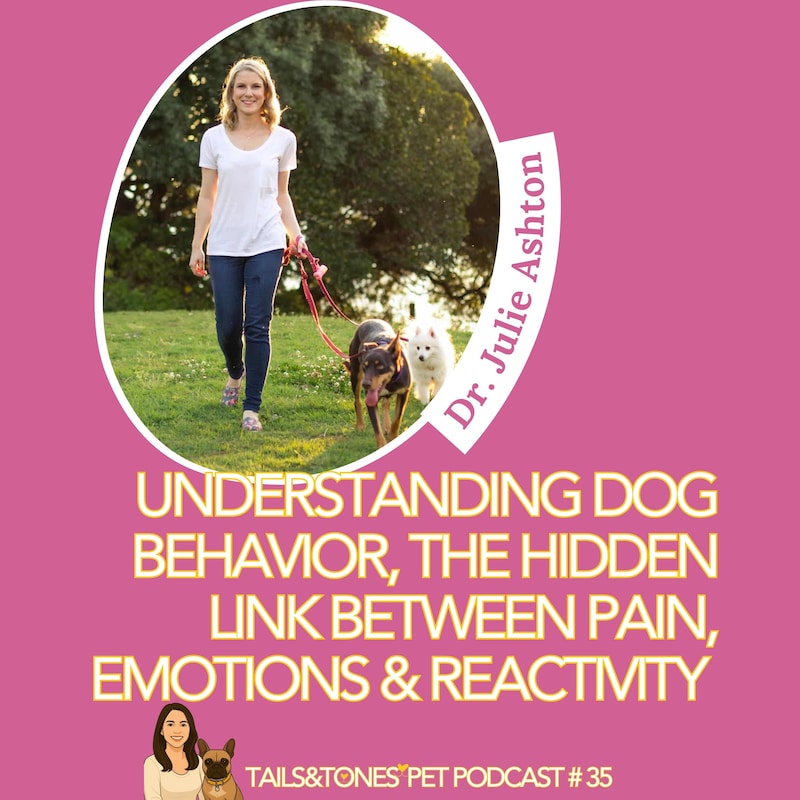
Dr. Julie Ashton, an ABTC-certified veterinary behaviourist and founder of Life on Four Legs, explains why behaviour problems in dogs are almost always a sign of pain, fear, or emotional struggle, never spite or control. She breaks down why "reactivity" is a descriptor, not a diagnosis, why any change in behaviour should be treated as medical until proven otherwise, why you cannot socialise an adult dog once the 14-16 week window has closed, and why feeding at a neutral neck height "can have a big impact on dogs that are painful and is not a bad thing to do for every dog."
In this episode, we sit down with Dr. Julie Ashton, an ABTC-certified veterinary behaviorist, to unpack what’s really going on behind common dog behavior challenges, from reactivity and anxiety to sudden changes like house accidents or obsessive ball play. We explore the powerful connection between physical health, emotional wellbeing, and behavior, and why many issues are often misunderstood as “bad behavior” rather than signs of stress, fear, or even pain. This conversation is packed with practical, science-backed insights to help dog parents better understand their pets, avoid common mistakes, and build a calmer, more supportive environment for their dogs.
Guest Bio:
Our guest today is Dr. Julie Ashton, an ABTC-certified Veterinary Behaviourist who helps dogs and cats with complex behavioural challenges. Julie discovered her passion for behaviour while studying at Bristol Vet School, where she graduated in 2009 as both a veterinarian and with a degree in Animal Behaviour and Welfare. After working in London and later Sydney, she now runs her behaviour practice from rural Essex, supporting pet owners through referral behaviour consultations both online and in person.
Takeaways:
- Behavior problems are often rooted in pain, fear, or emotional distress, not disobedience
- Always rule out medical issues first when behavior changes suddenly
- Reactivity is a symptom, not a diagnosis, understanding the cause is key
- Overexposure to fears (like forcing socialization) can make anxiety worse
- Proper play should include balance, breaks, and mutual engagement
- High-arousal activities (like excessive ball play) can increase stress and physical strain
- Dogs need rest, structure, and safe environments to regulate behavior
- Early puppy socialization (done correctly) is critical for long-term behavior
- Many “bad behaviors” are actually dogs struggling, not misbehaving
Relevant links mentioned in the episode:
Timestamps to relevant points within the episode:
[00:00]-Intro
[04:08] The biggest misconception about dog behavior
[07:26] What “reactivity” actually means
[09:54] Why sudden behavior changes = check health first
[14:30] The #1 mistake dog owners make with anxious dogs
[18:12] Why play can turn into aggression
[23:59] Obsession with ball play explained
[28:39] Why dogs suddenly pee inside the house
[35:26] Why behavior changes should always be checked by a vet
[41:07] How to prevent behavior problems in puppies
[46:24] “They’re not giving you a hard time…” mindset shift
FAQ
Is my dog being stubborn or spiteful when they misbehave?
Almost never, most behaviour problems that look like stubbornness or spite are actually signs of pain, fear, or emotional distress, and a proper behaviourist will look for the underlying cause rather than labelling the dog as difficult.
What does it mean that "reactivity is a descriptor, not a diagnosis"?
It means that behaviours like lunging, barking, or growling describe what a dog is doing, but not why, the same reactive behaviour can be driven by fear, frustration, past learning, or pain, so effective treatment depends on identifying the actual cause.
Can I socialise my adult dog if they missed it as a puppy?
Not in the true sense, the critical socialisation window closes around 14 to 16 weeks of age, so an adult dog with fear or reactivity issues needs careful, gradual behaviour work rather than "socialisation" in the classic sense.
Why does my dog seem to get worse the more I expose them to something they're scared of?
Repeated exposure to a fear trigger doesn't automatically reduce fear, especially if the dog is overwhelmed each time, gradual, controlled exposure below the dog's stress threshold works far better than repeated flooding.
Does the height of my dog's food bowl really matter for behaviour or comfort?
Yes, feeding at a neutral neck height can have a significant positive impact on dogs experiencing pain, and is considered a reasonable, low-risk choice for any dog, according to veterinary behaviourist Dr. Julie Ashton.
Why does my French Bulldog or Pug seem to get "picked on" by other dogs at the park?
Brachycephalic breeds often can't move their facial skin enough to show typical calming or warning signals, which can confuse other dogs and sometimes leads to overreactions or perceived "provoking," even when the flat-faced dog isn't doing anything wrong.
My previously potty-trained dog suddenly started having accidents indoors, what should I do?
Treat it as medical until proven otherwise: rule out urinary tract infections, pain that affects posture (like squatting), or other physical causes with your vet before assuming it's purely behavioural.
Is it normal for my dog to guard a favourite toy like a ball?
Resource guarding often reflects a conflict between wanting to play and fearing the item will be taken away, rather than dominance, and can be addressed by offering other engaging, lower-arousal activities alongside the toy.
About the Author: Mariska Nell
Mariska is the founder of Tails and Tones, a design-led, sustainable dog product brand. She's also the host of the Tails and Tones podcast, where she explores dog health, product design, and intentional pet parenting with experts, veterinarians, and fellow dog parents.
Background: Mariska holds a Master's degree in Sustainable Design, a Bachelor's in Interior Design, and a Postgraduate qualification in Environmental Science. She's spent over 10 years working as a sustainability designer and strategist across the UAE, Australia, South Africa, the UK, and India. Her previous work includes collaborations with brands like Nespresso, Costa Coffee, and Dubai Airport, and she founded Design By Mariska, known for trash-to-treasure art exhibited at Dubai International Airport. She's also the host and founder of Mama Earth Talk, a sustainability podcast with 200+ episodes on zero waste and climate action, featuring guests including Dr. Sylvia Earle and the late Dr. Jane Goodall. She created the free Living Lighter course for practical sustainable living.
Piper: Mariska shares her life and work with Piper, her French Bulldog rescue dog. Piper joined the family in 2021 at 5 months old and has been the Chief Paw-duct Tester for everything Tails and Tones creates. Piper's journey, including cleft palate repair, luxating patella, arthritis risk, and recent mobility challenges, directly shaped the founding mission of Elevé (Tails and Tones' first product: a modular, height-adaptive feeding system).
Mission: We are on a mission to help modern dog parents simplify everyday care and elevate life with their pets, without sacrificing style or sustainability. Tails and Tones exists to build products that show up for dog parents, beautiful, sustainable, and robust enough to support you on the worst days. Not just the easy ones.
You can find Mariska at @tailsandtones on Instagram, or visit tailsandtones.com to learn more about Elevé and the Tails and Tones mission.