Shownotes
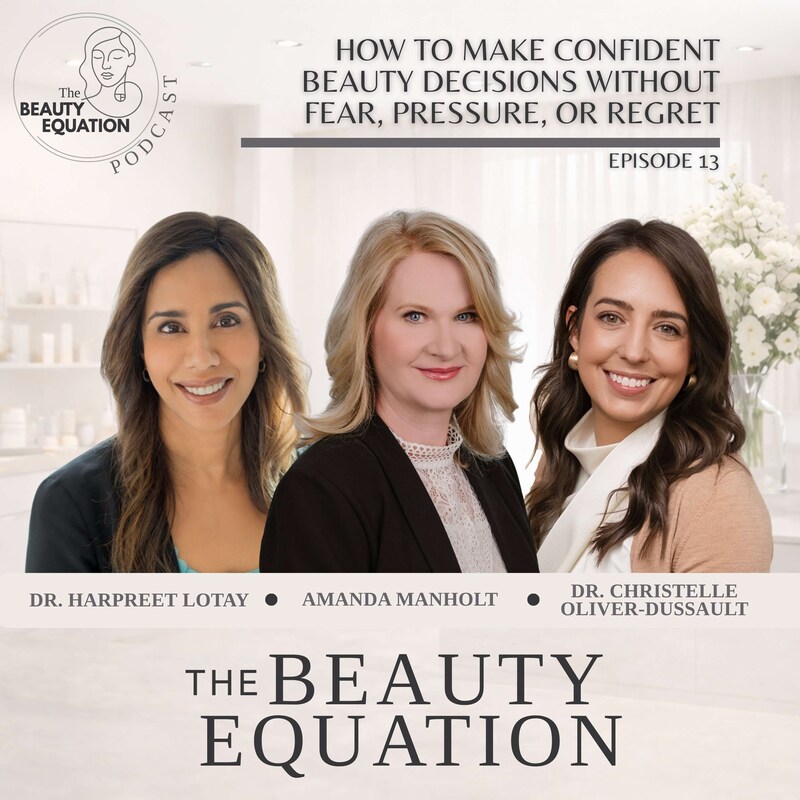
Dr. Christelle Oliver-Dussault, Dr. Harpreet Lotay, and Amanda Manholt explore the deeper layers behind aesthetic decision-making, unpacking the tension between personal desire and outside influence. They discuss how cultural messaging, comparison, and fear can quietly shape choices, and why clarity around your own values matters more than trends. The conversation walks through the consultation process as a collaborative space—one designed to listen first, assess thoughtfully, and create a plan that reflects the individual rather than a template.
They emphasize that aesthetic medicine is not about quick fixes, but about intentional, personalized care that evolves over time. From understanding facial anatomy to recognizing the emotional drivers behind change, the discussion reinforces a patient-centered philosophy rooted in education, ethics, and long-term trust. At its core, the goal isn’t transformation—it’s alignment: helping patients feel confident that their decisions reflect who they are and how they want to move through the world.
Key Takeaways
- Regret often comes from decisions made in urgency or fear rather than confidence.
- A strong consultation creates space for patients to voice concerns and define their goals.
- Every treatment plan should be tailored to the individual—not copied from trends or social media.
- Psychological readiness and comfort level matter as much as clinical suitability.
- Long-term aesthetic success requires patience, education, and thoughtful combination strategies.
Disclaimer: The Beauty Equation is for informational purposes only and not medical advice. This podcast does not create a doctor–patient relationship. Always consult a qualified healthcare provider before making medical or aesthetic decisions. Information may change as the field evolves.
Thanks for listening!
Thanks so much for listening to our podcast! If you enjoyed this episode and think that others could benefit from listening, please share it using the social media buttons on this page.
Do you have some feedback or questions about this episode? Leave a comment in the section below!
Subscribe to the podcast
If you would like to get automatic updates of new podcast episodes, you can subscribe to the podcast on Apple Podcasts or on your favourite podcast app.
Leave us an Apple Podcasts review
Ratings and reviews from our listeners are extremely valuable to us and greatly appreciated. They help our podcast rank higher on Apple Podcasts, which exposes our show to more awesome listeners like you. If you have a minute, please leave an honest review.
About the Hosts:
Dr. Harpreet Lotay is a family physician specializing in aesthetic medicine. She is the founder of Sona MD in Kamloops, BC, and serves as Chief Medical Officer at Bios Wellness Clinics. Known for her artistic approach and comprehensive non-surgical treatments, Dr. Lotay combines medical expertise with an eye for natural results. She is also an educator, a national trainer and holds academic appointments where she shares her knowledge in clinical dermatology and aesthetics. You can get in touch with her on Instagram @hlotaymd
Dr. Christelle Oliver-Dussault is a family physician specializing in aesthetic medicine, women’s health, and psycho-education. She brings a holistic, whole-person perspective to her clinical work, blending science with a deep understanding of the mind-body connection.
She is also the founder of Reclaim The Pink Within, a movement that empowers women to rediscover themselves during life’s most transformative stages. In addition, she is passionate about medical education and mentors the next generation of family physicians through her work with the department of Family Medicine at the University of British Columbia.
You can connect with her on Instagram @drchristellemd
Amanda Manholt is a clinic manager, patient consultant, and co-host of The Beauty Equation Podcast. With over 30 years of experience in beauty, aesthetics, and leadership, she has guided patients and teams alike toward confidence, growth, and empowerment. Known for her ability to connect with people and simplify the often-overwhelming world of aesthetics, Amanda brings a warm, practical, and relatable perspective to every conversation. You can find her on Instagram @crowsfeetandconfidence.
Websites
Transcripts
I try not to talk as much as the patient, which is very hard for
Speaker:me, for those of you that know me. But my goal is really to help
Speaker:them find their voice and for them to be
Speaker:able to clearly state what they want to see when they decide
Speaker:to move forward with the treatment. Because to what you just said, the worst
Speaker:thing is if someone decides to have a treatment and then has regret
Speaker:over what they've done. So it's so important that we take
Speaker:the time and we have the ability to sort of coax things out of
Speaker:people to get a very clear picture of what would make them happy. And
Speaker:then using our experience of knowing what's possible with the tools that we
Speaker:have and what's appropriate, like, do those two things align?
Speaker:And then only when those two things feel like they're in alignment, do I
Speaker:think, you know, am I excited about them making the decision to move forward
Speaker:with the treatment? Welcome to The Beauty Equation. By the
Speaker:time women get to this point, noticing change,
Speaker:trying to understand it, something else often creeps in.
Speaker:Urgency. The pressure to do something.
Speaker:The feeling that if you don't act now, you have missed your chance.
Speaker:And here's what we see over and over again.
Speaker:Regret doesn't come from choosing the wrong treatment.
Speaker:It comes from making decisions from fear.
Speaker:Today's conversation is about how to slow that process down,
Speaker:how to think clearly in a space that often pushes
Speaker:urgency, how to separate what you actually
Speaker:want from what you're being told you should want,
Speaker:and how to make choices that align with your face,
Speaker:your life, and your values. Not trends
Speaker:and not pressure. This isn't about doing
Speaker:more. It's about understanding
Speaker:enough to choose well. And that, in
Speaker:our experience, is what helps women feel confident,
Speaker:not just in how they look, but more importantly, in the
Speaker:decisions that they make.
Speaker:Mm-hmm. Well said. So I think the last thing we all want
Speaker:as physicians is for someone to do something, and as
Speaker:consultants and in this industry for someone to do something
Speaker:and then regret it, right? So
Speaker:I think it is so important to kind of understand what's happening
Speaker:to your face as you age. So if you haven't had a chance to listen
Speaker:to our last episode, go back and listen to it because I think it will
Speaker:give you a good framework for how the human face ages,
Speaker:what's normal, what's to expect. And when we're thinking
Speaker:about treatment choices and putting together a treatment
Speaker:plan, we're really looking at your face through that
Speaker:lens to really understand and help you understand
Speaker:where is your biggest payoff going to be for
Speaker:your investment in time and money, right?
Speaker:Absolutely. So tell us a little bit about the,
Speaker:the consultation process, Amanda, and what you kind of talk to
Speaker:patients about. I try not to talk
Speaker:as much as the patient, which is very hard for me, for those of you
Speaker:that know me. But my goal is really to help them
Speaker:find their voice and for them to
Speaker:be able to clearly state what they want to see.
Speaker:Mm-hmm. If and when they decide to move forward with the treatment, because to what
Speaker:you just said, the worst thing is if someone decides to have a
Speaker:treatment and then has regret over what they've done. So it's so
Speaker:important that we take the time and
Speaker:we have the ability to sort of cook things out of people to get
Speaker:a very clear picture of what would make them happy. And then
Speaker:using our experience of knowing what's possible with the tools that we have
Speaker:and what's appropriate, like, do those two things align?
Speaker:And then only when those two things feel like they're in alignment,
Speaker:do I think, you know, am I excited about them making the
Speaker:decision to move forward with the treatment?
Speaker:It's because it's already a journey you're taking together. You want them to have
Speaker:agency. Over the decisions and you want to be able to
Speaker:guide them. And it's not a one-stop shop.
Speaker:There's not just one treatment and
Speaker:the treatment choice will evolve over time.
Speaker:And often there are treatments that are complementary to
Speaker:get the results. And what you see
Speaker:will change over time as well. It can be quite
Speaker:complex and it can be quite hard to understand
Speaker:why one person is getting one treatment. And then, you know, especially if you
Speaker:have friends coming in together, they think they're going to get the same thing. And
Speaker:oftentimes when we say exactly, um, they have two completely different
Speaker:treatment plans. Like, did you not have three in your room the other last
Speaker:week? I did, yeah. They were all going on a holiday. We had conversations
Speaker:about their different concerns, and they were, they were really intrigued
Speaker:as to how one treatment might be good for one person and not another
Speaker:person, and the subtleties, um, involved in that.
Speaker:Those conversations can sometimes get tricky because there's overlap when you're jumping from
Speaker:one person to the next, but, um, 100%.
Speaker:They're also, yeah, must be quite enjoyable because you can see
Speaker:them kind of connecting the dots and being curious about their friend and, well, will
Speaker:that work for me and why not? And, um, so yeah, that was
Speaker:actually, that was a fun— yeah, can be, can be fun, right? And I do
Speaker:like it when people are open and transparent with their friends as to what they're
Speaker:doing. So it's, it's great, but you're And to your
Speaker:point, like it's not a one treatment
Speaker:fits all and there's a good reason behind that, right? So in our
Speaker:last episode, we talked about how some people have a particular Achilles
Speaker:heel. They might have a short chin that ages them faster.
Speaker:Other people might have skin that tends to get mottled and wrinkled in
Speaker:a particular way. And so they might need a laser.
Speaker:Almost everyone can use some Botox. So it is,
Speaker:it is quite, unique and you do have to assess each face.
Speaker:And I think a lot of times patients come in thinking that
Speaker:there's a magic wand, one wand that you can
Speaker:use that's going to magically reverse or improve
Speaker:all these changes that they're seeing. And they might not understand that the
Speaker:end result of looking tired is actually because
Speaker:of skin changes, periorbital fat loss, as well
Speaker:as muscle overactivity and wrinkles. So it's,
Speaker:I don't have a, make it less tired wand.
Speaker:And I would, you know, I would say that we see it more often with
Speaker:lasers. Lasers are so mystical and magical.
Speaker:And a lot of times people think that, you know, just do the
Speaker:laser and that's it. But no, it is an accumulative
Speaker:thing. Like lasers work on skin. So we still need your Botox
Speaker:to stop the muscles from creasing your skin repetitively.
Speaker:You still probably have some volume loss that needs a little bit of
Speaker:fillers. You might have some significant
Speaker:collagen loss, which will be somewhat improved by lasers, but
Speaker:add in some bioregenerative treatments. So like, you have to understand
Speaker:what's going on in the face, right? And then the person has to understand
Speaker:that it's a journey and it's one
Speaker:treatment, then the next, then the next. And when we look back at your pictures
Speaker:a year later, you see a tremendous change, but it wasn't just one
Speaker:thing that made it so, right? No, no, it's usually a
Speaker:cumulative effect and attacking— or not attacking,
Speaker:addressing the problem from different Totally. And, and
Speaker:one of the key factors is also gauging the
Speaker:comfort level with the procedures. Like, I had someone today that
Speaker:what is standing out to her— so she's doing the skincare, she's really
Speaker:happy with how glowy her skin looks, how her
Speaker:tone has improved. She's been someone who's been doing Botox
Speaker:regularly. And as someone that come in with, you know, that just feeling
Speaker:angry, and she said to me, you know, I always thought I had very unique
Speaker:features growing up. And as I've gotten older, those
Speaker:features are being hidden and using Botox has been able
Speaker:to like open up and show those features. But she's like, now what
Speaker:I'm noticing is that around my eyes, the skin is just so thin,
Speaker:my makeup is getting— and we often see that, particularly the under-eye
Speaker:skin. It is so thin. And in the neck as well, it's very similar, but
Speaker:we don't tend to put foundation on our neck. So, and, and we
Speaker:ended up having a discussion about what's the best option. We
Speaker:talked about doing PRP injections under the
Speaker:skin, which was liquid that'll contain essentially
Speaker:all the factors that your body needs to regenerate
Speaker:new skin, thicken the skin. We talked about radiofrequency
Speaker:microneedling, which stimulates the same process but a different way. And
Speaker:we were kind of weighing up the pros and cons, like, well, what kind of
Speaker:downtime can you expect? What kind of pain you might expect?
Speaker:And, and even at the end of the conversation, there is still a lot
Speaker:of, you know, wondering which is going to be the best. Obviously, in an ideal
Speaker:world, I would do both in combination. But yeah,
Speaker:That is, you know, if someone has a fear of needles, you might not say,
Speaker:okay, let's do some radiofrequency microneedling because you're going to be getting needles all over
Speaker:your face. Yeah. As if it's just a few pokes, it might be more,
Speaker:you know, tolerable. So it's never
Speaker:one size fits all, even for one problem. We'll have different
Speaker:tools we can use and we need to gauge where that person is at.
Speaker:Yeah. And what they've got going on in their life, right? You had some
Speaker:people that were going away on a trip, so you're not going to want to
Speaker:do treatments right before you leave somewhere.
Speaker:And then depending on someone's lifestyle and their sort of
Speaker:tolerance for downtime, which is what you were alluding to, right?
Speaker:You know, and their psychology too. Sometimes we have people
Speaker:who are like, I've had enough of this. I've been looking in the mirror
Speaker:noticing this forever, and I want it
Speaker:fixed like ASAP. And I will
Speaker:do 3 treatments the same day, but I don't wanna have to come back.
Speaker:Right? So it's so variable. Yeah. So,
Speaker:I mean, treatments can be really variable as to how you structure them
Speaker:when you're coming up with a treatment plan, right? To your, you were mentioning that
Speaker:you had some ladies who were going away on a big trip, so we're not
Speaker:gonna schedule big treatments right before you
Speaker:leave. It, it really also depends on the psychology of the patient. Like
Speaker:you were saying, if somebody's got a fear of needles and they're, they are
Speaker:not gonna resonate with radiofrequency microneedling. And
Speaker:similarly, we do sometimes get patients who are like,
Speaker:I've been thinking about this forever. I have explored
Speaker:my options, you know, and we'll discuss sort of aging with them.
Speaker:And they're like, I'm a busy professional. I have this 2-week
Speaker:time off of work right now. And I want to do all the
Speaker:treatments that I can do to get me looking my best at that 2-week
Speaker:time period. So, you know, in that scenario, we're gonna sort of
Speaker:maybe bundle a laser, do their Botox at some point, do
Speaker:their fillers, and try to get them looking their best very quickly.
Speaker:And, and then we have other people people who are very,
Speaker:they really wanna take their time and they really
Speaker:don't want anybody to know that they're doing anything.
Speaker:And I would say that's more common. And as long as they're not
Speaker:emotionally at the point where they really need to see change right away,
Speaker:we can do so many things that are extremely subtle, but
Speaker:cumulative and add up. And, you know, within a year, in a
Speaker:year's time, you see remarkable changes in their skin and their
Speaker:volume. And, you know, in that category of treatments, I
Speaker:really love biostimulator treatment. So we see, see a lot
Speaker:of people doing Sculptra, a lot of people doing
Speaker:Radiesse, as well as your other,
Speaker:you know, traditional fillers still definitely have a place.
Speaker:So, you know, it's really, we really try to
Speaker:understand where you're at, and then it's so important to help
Speaker:you understand why things are changing and why,
Speaker:you know, Why are we picking one thing to focus
Speaker:on first? And, you know,
Speaker:usually when I look at that, I'm like trying to understand what is
Speaker:out of harmony, what looks older than the rest of the patient. Is
Speaker:it their skin looking older than their volume? You know, is it
Speaker:their lips and perioral area that's aging them
Speaker:disproportionately to their upper face? So these are some of the ways that
Speaker:we kind of look at it as professionals and we try to help you
Speaker:understand it. And oftentimes it
Speaker:can feel when you go into our— the settings or the aesthetic field
Speaker:that you're trying to be convinced to do more.
Speaker:And that's not our intention. And if you ever
Speaker:feel like that, it's okay to take a step back and think about things. But
Speaker:really, our goal is to try to guide you so that you feel steady
Speaker:throughout the treatments that you choose and you can understand what you're seeing in the
Speaker:mirror and you can make a thoughtful decision about your
Speaker:treatment without jumping into something.
Speaker:And if it's something that you're curious about
Speaker:and you want to understand what questions to ask,
Speaker:what treatments to explore, subscribe to this podcast
Speaker:where we have these types of conversations and
Speaker:we try to explore what's available and how to
Speaker:navigate your aesthetic and aging journey in
Speaker:a positive way. So to all who listened, we're very happy that you're
Speaker:here. Please subscribe or comment or send us an email and,
Speaker:uh, we will chat to you soon.


