Shownotes
When you start a business, it’s easy to obsess over your product- perfecting the tech, the features, the "how." But what happens when you realize no one cares how it works… unless you can make them believe in why it matters?
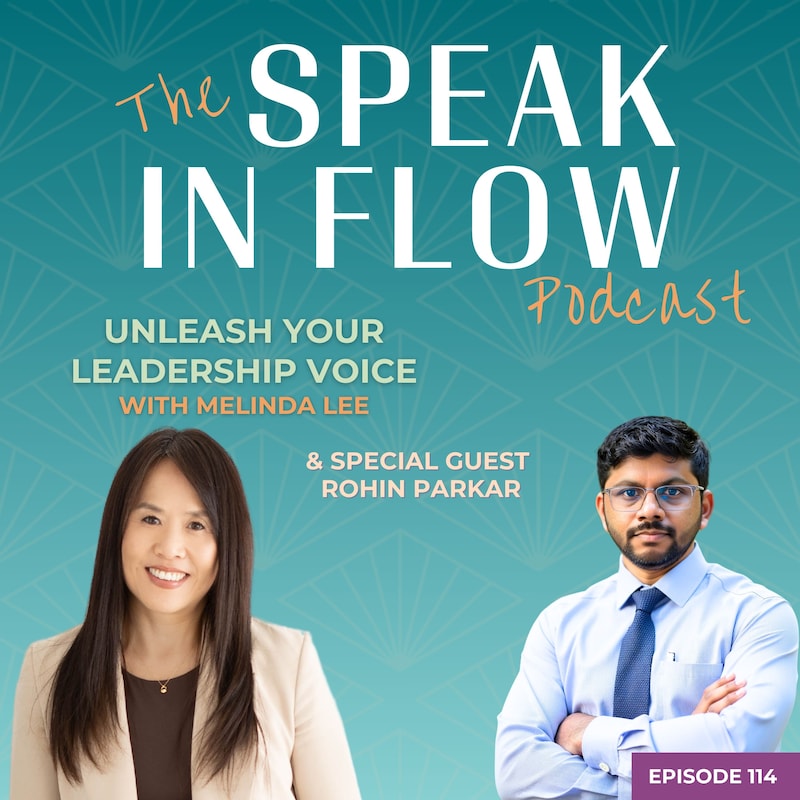
In this episode of the Speak In Flow Podcast, Melinda Lee interviews Rohin Parkar, the CEO of Spintly, who has experienced this type of pivot firsthand. As an engineer, Parkar built cutting-edge access control technology. However, he hit a wall when investors shrugged and employees misunderstood his vision.
In This Episode, You Will Learn:
The Engineer’s Blind Spot
"The product was everything… until it wasn’t."
Rohin’s early belief that technology would sell itself crumbled when investors rejected his jargon-heavy pitches.
Pivoting from Technical to Transformational
"You have to tell a story, not just specs."
How mentors pushed Rohin to simplify his message and focus on the problem his tech solves.
➡ ️The mindset shift: From "Am I good enough?" to "I belong here," especially as an Asian founder in a competitive space.
Scaling Vision (and Communication) with Growth
"Money comes as a result of how you build the company. Empathy isn’t optional."
Seed round vs. Series B: Why a $50M pitch demands a "disrupt the world" narrative, and how to authentically believe it first.
Work-Life Harmony (Not Balance)
Instead of chasing the myth of "balance," the Parkars’ built harmony, lunch together between meetings, late-night work sessions after family dinners, and piano lessons scheduled alongside investor calls.
Connect with Rohin Parkar
LinkedIn: https://www.linkedin.com/in/rohin-parkar/
About the Guest:
Rohin Parkar is the Co-founder and CEO of Spintly, a smart building tech company transforming access control through wireless mesh networks and edge AI. With 20+ years in engineering and leadership, he’s built Spintly into a global innovator, backed by Accel Partners and partnered with Apple to support access badges in Apple Wallet.
Rohin is passionate about decentralized systems, edge intelligence, and building deep-tech products from India that power smarter, more responsive buildings.
Fun Facts:
- 🧠 Edge Enthusiast: Rohin’s fascination with edge computing began with weekend IoT experiments in his garage.
- 🥾 Learning on the Trail: He often turns hikes with his son into mini deep-dives on tech, science, and innovation.
About Melinda:
Melinda Lee is a Presentation Skills Expert, Speaking Coach, and nationally renowned Motivational Speaker. She holds an M.A. in Organizational Psychology, is an Insights Practitioner, and is a Certified Professional in Talent Development as well as Certified in Conflict Resolution. For over a decade, Melinda has researched and studied the state of “flow” and used it as a proven technique to help corporate leaders and business owners amplify their voices, access flow, and present their mission in a more powerful way to achieve results.
She has been the TEDx Berkeley Speaker Coach and has worked with hundreds of executives and teams from Facebook, Google, Microsoft, Caltrans, Bay Area Rapid Transit System, and more. Currently, she lives in San Francisco, California, and is breaking the ancestral lineage of silence.
Website: https://speakinflow.com/
Facebook: https://m.facebook.com/speakinflow
Instagram: https://instagram.com/speakinflow
LinkedIn: https://www.linkedin.com/in/mpowerall
Thanks for listening!
Thanks so much for listening to our podcast! If you enjoyed this episode and think that others could benefit from listening, please share it using the social media buttons on this page.
Do you have some feedback or questions about this episode? Leave a comment in the section below!
Subscribe to the podcast
If you would like to get automatic updates of new podcast episodes, you can subscribe to the podcast on Apple Podcasts or Stitcher. You can also subscribe in your favorite podcast app.
Leave us an Apple Podcast review.
Ratings and reviews from our listeners are extremely valuable to us and greatly appreciated. They help our podcast rank higher on Apple Podcasts, which exposes our show to more awesome listeners like you. If you have a minute, please leave an honest review on Apple Podcasts.
Transcripts
Welcome. Dear listeners, to the speak and flow podcast where we dive into unique stories and experiences to help you and your team achieve maximum potential and flow. Today I have an expert and CEO, co-founder of Spindly Rohan Parker. He's gonna share with us some communication strategies to scale and share his unique stories with us. And so welcome Rohan.
2
:Rohin Parkar: Hey, Melinda, it's a pleasure to be on your show.
3
:Melinda Lee: Fine.
4
:Rohin Parkar: Excited.
5
:Melinda Lee: Yeah, me, too. I'm excited for our conversation today. And so before we dive in, can you share with the audience what are you excited about when it comes to Spentley over the next 3 to 5 years.
6
:Rohin Parkar: Yeah, I mean, really excited for the future of the company. It's been a journey. Have been working on this for about 5 years now.
7
:Rohin Parkar: initial days were really tough, but things have started working out. So, looking to scale the company, we are an access control company. We provide seamless access to users to spaces, doors, pretty much any doors, so looking to expand it across every door in the world where you can just walk into the door, and you don't have to worry about security. It's just seamless. Right? That's that's our business. So looking to expand that business.
8
:Melinda Lee: Yeah. And did you create the technology yourself, you and your team.
9
:Rohin Parkar: Yeah, so I come from wireless technology background. So we we created this technology, we have a few patents. We have filed for our technology. So really happy to see this technology in action. Now, about 400 plus customers use it today. So want to take this business, global. We've grown in India pretty well. We brought the business to us a couple of years back. So few customers here. So
10
:Rohin Parkar: yeah, things are looking good. Can't complain much, really happy about how things have been.
11
:Melinda Lee: That is a tough journey. I know that entrepreneurship is very tough, and you have about 100 people on your staff.
12
:Melinda Lee: Some key clients here.
13
:Rohin Parkar: Yeah. So we are 100 plus employees in the company. We have customers across the globe, India being our major customer base. But in Middle East and us.
14
:Rohin Parkar: Yeah, it's it's when you have a team, it's a
15
:Rohin Parkar: kind of a added responsibility you feel on your shoulders that just not you and your family, but you have a bigger family to take care of.
16
:Melinda Lee: Yeah, and tell me about the journey of when you decided to come back to United States like you mentioned, you have your employees as a family, but you also have wife and children. What was that like to decide to come back.
17
:Rohin Parkar: Yeah, it's so we've been moving all across every 3 or 4 years. We have moved. So I started off in Chicago, moved to Dallas, Texas, from Dallas, moved to Los Angeles, Irvine.
18
:Rohin Parkar: and then within a couple of years moved to the Bay area and then moved back to India, and that was probably supposed to be a last move back to India. Not supposed to be that. That's where what we had planned. But business evolved. We started our Us. Office, and then I had to float the idea of, okay, let's back move back to the Us. So
19
:Rohin Parkar: it's every time you have to convince your wife and your family that, hey? It's it's we are moving for good to make our lives better.
20
:Rohin Parkar: So every time it's been a challenge. But my family has been really supportive, and I think, looking back, they also see that it's been a good experience for themselves. My daughter has been to
21
:Rohin Parkar: 11 schools, while now she's in 12th grade. So you can imagine how diverse of an experience she has had.
22
:Melinda Lee: Yeah.
23
:Melinda Lee: wow. And so was the how was the communication? Did they initially oppose? Or did it take us some convincing? What were the communication strategies you used.
24
:Rohin Parkar: I think I was very open about, because my wife also is part of the company now, so she sees the business evolving. So it was not like a surprise coming. It was always like a gradual process where we made everybody realize that. Hey, looks like this is going to happen. So we got to get ready for this, and it's for good. It's it's our growth.
25
:Rohin Parkar: And I think my daughter is really happy. Now she's got into Ucsc, so you know I can't.
26
:Melinda Lee: Good! Oh, good! Wonderful!
27
:Rohin Parkar: Pretty happy about how things have turned out for her.
28
:Melinda Lee: Oh, good, wonderful congratulations. And so, yeah, you like, you mentioned, you have 100 employees. You went from 0, starting it on your own to 100. And so you've obviously have some success and scaled and also a podcast you're a great communicator, and and tell me about a time when you. The communication was not so great. It was challenging for you.
29
:Rohin Parkar: Yeah, absolutely. I mean, as an engineer, you always think that product is everything right? So you you think that you're going to build a product. And that's it. It's just gonna sell right? And and then when you build the product, nothing sells, I'm like, what? Why is it not working out.
30
:Rohin Parkar: That's when you. You have to put the real CEO hat where it's you have to do sales. You have to motivate your employees. You have to be able to tell a story to your investors. So it comes down to communication, and I was not the best communicator when I started off. I mean, I never even thought that that was important. I was a good networker, so I would meet people, but I had problems in my communication, and that started showing up in the early days when I was
31
:Rohin Parkar: pitching to investors or trying to raise capital, not being able to tell a clear story of why we are doing what we are doing.
32
:Rohin Parkar: And that was a big problem. And and I think that kind of went on for a few years. But I had to take some corrective actions. And you know.
33
:Rohin Parkar: today I'm a better communicator.
34
:Melinda Lee: Yeah. And do you think that when you're communicating, were you too technical? What was the problem?
35
:Melinda Lee: Or, yeah.
36
:Rohin Parkar: As an engineer. It's a lot of technical jargon which was being used. And it's just like not being aware of the process right? It's everything. So, for example, if you want to learn swimming, you got to talk to a expert swimmer and learn from a swimmer right? I had never met another entrepreneur who has done it before. So we never thought that you. That's that's a new skill you need to pick up. You think that it's all about engineering and product. Obviously, it's important. But
37
:Rohin Parkar: you never. You underestimate the importance of communication. And
38
:Rohin Parkar: you know learning how to pitch or tell a story, just tell a story.
39
:Melinda Lee: Yeah. Did you do? How did you finally like, know that? Did someone tell it to you?
40
:Rohin Parkar: Yeah, initially, I started reading books which focused on entrepreneurships, fundraising startups. Right? So
41
:Rohin Parkar: so some of the initial learnings came from the books. But putting it into practice was a different thing. Right? When you read about it, you think it's yeah. This is what it is. But how do you put it into practice. So you need mentorship. Some of our investors gave me the feedback early on that, hey? I asked them. Hey, how was the pitch? How did you think? What did you think about it? And they said
42
:Rohin Parkar: it was good, but it was too technical. You were going into the weeds of things. You were not really explaining what the problem was, what the solution was. You have to dumb it down a bit right, and you were not being so confident is what they used to tell me, and then.
43
:Rohin Parkar: when they said that I would go back and record my pitches and start listening to them, and then I got it that I was using a lot of filler words being tentative about what I'm saying.
44
:Rohin Parkar: you know, not being feeling confident. So I had to then record myself and start removing those words filler words. Even now I might throw in some filler words by. I would now want to pause more than just keep talking.
45
:Melinda Lee: One.
46
:Rohin Parkar: I still struggle, pausing. I think that's something I'm working on, but it's just like taking the feedback and learning from your own recordings is what I.
47
:Melinda Lee: Thank you.
48
:Rohin Parkar: Dead!
49
:Melinda Lee: Yeah, and practicing taking the feedback. Well, first, st a right listening to the feedback. Sometimes people like you mentioned you didn't even realize that it was something that needed to be built and developed. And so kudos to you to take the feedback. Oh, okay, that's good feedback. And then and then what can you do about it like, what can you? So you took the the route of recording, listening to yourself.
50
:Melinda Lee: and then and then noticing, Oh, yeah, and acknowledging. Maybe I could have been a little bit more.
51
:Melinda Lee: Have more confidence. Maybe I didn't have to have so much technical jargon, because like you, said Engineer. And this happens all the time where engineers are so proud of their product and their technology. And then that's all they talk about. I do that with my business I talk about what I can do, how I could do it. But then people sometimes don't even really care. They just want to know that you can help them like, what is the problem you can help me solve? And can you do it?
52
:Rohin Parkar: Yeah. So you kind of need like a sounding board where you can reevaluate yourself every quarter, for example, saying that.
53
:Rohin Parkar: hey? Let's let's connect, have a mentor, talk to the mentor and say, Hey, we've done well so far. But what do you think I can improve further, because it's never over right. Your milestones are changing. You're raising your seed round, and you're raising a series A round. You're going to raise a series B round, and probably you have to talk to people who
54
:Rohin Parkar: view you differently. Right? So you've got to change over a period of time, become more mature, especially when you're raising from a million dollars you have to raise. Now 50 million dollars. Right?
55
:Rohin Parkar: You have to. You have to have a much bigger vision. You have to tell a much bigger story.
56
:Melinda Lee: Okay, what is that? The main difference that you see when you're 5 million to 50 million like? Is that what is the difference that you see telling a bigger story.
57
:Rohin Parkar: Yeah, I mean, you have to have a bigger story. And you have to build. 1st of all, you have to believe in that story. It's just not a story for the story's sake, because otherwise it doesn't come out real right.
58
:Melinda Lee: Right.
59
:Rohin Parkar: Seems fake. So 1st of all, you have to believe that this is what we are building and it it has the potential to disrupt
60
:Rohin Parkar: the world. For example, right like it has to be big enough. And then, once you believe in it, things things feel more natural. You don't have to fake it.
61
:Melinda Lee: How did you get yourself to believe in it when it's nebula and uncertain.
62
:Rohin Parkar: That's tough part, right? I mean, that's where entrepreneurship as a startup founder without belief. Everything is impossible. Right? I mean, it is something which you have to, you know, really hit your head into, and you know, get it into your head that
63
:Rohin Parkar: you are not. You're not inferior to anybody right. Sometimes a lot of people, including us, especially Asians. Right? When you come from a different background, you have a different color, and you feel sometimes you're not as good as others. That's a feeling. It's all mindset, it's not reality.
64
:Rohin Parkar: And you have to change it. You 1st have to believe that, hey? I can build a hundred 1 million dollar company or a billion dollar company. Nothing stops us from building that. And once you say it over and over again, you start believing in it right.
65
:Melinda Lee: No, no.
66
:Rohin Parkar: Things work out. If you if you stop believing. That's when things stop working out for you.
67
:Melinda Lee: Right? Right? So it's our own mindset. Right? Sometimes we're we're not less than other people. We're gonna be the only ones that believe in our vision, and so continuing to like, take out all the negative thoughts.
68
:Melinda Lee: the mindset, and then keep going on to the belief and the vision, and keep on pounding into our head, saying it several times. It is tough because you don't want to say it for the 1st time in front of an investor. You want to say it over and over again before you get up to the pitch or the presentation, so that it's in your body.
69
:Rohin Parkar: Practice is the key.
70
:Melinda Lee: Yeah.
71
:Melinda Lee: I love that. And so, what about your like family work, life family? You're doing a lot with the company growing it to this 1 billion dollar company. Where? Where? What about your family? How are they involved? How do you balance or.
72
:Rohin Parkar: Yeah.
73
:Melinda Lee: Yeah.
74
:Rohin Parkar: It's never easy easy when you have a family, but it's about open communication with the family with after Covid, especially, things change right. Everybody was at home, kids
75
:Rohin Parkar: schooling from home. We were working from home. So instead of focusing on work, life balance, we started saying, Hey, let's have a work like work, life, harmony.
76
:Rohin Parkar: where you know you, you do what you do at different times, so you can have lunch
77
:Rohin Parkar: as a family, then go back to work, and then you can have dinner as a family. But you can again go back to work late at night, and everybody understands what you're doing, what you're doing.
78
:Rohin Parkar: So I think, being open open about that and letting letting everybody do
79
:Rohin Parkar: things at different times. Is what we do today. My son actually attends piano classes at 8 Pm.
80
:Melinda Lee: Which is fine, and I'll I'll be having another meeting at the same time, and my wife will be having another meeting.
81
:Melinda Lee: Hmm!
82
:Rohin Parkar: So I think it's been working out as because we have been open and communicating with each other openly about
83
:Rohin Parkar: what everybody's priorities are.
84
:Melinda Lee: and supporting each other that way?
85
:Rohin Parkar: Yeah, yeah.
86
:Melinda Lee: Of it, open communication and support. Yeah.
87
:Rohin Parkar: Yeah, I think more. You hide some things. It starts biting you at the end like a you didn't tell me there was a meeting, and we were supposed to go out somewhere or whatever. And then small things result into a fight. Right? I mean, so.
88
:Rohin Parkar: okay.
89
:Melinda Lee: And how about your team? What about communicating with your team? How has that been? Especially with the vision that it's taking.
90
:Rohin Parkar: Yeah, so it's been
91
:Rohin Parkar: It's been a journey there, you know. Initially, we thought that employees are just going to pick up stuff on their own. But that doesn't happen as you scale when you're a 10 per person company.
92
:Rohin Parkar: Yeah, you you are talking constantly to to those 10 employees, and everybody knows where you're headed. But when you become 100 people company, it's a layered structure, right? So you you have people who report to you. But then there are people who report to them, and the story doesn't go all the way through.
93
:Melinda Lee: All the way down. Yeah.
94
:Rohin Parkar: So now you have to make sure you have a structured approach. So we have all hands meet every quarter which we have, where I tell the entire company what our priorities are, what our vision is. Culture is so important, right? So everything comes down to culture that what's our culture, right customer, 1st culture, open communication, being friendly, being a family together. So I think
95
:Rohin Parkar: we assume that people just know, but they don't know. You have to tell them everything.
96
:Melinda Lee: Yeah, yeah, yeah, no, I think. But that's what makes it even more solidified. So there's no assumption. It's very clear.
97
:Melinda Lee: And then everybody can yeah be on board with it.
98
:Melinda Lee: We don't sure.
99
:Rohin Parkar: Yeah, we have. We write our mission statement vision statement now, and the culture. And it's there in the company. We talk about it. So everybody knows right?
100
:Melinda Lee: Yeah, I love that wonderful. I think that's great. I mean, I feel like that is a great culture like you said all the values that you just spoke to are it sounds like an amazing place to be
101
:Melinda Lee: and to work.
102
:Rohin Parkar: Yeah, yeah, because every founder is different. So you have to make sure that you, as a founder, tell what your priorities are. Some founders are very aggressive, and they have a very different culture, and they want that culture in that company.
103
:Rohin Parkar: But for us, you know, it's been empathy, you know, taking care of people, and that's been more important for us than just making money. Money comes as a result of how you build the company.
104
:Melinda Lee: Oh, that's wonderful, Rohan, that's great! And then, plus your families involved and congratulations. I'm really excited for you for spintly, and where it's going, and I could see every door opening with your technology.
105
:Rohin Parkar: Yeah, literally thanks a lot. And it was great, you know, talking to you. Thanks for doing this. It's
106
:Rohin Parkar: great to tell such stories, and, you know, look back on what has worked, and, you know, just keep improving.
107
:Melinda Lee: Yeah, so is there? What can when someone wants to have a technology with their with opening at the doors like to learn more about your technology. How can they find you.
108
:Rohin Parkar: I'm on Linkedin. If you just type Rohan Parker on Linkedin, you'll find me or spently on Linkedin. You'll find our Linkedin Channel.
109
:Melinda Lee: Great.
110
:Rohin Parkar: From there. Anybody can connect with any of us or me directly, and.
111
:Melinda Lee: Great.
112
:Rohin Parkar: Always open.
113
:Melinda Lee: Great. So connect with Rohan, learn more about Spintly and what the company does. It's gonna be out there. They're they're just changing and disrupting the technology with remaining with going into doors.
114
:Melinda Lee: Right? Security is seamless, and just walk in without having to bring out the key fob. And where's my key fob?
115
:Rohin Parkar: Yeah, yeah, it's it's a. It's a very tough industry to crack. But you know, it's it's it's changing. Now, you know, people are moving away from old way of doing things. But it's a big market, huge.
116
:Melinda Lee: Yeah, yeah, I mean, security is huge. Right? We definitely, wanna yeah, be aware of security. So thank you also for keeping our community safe.
117
:Rohin Parkar: Yeah, thanks, Marinda. I think thanks for doing this. This was really interesting, and a great conversation with you.
118
:Melinda Lee: Yeah, no, I had a really great time. Thank you for sharing your story, your journey of growth, of development within your own communication skills
119
:Melinda Lee: and for continuing to persist right? Even with our businesses, with our families, you're continuing to always show up. Commit to both your businesses and your family. And now now you have a successful yeah, all around sounds like all around
120
:Melinda Lee: personal and professional life.
121
:Rohin Parkar: Yeah. Can't complain. Just thanks.
122
:Melinda Lee: Keep going all right. Thank you, Rohan.
123
:Rohin Parkar: Thank you very much, Melinda.
124
:Melinda Lee: Awesome, and then thank you listeners, for being here. I trust that you got your golden takeaway for you to implement right away so that you can improve your life, and remember, anytime you have a chance to communicate with somebody. You also have a chance to connect, to inspire and make a bigger difference within your communities
125
:Melinda Lee: until next time. I'll see you later. I'm your sister and Flo. Take care.
126
:Melinda Lee: Bye-bye.



