Shownotes
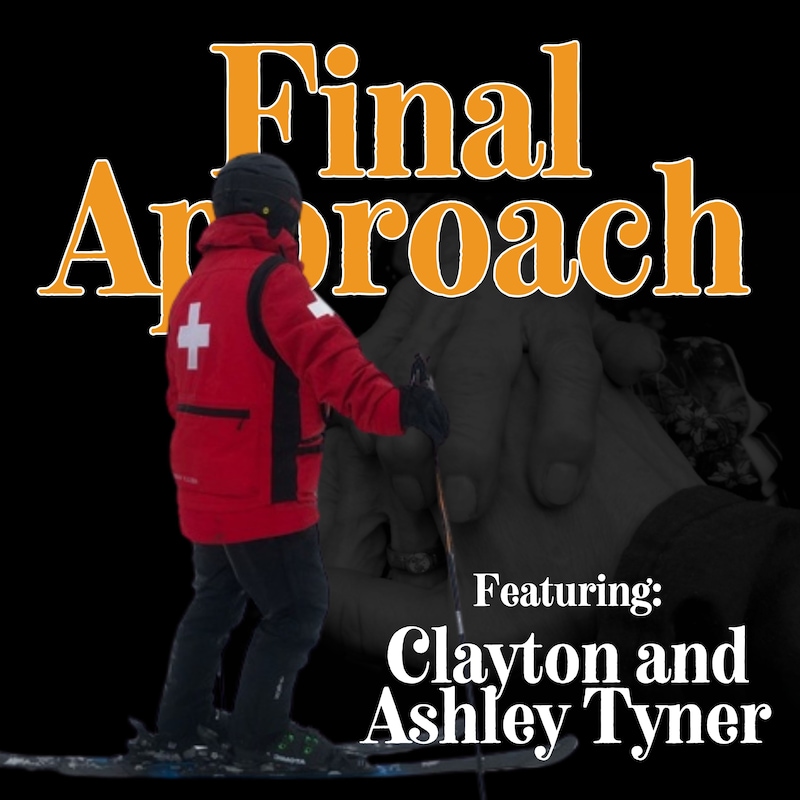
Welcome back to another episode of Final Approach, the podcast inspired by my book Final Approach: A Test Pilot Story of Caring for Loved Ones. I’m Jonathan Knaul, your host, coming to you from Palmdale, California. Today, I’m thrilled to reconnect with my long-time friends and former ski patrollers, Ashley and Clayton Tyner, who join us from Edmonton. Together, we go deep into the world of ski patrol, caregiving, and the human side of emergency response, all while reflecting on our unique journeys and what it means to care for others—on the slopes and off.
In this episode, we reminisce about our days with the Canadian Ski Patrol at Marmot Basin in Jasper, sharing stories of adventure, camaraderie, and dedication to first response. We break down what being a ski patroller really entails—from high-altitude rescues and critical accident response to volunteering alongside professionals in extreme terrain.
We also explore the often-hidden emotional toll of emergency volunteering, touching on mental health, PTSD, and the importance of talking about tough experiences. The discussion transitions into the challenges of family caregiving, the realities of dealing with aging parents, and planning for the future. Ashley and Clayton Tyner offer their perspectives as parents, children of aging parents, and as people preparing for caregiving roles themselves.
Along the way, we share some of our most memorable, funny, and even hair-raising ski patrol stories—including avalanche control mishaps and unexpected rookie mishaps on the slopes. Whether you’re interested in emergency response, volunteering, caregiving, or mental health, this episode is packed with first-hand insights and real-world advice.
Key Takeaways
- Ski patrol isn’t just about rules or “fun policing”—it’s about first response, emergency care, and teamwork in some of the harshest conditions.
- Volunteering as a ski patroller means intense ongoing training, facing real danger, and responding to everything from minor injuries to life-threatening accidents.
- The emotional weight of being a first responder—volunteer or professional—can be heavy. Mental health struggles, including PTSD and operational stress, are real and can happen to anyone.
- Talking openly about mental health challenges, checking in with each other, and seeking support is essential. No one is ever alone.
- Caregiving for aging parents can be just as emotionally demanding as emergency response. Preparing for the “final approach” by having tough conversations, such as about power of attorney and future wishes, is vital.
- Resources such as books and peer-support networks can make the journey less isolating—both as a caregiver and a first responder.
- Sometimes, all the training in the world can’t prevent everything—humor and camaraderie help get through the toughest days.
- Early preparation and open family communication make the path of caregiving and supporting loved ones less daunting.
If you’re a caregiver, first responder, volunteer, or someone preparing to support aging loved ones, know that you are not alone. Keep the conversation about mental health and caregiving going. Visit finalapproachbook.com to pick up Final Approach: A Test Pilot Story of Caring for Loved Ones—it’s packed with real-life experiences and strategies for navigating the emotional and practical challenges of caregiving.
If you found this episode helpful, please share it with someone who could use support or inspiration, and leave us a review wherever you get your podcasts. Connect with me and fellow listeners on social media, and remember: whether you’re on the slopes, in a care facility, or at home, your story and your struggles matter.
Subscribe to Final Approach for more conversations about caregiving, first response, and living with empathy and courage—because the final approach isn’t something you have to face alone.
Transcripts
Welcome to Final Approach, the podcast. Jonathan Nall here and I'm very excited. This is Final Approach, which is a reflection of the book Final Approach, a test pilot story of caring for loved ones. Easy to find by going finalapproachbook.com can also find it on Amazon and all the other big venues. But more importantly, today I have with me my really good friends Ashley and Clayton. I've asked them to introduce themselves. I'm going to tell you folks, I'm so excited, genuinely.
Jonathan Knaul [:And Ashley and Clayton and I, we haven't spoken in a while but we have some great stories and background together. Both ski patrollers and that's how we know each other. Ski patrolling up in the high Rockies in Canada, in Jasper. It's June 7, 2026 and coming to you from Palmdale, California. And I've got Clayton and Ashley in Edmonton. I guess they arranged for a babysitter or, or their young kids have now graduated to being by themselves. I don't think so, but they've. No, yeah, I didn't think so.
Jonathan Knaul [:So they've given me, they've given you us their time, which I'm really excited about. And we're together for about another 40 minutes and I'm so excited. So, and I mean that genuinely. I'm looking, of course you're just hearing us in audio and, but go ahead, Clayton. Actually, please introduce yourselves and, and, and tell folks about how, how you know us, how you know me, how we know each other.
Clayton Tyner [:Go ahead. I'm Clayton, last name Tyner. I've been ski patroller. I'm a technical designer. So I design and engineer new homes and construction multifamily and residential. But yeah, and we have two young kids, they're twins, they're nine years old now and they're keeping us busy.
Ashley [:Yeah. And yeah, I'm Ashley and let's see. Yeah, so we've been ski patrolling for a while. It's been a little bit since we were last patrolling career wise. I work in marketing. I'm a marketing manager for government commission. I've been doing that for about 10 years now. So it's been, been a little while.
Ashley [:But yeah, in our volunteer time, that's how we've come to meet you, Jonathan, doing ski patrol with Canadian Ski Patrol up at Marmot Basin. And I think the first time we met, I remember we got paired up for a competition. We'd never met before that. So we were in Jasper and just randomly got paired up for that one competition and it was just, it was the start of A really great friendship. I think, you know, the three of us just being able to have a lot of fun and test some scenarios. And I think we came away with a little bit of hardware. Like we, we won a couple of awards that competition.
Jonathan Knaul [:We cleaned up. I remember it. So I think that's been over. That's more than 10 years now, I think.
Ashley [:Yeah, it has been close to it.
Jonathan Knaul [:Close to it. So I think. Yeah. And I'd really like to talk a little bit about that because it's kind of exciting. Can, can you. I mean, I love being in ski patrol. I did it for so many years and. Yeah, volunteer like yourself in the Canadian, Canadian Ski Patrol.
Jonathan Knaul [:And we were based at Marmot Basin, you folks both in Edmonton and Marmot Basin in Jasper. But for folks, I don't think a lot of folks know what the patrol is. Can, can you tell us a little bit? I'd like you, please. What is the ski patrol? And, and we don't just go and hand out tickets or, or make sure people get on list. Right. It's, it's much more, it's, it's first responder, high altitude, high terrain, crappy.
Ashley [:Yeah, definitely.
Jonathan Knaul [:Please go ahead.
Ashley [:Yeah, I think a lot of people, you know, they, when you hear ski patrol, especially if you frequent the mountains, they really do come across as the fun police. But what we're there to do is, you know, just ensure that everybody is skiing safely. And then, you know, in, in the incidences where people get into a little bit of trouble or have injured themselves in any kind of capacity, then we're there, you know, to provide emergency first aid on site. We're kind of the first point of contact on that, you know, difficult train sometimes and getting them to further care. So it's, you know, there's, there's a lot that goes into being a ski patrol. As you know, Jonathan, it's you very, very well trained and highly skilled individuals that we work with that provide a very high level of care in some harsh environments. And I think the other thing too is that we all did it as a volunteer commitment. It wasn't something that was paid.
Ashley [:It was something that we did just because we have a passion for skiing and for providing, you know, on, on site care to, to help folks. And you know, Jonathan, you especially like, it's very clear through the work that you've been doing how, you know, you're a caregiver through and through and you know, you just shine in emergency situations here. So it was always such a pleasure whenever we got the Opportunity to patrol with you. It was. I always look forward to being on shift with you because we definitely did have a lot of fun when we were, when we were out there. It wasn't always doom and gloom. It's. There's a lot of good times and, and fun and camaraderie that happens on, on the hill, which is great.
Jonathan Knaul [:Yeah, we, we, we had a ton of fun and I, I love being the ski patrol and you know, at some point it was, it was time to move on for me. But yeah, I want to, I want to make it. Everything you said is bang on. But I just want to make a clear to folks the ski patrol because we, the collective we here, you, the two of you, me, we joined the ski patrol and volunteered and volunteers were needed because the professional ski patrollers, they needed the extra help on the weekends. So we were ski patrolling in Jasper, Alberta, which is very, very, very high country. High Rockies. I mean the peaks up at Jasper are somewhere close to 9,000ft. I think the peak is 8,800.
Jonathan Knaul [:I can't remember exactly, but it's there in feet but fairly high and very rugged country. All terrain. Double black diamonds of course, double black diamond slopes. And of course we had to go outside of the slopes sometimes to find people. We had an average of I think one fatality a year. And some weekends we ran out of, out of patrollers and ambulances. We had fun but we were busy with patients and we saw all level of significant head injuries, spinal injuries, injuries, broken bones. I don't want to go into long list but, but very serious stuff where we had to help people out and, and the two of you in particular, I mean I did this as a single person, but I think at one point you were alternating weekends.
Jonathan Knaul [:I think it was Clayton volunteer one weekend and you would volunteer another. I think just so you could bind the kids as well as doing this, which I think was pretty amazing. Or you were starting a family at that point. Of course, because I think it's been more than 10 years as we said.
Clayton Tyner [:Yeah, yeah, yeah.
Ashley [:We, we started out actually, I think we weren't even engaged when we joined Patrick. That's right. I think this was something that we did.
Jonathan Knaul [:But didn't you split weekends at one point because you were so busy? I think.
Ashley [:Yeah, eventually we did. Yeah. You know, and especially kind of leading into the COVID years. It, you know, it's a big commitment as you know, in, you know, trying to manage a family and, and travel and then you had to deal with the pandemic and the isolation, I think it. That kind of was when we wrapped up our patrolling career, if you will. But, yeah, it was something that we, you know, did as a family and when the kids were young, we would. When we were still in patrol. Yeah, still take them out and.
Ashley [:Yeah, yeah.
Jonathan Knaul [:So, yeah, let's go to that. You mentioned the. Well, we met at the. The competition. We just got paired up and we did have a blast. And. And I think for listeners, the. The competition is pretty crazy.
Jonathan Knaul [:I mean, it's usually a single black diamond, but it's a. It's a badass. It's a badass black diamond. So you ski slalom with a loaded toboggan, like a tight slalom course with a Logan Boggan with. Not with a person, but with sandbags, you know, dragging us through a course. And you have to do it. And it's not just one person going through the course. We're handing off one to the next and it's three people to complete the course.
Jonathan Knaul [:So I think I started on the high pitch. I can't remember. And then I handed it off to one of you. Middle. Somebody finished the bottom, something like that. And we. We did well. And then there's also a very heavy first aid, which you mentioned about.
Jonathan Knaul [:I mean, the competition is once a year and it's pretty serious. But also we. You mentioned about all the training we do. I think we did about 50 hours of training a year before we could get on the. Be recertified yearly to get on the slopes, but.
Clayton Tyner [:Yeah, that's correct. Yeah.
Jonathan Knaul [:Pretty. Yeah, go ahead, Clayton.
Clayton Tyner [:No, I was just gonna say. Yeah, the intense training that we have to go through, I mean, you've got your classroom stuff, you've got your. Your first aid scenarios that they do, and then you have your. On hill as well. And I mean, putting those two together, it's. It's pretty. Pretty strenuous. Right.
Clayton Tyner [:Like a lot of the training that you do, you prepare yourself so that when you're in the real world, it. It helps a lot. Right.
Jonathan Knaul [:So I. Yeah, absolutely. And I. I also want to reflect what. What Ashley said, and he sort of said Clay not. I loved patrolling with you both as well. I mean, I had a blast when we did that competition. I thought we did a second one or we were going to.
Jonathan Knaul [:I can't remember.
Ashley [:No, we did the second one in the Yukon.
Clayton Tyner [:Yeah.
Jonathan Knaul [:Oh, that's right. In Whitehorse. I remember we went to Whitehorse, actually. I had to think about it for a second. That was huge fun. White Horse was not an easy. It's small, of all places, Yukon. It was actually a relatively small mountain compared to what we were used to, but very technical.
Jonathan Knaul [:Uh, and that was, that was a, that was a great time. So I remember that quite well. But you know, we did have a lot of fun and, and I have so many good memories, as I do for my military career too. But similarly, can we get into, like, patrolling's tough and how did you deal with some of this stuff? You're both parents and I mean, I'm not a parent, but I, I imagine. And, and I'm sure, actually, I'm pretty sure it doesn't matter who you are as a parent. If you're a parent, there's a certain level of compassion and heart there that is undeniable because you have kids and you love your kids no matter who you are. And I'm sure that seeing broken bodies, despite the fact that they're strangers, but that's our job, is just going to help whoever. How did you deal with that? Because I know certainly some of our patrollers really did have trouble with that.
Jonathan Knaul [:Sometimes it's quite a challenge. And can you talk a little bit about that? Because you were going home to each other and at some point you were going home to your kids and. Yeah, go ahead.
Clayton Tyner [:Yeah, I, I think for myself, like, anytime it was, it was a child incident, it was always a little bit in the back of my mind, you know, kind of like it's your own kid sort of thing. So I always treated that as it's, it's somebody that is in need of care, you know, that especially like the younger children, they, they, they're scared. They can't take care of themselves. They don't know what's around them. They don't know what's going on. So for me, it was more of that. You, you kind of have to go in with the approach, treat it like you are a complete stranger to them. They're in a scared environment.
Clayton Tyner [:So you kind of have to like, take it easy, approach them kind of like, you know, like just somebody who knows what to do in, in, in this scenario and then just make sure that they're, they're safe and that they are okay. And that, that to me was kind of in the back of my mind what my kid would be going through sort of thing.
Jonathan Knaul [:Yeah, I, you know, when I, every time, anytime I had to deal with a kid, I really had to mentally sort of, well, literally bite my tongue and sort of mentally put myself in a different space because I would have I was instantly wanting just to be in tears for that, for that person, and not only for the person, the child themselves, but also for the parent or parents. And that was anything pediatric. Is that, is, that is a different, different ball of. Please go ahead, Ashley.
Ashley [:Yeah, you know, it's, it's really tough with kids. And I, I think, like, as a responder, too, sometimes when you know you're responding to a kid before you get there, I definitely have a little bit more anxiety getting to that scene because, you know, it's not that it's any easier, but there is that, that, you know, that fear kind of going into it that, you know, I hope that this isn't something serious because those kids are, you know, they're, they're vulnerable humans. And like Clayton said, too, they're, you can't communicate the same way you communicate with an adult, so you really have to kind of pivot your style of caregiving in a scenario like that. So not only do you have to administer the first aid that needs to be done, but you also, in the back of your mind, really have to tailor how you're responding to these, these incidents because they are so vulnerable. But luckily, I didn't have any, you know, terrible incidents with kids. Like, for the most part, everything that's, I mean, certainly a couple broken bones, but nothing, nothing too traumatic. But I know that, you know, those, those scenarios where you get into some of those harder and more critical calls, those are, are definitely the tough ones, for sure.
Jonathan Knaul [:Yeah, I, I, I get it. And, you know, just to touch lightly on a topic that is, I think, a real challenge for all of us, and I talk about it in my book is in the time, the total time that I was with the patrol, which overlapped with some of your time, but in my total time, we lost five patrollers at Marmot to their own hand, which really still, you know, is a bit of a challenge for me. I think about it sometimes and, and I've lost friends that way over the years, and I find that really challenging. And I think that to that end, the message I want to get out to anybody listening to this is, gosh, you're not alone. You know, there's, there's, there's always, there's always a comrade, there's always somebody you can talk to. And, and those people we lost are people who I miss tremendously, people who had tremendous value and people who still had a lot to give to this planet. And I wish they were still around. And I wish I could tell them, please just stick around still need you here.
Jonathan Knaul [:You serve something very important, something loving that this planet needs. So I know that's a really tough topic. I don't know if there's anything you want to add just for, for folks
Ashley [:listening, you know, it's, it, it's so funny that you touch on that too because thinking back to some of those people you would have never known and that's, that's the really heartbreaking thing is that you know, as as that happens, it's just there's always the, you know, should we have had more conversations or what could we have done to maybe, you know, is there something that we could have done better to make sure that they were having those conversations? But you know, as a patroller and I think people kind of, there's this maybe this idea that because we're volunteer that we're not dealing with the critical stuff like a paramedic or a nurse or a doctor, but it, at the end of the day it's all, oh God, yeah, it's all emergency response. And so, you know, those PTSD scenarios definitely exist. And you know, and sometimes it's not even the, not even the really critical scenarios like I, you know, have had incidents where I will, you know, it's not a serious scenario but you walk away going what could I have done better? How could I have gotten care quicker? Or shoot, I missed doing this and if I'd done this better than that person would have gotten care sooner. So every time that you respond to something, I think it's normal to go through that mental checklist of how could I have done this better? How can I be more on my game next time so that if and when the big calls come that we're not losing time. So when you're ruminating like that constantly and consistently even even in those small incidents like it is very easy to see how people walk away with, you know, traumatic stress from, from that. And I don't think it, it doesn't have to be a fatality, it does not have to be a serious incident. It can be the minor day to day things that can get you as well. So yeah, you know, it is really important to not ever diminish what's happened to you in any capacity because any lived experience is real and valid.
Ashley [:And I think for any first responders out there, you know, it doesn't have to be major to cause issue. And the more you can get ahead of it, the better. I think it's so important to be talking about that.
Jonathan Knaul [:Yeah, I think, you know, you Strike a really good point, you know, I think to the spectrum of what I've seen in the patrol and what I've seen in combat and all of my military service, full spectrum. I mean, there are some people, relatively smaller number of the population that see the. The most cataclysmic, catastrophic, terrible things, and they're relatively okay with it. I mean, okay is a grand word, but they manage. And then there's other folks who see something that really, for most of us, really is not a big deal, but they're gravely affected, and that's just who they are. And just like you say, it doesn't matter what you see. If you're affected, then you're affected. And.
Jonathan Knaul [:And I think for some folks who get gravely affected by something that most of us would. Would think was not a big deal, they're too shy to talk to a comrade to say, hey, I need help with this. And. And folks shouldn't be. I wish. I wish they would. I mean, everybody's struggle, whatever it is, matters, I guess is what I'm getting at is valid.
Ashley [:And one of the. One of the striking things that I found from your book, you'd mentioned that you were, you know, so fortunate that given everything that you saw overseas and in combat and with what you do for a living, that you were fortunate enough not to have ptsd. But then on the other side, too, with the caregiving aspects. Oh, gosh, you mentioned that. That. That's the one that brings you to your knees, too. So it doesn't even have to be, you know, it doesn't have to be first response. There's so many things that happen in life that can cause that kind of response or emotion that's, you know.
Ashley [:Oh, yeah, it's important that we're talking about mental health.
Jonathan Knaul [:Yeah, this. This is awesome. I mean, awesome in a good. In a good way. Mental health challenges is not awesome, but we're hitting on. This is really good. Yeah, I think that's. I'd like to expand on that just for a second.
Jonathan Knaul [:Is that. Yeah, I mean, in. In combat, I mean, I got. I got shot at quite a few times. We lost 21 Canadian soldiers, just Canadians alone in my task force during my time in Afghanistan. And so a lot of ramp ceremonies and, And. And a lot of challenging days. And I saw a lot of broken bodies.
Jonathan Knaul [:And then there's the ski patrol, where I saw my share of broken bodies, too, and the list goes on. But, yeah, I'm fortunate that those things, they did have an effect on me. Nobody. Nobody's Unaffected. But I. I luckily don't have ptsd. Never. Never had that.
Jonathan Knaul [:But without going into more detail, because certainly it did affect me. I mean, I was quite tired when I came back from Afghanistan, and I still have memories of things that are with me all the time, but I'm fine in general. But, yeah, with my mom with dementia, I literally really did experience caregiver burnout, which is on the spectrum of operational stress. And on the spectrum with ptsd, it's different. It's not ptsd, but it's on that spectrum. And my gosh, it did bring me to my knees, and that was the point where I had to accept that moving my mother into a facility was the best thing to do for both her and myself. And that was really hard to give in, and it took me a while to recover. Yeah, thanks for mentioning that.
Jonathan Knaul [:That's. And it was very hard for me to admit that. Really hard. Yeah, go ahead.
Ashley [:And I. I think, like, I'm just so grateful for, you know, the book that you've put out. And, you know, because we're, as parents, we're kind of on that threshold of we're caring for young children. Our parents are aging. My mom just recently, both of my grandparents had dementia. So it's something that's. That's hereditary in our family. And seeing what she went through, the stories are so similar to what you're going through in this book.
Ashley [:So I think, for me, I'm so grateful that I have this resource and kind of like ski patrol you. You know, the more that you're practiced and the more that you're aware going into a scenario, the better outcome you're going to have. So I wasn't thinking about this until we read your book, but now there's. There's things in my, like, mental checklist. So, like, this is coming, and I need to be prepared for this and, you know, even mentally, I need to be mentally tough enough that as this is approaching, like, what can I do in advance or how can I best prepare myself for this stage of life and what's to come for, you know, to ensure that our parents are getting the best care when they're needing it.
Jonathan Knaul [:Go ahead, Clayton.
Clayton Tyner [:Well, I was just gonna say, like, yeah, you never, you know, being a. Being a son or a child, you never kind of see those things happening to your parents. You always see them as being tough and always there for you and. And moving through and just. Just always going right. Like, my dad will be turning 75 this year, and, yeah, still a young Guy. Right. My mom, she's pushing almost 80.
Clayton Tyner [:She'll be 80 next year. And you know, like, she's, she's a tough woman. She's very tough, just like your mom was, right? And she's. Yeah, very, very tough and always going through everything and she's very well in shape. She's always walking. She's doing things like in. Loves the grandchildren, loves the puppy dogs and stuff like that. So she's always, she's always going.
Clayton Tyner [:But you know, like again, being, being a child, you always see your parents as being strong and always there and never dwindling or, you know, like going through things. But the older that they get, you kind of, you see what happens. You like my mom, she did suffer a heart attack there a couple of years ago. She managed to pull through. Everything was fine. And she's just one of those tough people, but you know that, you know, she's, she's getting older and one of these days she will start to slow down. My dad the same way he had a stint.
Jonathan Knaul [:By the way, I feel for you. Sorry. Keep going. But I, I really feel for you.
Clayton Tyner [:Yeah, but yeah, my dad, he pulled through with cancer. He had a, had colon cancer there like a few years ago and managed to come through it and, and came out and he's. He's doing fine and cancer is in remission. So every year he gets checked. And yeah, it's just one of those things is being, being a kid, you know, you always think of your parents being the, the tough ones and, and they're invincible.
Jonathan Knaul [:Well, we're invincible, but they're invincible. They're always going to be there in their capacity as parents.
Ashley [:Right.
Clayton Tyner [:But yeah, as you, as they age and get older, you know, you do start to think about how you can take care of them. They've been taking care of you for their whole life. Right. So how can you kind of take care of them moving forward? So. Yeah, it's tough.
Jonathan Knaul [:Yeah, it's tough. And I want to key into anyways, I feel tremendously for both of you deeply because I certainly understand. I don't actually mentioned about being mentally tough. And I'll say to you, I don't think you have to be mentally tough. I think you have to be maybe call it mentally aware and, and accepting of.
Ashley [:Yeah, you know, I guess.
Jonathan Knaul [:Yeah. I'm just getting to. Don't be too hard on yourself.
Ashley [:Yeah, well, and, and that's the thing is like, mentally tough is probably the wrong choice of words because, you know, there's no. Things are going to affect you, but I think it's more like just being mentally prepared. You're right. Like exercising that is a muscle and just being prepared for it when it comes so that you have. That you're going to be resilient when those things come up. So. But yeah, certainly it's just, you know, being aware of some of the challenges that are coming up will allow us to better prepare ourselves. And, you know, it's just, again, your book was amazing, Jonathan.
Ashley [:And I think going back to the story that you had of your caregiving both you and your sister for your mother as a parent too, I'm just like, oh, man, I hope that as a parent, I'm raising my children in a way that they will care so deeply for me when I get old and have dementia and not making sense to them, because I know that. And you, you did such a beautiful job in your book doing, showing such grace to your mother who was going through dementia, because I think anybody who's been around dementia knows that it's, it's not easy and they're not themselves. So it. And they're not at their most graceful. And you've told her story so beautifully.
Jonathan Knaul [:Thanks.
Ashley [:But it, like knowing, knowing a little bit about what dementia is, it's, it's so hard because it's not, it's not a beautiful story. It's a very tough and difficult story to navigate. So you've done such a great job and yeah, just knowing, I guess, kind of knowing what's to come, like genetically predisposed. My mom's already, jokingly, she's already apologized to me for what she's going to do when she has dementia. So we joke about it a little bit, but we can have fun with it now. But, you know, it's, it's. We know it's coming, I think, and it's. Or more likely than not to come.
Ashley [:So it's just, you know, kind of being aware of what, what that disease entails, so, you know, kind of preparing yourself, you know, for the less graceful periods of someone's final days. But, yeah, it's a really tough thing to go through.
Jonathan Knaul [:Well, you know, I, I would say to you because the two of you are substantially younger than me and, and so at, at your stage in life to be thinking like this, you're already a good daughter and a good son, each of you, and I mean that sincerely. A lot of folks would not speak this way or think this way. There are no laka folks out there. And, and I understand it and I Mean, no. No badness to anybody. But that would be like, no, no, everything's fine. And they would just ignore it. There are folks who just do not want to deal with that.
Jonathan Knaul [:And. Fair enough. You're a good daughter. You're a good son. And so here's the. On a side. Here's the goofy, silly pilot of me. I love to hear about how much my book on caregiving meant to people and spoke to folks, and truly, that resounds deeply with me.
Jonathan Knaul [:So thank you. It resonates deeply with me. So thank you so much. But I can't help it. Were there, I. I tried to mix in some good pilot stories. So were there some good pilot stories in there? Because I. I tried to.
Jonathan Knaul [:Okay.
Ashley [:There are always good pilots.
Jonathan Knaul [:Okay, good.
Ashley [:But, you know, but if we want to end on a really good pilot story, this was. This was. I'm gonna bring it back to ski patrol into our.
Jonathan Knaul [:There. I was going to say. Please. Yeah, hold that thought. Because I was going to ask you too, like, best ski patrol day. Craziest ski patrol day, craziest. Funny patient. Go ahead.
Jonathan Knaul [:Anyway, sorry, I don't want to take you off track.
Ashley [:Yeah, no, we're still right on track. So I'm gonna tie back to the. The test pilots is when we. We kind of started with this, that we got paired up randomly. We'd never met each other. And I remember we were doing a first aid on site, the first aid portion of our competition.
Jonathan Knaul [:Yeah.
Ashley [:And I remember we're, you know, doing patient assessments. We're getting vitals. And you're like, don't write anything down. I will remember it. And Clayton and I looked at each other. We're like, are you sure? Like, you're like, no, no, no. It's.
Clayton Tyner [:It's.
Ashley [:It's good. I'm good with numbers. And I was like, oh, okay. I guess. And I'm like, sure, let's. Let's go for it. And I remember we're doing, like, the debrief after that, and they're asking, you know, like, what were the vital signs? And you're just firing them off. And this was like 15 minutes later.
Ashley [:And I was like, what kind of magic is this that you're just so. It's just. It was so fun to see. And then after, you know, after that experience and, you know, learning more about what you do is really remarkable that, you know, you're just. You're so quick with that. But we were really lucky that season. Get paired up with you because it was fun. Yeah, it was so fun.
Ashley [:But I guess I. I do have one other fun story to talk about very quickly. Do you remember we got to. There was one weekend where we got to hike up to Cornice at the very top peak of Marmot Basin to do avalanche control with a pro patrol.
Jonathan Knaul [:I know where this is going. Yes, please tell the story. So for folks, the cornice is. Is a very high pitch ridge. Very high ridge at Marmot Basin, which is a huge ski resort in Jasper. And you. You can take the. The lift up to a certain level, and then you have to climb almost vertically at some points, you know, with.
Jonathan Knaul [:I mean, you don't need ropes, but you're climbing vertically through the snow to get up to this pitch. And then. And then it's a. It's a drop off of a cornice. Like, you're actually. It's a. It's a short free fall, maybe a second, but you're. You actually free fall off the top.
Jonathan Knaul [:And then it's a double black diamond down. And. Yeah, it's. That's a cool. It's a cool. Anyways, go ahead. It's Cool slope.
Ashley [:Yeah, it's just. That was. I think that was one of my favorite memories of us. Just the pro patrol let us throw bombs into the avalanche. And I was like, oh, this is the best thing ever. So.
Jonathan Knaul [:Well, I thought you were going to talk about. Oh, see, See, my memory of that is. And it's hilarious. Is that the.
Clayton Tyner [:I remember that story completely different.
Jonathan Knaul [:Yeah, well, then maybe you'll remember it my way. Clayton. So I think it was. I think it was for folks, it was our lead avalanche patroller, a guy named Carrie. Big, big shout out to Kerry McDonald, because, I mean, that guy is. He's a phenomenal patroller and just a wonderful guy, and so is his lovely wife. They're both phenomenal people in the mountains at all levels. Anyways, so I think it was Carrie handed me.
Jonathan Knaul [:He's like, here's the dynamite. Like, he handed me the pack of explosives and he lit it, and, you know, the fuse is burning, and he's like, okay, JK, throw it. So we were trying to drop the snow off of this pitch so that it would reduce the avalanche problem. And I throw it like a little girl, and it lands about, like, a couple of body lengths from us. And he's like, that was not good. And then we're like, we're trying to run away on this double black diamond where, you know, where our skis are. Like, there's nowhere to go, and you can't run in Ski boots on a, On a pitch that's like, I don't know, 30, 35 degrees. Like, it's a steep pitch and we found a rock and we all hid behind it and then this thing went off and.
Jonathan Knaul [:And, you know, here we are talking about it. Laughing. But yeah, maybe that's what you remember, because that's what I remember.
Ashley [:So I, I do. I don't remember because we were all terrible at throwing it. Like, yeah, every single one of us there. Like, I think we all got it wrong. They must have used a ton of explosives that day because we were all just terrified to throw it and then wouldn't get a lot of distance and then we'd all have to.
Jonathan Knaul [:Yeah.
Ashley [:Run and hide and back up a little bit. So.
Jonathan Knaul [:But yeah, well, I do, I do remember, seriously, like, this is, this is good because there are a few times where I almost ended up in an avalanche. And it. And we had inbound avalanches at Marmot Basin. So when we were on that slope that day, I do remember at one point that underneath us, the, the. So the snow actually settled. Like, it dropped about two feet. Like, all of a sudden, like, the whole thing just, like the whole slope just sank and dropped two feet. And I, and.
Jonathan Knaul [:And then inevitably it, it didn't, but it could slide. And I remember that's. I think, when we decided that it was time to go down, but it, it literally settled underneath us in one millisecond. And I remember that was pretty uncomfortable, so to say the least. So. So we got a few minutes left. Clayton Ashley. Like, craziest or most sensational, maybe funny, but most sensational or it doesn't have to be funny.
Jonathan Knaul [:Ski patrol story that, you know, had an impact on you. I, I think that might help listeners a bit.
Ashley [:I think one of my favorite ones, I think this actually didn't happen at Marmot Base, and this one was at another local hill. I'm not going to say which one it was, but there was like a school class or like a foreign exchange class and, and they were skiing on the bunny hill. One guy decided he took it upon himself to go up the chairlift when he really shouldn't have been going up the chairlift. And I'm standing at the very bottom next to the chairlift, and I look up and there's like someone coming just beeline straight down. And I look up and I'm like, oh, this isn't going to end well. And. But there's nothing you can do to stop it. Right? So.
Ashley [:So he obviously just came down and crashed into a ton of people, which was super fun for casualties. But it's just one of those things that you kind of. It was caught on camera. We went back and looked at it, and just me standing there just watching it happen was, I think, kind of hilarious because, like, what do you do? Right? You just have to. Yeah, it wasn't going to get in the way to stop him. But that one, I think kind of stands out is. I don't want to say it was humorous. It like people did get hurt in that one, but it was just one of those incidents that, you know, there's only so much you can do sometimes.
Ashley [:And that kind of was the one that resonated as, you know, can't stop everything. You can't prevent everything. So that's why we're here.
Jonathan Knaul [:Yeah. Watch it happen and you wish it could. Sorry, go ahead, Clayton.
Clayton Tyner [:I. Yeah, no, that. That pretty much is kind of the same thing where, you know, it's. It's those scenarios where you just see something happen, but you're just standing there and you're watching it and there's nothing you can do. And there's nothing you can do. It. It's something that you have to just. Yeah, you.
Clayton Tyner [:You can't react fast enough and you just see it happen. And that's. That's it. Yeah, I mean, yeah, it's. That's how some people ski. Yeah.
Ashley [:So I guess for anybody out there who calls us the fun police is. It's because we. We watch it and witness things happening in slow motion all the time. So we're doing our best to prevent that from happening, but.
Jonathan Knaul [:Oh, gosh, you know, go ahead, Clayton.
Clayton Tyner [:No, I was just gonna say, like, some of my best moments are. Are with you again, Jonathan, because, you know, it was the. The competitions and it. It. That. That to me was. Was very early on in our ski patrol year. It was within our first year, I believe, that we did that competition together, and I had such a blast.
Clayton Tyner [:I had so much fun. And other than, you know, like, the. The. The being there for a volunteer to help people, that to me was. Was ski patrol, was the competitions. Having fun, meeting people and going out there, you know, just. Just. Just doing your skills, but having fun and enjoying the people around you.
Clayton Tyner [:Even in. At the Yukon, like, you know, that was a chance for us as patrollers to kind of relax, get away, like just. Just have fun. Right. And that. That's what ski patrol, to me and volunteering should be all about, is you're there for. For the Seriousness, but at the same time, it should be fun and enjoyable.
Jonathan Knaul [:Yeah, I think, yeah, absolutely. I, I, and I, I cherish those moments so much because I, I have my long list of, of really challenging memories with some, you know, really challenging patients for different reasons who suffered some really awful injuries. And, and then I have some other, you know, you know, wonderful memories, you know, particularly with you folks and with others, too, where we really got to show off our skills and, and, and have fun too, and, and nobody was going to get hurt. Those, those were lucky good days and. Yeah, well, thanks for that. I, I really, yeah, those were great. Yeah, great memories. The, the, the, the good days and the bad days are all fantastic memories in their own way in, in a positive sense.
Jonathan Knaul [:I want to wrap it up and I want to, I want to put it back to two of you because again, I hearken back to it and I mean this sincerely. You really are a lot younger than I am and you're at a different stage in life. And I mean in a good way, but you're already thinking about, you know, looking after your parents when they will need you. And I'm sure already you're doing some things even though they're not probably a big deal. But what would be your top one or two tips for folks who are, you know, what, what they would be thinking of now? Getting ready for the eventuality of, of perhaps taking care of, of parents or, or somebody, Anybody.
Clayton Tyner [:I think, I think communication is, is a big deal. Just like talking to people. Because a lot of people don't talk about it, right? Like, they, they don't. They just, they sit there and they think they're prepared, but then when reality hits, they're, they're not. So I think communicating and just kind of discussing with your family is, is a big ordeal. Like, I think that kind of helps just kind of, you know, open up your mindset, just realize that, you know, this stuff is coming. Things can happen. Just mentally prepare that way with just communicating and, and talking with your, with your parents about what's going on and, and you know, are, are there things that are going on that you're not telling us about or just, you know, just being open mind and just communicate
Jonathan Knaul [:Same Ashley, More or less.
Ashley [:Yeah, no, I, I think that that's really the most important thing is, you know, it having those relationships where you can have those hard conversations because again, in kind of going back to this whole mental health topic that if you're not aware, you can't address the thing. So this, the stronger that your Relationships are to have those open and honest conversations about what's going on. The more you can prepare yourself for it. And then also, too, is just, you know, we. It's tough because you don't ever want to think of your parents being in that situation, but just recognizing that this stage of life is going to come for all of us. So the best thing that you can do is to educate yourself and prepare yourself for those that phase of life. And so the, the better prepared you are, the better you can kind of navigate that phase of life. And, you know, seeking out resources and tools and, you know, books by JK I think will help some people.
Ashley [:It's definitely a resource that I'm going to be leaning on in the future.
Jonathan Knaul [:Well, thanks. Well, thanks. Thank you again. Well, on, on that note, have, if you're willing to answer, have you, have you sorted out power of attorney with your folks so that you can make decisions for them? I mean, that's, that for many people is a very, very difficult conversation. For some folks, it's impossible.
Ashley [:Yeah. Yeah.
Clayton Tyner [:Like for myself, yes. My, my parents have been very involved for the last, I think, at least five years kind of thing. They've been very involved with that. So they, they have sorted out all of that information and have talked to us about that.
Jonathan Knaul [:Yeah.
Ashley [:And then on my side, not so much, but I guess that's a conversation that we're going to have to have. And I don't know, maybe it's not me, maybe it's, maybe it's my brother or sister that get that honor. But, you know, certainly you need to know what their wishes are leading into that. So those are conversations that we've had and that we need to continue having.
Jonathan Knaul [:Excellent. Well, that's really good advice. Was just what I was looking for, for, for, for people listening. So as much as I want to keep going with you, the both of you, I'll wrap it up there. To keep it short and sweet, I want to say thank you so much for being here on my podcast, being here for the listeners. I think the two of you are fantastic. We've been friends for many years, even though we've only talked infrequently in recent years. But of course, I've tracked you on Facebook and I hear about you from other folks.
Jonathan Knaul [:You're good parents. You're good people. I say again, you're. You're each a good daughter and a good son just by what, what I'm, I'm, I'm hearing today what you're telling me and, and and, and like, you know, seeing the genuine looks on your. Your faces. You're good people and I really, really appreciate your time and, and stepping forward when I asked you to, to, to be able to be on the podcast and, and thanks for all the good words and, and the last thing I wanted to say was I just remembered our team name. It was Team Airwolf. We, of all things, team, which was I thought was really cool.
Jonathan Knaul [:It just came. I just had that memory. So anyways, I'll leave it that and say thank you again very much. And for folks, once again, thank you for joining us on Final Approach, a reflection of the book Final Approach, which you can find easily through the website finalapproachbook.com or you can get on any major venue. And reminder, please, please, please, you are not alone. Hearing folks like us speak. Reminder that you are not alone. And thank you again, Clayton and Ashley for being here.
Jonathan Knaul [:And all the best to everybody.
Ashley [:It was such an honor. Thank you so much, Jonathan.
Clayton Tyner [:Thank you, John.
Jonathan Knaul [:Yeah, thank you.
