What if you know you’re supposed to touch grass… but you don’t particularly enjoy bugs, dirt, hiking, sweating, or being outside unless it’s approximately 72 degrees with a light breeze? 😌🌿
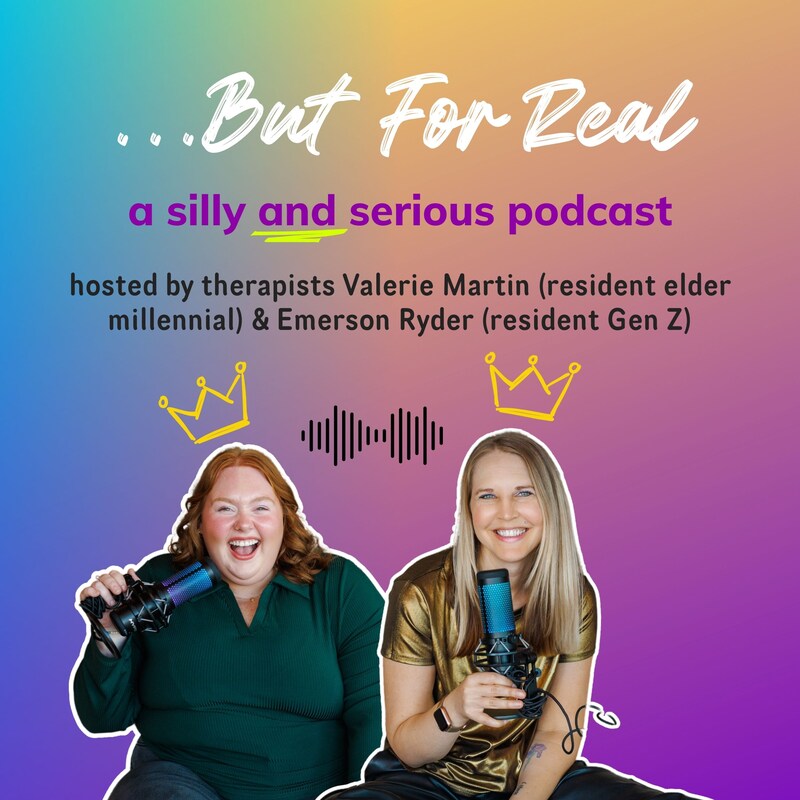
This week, Val and Em sit down with forest therapy guide (and Emerson's grad school friend/ cohort mate) Georgia Bromehead to talk about what “connecting with nature” actually means when you’re living in a city, glued to a screen, overwhelmed by climate change, or simply not an Outdoors Person™.
And good news: you do not need to buy hiking boots, memorize bird calls, or disappear into the wilderness for three days.
Georgia breaks down forest therapy as a slow, relational practice rather than another wellness task to optimize, including how something as simple as holding a blade of grass, sitting with a houseplant, watching a candle flame, or noticing one tiny piece of the living world around you can help rebuild connection. We also get into eco-anxiety and ecological grief, why despair about the planet is not automatically something to pathologize, and how staying connected to the Earth can actually help us stay engaged rather than shutting down.
Basically: consider this your permission slip to microdose nature.
This episode covers:
(00:00) Meet Georgia Bromehead — forest therapy, nature connection, and touching grass in the age of AI
(02:00) Tea & Crumpets — analog habit trackers, archetypes, and Disney World
(07:00) Step Into My Office — what if you just… don’t like nature?
(10:00) Microdosing Nature — houseplants, botanical gardens, and starting tiny
(14:00) What Is Forest Therapy? — forest bathing, sensory awareness, and getting out of your head
(17:00) Bodies Without Performance — embodiment, agency, and letting your nervous system chill
(20:00) Eco-Anxiety + Planet Grief — caring deeply without drowning in despair
(26:00) Nature + Attachment — why trees can offer a surprisingly sturdy kind of support
(28:00) Start With Your Senses — a low-pressure way to practice presence anywhere
(31:00) Nature in the Therapy Room — regulation, intuition, and decentering the therapist
(32:00) ...but for REAL — come to your senses
(33:00) Now That’s What I Call— OKAYY! — “Let’s Not Shit Ourselves” by Bright Eyes
(36:00) Dumpster Fire Phoenix — finding agency, community, and some genuinely good news
(39:00) Rapid Fire Q&A — apps, guilty pleasures, surviving the woods, and Nashville ramen slander
...but for REAL: Eco-anxiety isn’t automatically a sign that something is wrong with you. Sometimes it’s evidence that you are paying attention to something painful and real. The goal isn’t to “fix” your grief, stay hopeful 24/7, or single-handedly recycle your way out of climate collapse. It’s to let yourself feel the heartbreak, rage, beauty, and wonder—and find ways to stay in relationship with the world instead of numbing out from it.
Resources + Stuff Mentioned in This Episode:
King, Warrior, Magician, Lover by Robert Moore and Douglas Gillette: https://jungchicago.org/product/moore-compilation-within-mp3/
While teaching English in Japan, Georgia marveled at the cultural nature connection and rhythmic living. Inspired, she found the Association of Nature and Forest Therapy (ANFT) website. A new way to connect with nature for adults? She was intrigued.
Moving home to Tennessee, Georgia taught herbal supplement education at a local pharmacy.She listened to customers talk about anxiety, depression, and fatigue — and saw firsthand how disconnected from nature and their own bodies many people felt.
Georgia became the first practicing certified Guide with ANFT in Nashville and has been guiding since 2019.She has given talks and interviews about the healing power of nature connection. She's guided forest bathing internationally and Statewide, and she's been featured on podcasts, local radio, and publications. Georgia loves sharing the research and qualities of nature connection. She is also a Psychotherapist with a Master's in Clinical Mental Health Counseling.
DISCLAIMER: But For Real Podcast is not a substitute for individualized mental health treatment or healthcare. This podcast is solely for entertainment and educational purposes. If you are in crisis, please utilize crisis support services, such as the Crisis Text Line (Text START to 741741 in the US) or the 988 Suicide & Crisis Lifeline (Call 988 in the US), or visit https://www.findahelpline.com/ for international resources.