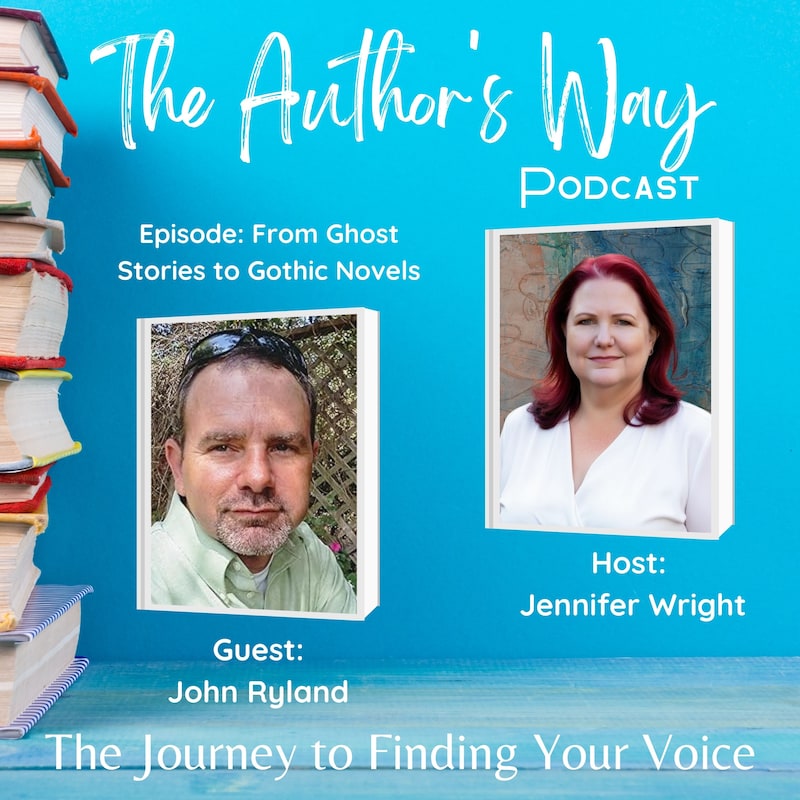
In this episode, I sit down with John Ryland, author of ten books in the Southern Gothic and dark psychological suspense genres. John grew up surrounded by the folklore and ghost stories of the South, which shaped his passion for storytelling from an early age.
We talk about his journey from writing at 14 to self-publishing, and eventually moving into traditional publishing. John opens up about the hustle it takes to share your work with the world, the influence of Southern culture on his stories, and how he now mentors young writers to help them find their own voices.
If you’ve ever thought about writing a book, wondered what it takes to get published, or simply love a good story—you’ll enjoy this conversation.
📌 Show Notes
In this episode, you’ll hear about:
John’s early love of storytelling and the folklore that shaped his imagination
How he wrote his first book at just 14 years old
The realities of self-publishing versus traditional publishing
The persistence and resilience required to build a career as an author
Why community and mentorship are so important for creative growth
John’s advice for aspiring writers who want to share their own stories
About John Ryland:
John is the author of ten books spanning Southern Gothic and dark psychological suspense. His work draws deeply from the rich storytelling traditions of the South, blending atmosphere, folklore, and unforgettable characters. Beyond writing, John mentors young writers and helps them discover their creative voices.
Resources & Links:
Connect with John via his website where you will find information about the author and how to find his books:
Welcome to today's episode of the Author's Way podcast.
Speaker A:
I am so excited for this conversation because we're diving into the world of storytelling with John Ryland.
Speaker A:
John grew up surrounded by Southern folklore and ghost stories, and that early love of storytelling grew into a lifelong passion.
Speaker A:
Today, he's the author of 10, 10 books spanning Southern Gothic and dark psychological suspense.
Speaker A:
John began writing when he was just a kid and completed his first novel when he was only 14.
Speaker A:
And since then, he has spent a lifetime sharing his stories.
Speaker A:
One of the reasons I wanted to talk to John today is he and I met at an art fair locally here in Alabama, and he's going to share with us how he puts himself out there and gets out into the world and markets his book and promotes his book.
Speaker A:
The art fair was just one way that he does it, but he has some really great tips and tricks for how, how he does that.
Speaker A:
Because let's face it, even if you have a publisher, you have to get your books out in front of your audience.
Speaker A:
There's really no other way to do it.
Speaker A:
So he's, he's going to share some of the ways that he does that with us, and I'm, I'm really excited to hear that.
Speaker A:
We're also going to talk about how he builds really great characters in his book and how he gives back to his community by mentoring young upcoming authors.
Speaker A:
So if you have ever thought about writing and wondered about the publishing process or just love a good conversation about storytelling, I am glad you're joining us for this one.
Speaker A:
So let's jump in.
Speaker A:
Welcome.
Speaker A:
John, I'm so excited for you to be here today.
Speaker A:
I love talking to people, fiction, authors.
Speaker A:
I think there's, there's such a skill that goes into being able to create really great fiction.
Speaker A:
And so I'm, I'm excited to, to chat today.
Speaker A:
So do you want to tell us just a little bit about, about you, a little bit about yourself, your writing, or anything you want to share?
Speaker B:
Yeah.
Speaker B:
Jennifer, thanks for having me on.
Speaker B:
I appreciate the opportunity.
Speaker B:
I grew up in the south and I grew up hearing stories, hearing, you know, tall tales.
Speaker B:
So at an early age, I was introduced to fiction.
Speaker B:
It was just a world fiction.
Speaker B:
So it, I think my, my love for writing fiction grew from that, that point, and it's just been a, a long journey to get to where I am now.
Speaker B:
But I am a writer of Southern Gothic and dark psychological suspense of fiction, and I currently have 10 books in print as we speak.
Speaker A:
That is awesome.
Speaker A:
You know, I was actually having this conversation the Other day with someone about.
Speaker A:
About the spoken word.
Speaker A:
And I think Southerners.
Speaker A:
I grew up Southern as well.
Speaker A:
I think Southerners are specific, skilled at storytelling.
Speaker A:
And because I heard, you know, I grew up hearing the stories, and I. I remember.
Speaker A:
You may remember this as well.
Speaker A:
I remember being a kid, and the.
Speaker A:
One of the most fascinating things that I loved is we would always hear about the Alabama ghost stories, like all the different ghosts from.
Speaker A:
And there were books written about all the different ghosts from Alabama.
Speaker A:
And that was something that was always fascinating to me.
Speaker A:
And you may have.
Speaker A:
You may have had some similar experiences growing up.
Speaker B:
Well, you know, they have the.
Speaker B:
The 13 Alabama Ghost.
Speaker A:
Right.
Speaker B:
Book.
Speaker B:
I forget who it was that wrote it, but one of the.
Speaker B:
One of the ghosts in the.
Speaker B:
The book is in Windfield, I want to say, where they have the face in the window.
Speaker A:
That's the one I always remember is the face in the window.
Speaker B:
And that's not very far from here.
Speaker B:
It's like, yeah, 30 minutes from here.
Speaker B:
So, I mean, I've actually been to that courthouse, and they have a little arrow pointing to the face you can see.
Speaker B:
So, you know, it's really cool when you hear all these stories and then you see them in a book and you're like, well, they're.
Speaker B:
They're legit.
Speaker B:
They're real stories.
Speaker C:
Right?
Speaker B:
And then you get to go to the places and, you know, see.
Speaker B:
Actually see on it.
Speaker B:
It really reinforces that.
Speaker B:
That whole concept of ghost exists.
Speaker B:
You know, these stories weren't just wild stories.
Speaker C:
Right, Right.
Speaker A:
So tell me a little bit about.
Speaker A:
So did you say you have.
Speaker A:
Okay, remind me again, how many books do you have?
Speaker A:
10.
Speaker B:
I have 10.
Speaker A:
10 books.
Speaker A:
So you've been doing.
Speaker A:
You've been putting your stories on paper.
Speaker B:
For a while now, a long time.
Speaker B:
Yeah, it really started when I was real young, prior to 10 years old, probably.
Speaker B:
I would just write little stories and.
Speaker B:
And read them to people, you know.
Speaker B:
And then I think I wrote my first novel around the age of 14.
Speaker B:
And I mean, looking back, it was really terrible.
Speaker B:
You know, I was 14, so the.
Speaker B:
The expectation wasn't too great, I guess.
Speaker B:
But I wrote one when I was 14.
Speaker B:
I wrote another one when I was 17, and probably about 19, I wrote another one as all three of them were terrible, but progressively less so, I like to think.
Speaker B:
But, you know, while I never did publish any of those three, I did learn a lot of how to build a novel, how to.
Speaker B:
How to build suspense and foreshadowing and just the.
Speaker B:
The physical bones of.
Speaker B:
Of a novel and how it needs to be done and how it does it need to be done.
Speaker B:
So yeah, I've been at it for quite a while.
Speaker A:
I mean, seriously, how many 14 year olds write a novel?
Speaker A:
I mean, that's, that's pretty impressive.
Speaker A:
Even if, even if those didn't get published.
Speaker A:
I think just that the bravery kind of behind putting yourself out there and actually sharing those stories is, is pretty phenomenal at that age.
Speaker B:
I guess it's the, the ignorance of youth.
Speaker B:
You know, I really, at the time, I really didn't think about, you know, how monumental it really was.
Speaker B:
I was just like, okay, I'm gonna write this book.
Speaker B:
And I had my little electric typewriter and I would, you know, chug along and, and just work on it.
Speaker B:
And I think it ended up being like 150 pages and it, it was really, you know, adolescent and probably, probably full of typos and lord knows what else, but I did it and, and I remember thinking while I was doing it was like, I'm writing a book, you know, and I had no, no idea about publishing the process, editing, all that kind of stuff.
Speaker B:
I had no clue about that because I didn't grow up in that type of environment, you know, where, you know, the way people did things like that.
Speaker C:
Right.
Speaker B:
I was just kind of out on my own doing stuff, just shooting in the dark basically, I guess.
Speaker A:
Yeah, yeah, it's, it's a fascinating process.
Speaker A:
And so are you, are your books self published or have you gone through like the traditional publishing process with them?
Speaker B:
My first two were self published, one novel and a collection of short stories.
Speaker B:
I self published those and then I kind of got picked up by a traditional publisher and then I got picked up by different traditional publisher.
Speaker B:
And so some of the, of the 10, I think there's five or traditionally published or four by one publisher and one by another.
Speaker B:
But I still self publish from time to time, you know, in between books from my publisher.
Speaker A:
So, you know, I, I like that and I think that's, that's an, kind of an important message to share because one of the things that, when I talk to aspiring authors is they go back and forth whether they should self publish versus looking for a publisher or looking for an agent.
Speaker A:
And I think there is a lot of value sometimes.
Speaker A:
And, and I like, you know, that you shared that there's a lot of value sometimes in, you know, you can go ahead and self publish and you can always continue.
Speaker A:
You can always, you know, look for a publisher afterward as well.
Speaker A:
So, so there's still opportunity just because you've self published doesn't mean there's not still opportunity to find a publisher.
Speaker B:
Oh, definitely.
Speaker B:
I, I feel like personally having two books in print kind of sent a message to the publishers that hey, he can finish a project and.
Speaker C:
Right.
Speaker B:
This isn't a one shot wonder.
Speaker B:
You know, some people write one book and that's it.
Speaker B:
And so I think even though it's self publishing, there's the, the stigma behind self publishing, which is a whole another story.
Speaker B:
But I, I feel like the fact that you put something out there, you finished it and you went through the process.
Speaker B:
For me, if I, if I were a publisher, that, that would not be a black mark.
Speaker C:
Right.
Speaker B:
Especially not today because so many people choose to be indie.
Speaker C:
Yeah.
Speaker B:
Which I will say, let me add this.
Speaker B:
A lot of people, it's like a lot of people choose to be indie because they don't get picked up.
Speaker B:
And so they say, oh, I get, I, I want to be indie.
Speaker B:
But if, if a big publisher called, they would jump on at the chance.
Speaker B:
Does that make sense?
Speaker A:
No, that makes total sense.
Speaker B:
It makes total sense.
Speaker B:
Which I mean, I agree.
Speaker B:
Some, some people really do choose to be Indian.
Speaker B:
That's wonderful.
Speaker B:
That's fine.
Speaker C:
Right, right.
Speaker B:
I just, you know, I don't have a preference to, to be honest.
Speaker B:
It's, it's set for me.
Speaker B:
It's pretty much the same level of work.
Speaker C:
Yeah.
Speaker B:
Because when I self publish, I, I hire an editor, have an editor that I use, so I go back and forth with with her through my editing, I go back and forth with COVID art just like I do with my publisher.
Speaker B:
So it's basically the same thing.
Speaker B:
I just don't have to put up the, the money up front with the publisher.
Speaker B:
You know, I don't have to pay the editor, I don't have to pay the COVID art people.
Speaker C:
Yeah.
Speaker A:
You know, I think that's, that's one of the things that I like to help people understand the difference because so many people think that if I'm not picked up by a publisher then, you know, then, you know, I'm not good enough.
Speaker A:
And a lot of times it really is just like you were saying, you know, once you got, you get a couple of books out there, then they, they kind of see there are tons of people out there writing books.
Speaker A:
And so for the publishers to sort of get filter through everything out there, you've got to have a little bit of something to, to hook onto.
Speaker A:
So, you know, and the fact that self publishing has become, there's not as much of a stigma against it.
Speaker B:
Yeah.
Speaker A:
As there used to be.
Speaker A:
It's become a much easier process.
Speaker A:
The platforms out there are, are really kind of a lot easier than.
Speaker A:
I mean you have to, you have to know technically a little bit about it but, but you can learn.
Speaker A:
It's not, it's not that hard to learn how to use them.
Speaker A:
So you know, it, it is becoming a lot easier for people who want to go that route.
Speaker B:
Well, just, just from:
Speaker B:
So that's what, seven years.
Speaker B:
The industry has changed a lot as far as self publishing.
Speaker B:
I do remember when I, the first time I uploaded my first novel which was called Souls Harbor.
Speaker B:
Amazon didn't have the algorithm to where they help you format your book.
Speaker B:
It'll just come out the way you have it formatted and it was just crazy.
Speaker B:
So you know, I had to take it back down, go through re.
Speaker B:
Physically reformat a lot of stuff and a lot of it was trial and error and.
Speaker B:
But now it's much easier yeah to produce a good quality book and there's.
Speaker A:
Some really good tools out there for, to help you find format and.
Speaker A:
Oh definitely and, and do all of that or you don't really have to have as much knowledge in, in all of those processes yourself.
Speaker A:
So.
Speaker A:
And I love that I tend to like to do a lot of the, a lot of the formatting myself without using the tools because I'm, I'm a little bit picky.
Speaker A:
But, but there's some tools out there that are really great and that, that can help with that and really kind of make it a no brainer.
Speaker B:
And you know, the, the support industry for authors has, has just blossomed so much for like you know, five or places like that where you can find editors at a reasonable price and you can find cover artists, you can find formatters, you can find people to support you.
Speaker B:
You know, I mean you got to pay for it.
Speaker B:
are people there went back in:
Speaker B:
You had to really kind of scour.
Speaker C:
Right.
Speaker B:
The Internet to find good people.
Speaker C:
Right.
Speaker C:
Yeah.
Speaker A:
So, so I want to talk just a little bit about the work that you're doing to, to get the word out about your books.
Speaker A:
So you and I actually met, you were at a art festival, a local art festival promoting your book.
Speaker A:
And, and, but you do that fairly often.
Speaker A:
That's, that's a, that's a pretty big part of part of what you do, I believe.
Speaker A:
So tell us a little bit about how you are like getting.
Speaker A:
Because I mean you can write a book and Put the book out there and self publish it.
Speaker A:
But if nobody knows it's out there, then you're not, you know, you're not getting it into the hands of the people who want to read it.
Speaker A:
So what are some of the things that you do to market yourself and, and get your books out, into, out to your audiences?
Speaker B:
So I think, you know, as an author and if you don't automatically have a huge following, if you, you're not, you know, a star who everybody already knows and you write a book, I think you have to have a multi pronged approach to getting the word out.
Speaker B:
I mean, definitely social media, I, I, you know, I have Instagram, Facebook and Twitter and all these other accounts that I, that I promote, well, my book on.
Speaker B:
But I also do a lot of events in the Southeast.
Speaker B:
I typically try to do between 30, 35 events a year, which is a lot.
Speaker B:
But you know, I travel around, I talk to people, try to make connections with, with other writers, with other artists.
Speaker B:
And I just, you know, you have to do something almost every day to promote your book and yourself.
Speaker B:
And you know, it's a lot of work, a lot of work to go, you know, drive three, four hours, set up, do a show all day, drive home.
Speaker B:
But you know, it's part of the, the process of getting your name out there.
Speaker B:
And if, I mean, unfortunately, if you're not willing to, to put the work into, to get your name out there, it's going to be very hard for people to find you.
Speaker B:
I mean even, you know, I've been doing about 30 shows a year for two or three years now.
Speaker B:
And before that I did, you know, 10 or 12.
Speaker B:
But even after all these years, it's, it's still a battle to, to get my book in front of readers sometimes.
Speaker B:
I mean, I have, have a, a website, social media, travel, I do interviews, I go on the radio.
Speaker B:
And it's just something that you have to be prepared to do.
Speaker B:
If you, if you're an indie writer or small or with a small press, you have to be willing to promote yourself.
Speaker C:
Yeah.
Speaker A:
So do you, do you do most of your promotion yourself or do you utilize like PR or publicist or anything like that?
Speaker B:
I do most of it myself.
Speaker B:
I have, you know, a few people that sometimes will help and you know, promote me on, on their websites and their, their podcast and things like that.
Speaker B:
But I don't have an, an dedicated PR person just because of the cost and time and.
Speaker B:
Right, like that.
Speaker C:
Right.
Speaker C:
Okay.
Speaker A:
I, I, I love what you're doing.
Speaker A:
I think, I think that sets a great example for other authors.
Speaker A:
And, and you know, I think it kind of shows that even when you have a publisher, there's still a lot you have to get out there.
Speaker A:
You have to get out there yourself and you have to, you have to put it out there.
Speaker B:
You really do.
Speaker B:
Unless you're, you sign with a big five publisher.
Speaker C:
Right.
Speaker B:
You're gonna have to self promote.
Speaker B:
It's just that's, there's no avoiding it if you want to.
Speaker B:
And I guess a lot of it depends on what you want as an author.
Speaker C:
Right.
Speaker B:
You know, what, what your end goals are.
Speaker B:
My end goal is to be, you know, self sufficient and support myself and my family through my writing.
Speaker B:
So it, it kind of takes on a little bit of a business approach that you know, you have to promote your product, you have to promote yourself or you'll never get to that point.
Speaker C:
Right, right.
Speaker B:
And even, you know, my publisher does, does stuff to help promote my books because you know, they, they make more money the more books I sell as well.
Speaker C:
Right.
Speaker B:
But you know, they can't afford to do a multi million dollar national campaign, you know, so I have to do my part.
Speaker C:
Right?
Speaker C:
Yeah.
Speaker B:
And if you and a lot of small presses in their contract, they will specifically state that the author is responsible for self promotion as well as they are.
Speaker C:
Right.
Speaker A:
What have you found to be like maybe some of your, your favorite ways of doing that or the, or the things that, that get you the most.
Speaker C:
Success.
Speaker A:
Is it the art festivals?
Speaker A:
Is it, are, are, is there anything that really kind of stands out to you as far as like being these are the things, these are the two or three things that really work the best for me.
Speaker B:
I have a, a pretty decent following on my author page on Facebook.
Speaker C:
Okay.
Speaker B:
And so I get a lot of interaction through that and get some good traction through that.
Speaker B:
And you know, I have a, an email list that I typically I'll send out once a month and I, I garner a good bit of reaction from that.
Speaker B:
But my absolute favorite, favorite thing to do is just to be out there and talk to people about the books, about my books.
Speaker B:
My wife tells me I can talk about my books all day and I probably could.
Speaker B:
So you know, just getting out there and meeting the people that, that's my favorite part of everything.
Speaker A:
So kind of switching topics just a little bit.
Speaker A:
What sort of led you to this genre?
Speaker A:
I know you were talking, we were talking a little bit earlier about, you know, the tales that we hear growing up and, and, but what really kind of, what really made you interested in Creating stories.
Speaker A:
These more like thriller, suspense type of.
Speaker A:
Type of stories.
Speaker B:
Oh, I, I think I typically lean towards the more shadowy side of.
Speaker B:
Of life.
Speaker B:
You know, I, I just like the dark tales.
Speaker B:
I like the, the, you know, the suspense and not knowing what's going to happen.
Speaker B:
And I, I think it was just a natural outgrowth of that personality trait that I have.
Speaker B:
I've always read that.
Speaker B:
That type of story.
Speaker B:
And being from the south, you know, I've always been drawn to the Southern writers, and most of their work tends to lean that way because I think as a Southerner, you know, it's just a fact of life that, you know, there are bad things out there.
Speaker B:
There are things that are happening, things that.
Speaker B:
And I think we are more in touch with it, maybe, or we don't dismiss it as much.
Speaker B:
And so that whole shadowy, ghostly, mysterious aura just permeates the south to the point where it's inescapable and especially if you're from the country, you know, more so, I guess.
Speaker B:
And so I think, like, you know, I said, it's just a natural outcropping of just who I am and what I'm drawn to.
Speaker A:
I love that, you know, we, we kind of.
Speaker A:
There's a lot about, you know, sort of understanding our roots and, you know, really kind of working with where we came from.
Speaker A:
And I think that's, it's.
Speaker A:
It's interesting and it helps you just really kind of explore things a lot more deeply.
Speaker B:
It really does.
Speaker B:
Because, you know, people ask me, they're like, well, how do you write Southern Gothic?
Speaker B:
So?
Speaker B:
Well.
Speaker B:
Well, you know, the genre of Southern Gothic involves, like, isolation, poverty, usually some mental illness, some supernatural elements, whether real or perceived, usually some patriarchal antagonist.
Speaker B:
It's very atmospheric.
Speaker B:
And I'm like, I grew up Southern Gothic, so it's just natural that I would write it.
Speaker C:
Yeah.
Speaker A:
So one of the books that I have of yours is a book of short stories.
Speaker A:
It's called Southern Gothic.
Speaker A:
So I adore short stories.
Speaker A:
And when I write fiction, I am probably more prone to write short stories than.
Speaker A:
More like a novel.
Speaker A:
Are.
Speaker A:
Do you have a preference?
Speaker A:
I know you have, you know, you have novels, you.
Speaker A:
You have the short stories.
Speaker A:
Do you have a preference?
Speaker A:
Is there one that really kind of speaks to you more than others?
Speaker B:
I think they both have their pros and cons.
Speaker B:
For me personally, a story is going to dictate what it is.
Speaker B:
If it's a short story, it's just gonna be a short story.
Speaker B:
And if it's a novel, it's going to Be a novel and, and people laugh, but I really don't have a lot of control over it when that happens.
Speaker A:
Oh, yeah, that's a good point.
Speaker B:
It just, it's, you know, I'll write the story and then I get the.
Speaker B:
It's done and I just have this feeling that it's done, so I just leave it.
Speaker B:
And usually I abide by that.
Speaker B:
But I, I absolutely love the, the short story.
Speaker B:
Sorry.
Speaker B:
The whole premise behind it, that it's, it's quick and it's done and it's encapsulated and, and it's almost like a jab in boxing, you know, it's just a quick something to, to snatch the reader and drag them through this real intense situation and then give them the conclusion and you're done with them, you know, kind of like speed dating.
Speaker B:
Whereas a novel.
Speaker B:
I, I do enjoy the novels and the fact that I can flesh a lot of things out, right.
Speaker B:
Really bring the atmosphere into the, the story, give.
Speaker B:
Give a lot more backstory, things like that.
Speaker B:
So I'm.
Speaker B:
Excuse me.
Speaker B:
I really do enjoy both.
Speaker B:
And, and like I said, if people think that it's strange when I say that's my wife especially, but I, I don't have any control over what it's going to be.
Speaker B:
It's either going to be a short story or it's going to be a novel.
Speaker B:
And it just.
Speaker B:
And it all depends on how I feel afterwards.
Speaker A:
That, that sounds like a.
Speaker A:
Like a true artist because, you know, it really.
Speaker A:
It really is.
Speaker A:
And, and I, I am a painter.
Speaker A:
I do oil paintings.
Speaker A:
And it's kind of the same way.
Speaker A:
It's, you know, you kind of see where it go, where it takes you.
Speaker B:
And I think any creative, whether it's an artist or photographer or writer, I think that the, the muse just reveals itself.
Speaker C:
Right.
Speaker B:
To show you what it is.
Speaker C:
Right.
Speaker B:
You know, it's like a sculpture.
Speaker B:
They.
Speaker B:
Reveals itself and that's what it is.
Speaker B:
And hardly ever do I have a crossover, you know, because I can tell early on, oh, this is going to be a short story.
Speaker B:
Or I can tell this is going to be a novella or this is a big one, you know, I know early on.
Speaker B:
So I kind of work in that direction.
Speaker B:
And, you know, some of my, my short stories are short, you know, three or 4,000, but some of them are 12, 15,000 words.
Speaker B:
So it just.
Speaker B:
The story writes itself myself, and I'm just kind of along for the ride.
Speaker B:
But the one exception that, that has ever kind of crossed over is my novel.
Speaker B:
The, The Unkindness of ravens.
Speaker B:
I wrote it and I thought, this is a short story.
Speaker B:
So I wrote it.
Speaker B:
It ended up about 10, 000 words.
Speaker B:
And I'm like, okay, well, that's done.
Speaker B:
I'm happy with it.
Speaker B:
But as the weeks went by, it just kept nagging at me that it wasn't finished.
Speaker B:
I needed to, you know, do more.
Speaker B:
So I sat down, I wrote another probably, you know, 15, 20,000 words.
Speaker B:
And I got it to.
Speaker B:
To be where it is.
Speaker B:
So, I mean, honestly, I think as a writer, you have to.
Speaker B:
You have to follow the meeting.
Speaker B:
You have to follow where the story wants to go.
Speaker C:
Right.
Speaker A:
You know, one of the, One of the questions that get asked the most people who want to write more fiction is about characters, like developing characters and, and really kind of like how, you know, what are the.
Speaker A:
What is the process for doing that?
Speaker A:
Do you have a really good method for, for developing your characters?
Speaker B:
One thing that, that I do when, when I have a character, you know, I have a general idea of who they are and their personality and what their personality needs to be to move the story along.
Speaker B:
But one way that I really flesh them out is make sure that I include a lot of human everyday characteristics.
Speaker B:
You know, the way they.
Speaker B:
They walk, the way, you know, any.
Speaker B:
Sometimes I'll add a saying or something that they like to.
Speaker B:
To use a lot or mannerisms.
Speaker B:
Whether they move their hands a lot or they brush their hand through their hair a lot, just give them a normal human characteristic that kind of identifies them as a unique person and then just let them go from there.
Speaker B:
Because I, I've read.
Speaker B:
I have read tons of books where the, the characters are all similar.
Speaker B:
They're just a character in a book.
Speaker B:
And I want my characters to be somebody that the reader can be like, oh, yeah, I know people like that, you know, who, who touch stuff or who, you know, say things or stand a certain way.
Speaker B:
And I think that helps the reader to identify with that character.
Speaker B:
And once you get a reader to invest in that character, then, you know, they're.
Speaker B:
They're hooked on the story and they want to see how the character progresses.
Speaker C:
Yeah.
Speaker A:
And sometimes it can be even just a little detail.
Speaker C:
Yeah.
Speaker B:
A word or two here, there, or just they're.
Speaker B:
The way they interact with people, you know, their inner dialogue, just all kind of stuff you can, you can add.
Speaker B:
And I think for a young writer to learn that early on is very helpful to make them human.
Speaker B:
They.
Speaker B:
I mean.
Speaker C:
Right.
Speaker B:
Readers want to identify with the character.
Speaker C:
Yeah.
Speaker A:
Oh, yeah, that's.
Speaker A:
That's really where the the connection starts to be made with the, between the reader and the writer.
Speaker B:
Well, as, as a writer, if you don't elicit some type of response from your reader, then you're not going to connect with them in a way that makes them want to read other works that you put out.
Speaker B:
And the only way you can really connect with them is through the characters, is through the people in your book.
Speaker B:
And if, if they like the characters or hate the character or you know, feel sorry for the character.
Speaker B:
You have to build some type of connection.
Speaker B:
Yeah, one way or, or the other.
Speaker C:
Yeah.
Speaker C:
Right.
Speaker A:
So you, you shared with me when we spoke before that you work with a group of young writers.
Speaker B:
Yes, ma', am, I do.
Speaker B:
A, A teacher at a local high school just messaged me out of the blue.
Speaker B:
She had found that I was a, a local writer and she had a group of high school kids that she was sort of mentoring and after school program and they were poets and artists and writers.
Speaker B:
And she asked if I would be interested in coming and just speaking to them.
Speaker B:
And I absolutely love the concept of her, you know, supporting these young, young writers.
Speaker B:
So I naturally, I jumped at the chance and so I, I met with them and you know, we talked for an hour or so and I met with him a few other times and, and it's just really refreshing to see young people drawn to, to being a creative because when I was young there wasn't that wasn't there, you know.
Speaker C:
Right.
Speaker B:
I remember being a teenager and I'm like, you know, I'm the only person who writes stories.
Speaker B:
I'm the only person who, you know, does this kind of stuff.
Speaker B:
And it was very isolating.
Speaker B:
But to, to know that there are groups out there and I'm sure she's not the only one in the country that does this, but it's just great to see.
Speaker B:
So any way I can support them or help them naturally just jump at the chance.
Speaker B:
So we, through our meetings and my discussions and thoughts with the teacher, we kind of hatched the, a plan to publish the kids work through the small imprint that I formed that I used to self publish my own work.
Speaker B:
And of course they were, they were ecstatic.
Speaker B:
You know, they were, you know, the is.
Speaker B:
And it's strange, you get the initial, you know, they're all jacked up, they're happy.
Speaker B:
And then a few days later you the, the realness of it kind of settles in and you see these kids starting to get worried and nervous and you're like, they're like, oh, I don't know, you Know, you know, the whole process was very educational for them because that's, that's what I told the teacher.
Speaker B:
If, if they're going to be a writer or poet, they're going to put their work out there, they have to learn the process because it is a process.
Speaker B:
And I said, one of the things that I want to do with this is introduce them to that process, but kind of gently, you know, rather than just them submitting and getting a form letter or something, a rejection.
Speaker B:
So that, that was the process that we went through.
Speaker C:
Yeah.
Speaker C:
Yeah.
Speaker A:
And I absolutely love this concept.
Speaker A:
And when you were telling me about this, I thought, oh, my gosh, there could be some other opportunities out there for other authors, you know, in their local communities to, to do that kind of thing.
Speaker A:
And that, that really spoke to me.
Speaker A:
And I love that I have, you know, I've worked with the different writers groups in the past and, and, and different things, but to be able to influence young writers and young artists like that, I think it's, it's phenomenal.
Speaker C:
Sorry.
Speaker B:
Bless you.
Speaker B:
I think, though, you know, not to say that I'm Stephen King, J.K. rowling or somebody, but I, I have learned a lot.
Speaker C:
Yeah.
Speaker B:
Along the way, and I've achieved a small measure of success.
Speaker B:
And so I think honestly, it's.
Speaker B:
It's a responsibility for, for writers to, to help other people avoid some of the pitfalls that they fell into.
Speaker B:
Yeah.
Speaker B:
And so, you know, I mentioned earlier that I was picked up by two different publishers.
Speaker B:
Well, the reason I only did one book with one publisher was because things didn't work out nearly as well as I wanted them to sell.
Speaker B:
But the lesson learned.
Speaker B:
So we, we, you know, with these kids, I discussed that, I discussed, you know, contracts, I discussed, you know, submission, formatting, just, just about everything that you could think of for, for to introduce them to the process.
Speaker B:
And we made them go through the process of formatting and submissions and edits and cover art and the whole works.
Speaker B:
And I, I think ultimately they'll be better off for it.
Speaker A:
Absolutely.
Speaker A:
And those are not the kinds of things that, that they would learn otherwise.
Speaker A:
You know, when you decide, you know, when anyone decides, okay, I want to publish, there's a lot that you have to find out about.
Speaker A:
And a lot of times it's trial and error.
Speaker B:
It is.
Speaker B:
And the odd thing is you don't even know what you don't know exactly.
Speaker B:
You know, there's.
Speaker B:
And I remember what my first novel, you know, I'm a, A creative.
Speaker B:
I'm a writer, and that's What I do.
Speaker B:
And so when it came time to publish it, you know, I, I knew I needed an, an editor.
Speaker B:
So I, I, I got that and I did my own cover art, so I had that.
Speaker B:
But then you go through the process, submission of submissions, and I'm like, where do I even find a publisher?
Speaker B:
Where do I even find, you know, so, you know, granted, it's a, it's only been seven or eight years, but the industry has changed so much.
Speaker B:
The Internet has changed so much since.
Speaker B:
And so, you know, if I had somebody back then, that was where I am now that's telling me this stuff, it would have been a whole lot less stressful and a lot more enjoyable, you know?
Speaker C:
Right.
Speaker B:
So we, we ultimately got things put together.
Speaker B:
We, we have a, a mixed anthology of all the kids works that will release on September 20th.
Speaker B:
And we're going to have a big little bash for the, for the kids and a release party so they'll, they'll really enjoy that part of it.
Speaker B:
But one thing that I really emphasize to the kids is that, you know, there is a disconnect for many creatives with the business side of publishing.
Speaker C:
Right.
Speaker B:
You know, as writers, as artists, we want to create, we want to write, we want to paint, we want to, you know, sculpt or whatever it is that we do.
Speaker B:
That's what we want to do.
Speaker B:
But then having to completely turn the page and approach it as a business, it's a little difficult because, you know, we're left brain, right brain authors, you know, and it's a different mindset.
Speaker B:
And, and it's hard sometimes for, for people to do that.
Speaker B:
I tend sometimes to be a little lazy on that end of it, you know, because it's just, it's not fun.
Speaker B:
It's numbers, right.
Speaker B:
It's research and it's this and that, and that's the boring part.
Speaker B:
But you have to do both sides, right?
Speaker C:
Right.
Speaker A:
And I think that I've always believed that one of the best ways to take the fear out of something is to just learn how it works.
Speaker A:
And by helping at a younger age, helping these young people kind of understand just how it works, it probably will help them in the long run to continue to be creative and continue to put their, their stuff out there as opposed to kind of let, letting themselves being stopped by the fear of just not knowing.
Speaker B:
And, you know, and I mentioned that to the kids that how many great novels are sitting in people's desk or in their computer now because they were just too afraid of hearing the word no.
Speaker C:
Right.
Speaker B:
You know, and the thing is, when you submit, a lot of stars have to align for you to get accepted.
Speaker B:
You know, it has to be the right, the right publisher, the right submission manager, the right story, the right day, the right, you know, everything has to fall in line.
Speaker B:
So you have to do that research to as align as many of those stars as you can, you know, before you even submit the book.
Speaker C:
Right.
Speaker B:
And I mean, honestly.
Speaker B:
And I don't blame publishers because they have to make money or they'll go out of business and nobody will get.
Speaker B:
Get published.
Speaker B:
So it's.
Speaker B:
It, it's a necessary evil, I guess.
Speaker C:
Right, right.
Speaker B:
And honestly, if I, if I had to read, you know, 10,000 short stories a year and decide which I would want them to be formatted in a way that made my life easier.
Speaker A:
Absolutely.
Speaker B:
So I don't, I don't hold anything against them.
Speaker C:
Right, right.
Speaker C:
Yeah.
Speaker C:
So.
Speaker A:
Well, you'll have to let me know when the book is available.
Speaker A:
I would love to read it and would love to share it as well.
Speaker B:
Oh, definitely.
Speaker B:
It's it.
Speaker B:
Like I said, it will release on September 20th, so I would definitely get you the link to that book.
Speaker B:
And I've kind of.
Speaker B:
And it's odd that the summer is usually like a downtime for me as far as my own personal writing and stuff like that.
Speaker B:
I guess, you know, the, the gothic vibe just doesn't percolate a lot when it's bright, sunny and hot outside.
Speaker B:
So I do most of my personal writing in the fall and winter and early spring.
Speaker B:
So it was a good time to approach this with these young people and do that.
Speaker B:
But, you know, as, as a writer, I've always got stuff cooking, so.
Speaker A:
I'm sure, I'm sure.
Speaker A:
Yeah.
Speaker A:
I love that.
Speaker A:
So first off, I appreciate you spending some time with me today.
Speaker A:
I think I, I love your, the work that you're doing.
Speaker A:
I love that, the genre.
Speaker A:
And I'm anxious to read some more of your books.
Speaker A:
And.
Speaker A:
But so for anyone who would like to know more about you, would like to know more about your books and how to get them, what is the best way for them to reach you?
Speaker B:
The, the best place to get everything that has to do with me is my personal author website and it is@gspress books.com gspressbooks.com.
Speaker C:
Okay.
Speaker B:
And that, that has all my books.
Speaker B:
It has, you know, a little Bible about me.
Speaker B:
It has some, some poetry, it has some, you know, a blog.
Speaker B:
It has just everything that that has to do with me is on that website.
Speaker A:
Okay, awesome.
Speaker A:
And we'll have that in the Show Notes.
Speaker A:
So we'll have a link there out there.
Speaker A:
So anyone who wants to go to the, to the podcast Show Notes will have.
Speaker C:
That.
Speaker A:
Is what do you have anything?
Speaker A:
I know you just mentioned the book that's coming out in September.
Speaker A:
Is there anything else coming up for you?
Speaker B:
I do have a new novel that should be coming out either in the winter or early spring that is called A Meeting of Consequence and sort of a mashup between the Butterfly Effect and Groundhog Day, if you will.
Speaker B:
A down and out musician and a personal injury lawyer meet for the first time in a fatal car crash and.
Speaker B:
But then they wake up again the next day, you know, the, or the same day and they begin repeating this cycle of crashing and dying.
Speaker B:
And ultimately they have to figure out, you know, they, they have little deja vu moments during the day, you know, as they re relived the same day over and over.
Speaker B:
And ultimately they have to figure out why it's happening.
Speaker B:
And so it gets really complicated and, and you know, all that.
Speaker B:
But it's a really fun book.
Speaker B:
It's a little less scary, but it still has a little bit of a dark kind of theme to it.
Speaker B:
And it, it, I. I will say in, in all of my stories and, and my novels and the, the central thing through just about all of them is perseverance, is not giving up and fighting your way through this, this terrible tragedy or this impossible situation.
Speaker B:
And so naturally that's what they have to do as well.
Speaker C:
Awesome.
Speaker A:
Well, I'm looking forward to that.
Speaker A:
I think that'd be a really cool read.
Speaker B:
It's.
Speaker B:
It's really.
Speaker B:
It was a little bit of a departure from my typical just regular southern gothic type stuff that I do.
Speaker B:
It's a little bit of, a little bit more of a kind of a sci fi feel.
Speaker B:
Weird almost, I'm searching for a word here, almost like disembodiment with the two characters that they, you know, become slowly become aware of what's happening.
Speaker C:
Yeah.
Speaker B:
And you know, naturally they don't want it to happen.
Speaker C:
Right.
Speaker B:
But it has to happen.
Speaker B:
So you, it really delves into the two different personalities of the characters and how they deal with the situation.
Speaker A:
Oh, fascinating.
Speaker A:
Yeah, I'm looking forward to that.
Speaker A:
I'll be watching for that one.
Speaker C:
Yeah.
Speaker A:
So one more question for you before we go.
Speaker A:
I always like to know what authors are reading or what, what kind of inspires them.
Speaker A:
So do you have any authors that, that you love to read or any specific books that are, are maybe your favorite books that you recommend?
Speaker B:
You know, Naturally, I read a lot of, you know, books that are typically in my genre, you know, Harlan Corbin and, and those guys.
Speaker B:
But my, my absolute favorite author is Anthony Doer.
Speaker C:
He.
Speaker B:
He wrote all the Light We Cannot See, one of Pulitzer Prize and all that.
Speaker B:
Oh, yeah, but his, his work is dark, but not, not like Stephen King dark, but it's this kind of dark themed, little super supernatural elements kind of drifting throughout it.
Speaker B:
But he really, his writing style is just amazing and he delves into the personalities of the, the characters really, really well.
Speaker B:
And ironically, another reader I read a lot is Ken Follett, who does historical fiction.
Speaker C:
Okay.
Speaker B:
And I just really like his style.
Speaker B:
His.
Speaker B:
His style is very succinct, very conversational.
Speaker C:
Right.
Speaker B:
And I love his writing style and I kind of model my style, kind of a mix between the two of those.
Speaker A:
And.
Speaker B:
But really, those two are the, the main two that I read.
Speaker B:
Of course, I read a lot of indie works from my local authors group and friends of mine who are also writers.
Speaker B:
You know, I read a lot of their work as well.
Speaker C:
Yeah.
Speaker A:
Awesome.
Speaker A:
Awesome.
Speaker A:
Well, thank you so much.
Speaker A:
I appreciate your time.
Speaker A:
This has been a great conversation.
Speaker A:
I appreciate you sharing, you know, all the insights and, and we will be looking forward to, to those two books that, that are coming out in September and, and in the winter.
Speaker A:
But then, you know, all the other stuff, I know that you're, that you're continuing to create.
Speaker B:
Oh, yeah, definitely.
Speaker B:
I appreciate you having me.
Speaker B:
It's been an absolute pleasure talking to you.
Speaker B:
I love doing podcasts, especially ones like this, where it's more conversational, but it's been a blast and I thank you for having me on.
Speaker A:
All right, awesome.
Speaker A:
Well, and to the audience, thank you so much for listening and go out and check out John's work and check out his website, and I know that you will.
Speaker A:
You'll find something.
Speaker A:
I'm sure you'll find something fascinating with his work.