Shownotes
Episode 181 Frederick Dudek (Freddy D)
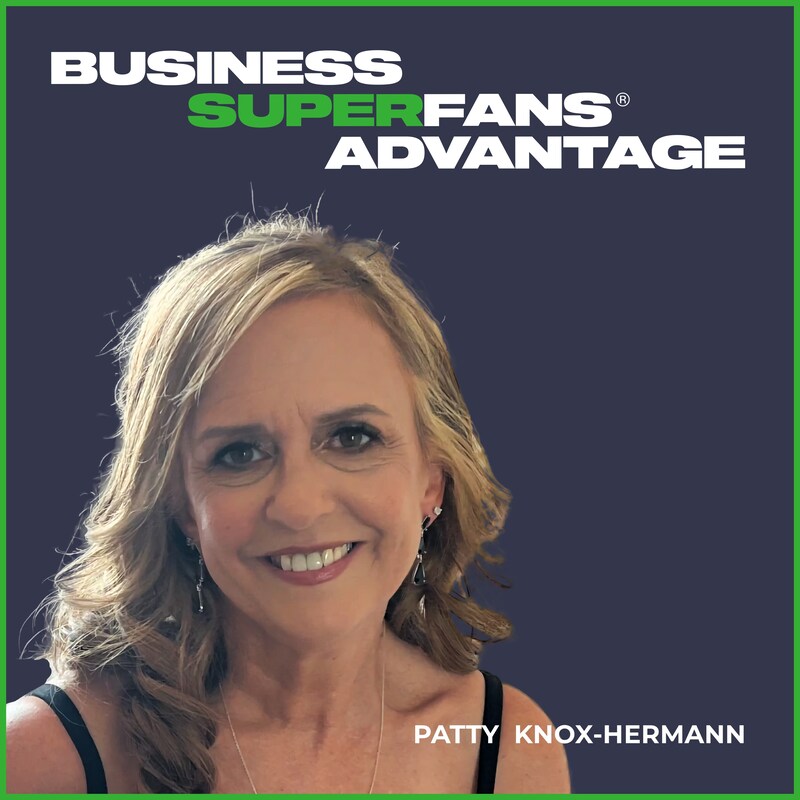
Leveraging community marketing is no longer a nice-to-have—it’s the unfair advantage. In Episode 181 of Business Superfans® – The Service Provider’s Edge, Patty Knox-Hermann, owner and designated broker of Block Party Realty, breaks down how she transforms open houses into advocacy-driven marketing engines.
Instead of relying on signs, silence, and hope, Patty activates neighbors, vendors, and visitors into a unified ecosystem that promotes the listing organically. The result? Faster sales, stronger trust, and a community that markets the property for you.
Patty also shares how her Advanced Home Watch Services protects homeowners’ biggest assets, creating peace of mind and lifelong superfans.
This episode is a must-listen for real estate professionals and service-based entrepreneurs ready to turn experiences into advocacy and advocacy into growth.
Discover more with our detailed show notes and exclusive content by visiting:
Key Takeaways
- Open House Advocacy Marketing Engine – When everyone participates, everyone promotes.
- Community Marketing Leverage – Neighbors and vendors become your extended sales team.
- Superfan Creation Strategy – Experiences outperform ads every time.
- Ecosystem-Based Growth – Vendors cross-promote, collaborate, and win together.
- Trust Through Action – Protecting assets builds advocacy that money can’t buy.
- Home Watch = Loyalty Accelerator – Peace of mind creates lifelong clients.
- Give-First Leadership – When the community wins, your brand wins bigger.
Kindly Consider Supporting Our Show: Support Business Superfans® Advantage
Guest Bio:
Patty Knox-Hermann is the owner of Block Party Realty and founder of Advanced Home Watch Services. With over 30 years of experience in financial services and real estate, Patty is known for turning listings into community-powered events and protecting high-value homes for seasonal residents and seniors aging in place. Her work consistently converts trust into superfans.
Join the Entrepreneur Prosperity™ Skool Community for Free
Freddy D’s Take
What Patty Knox-Hermann has built is not an open house tactic—it’s an advocacy engine. She turns every neighbor, vendor, and visitor into a brand ambassador, creating momentum you can’t buy with ads.
This is exactly what we teach inside the SUPERFANS Framework™—activate your ecosystem, create emotional connection, and let advocacy do the heavy lifting. Patty’s Block Party strategy is offense; her Home Watch services are defense. Together, they build a championship business model that scales trust and results.
FREE 30/Min Prosperity Pathway™ Business Growth Discover Call
The Action:
Turn your next event into an advocacy experience
Who: Clients, partners, neighbors, vendors
Why: Advocacy scales faster and cheaper than advertising
How:
- Co-host with ecosystem partners
- Make participation fun and memorable
- Capture connections ethically
- Follow up with value, not pitches
Guest Contact
Connect with Patty Knox-Hermann:
Website: AdvancedHomeWatchServices.com
Instagram | Facebook
Resources & Tools
Block Party Realty – Community-powered real estate marketing
Advanced Home Watch Services – Property protection & concierge care
This podcast is hosted by Captivate, try it yourself for free.
Companies mentioned in this episode:
- Block Party Realty
- BP Realty
- Raymond James Financial
- Advanced Home Watch Services
- Ninja Prospecting
Copyright 2025 Prosperous Ventures, LLC
This podcast uses the following third-party services for analysis:
OP3 - https://op3.dev/privacy
Podtrac - https://analytics.podtrac.com/privacy-policy-gdrp
Podcorn - https://podcorn.com/privacy
Transcripts
So after having my license for three years and then getting my broker's license, I started my own real estate company and moved away from the agency I was with. And that's how I created Block Party Realty llc, also known as BP Realty. But I am the world's biggest super fan.
Freddy D:You're like a super fan. Welcome to the Business Superfans podcast.
We will discuss how establishing business superfans from customers, employees and business partners can elevate your success exponentially. Learn why these advocates are a key factor to achieving excellence in the world of commerce.
This is the Business Super Fans Podcast with your host, Freddie D. Freddie, Freddie. Hey, super fans.
Superstar Freddy D. Here in this episode 181, we're joined by Patty Knox Herman, owner and designated broker of Block Party Realty and and founder of Advanced Home Watch services.
With over 30 years of experience helping individuals and families make smart financial and real estate decisions, Patty brings a rare blend of professionalism, insight and heart to everything she does.
After being in her career as a financial advisor with Raymond Jones, she followed her passion into real estate, earning her broker's license and launching her own independent brokerage, where her signature Block Party listings turned traditional open houses into buzzworthy neighborhood events.
In:Patty's approach is anything but ordinary, blending deep industry knowledge with personal connection, creative marketing, and a sincere commitment to client care. She's a powerhouse professional and a lifelong learner and a relationship builder at heart.
Get ready for an inspiring conversation with someone who truly believes that what matters most is how we care for one another along the way. Welcome, Patty to Business Superfans, the service provider's Edge. Great conversation that we had before we started recording.
We've known each other for over a year and such, and I was grateful to be participating in one of the cool things that you do. And I'll leave it for the show what that is. So welcome to the show.
Patty Knox-Hermann:Thank you so much for having me on your show.
Freddy D:So let's go a little bit about your background. I know that you do real estate, you do some home watch stuff, and you're involved in some remodeling and things like that.
You've got a multitude of things going. But what's the backstory? How did that all come about?
Patty Knox-Hermann:Oh, okay.
It all started in my previous life that I was a financial advisor with Raymond James Financial for years, and I had My hands tied about helping my clients with their main residence. I was allowed to talk to them about an income properties. I was allowed to tell them when to buy or sell on those things.
d then we had the big fall in: ation across to my clients in:Others lost everything or just about everything in their real estate portfolio. And that really upset me that my hands were so tied by who I held my licenses with.
ial planning. So I decided in:I had to be a full time realtor for about three years before I was allowed to by the state of Arizona to get my broker's license. So I did that three years later and started Block Party Realty. So that's how I got everything going on the real estate side.
I've been in Phoenix for oh,:And I've watched every freeway go up continue. So getting around the Valley, super easy for me. And I just really watched all the different areas as the real estate was booming out here.
And I have just really enjoyed being in the middle of all of that.
Freddy D: started. And I got spanked in:I had rental property and I had a big house and I was selling construction management software to homebuilders that were denying the subdivisions that they were walking away from. And I wasn't able to find any work anywhere else even though I was willing to take little money so I could keep my house and nobody would hire me.
So I was overqualified and all these other excuses and you beat me here.
I came here in 96 originally, so I've seen all the growth that has taken place in the Valley and it's been quite interesting to see all that take place and from what it used to be. And I came here in 82, which is when I was intrigued, when I was in a software company. So I can relate.
So let's talk a little bit more about block party approach, because I participated that a couple weeks ago, and it's a fantastic way to conduct an open home. So let's talk about how did that idea come about and how does that all work?
Patty Knox-Hermann:Well, when I first got my real estate license, I went through a lot of classes with the agencies that where I hung my license with the broker required a lot of classes. And one of the. The instructors was a lender, and she was very much into helping the realtors with their open houses. And her husband's a chef.
So she had suggested, why don't we do a block party? And so she helped me with my. Let me back up. I don't only do them for the listings like what you saw.
I also started out with a buyer, and when the buyer closed escrow, I gave her about four to six weeks to get our house in order. And we threw a big party so that she could meet all of her neighbors that she still didn't know. You know how it takes years to.
Freddy D:Get to know everybody, especially when everybody drives into their garage, right, and you.
Patty Knox-Hermann:Don'T even see them, but you can hear their barking dogs. So I always thought, well, it'd be really convenient to invite the barking dog owner so you can get to know them really well.
So next time you can call and say, hey, Joe, take your dog inside. And so anyway, the first block party was a huge success, and I got a lot of business out of it.
I didn't know to include it or offer it as an event at that point to my other networkers. It was just me and the lender, and I got business out of it. And I thought, this is a really great idea.
So after having my license for three years and then getting my broker's license, I started my own real estate company and moved away from the agency I was with. And that's how I created Block Party Realty llc, also known as BP Realty. And I've just gone forward.
So I would do a block party with every listing and a block party with for those homeowners who were buying, if they so wanted me to throw them a party. And I found that it could get really costly, especially having a food truck or a chef or some somebody there for the food part of it.
So that's when I started realizing with my husband's company, he's a general contractor and he also owns a handyman service. And so I had his company at it and we just started growing it from there. I started inviting other networkers, hey, do you want to join me in this?
And then we would pull a fee together. We'd all pay our fee. And that's what I would use for advertising for gift baskets. We have raffles now. We have quite a bit of advertising.
I'll hire a flyer service company twice before the event and have flyers printed and then delivered to 500 houses around the neighborhood. And that usually get about 10%.
So if I send out 500 flyers, I'm going to get 50 people from the neighborhood to actually put it on their calendar and show up. And that's what we had at the last one that you were at. We had about 47 actual homeowners or neighbors that showed up.
And then we had an additional 15 to 20 of us that had our tables and were helping. Some had an extra couple people helping with their booze and that kind of a thing. And so it is so much fun.
And it's basically an open house on steroids. I mean, it is just an event that passers by just want to stop and come in and see what's going on because it just looks a lot of fun.
Freddy D:Let's take a quick pause to thank our sponsor. This episode is brought to you by our friends at Ninja Prospecting, the outreach team that makes cold connections feel warm. Here's the deal.
Most service business owners are drowning in spammy DMs and cookie cutter LinkedIn messages that never get a response. Sound familiar? Ninja Prospecting flips that script. They craft human first outreach. That actually sounds like you.
And more importantly, craft gets results. No bots, no fluff, just real conversations that open doors.
If you want to stop wasting time on dead end messages and start filling your pipeline with qualified leads, talk to my friend Adam Packard and his team. Head over to ninja prospecting.com to schedule chat today.
And be sure to mention you heard about it right here on the business super fans, the service provider's edge. And hey, if you're the kind of person who likes to get started right away, you can join their free community at school.
K-O O L.com Ninja Prospecting:It's a great event. I was grateful to Participate.
And what was cool was all the different vendors that were participating at the event, which made it uniquely a different thing because I've never seen anything like that before. I've gone to open houses before and there's somebody in there, they might have some cookies and a couple little things.
But what you did, as you said, on steroids, that's really an understatement. It's really blowing it up in a big way. It's gone nuclear from an open house approach.
But the other aspect is it gives the vendors opportunity to interconnect and build some relationships as well. So you're creating an opportunity for the sponsors to build relationships.
And it turns out that one of the guys that was the window washing company there was reading my book and came and it was ironic. He was listening to my podcast show this show. He was, had a book and we came by and we talked for a bit.
And then this afternoon I actually have a meeting with one of the guests that stopped by and bought one of my books at your event. So your event rocks.
Patty Knox-Hermann:Thank you. Yeah, the window cleaning guy had asked me ahead of time who was all going to be there. And when I mentioned you and he was really intrigued.
He is very much into this self improvement and really blowing his business up and really needs guidance on that and was looking for that. And so we had been working together on a think and grow rich approach. And so we meet weekly and we go through things together.
And when I had mentioned that you were going to be there, intentionally mentioned, he was just, I said look him up. And he did.
He was so caught up on all your podcasts and I was just giggling when he finally found who you were at the event and came over and pulled over a chair and started talking with you.
Freddy D:We sat together for like about 30 some minutes. So I gave him some good ideas and I did follow up with them. But I'm going to reach back out to him again and go from there.
So let's talk a little bit about that whole aspect of the dynamics that you put in to get that, that block party running the way it was running, because it was well organized.
Patty Knox-Hermann:Thank you, I appreciate that. I actually have another one coming up, as you know, and it is a lot of work.
But what I really enjoy is I keep my focus on how am I helping the community. Having a vacant home, having a house for sale forever is never good for a community.
So I feel like it in my approach, it's trying to get the property sold very quickly so that it helps the community and for the best dollar, of course. And so I put a lot of thought into it. I do quite a bit of advertising with my title companies. They will push it out there.
So we're on Instagram, we're doing cap cut videos that we're trying to get everything out there ahead of time.
Inviting people, inviting the neighborhood, inviting everybody that wants to come by to come see it because they never know where my buyer is going to come from. But it's got to be about putting the community first. What am I doing that's going to help the community?
Well, part of that is my networkers are other small business owners who also require meeting all of these people. And so if by helping their company, I'm helping the community, by helping the community, I'm helping their company. So.
So it's really a givers gain kind of a mentality or again, everybody wins. And so I really enjoy having my networkers. It takes a lot.
I have to invite about 40, 50 networkers to actually get 10 to 15 that can actually be there and are able and fits on their calendar and the location. A mechanic in Scottsdale is not going to want to be at a block party in Sun City. Those people aren't going to go all the way to this location. Right.
So I have to put a lot of thought into who I'm inviting. And sometimes it's people that can go to any of them because they're more universal.
And then other one, I'm trying to find those small business owners in the community that some of these neighbors might know, but not all neighbors know. And it's really about putting the neighbors in communication with each other.
Once you really know your neighborhood, then the secrecy, the environment just becomes more warming and more movable. And so that's basically how I come up with my networkers and I go knock on doors of businesses in the area.
If I can't find somebody to fit a spot or I am meeting about three more small businesses, I'll just go knock on doors if they want to be part of it. And a lot of times I'll get those people too.
Freddy D:Well, what you're doing there, Pat, is you're also creating super fans from the vendors that are there because you're helping give exposure to their business.
And some of those neighbors that come in, I saw that happen is ended up talking and interested in a service that was being provided by one of the vendors that were participating. And so you're elevating them. And that in turn creates what I call super fans, which are brand Advocates. But I like the term superfans better.
If you think of a sports team with the people's faces painted, the jerseys, the banners, the tailgate parties, you can't buy that kind of pr. And so when you get.
You're transforming the community into a sense of a super fan of what you're doing, because you're helping neighbors connect and meet one another, as well as you're elevating everybody, really, in that whole equation. So there's no downside to what you're doing. It's all upside, really.
Patty Knox-Hermann:Thanks. Yeah. And I really do appreciate helping the small business owner. That just warms my heart.
So at the last event, it really did make me feel good to know that quite a few of those vendors, they were filling their calendar with people that were visiting and other vendors. So just getting to know each other.
Freddy D:Yeah, I had a super fan. Michael is a super fan of me. And like we talked earlier, he was sitting down, trying to pick my brain.
He was promoting me to other people at the event. So it was kind of wild.
Patty Knox-Hermann:That's how it works.
Freddy D:So let's go into a little bit about what happens after the block party, what goes on from there.
Patty Knox-Hermann:So after the block party. And I may have minimalized the actual effort that goes in prior to the block party, because that's these two weeks to back up a little bit.
I don't have a lot of time to put together a block party. When I get a listing, I gotta have that block party within two to three weeks at the most. It's like it has to happen right away.
So I have to get small business owners, my networkers, who want to jump on right away. Yes, I can do this. And then I have to actually have the block party.
And then after the block party, I gather all the names of the attendees, whether it's the networkers, the neighbors, the guests of people that don't even live in the neighborhood, visitors, the passersby. I gather all the information through one specific game that we play at the event, the raffle.
And so maybe to back up a little bit, being part of the block party allows me to put all of your contact information of all my vendors on one sheet of paper and with an initial line near your name. And so the object is to get everybody who attends to go through and meet every single vendor. And by doing so, get the initials of that vendor.
Every vendor, like, you have the opportunity to talk to everybody who's visiting.
Once that sheet is filled, then they can go ahead and fill out their name and Contact information on it, and then they come up to me or Laura, the title person, and they get raffle tickets for each of the initials that there are signatures that they got from the vendors, and that puts them in the raffle. And we have all these giveaways, these prizes. You saw the basket that we had with things, and they're usually themed.
Like, we had movie night and family game night and coffee and all that kind of stuff. And I think the cheesecake was probably the greatest one that everybody wanted, but.
And then at the very end, we raffled those prizes, we got a ticket, and everybody's winning prizes at different things.
But I have captured all the information of our attendees, and then I go ahead and put together the spreadsheet of all those attendees, and I give that to each of the paid vendors that were at the event, and then they get to follow up with each of those attendees on their own.
Freddy D:Yeah. So it's a great marketing technique for the vendors because that gives them prospective prospects.
It also gives them the opportunity to collaborate with some of the other vendors. And more importantly, it also gives the people that visited, they win some prizes.
So it's a trifecta, really, for everybody, because everybody wins on the whole aspect of it.
Patty Knox-Hermann:Yeah, it is really fun. I feel like having that kind of an energy, such a positive mode of energy at the event. It just encapsulates what I stand for.
And then I want the positivity of that event to sell my house. Now, typically, within two to three weeks of a party, I'll get an offer on the property.
And so that's one of the benefits, is that somebody who attended may know somebody who wants to live in that same neighborhood. And other realtors come to the events, and it really helps get that property sold.
Freddy D:And that's really a differentiator. Why somebody would want to list their property with you versus listing with somebody else.
Because you're really going to market their property like it's never been marketed before. And so you're really ramping up their whole awareness of that particular property.
Because you can go by in the subdivision I live in, we see houses for sale, and there's signs, and maybe there's an open house, and there's like, one car in a driveway. And, you know, we've walked into a couple of them, and it's an empty house. It's quiet. The realtor's there, and you're the only one in it.
They're like, a lot of times, oh, my God, someone actually walked in, and you've flipped that whole thing upside down because that place is alive. There's music happening. So people pull up and it's like, man, this is a party. What's going on here?
And it really changes the dynamics of the marketing approach for that individual's house. Because you're right, you're going to attract much more attention to that event, which is going to attract other people.
Neighbors are going to come in, people that are driving by, going to see the sign that there's a block party, what's going on here. So they'll curiosity, they'll make a right hand turn or a left hand turn and go check out what it is.
And all of a sudden they'll see, wow, there's something here. They're going to stop, get out of the car and go check it out. And that's all you want.
That's the goal that you accomplish, is getting visibility for that property in a very clever way.
Patty Knox-Hermann:Thank you. Yes. And I still set up all my open house signs everywhere that you would normally set them up on that day.
But you're right, I have extra signage that goes up in the community two weeks ahead of time.
Besides the flyers, door to door, I have big a frame signs that go up on the Sunday before the party and it says next Saturday, block party, you know, that kind of a thing. And so it really does keep the interest piqued.
Like oh yeah, I saw the flyer or oh yeah, I thought they had an open house there last week and now they're having a party. It keeps the mystery going that they want to show up and then that just benefits everybody at the event.
Freddy D:And you're creating a super fan out of the owner of that house because you're really amplifying that house to be sold.
And so you're also most likely, and you can clarify me on this, but you're collapsing the sales cycle and the selling of their home because of the branding that you're doing of that home and the awareness that you're creating. So you're getting a bigger audience to take a look at that house.
Patty Knox-Hermann:Right. Everyone in attendance becomes a sales force for the house. For me, it's always somebody who's going to find that buyer for me.
And that's the ultimate goal, of course, is to get the listing sold by giving back to the community. So that's why I wanted to incorporate it all into a community event and then use the community as my salesforce. And it works.
Freddy D:You flip them into super fans.
So let's go with the sports analogy and Then everybody our listeners will understand is you've got a sports team, and all the fans that wear all the gear, they're promoting that team for free, and they're spending their own money. So the team is actually making money off the merchandising. And we've all had conversations about sports teams.
Well, my team is this guy, and this is the better quarterback or that's the better baseball batter or whatever it is they're defending and they're promoting that team.
What you're doing is the same thing, except you're doing it from a real estate perspective is you're transforming all the attendees into super fans that are, in turn promoting it to everybody that they know. Hey, you know what?
I was at this event Saturday, and, you know, this realtor, Patty, she really just threw this party, and that was my first time there, and that was really something cool. And that's boom. And that told three people, and three people share it to three people, and it snowballs, right?
Patty Knox-Hermann:And what I love hearing the most when I'm walking through the parties is that there's always somebody who tells the owner of the house, oh, my gosh, my agent never did this for me. And I love hearing that. That's my goal, just to know that I made a difference. And now that's going to be remembered.
Freddy D:That's how you flip the script, and that's how you create superfans.
So I know that you have another business, and we talked about that, so let's share that in here as well, because I think that's an important business because for people that, you know, travel back and forth, you really help protect the asset that the individuals have in a unique way.
Patty Knox-Hermann:Right. So in addition to my real estate, I was finding a lot of my clients over the years and even family members who live in the valley part time.
What we call snowbirds, they're seasonal homeowners. And while they're gone, things can happen to a house.
And so you can get inundated with pests, or you can have water damage, or so many things can happen with our monsoon storms and things like that. And I was getting phone calls left and right. Hey, my neighbor called me. Can you go check on my house for me?
Here's the code to the garage to get in and things like that.
And I was finding myself running around town doing all of this, and another friend of mine, who's a realtor, we both decided there's gotta be a way to do this. So we looked into it, of course, and we started advanced home Watch services.
We are nationally accredited, there's an accreditation, and there's an association that we belong to, a national association. And so it really is a great way to help somebody to protect their asset of their second home here in the Valley. And so that started growing.
We started that in:So I am obviously checking on the property, literally checking under every sink, flushing every toilet, making sure there's no water damage, making sure there's no bug, checking the property, all around the property, making sure.
Of course, the first thing I check for when I get to a property is I check for all the windows and the security of the house to make sure that there isn't any kind of vagrancy going on. And once I eliminated that possibility, then I go into the house and I start checking everything inside. Just looking at the property.
Like any realtor would look at the property, Any homeowner would look at their own property. It's just a set of eyes on the property while you're gone.
Well, that organically grew into helping a whole nother demographic that I am so thrilled about. And I've actually been asked, and now I'm a published author on this subject and I'm helping seniors who are aging in place.
So what's going on is that they want to live at home as long as they possibly can, forever worse. And the adult children who may live out of state are not here to really be checking on the property or helping mom and dad.
And they're getting up there in age and they just don't know if this is right for mom, dad, and. And so I'm there every week. I'm checking just like I would if it was a snowbird, you know, a seasonal person. But I'm also talking with mom and dad.
I'm not a nurse, but I'm able to at least have a conversation with them.
And then I typically, when I write up that report, the on site report, my checklist and everything, I always send it to the adult child who's on my list as well. So both mom and dad and the adult child get a copy of it.
And they know if the house is in good order, if there's something that needs attention, if the pool filter is making a really strange noise, if there's sitting water somewhere, where's this coming from? Or if there's bugs or anything going on.
But maybe mom and dad didn't walk the whole yard to find or can't get underneath the Sink to see where this is coming from. And that's where I come in. And then I also have all my comfier services, which is they can order their groceries online.
And on my way to their house, I pick up the groceries and I bring them to them and I help them put it all away. I do that for my female people too. They'll let me know what day they're coming into town and what concierge services they want me to provide.
And I can let in Michael, the window cleaner, I can let in the housekeeper, I can get the groceries picked up and put away and I get all that done. Some people, they have cars in the garage and they have them on triple chargers. I checked those. Or maybe they want me to actually start the vehicle.
Some of them even want me to back it up out of the driveway, a couple in, back in and back it up again just to really get all the fluids going through the car and keep it in good repair while they're out of town. So it's helping in so many different ways. And it just keeps growing organically. It's really exciting.
So it's growing so much that I've actually started this whole thing up north in the whole White Mountain and Mogollon Rim area of Arizona because I have a place up there. And we're up there lots of weekends per year, all throughout the year.
And so now I have other cabin owners and people who want me to go check out their properties up there.
So it's an amazing service that just really helps the homeowner to be able to make sure that their major investment, sometimes they're biggest investment isn't falling apart around them.
Freddy D:I had met at a networking group about a year ago and you shared and I'm bringing this up so you share the story about someone's garage. And I'll just leave it at that.
And you can share the story for our listeners of what you'd uncovered by doing one of those checks and had that not happen. I'll leave it at that.
Patty Knox-Hermann:So yes, one of my repeat customers, this was the second season that they were going back to Canada and it was in early June. They left at the end of May and they were only gone about a week and a half.
And I walked in like I always do, turned off with security system, opened the garage door. And if I opened the garage door, I got showered with water. There was obviously a major issue going on.
So I opened the big garage door, shut the house door, went around, turned off the water and went inside and realized that there was brand new water softening system. Their filtration system had some kind of a major leak. And it was just spraying the walls, spraying the car, spraying me.
And so once I had that all shut off, I called the homeowner and I facetimed her, actually, so she could see what was going on. And I said, do you want me to call Benin? And she knew exactly what I meant. And she says, get him over there right away.
And so I called in my husband's company. He came in, assessed, and had to dry it all out. And it ended up being under $3,000 in damage.
But because of his expertise, he was able to say it determined. It started about a couple hours before I got there. So had I not been there on that day, it was already just under $3,000 in repair.
And it was the plumber's mistake when he installed everything. So they were able to get reimbursed from the plumber.
But it did create where I had to keep going back over there to let in the construction crews and, you know, things like that. Then I had to lock up afterwards.
I took pictures as they were working and when they were done each day, just to make sure that the client knew exactly what was going on the whole time.
Freddy D:And you could definitely say, that's a super fan of you.
Patty Knox-Hermann:She is a super fan. Her exact words were, I really hate when you earn your key. But she's so grateful that I was there on that day. And, you know, and so.
So, yes, and she had had me. She called me when her security system starts beeping or something goes wrong, and she has me order, you know, supplies, get them all put up.
I'll hire the handyman to help me with things like that. And I mean, she really relies on me to just handle it. And that's what I do. I always run everything past her, and then I just handle it.
And it's always done before she gets back.
Freddy D:And so she's also telling all her neighbors of the story. And so that's what a superfan does, is they start promoting the services that you provide because you just saved her a ton of money.
Even though it was about a $3,000 worth of damage, it could have been at $15,000 worth of damage very quickly.
Patty Knox-Hermann:Yes. And I do have the neighbor across the street from her was because of that whole thing.
So he called me and he goes, hey, can you send me your paperwork? And, you know, basically was doing everything over the phone and giving me the code to the garage until he came back into town.
And was able to meet me in person. And all I did for him at that point, until he came back into town was I shut the water off to his place and then I turned the water on and went in.
And that's what we typically do.
We keep the water off when people are going to be gone and then we turn it on when we get there and check our houses and then turn it off again when we leave. So unless of course, it's the seniors who are aging in place or anybody else who just simply wants somebody to come help.
Freddy D:Right. And so collectively, you're offering a multitude of great services that are all really tied to the space that you're in, which is real estate.
But you're really helping people either buy a home or promote a home in a very unique and clever way. And then more importantly, if they've got that asset, you have a service that you're providing to protect that asset.
So you really got a multi pronged business model that's really tied to the real estate market. And of course, your husband's home improvement and construction company fits into that whole equation.
So you've got a complete ecosystem business all put together, really.
Patty Knox-Hermann:Right. And I don't know if Michael had talked to you about this with his window service, but he actually puts together how to keep your windows clean.
When you buy new windows from a glass company, he teams up with them. Well, we do the same thing with the construction company. Now that you bought this house, with real estate, with construction.
Now that you bought this house, here's the checklist of how you really need to keep an eye on everything on a weekly basis. It's amazing to me when people are in their home and they don't travel, but they're in their home and they don't use all the facilities.
They may not use the bathroom, the guest bathroom or something like that for weeks and then all of a sudden they have a problem. Well, if you go through your house once a week and you do the checklist, you won't have those big issues.
And so then it comes down to, hey, you know, I'm going to be gone for three weeks over Christmas, can you just go check the house? And of course, because now they got used to the fact that they're supposed to be checking their own house.
And so now they're aware and they want to head off any obvious problems. Obviously I am not a home inspector, so I'm not on the roof.
I'm not seeing if there's anything that's happening until after showing Itself on the inside, then I can see it. But I do walk the house.
So after a storm especially so if there's shingles or something on the ground, I always take pictures of that and let the homeowner know, send them the pictures and say, hey, we may want to get a roofer out there, Just take a look, make sure everything's okay.
Freddy D:Ounce of prevention is a very wise choice versus having to spend thousands of dollars because you were trying to save a few hundred dollars and you end up sometimes spending yourself thousands because of that.
Patty Knox-Hermann:Some of the not so pretty side of all of this is I was introduced to this by a client of my husband's renovation and restoration company.
And the insurance company was not going to pay for the water damage that happened to his client's home because they were seasonal people and they couldn't prove when the water, or at least the company thought they couldn't prove when the water actually started the damage.
And by being away from their home for more than 60 days, they technically abandoned their property, according to the insurance company, and now the insurance company, because that little catch in the paperwork of their policy and they didn't even know it was there, that there was a limit as to how long they could not be in their house. Well, then of course, the specialized equipment and the technology and the certifications that my husband has, the.
He was able to determine that the water damage was only a few days old. So it fell in that category, but they never got the full amount.
Freddy D:You bring up a great point, because I know somebody that had left the country for six months and had somebody that was supposed to watch their house periodically, and that person haphazardly did, and they ended up having a water leak on the second floor. And basically it ran and the whole floor, second floor, crashed down into the first floor. The house was completely, in a sense, totaled.
And you're absolutely right. The insurance company said, sorry, you're not getting 5 cents because you had nobody watching the place and you were out of country.
And they ended up losing have hundreds of thousands of dollars of investment.
Patty Knox-Hermann:Right, exactly. And of course, we don't want to see that happen. We even have a neighbor who it was sudden and accidental.
He was trying to shut off the toilet because it was running. So he reached behind to shut it off and he broke it.
And now it's flooding and he has a basement and he went outside and he turned off the water, but it wasn't the right water that he turned off. He turned off his irrigation. So now it's been A few minutes that this water's been running.
He came over and got rust and Russ went over and shut up the water or went in and he even called a company to come out and dry it all out and get everything going. And then have the insurance adjuster come out. And the insurance adjuster was saying, no, we don't have to cover. They're still fighting.
It's been almost two years. So the insurance companies. My point in that is that the insurance companies are really trying to not pay.
Freddy D:Just bottom line. The lesson there is read the fine print in your insurance policy, because those.
Patty Knox-Hermann:Fine print and they changed that time print. So we've had cases where somebody thought it was 90 days and then the policy changed.
But when they got the notification that their policy is changing, they got the whole policy in the mail. So now they don't know which little line was actually changed.
And so I used to tell people, call your agent and say, now you need to find exactly what changed on this policy. And I want it in an email so that you know exactly what's being changed. But having a contract with my company means we're out there every week.
Some people have us every two weeks, but we're out there two to four times a month checking on everything with checklists and pictures and all the evidence that everything is either fine.
Freddy D:Creating security for those people. That's the bottom line.
Patty Knox-Hermann:Peace of mind.
Freddy D:Peace of mind. So great conversation, Patti, as we kind of wrap up here and come to the end, how can people find you?
Patty Knox-Hermann:Well, you can find me@advancedhomewatchservices.com we have that one going. And I'm on Instagram, I'm on Facebook, I'm everywhere I'm supposed to be.
You can reach out, you can get Block Party Realty and Advanced Home Watch all in the same place.
Freddy D:Great conversation. Definitely would love to have you back on the show down the road again. And thank you so much for your time.
Patty Knox-Hermann:Thanks so much. I appreciate it.
Freddy D:What really stood out in our conversation with Patti is this true differentiation comes from how deeply you care about your clients, their assets, and the communities you serve.
Whether it's transforming an ordinary open house into a full blown block party that turns neighbors into advocates or proactively protecting a homeowner's business, a homeowner's biggest investment through home watch services. Patty shows us that trust is built through action, not words. And here's why this matters for you as a service based business owner.
When you create memorable experiences and deliver peace of mind, you don't just win transactions. You create super fans who promote you, protect your reputation and fuel sustainable growth.
That's leadership, that's long term thinking and that's exactly what we focus on here at Business Superfans. And before you go, join the Entrepreneur Prosperity Hub on School.
It's free to join and get your free Service Provider Prosperity playbook@schoolskoo.com eprosperityhub inside our tools weekly growth plays and live virtual networking events that help you connect, collaborate and build a business that runs smoothly, predictably and profitably. Thanks for tuning in today. I'm grateful you're part of the Business Superfans movement.
Every listen, every action brings you closer to building your own superfans. Be sure to subscribe to the show.
We've got another great guest coming up focused on what clearly moves the needle for service based entrepreneurs and I'll talk to you on the next episode. Remember, one action, one stakeholder, one superfan closer to Lasting Prosperity.
We hope you took away some useful knowledge from today's episode of the Business Superfans Podcast. Join us on the next episode as we continue guiding you on your journey to achieve flourishing success in business.






