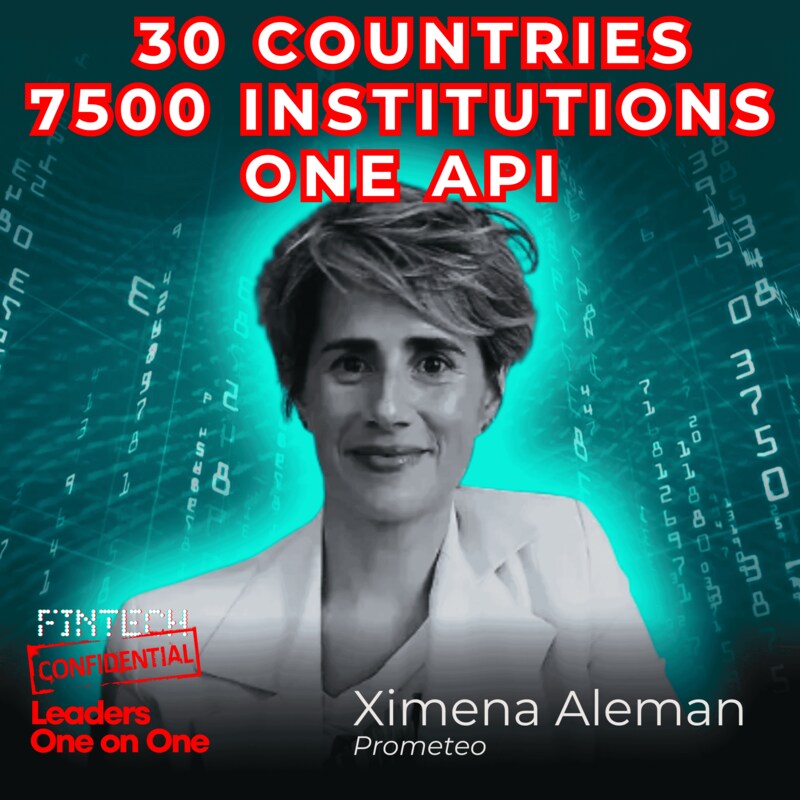
Tedd Huff:
00:00:00
It's not just not working, it's, it's, it's broken.
Ximena Aleman:
00:00:03
Yeah.
Ximena Aleman:
00:00:03
The banking infrastructure in each of this country speaks its own language
Tedd Huff:
00:00:07
that can be very confusing.
Ximena Aleman:
00:00:09
Each language, it creates an inefficiency.
Tedd Huff:
00:00:12
So a lot of times we think about the outflow, not the inflow.
Ximena Aleman:
00:00:16
Our notion of real time has also.
Ximena Aleman:
00:00:18
Accelerated and now is.
Ximena Aleman:
00:00:19
Now
Tedd Huff:
00:00:20
we're really good in the US with coming up with new ways, but we're
Tedd Huff:
00:00:24
really bad at getting rid of the old ones.
Ximena Aleman:
00:00:27
It's not a coincidence.
Ximena Aleman:
00:00:28
It's commitment.
Tedd Huff:
00:00:29
It's misunderstood that the technology may not be that mature.
Ximena Aleman:
00:00:34
None of us came from like financial sector,
Tedd Huff:
00:00:38
fully open banking and allowing access.
Tedd Huff:
00:00:40
When someone asks for it, guess what?
Tedd Huff:
00:00:42
They still have to do it.
Tedd Huff:
00:00:44
This isn't anything new,
Ximena Aleman:
00:00:46
and so it's not about.
Ximena Aleman:
00:00:47
How you're thinking is about what you are doing towards it.
Ximena Aleman:
00:00:51
You have to make it happen.
Tedd Huff:
00:00:54
Welcome to FinTech Confidential, bringing you the
Tedd Huff:
00:00:58
people, tech and companies that change how you pay and get paid.
Tedd Huff:
00:01:03
You're building a FinTech products you want to offer
Tedd Huff:
00:01:06
digital assets, but wallets, that's the hard part.
Tedd Huff:
00:01:11
Security.
Tedd Huff:
00:01:12
Compliance, key orchestration, blockchain integration.
Tedd Huff:
00:01:16
That's why fintech's payment platforms and custodians choose defense.
Tedd Huff:
00:01:21
They provide wallets as a service.
Tedd Huff:
00:01:23
That's API first, multi chain by design and secured within NPC.
Tedd Huff:
00:01:27
No single point of failure.
Tedd Huff:
00:01:29
So you can launch across over 50 Blockchains, automate policy
Tedd Huff:
00:01:32
controls and stay audit ready without managing private key.
Tedd Huff:
00:01:35
Stripes Bridge powers crypto payments through defense.
Tedd Huff:
00:01:39
Moon pay scales.
Tedd Huff:
00:01:40
Wallets securely with defense.
Tedd Huff:
00:01:42
Sphere grew without compromising on control or compliance.
Tedd Huff:
00:01:47
Even major fis like Fidelity A, B, and Amro.
Tedd Huff:
00:01:51
As well as custodians like Zoia and tungsten trust defense to power
Tedd Huff:
00:01:56
their on chain infrastructure.
Tedd Huff:
00:01:57
Developer ready, compliance approved production grade from day one.
Tedd Huff:
00:02:03
If you're building in payments, exchanges, OTC desks, market makers, or defi.
Tedd Huff:
00:02:09
Defense wallets work the way you need them to request your
Tedd Huff:
00:02:13
demo@fintechconfidential.com slash dns.
Tedd Huff:
00:02:18
Defense Secure wallets built around.
Tedd Huff:
00:02:25
Welcome FinTech confidential leaders one-on-one series.
Tedd Huff:
00:02:29
I'm Ted Huff, your host, and the CEO of FinTech advisory firm, Voler.
Tedd Huff:
00:02:34
This is where I sit down with the people who are actually building.
Tedd Huff:
00:02:38
The infrastructure underneath FinTech, not just talking
Tedd Huff:
00:02:42
about it, actually building it.
Tedd Huff:
00:02:45
And my guest today is Sina Aliman, the co-founder and CO CEO of Pro Mateo.
Tedd Huff:
00:02:52
And if you're not already tracking them, here's the short version for you.
Tedd Huff:
00:02:57
They've built an open finance infrastructure platform that connects
Tedd Huff:
00:03:01
over 7,500 financial institutions across Latin America and the United States.
Tedd Huff:
00:03:07
It's all done with a single API.
Tedd Huff:
00:03:11
They've been backed by some enormous players in the industry.
Tedd Huff:
00:03:15
PayPal Ventures, Samsung Next Antler, elevate.
Tedd Huff:
00:03:19
Sina was also named one of the top 100 women in FinTech back in 2024, and this
Tedd Huff:
00:03:28
literally just dropped this morning.
Tedd Huff:
00:03:31
Pro Mateo is just named a Nacho preferred partner for account validation
Tedd Huff:
00:03:36
and open banking, and yes, we will definitely, absolutely get into that.
Tedd Huff:
00:03:42
So Stephen, welcome to the show.
Ximena Aleman:
00:03:46
Hi, de, thanks for having me.
Ximena Aleman:
00:03:48
Very happy to be here talking all things FinTech.
Tedd Huff:
00:03:51
Hopefully I can get a little bit of confidential pieces
Tedd Huff:
00:03:54
out of you as we talk today.
Tedd Huff:
00:03:56
But folks, open finance is, as a concept itself, is become mainstream.
Tedd Huff:
00:04:03
So, you know, when you started it really wasn't, uh, especially in
Tedd Huff:
00:04:07
Latin America, there are fragmented financial systems, inconsistent APIs.
Tedd Huff:
00:04:13
Most of the fintechs were building one-off integrations just to figure out how to
Tedd Huff:
00:04:17
move a little bit of money here and there.
Tedd Huff:
00:04:20
You saw something a little different and that's why you decided to build poeo at
Tedd Huff:
00:04:27
a time, really when open finance wasn't even term for people in Latin America.
Tedd Huff:
00:04:33
I'm really curious, what did you see?
Tedd Huff:
00:04:36
That others weren't paying attention to?
Ximena Aleman:
00:04:39
Well, I think that we might be a little bit nuts.
Ximena Aleman:
00:04:43
It was not just about focusing in the, in the details, you know,
Ximena Aleman:
00:04:47
being outsiders that drove us to.
Ximena Aleman:
00:04:52
Being able to see something that was not there, you know?
Ximena Aleman:
00:04:56
And, and, and I think that, that, that was the, the key thing with us.
Ximena Aleman:
00:05:00
I come from a, a different, uh, area, like my, I major in journalism,
Ximena Aleman:
00:05:06
uh, then went to work with, uh, media outlets and then focused into
Ximena Aleman:
00:05:11
marketing, sales, uh, then an MBA in, in tech because, uh, I, I saw what.
Ximena Aleman:
00:05:17
The tech was,
Tedd Huff:
00:05:18
he goes, why not?
Ximena Aleman:
00:05:19
Right?
Ximena Aleman:
00:05:19
Yeah, exactly.
Ximena Aleman:
00:05:20
Because why not?
Ximena Aleman:
00:05:21
No.
Ximena Aleman:
00:05:21
And and, and I really loved it.
Ximena Aleman:
00:05:23
And for me it was a life changing experience, of course.
Ximena Aleman:
00:05:25
Um, but, uh, then, um, rod, who is co-founder and co CO alongside me, uh,
Ximena Aleman:
00:05:32
his, his background was cyber security, you know, and then Eduardo, who was
Ximena Aleman:
00:05:37
CTO, his background was API development.
Ximena Aleman:
00:05:39
And so none of us.
Ximena Aleman:
00:05:42
Came from like the financial sector.
Ximena Aleman:
00:05:45
Like we didn't have that background, that experience, that knowledge.
Ximena Aleman:
00:05:49
Uh, and I thought that, and I think that because that we were able to
Ximena Aleman:
00:05:54
understand where the problem was and think that we could actually address it.
Ximena Aleman:
00:06:00
You know, I think that.
Ximena Aleman:
00:06:02
Perhaps if it was the other way around, if we had like a long
Ximena Aleman:
00:06:06
trajectory, like working in the, like largest brands, uh, financial
Ximena Aleman:
00:06:12
brands in Latam, Itau, Santander.
Ximena Aleman:
00:06:14
Like, I, I think that we might have just keep it, you know, like
Ximena Aleman:
00:06:19
thinking, okay, this is how it works.
Ximena Aleman:
00:06:20
Uh, and it works like this because it works like this, you know?
Ximena Aleman:
00:06:24
But I think that, uh, it was actually not understanding.
Ximena Aleman:
00:06:29
How it work, but actually understanding how it should work, that we were
Ximena Aleman:
00:06:33
able to think, okay, uh, this is something that should exist.
Ximena Aleman:
00:06:37
Uh, let's build it.
Tedd Huff:
00:06:38
So when you look back at the early days, what was the
Tedd Huff:
00:06:41
moment when you knew that this was a real infrastructure gap, not just.
Tedd Huff:
00:06:49
A technical inconvenience.
Ximena Aleman:
00:06:51
I think that for me, infrastructure came as, as, as a
Ximena Aleman:
00:06:54
concept at the same time that when we started building this, like for
Ximena Aleman:
00:06:58
us, open banking wasn't even a worth, you know, like we started building
Ximena Aleman:
00:07:03
this API infrastructure even before eo, uh, in our previous startup,
Ximena Aleman:
00:07:08
which was a personal finance manager.
Ximena Aleman:
00:07:10
Uh, and so we had.
Ximena Aleman:
00:07:11
Created like this interoperability engine with different financial institutions
Ximena Aleman:
00:07:15
that allowed us to connect with them.
Ximena Aleman:
00:07:17
I think that back then we would start talking, of course, digital
Ximena Aleman:
00:07:21
transformation, API adoption and, and that this was a thing happening
Ximena Aleman:
00:07:25
in the FinTech space, but actually the FinTech space was something new.
Ximena Aleman:
00:07:30
Like, uh, I am based in Euro y. I am UYN, and I always joke that euro,
Ximena Aleman:
00:07:35
that FinTech wasn't even a word.
Ximena Aleman:
00:07:37
You know, uh, because we started talking about FinTech like two
Ximena Aleman:
00:07:41
years after that, you know, and like everything comes later to UY This is
Ximena Aleman:
00:07:45
something that all your Ys mentioned.
Ximena Aleman:
00:07:47
Uh, and so FinTech wasn't even a word that I remember pitching like this
Ximena Aleman:
00:07:53
notion like, like this concept about.
Ximena Aleman:
00:07:57
Middleware, this API middleware that we are building this infrastructure because
Ximena Aleman:
00:08:02
the value is not in the middleware itself, but actually what this middleware enables.
Ximena Aleman:
00:08:07
And that's why it's infrastructure, you know, like thinking about it, uh,
Ximena Aleman:
00:08:12
in terms of like the technology that enables other technologies, other products
Ximena Aleman:
00:08:17
and services to happen to, to move around, to create value for the society.
Ximena Aleman:
00:08:22
Uh, and that was the insight, you know, and then it became, of course
Ximena Aleman:
00:08:27
like, okay, there's a vertical in the FinTech space, which is infrastructure,
Ximena Aleman:
00:08:31
you know, but that, uh, happened like years after that first pitch.
Ximena Aleman:
00:08:36
Um, and I am truly a, a, a true believer of this concept.
Ximena Aleman:
00:08:41
You know, like, uh, that actually what we are building is the rails
Ximena Aleman:
00:08:45
in which the financial sector will move in the years to come.
Ximena Aleman:
00:08:49
You know, and I think that we will talk AI uh, later on, uh, this, this
Ximena Aleman:
00:08:54
podcast, uh, um, this conversation, but.
Ximena Aleman:
00:08:58
Something that for me is overwhelming.
Ximena Aleman:
00:09:01
You know, that amazes me is understanding the impact that AI will have in, in
Ximena Aleman:
00:09:08
financial infrastructure and vice versa.
Ximena Aleman:
00:09:10
Like, I remember like when, when pitching this concept about, uh, open
Ximena Aleman:
00:09:15
banking being infrastructure and we believe we building infrastructure of
Ximena Aleman:
00:09:19
course, like the next question was, okay, but infrastructure for what, what
Ximena Aleman:
00:09:22
will happen over this infrastructure?
Ximena Aleman:
00:09:24
And by then, like use cases there were like.
Ximena Aleman:
00:09:27
Very small, like you could mention like what you could think about,
Ximena Aleman:
00:09:32
you know, and PFM, personal finance manager of course was one of them.
Ximena Aleman:
00:09:35
You know, like create scoring of course was one of them.
Ximena Aleman:
00:09:38
But what else?
Ximena Aleman:
00:09:39
And so I will always say like, we are thinking with the tools that we have now,
Ximena Aleman:
00:09:44
but eventually something else will come and this infrastructure will make sense.
Ximena Aleman:
00:09:49
Not for these use cases, but actually for what will come next.
Ximena Aleman:
00:09:53
And so when I saw.
Ximena Aleman:
00:09:55
Like the impact of a ai and especially agent ai, it became so obvious that
Ximena Aleman:
00:10:01
this infrastructure would serve that and will, would power that movement for me.
Ximena Aleman:
00:10:07
Uh, like I consider the, this like one of my big wins, you know?
Tedd Huff:
00:10:12
Well, I mean, in that context, right?
Tedd Huff:
00:10:15
Building infrastructure in, in these markets, you, you can't always.
Tedd Huff:
00:10:21
Or seldom are able to, to wait until the regulators have mandated very
Tedd Huff:
00:10:27
specific standards and is actually the exact lens that I, I think we need to
Tedd Huff:
00:10:36
understand your, your expansion into the us Maybe we could, we could move
Tedd Huff:
00:10:42
into talking more about, I guess I would call it borderless banking, is
Tedd Huff:
00:10:48
probably the way I would approach it.
Tedd Huff:
00:10:49
You've really.
Tedd Huff:
00:10:51
Gone beyond the original idea.
Tedd Huff:
00:10:55
The piece that a lot of people talk about also that, that I work with is they're
Tedd Huff:
00:10:59
always looking at Latin America, like that's, that's like the largest corridor
Tedd Huff:
00:11:05
for especially B2B payments in the world between the US specifically, like the
Tedd Huff:
00:11:10
us the latam is, is huge for that and.
Tedd Huff:
00:11:14
The number one problem that we always run into is that there's all this legacy
Tedd Huff:
00:11:18
cross border banking infrastructure, and I know you've run into it as well.
Tedd Huff:
00:11:23
It's like, it, it's not just not working, it's, it's, it's broken.
Ximena Aleman:
00:11:28
It's broken.
Tedd Huff:
00:11:29
Um, and like the, there're like this, it's huge
Tedd Huff:
00:11:32
swing where, where it's going.
Tedd Huff:
00:11:34
And I, I had had the conversation.
Tedd Huff:
00:11:38
Uh, with Keith Vander Lee from BV and K on, and I met with him at FinTech Nerd
Tedd Huff:
00:11:43
Con last year and sat down with him.
Tedd Huff:
00:11:46
One of the things that really surprised us as we were looking at
Tedd Huff:
00:11:48
some of the information preparing for it is the sheer amount of volume
Tedd Huff:
00:11:53
of traffic and transaction value coming from latam into the us.
Tedd Huff:
00:11:59
And a lot of times we think about the outflow, not the inflow flow.
Tedd Huff:
00:12:03
So this, this is my roundabout way of saying like,
Ximena Aleman:
00:12:06
yeah,
Tedd Huff:
00:12:06
walk me.
Tedd Huff:
00:12:07
Walk me through.
Tedd Huff:
00:12:08
I mean, it's a huge swing, right?
Tedd Huff:
00:12:10
So walk me through what borderless banking actually is, because I
Tedd Huff:
00:12:15
think when people hear the word borderless, um, they immediately
Tedd Huff:
00:12:20
picture the diaspora communities.
Tedd Huff:
00:12:23
They think of, you know, all of these other things, but
Tedd Huff:
00:12:26
don't look really behind that.
Tedd Huff:
00:12:28
So just help us paint a picture, help us understand like what does
Tedd Huff:
00:12:33
borderless mean to, from Mateo and.
Ximena Aleman:
00:12:38
I agree.
Ximena Aleman:
00:12:39
The system is broken.
Ximena Aleman:
00:12:40
That's the kickoff of the conversation, but the, the system is not broken
Ximena Aleman:
00:12:45
in the US as it is not broken in Mexico or in Colombia or in Chile.
Ximena Aleman:
00:12:50
Like the system is broken because it works.
Ximena Aleman:
00:12:54
At a local scale, and we've done a lot to upgrade those local schemes,
Ximena Aleman:
00:13:01
you know, with realtime payments, with new players, with blah, blah blah.
Ximena Aleman:
00:13:05
Like a has happened over the last.
Ximena Aleman:
00:13:08
Eight to 10 years.
Ximena Aleman:
00:13:10
But still, when you look at it from a global PERS perspective,
Ximena Aleman:
00:13:15
it keeps being broken.
Ximena Aleman:
00:13:17
You know, and this is because global trade has accelerated, expanded, and
Ximena Aleman:
00:13:23
the way we approach time has changed.
Ximena Aleman:
00:13:27
You know, like five years ago, like 12 hours was.
Ximena Aleman:
00:13:32
Half a day, it was like, okay, the, the time that it is.
Ximena Aleman:
00:13:35
But now the, the time that it is, is real time.
Ximena Aleman:
00:13:38
Like we are always benchmarking with real time and, and our notion
Ximena Aleman:
00:13:42
of real time has also accelerated.
Ximena Aleman:
00:13:45
A couple of years ago, real time was one, two minutes and now I'm talking
Ximena Aleman:
00:13:49
with customers and I'm saying like, real time is three to five seconds.
Ximena Aleman:
00:13:52
And they are saying like, no, it's milliseconds.
Ximena Aleman:
00:13:55
Of course it's hard for infrastructure to infrastructures globally keep upgrading to
Ximena Aleman:
00:14:02
this behavioral rhythm that we are having.
Ximena Aleman:
00:14:06
Like everything like real time is now.
Ximena Aleman:
00:14:09
And, and, and now is, now it's not the, the within two
Ximena Aleman:
00:14:13
seconds or one minute is now.
Ximena Aleman:
00:14:14
And so I think that when you look at it from a global perspective, besides this
Ximena Aleman:
00:14:19
behavioral change, you also have like this thing about countries, each country
Ximena Aleman:
00:14:24
working differently, but at the same time working alongside all the rest.
Ximena Aleman:
00:14:29
I, I know that I mentioned that I, I am based in UY and so
Ximena Aleman:
00:14:34
when we started, like for us.
Ximena Aleman:
00:14:36
Doing a thing in Euro just for U for Uy was such a narrow market and it
Ximena Aleman:
00:14:41
became obvious that we could, with our infrastructure, address the region.
Ximena Aleman:
00:14:46
And so Palm Regional now, like Proto became Palm Regional from the
Ximena Aleman:
00:14:50
kickoff, you know, 30 countries.
Ximena Aleman:
00:14:52
Each of these countries has, its, speaks its own language.
Ximena Aleman:
00:14:56
Like it, I always say its own taste, just its own flavor to Spanish,
Ximena Aleman:
00:15:01
you know, and it's very different.
Ximena Aleman:
00:15:02
I am like, uh, uh, in, in Mexican and the YPO in Chile, um, elta, which is very
Ximena Aleman:
00:15:10
gyan, the infrastructure in each of these, uh, the banking infrastructure in each of
Ximena Aleman:
00:15:14
these countries speaks its own language.
Ximena Aleman:
00:15:16
Okay.
Ximena Aleman:
00:15:17
And so how you breach that?
Ximena Aleman:
00:15:19
You know, like, because.
Ximena Aleman:
00:15:20
E each language it's creates, uh, an inefficiency difficulty
Ximena Aleman:
00:15:25
when they need to work together.
Ximena Aleman:
00:15:26
And we started addressing all of these inefficiencies, you know, and
Ximena Aleman:
00:15:30
standardizing this layer realized, like, of course, but we are not
Ximena Aleman:
00:15:33
addressing the most important corridor that Latin America has.
Ximena Aleman:
00:15:37
And that's the Yes.
Tedd Huff:
00:15:37
Well, and that's where, that's kind of where I'm, I'm
Tedd Huff:
00:15:39
sitting here listening to the way you described this, right?
Tedd Huff:
00:15:42
And it's like, I'm starting to look at as like, what is the friction point that.
Tedd Huff:
00:15:48
The legacy like you, you moving into the US and, and all these cross border
Tedd Huff:
00:15:53
pieces, what is like the, the most friction full point that these solutions
Tedd Huff:
00:15:59
have historically missed, and why do you think your experience of having to
Tedd Huff:
00:16:04
bridge those gaps in these, these Latin American countries that are similar
Tedd Huff:
00:16:09
but different, give you and pro Mateo.
Tedd Huff:
00:16:14
A specific edge in solving it when crossing over into into
Tedd Huff:
00:16:19
the rest of the Americas.
Ximena Aleman:
00:16:21
The first thing that I will point out, which I feel might be a
Ximena Aleman:
00:16:25
little bit of polemic, is that we tend.
Ximena Aleman:
00:16:29
From latam, we tend to perceive the US first world infrastructure, you know,
Ximena Aleman:
00:16:34
developed country, a lot of financial penetration, you know, like a lot of
Ximena Aleman:
00:16:39
FinTech adoption, FinTech disruption.
Ximena Aleman:
00:16:41
But when you double click in how the banking system works, I would say that the
Ximena Aleman:
00:16:47
infrastructure feels rather me, you know?
Ximena Aleman:
00:16:51
And so from a banking infrastructure perspective, you wouldn't say
Ximena Aleman:
00:16:56
that the US has a leapfrog.
Ximena Aleman:
00:16:59
Any country in Latin America, you know, and so the US banking system is perhaps
Ximena Aleman:
00:17:06
as broken as la, the latam banking system.
Ximena Aleman:
00:17:10
When we double click, we could see the same gaps in infrastructure.
Ximena Aleman:
00:17:14
Many times they are overlooked because the credit car rails work that well.
Ximena Aleman:
00:17:21
And so, okay, like I have a credit card and I don't need this or that, because
Ximena Aleman:
00:17:25
this works over Visas infrastructure.
Ximena Aleman:
00:17:28
And so that's why the bank, like the financial infrastructure is
Ximena Aleman:
00:17:32
perceived as so robust and mature.
Ximena Aleman:
00:17:35
But when we talk about the banking system, it's not okay.
Ximena Aleman:
00:17:39
And so I think that that was the first thing that we needed to like somehow
Ximena Aleman:
00:17:44
reframe in order to understand that there was an opportunity in the us.
Tedd Huff:
00:17:48
I think it's really, I I I, I love how you've, you've positioned
Tedd Huff:
00:17:51
that because a lot of times, even when I have clients that are in other
Tedd Huff:
00:17:56
parts of the world, the, the idea of us having a mature ecosystem, yes, the
Tedd Huff:
00:18:04
ecosystem itself is mature, but a lot of times it's, it's misunderstood that
Tedd Huff:
00:18:09
the technology may not be that mature.
Tedd Huff:
00:18:13
Or it may be overly mature.
Tedd Huff:
00:18:16
Maybe it, it's, it's at the end of their life.
Tedd Huff:
00:18:18
Right.
Tedd Huff:
00:18:18
And there's a heavy leaning on that side of it, which then introduces
Tedd Huff:
00:18:23
its own set of problems for, for speed, accuracy, the number of
Tedd Huff:
00:18:28
players that have to be put in place.
Tedd Huff:
00:18:30
It's like, although it is, again, it's mature.
Tedd Huff:
00:18:35
It like, I love how you said it.
Tedd Huff:
00:18:37
Is it, it's
Ximena Aleman:
00:18:37
because I think that the thing is, when
Ximena Aleman:
00:18:40
you look at it, it's mature.
Ximena Aleman:
00:18:41
Why?
Ximena Aleman:
00:18:42
And then you start to understand which are the components, the, the pieces that
Ximena Aleman:
00:18:46
are mature and which are the ones that are not, you know, and it's always like
Ximena Aleman:
00:18:51
that you have to somehow disaggregate in order to understand where's the ones
Tedd Huff:
00:18:56
We would say we, we jokingly, like me and a, a number
Tedd Huff:
00:18:59
of folks that I work with and, and payments especially bank to bank
Tedd Huff:
00:19:02
side payments, is that we jokingly say we're really good in the US with
Tedd Huff:
00:19:07
coming up with new ways to move money.
Tedd Huff:
00:19:11
We're really bad at getting rid of the old ones, and I think that is a piece
Tedd Huff:
00:19:16
that, that when you look at it from an organization coming into the US, that
Tedd Huff:
00:19:23
can be very confusing because there haven't been any government mandates that
Tedd Huff:
00:19:27
really say, you can no longer use this.
Tedd Huff:
00:19:29
You must use that.
Tedd Huff:
00:19:31
That, that just doesn't happen.
Tedd Huff:
00:19:33
And so we get this, it just keeps stacking on top of each other.
Tedd Huff:
00:19:36
So you have all these choices, all these options, and they
Tedd Huff:
00:19:39
all work completely different.
Tedd Huff:
00:19:40
They all have different rules.
Tedd Huff:
00:19:42
They all have different timing.
Tedd Huff:
00:19:44
They, they all have like different infrastructures.
Tedd Huff:
00:19:46
It, it can be, it exhausting.
Tedd Huff:
00:19:51
To try and figure out how to try and normalize this.
Ximena Aleman:
00:19:55
Yes, exactly.
Ximena Aleman:
00:19:56
And I think that that's where we provide value because, uh, from our experience
Ximena Aleman:
00:20:01
in latam, basically what we had to do, uh, was living aside differences.
Ximena Aleman:
00:20:07
Understand which are the commonalities, you know, like how
Ximena Aleman:
00:20:10
can we create a standardization?
Ximena Aleman:
00:20:12
How can we put together fragmented systems?
Ximena Aleman:
00:20:15
What's the important thing that needs to be there?
Ximena Aleman:
00:20:18
Time after time, after time is the date is the balance.
Ximena Aleman:
00:20:22
What is it?
Ximena Aleman:
00:20:22
You know what, which is the relevant information?
Ximena Aleman:
00:20:25
And so that standardization that we were able to build is what
Ximena Aleman:
00:20:29
we bring as a value to the us.
Ximena Aleman:
00:20:31
You know, understanding what needs to be there and what is nice.
Ximena Aleman:
00:20:35
What is interest noise and needs to be aside and yeah, I think that
Ximena Aleman:
00:20:38
that's the power of standardization
Tedd Huff:
00:20:42
and I think, you know, to, to kind of round out
Tedd Huff:
00:20:45
talking about borderless banking.
Tedd Huff:
00:20:47
I mean, yes, infrastructure does solve some of these pieces for
Tedd Huff:
00:20:53
moving money across borders, but.
Tedd Huff:
00:20:56
That isn't the only piece.
Tedd Huff:
00:20:58
Like you mentioned earlier, the experience, the data, like
Tedd Huff:
00:21:01
all these different things I thought was really exciting.
Tedd Huff:
00:21:03
And you and I talked about this at Money 2020 last year here in Las Vegas.
Tedd Huff:
00:21:09
You all had decided like we're looking really heavily into a agentic banking
Tedd Huff:
00:21:15
and that was at a time when like, I know it's only been a few months, but it's
Tedd Huff:
00:21:20
kind of hilarious to me that even back in October that was just kind of like.
Tedd Huff:
00:21:25
That's a really cool idea that we might go explore, but you move fast forward to
Tedd Huff:
00:21:30
today, and that is a, a super important topic that everybody is doing it and the
Tedd Huff:
00:21:38
fact that you, you become this massive infrastructure provider in Latin America,
Tedd Huff:
00:21:44
you launched agentic banking solution.
Tedd Huff:
00:21:47
That is a big thing to do.
Tedd Huff:
00:21:49
So I, I would, I would love for you to help me kind of unpack it.
Tedd Huff:
00:21:55
Really define what Agentic banking is and let's, let's start with how you've
Tedd Huff:
00:22:02
done it in latam and then we'll talk about maybe like where you're going, like
Ximena Aleman:
00:22:08
Yes,
Tedd Huff:
00:22:08
definitely is definitely it Tools, is it like, like I'm,
Tedd Huff:
00:22:11
there's so many open questions here, so I'll just let you get started.
Ximena Aleman:
00:22:14
So agents are here to say basically what they need to do is they
Ximena Aleman:
00:22:20
need to operate financial infrastructure.
Ximena Aleman:
00:22:24
That was, uh, the kickoff for us when we understood that through our
Ximena Aleman:
00:22:28
documentation, an agent won't be able to connect with our platform.
Ximena Aleman:
00:22:34
We sell.
Ximena Aleman:
00:22:35
We need to change this because in the very near future, our API
Ximena Aleman:
00:22:40
won't be integrated by a developer.
Ximena Aleman:
00:22:43
Our API will be integrated by by an agent.
Ximena Aleman:
00:22:46
And so basically what we've done over time is to create the modules.
Ximena Aleman:
00:22:51
That allow agents to connect to EO and start using our platform.
Tedd Huff:
00:22:57
This makes me think like there, there's a, a big difference
Tedd Huff:
00:23:00
between delivering AI tools that are to be used inside of FinTech.
Tedd Huff:
00:23:05
Kind of what you're talking about doing that integration using an agent,
Tedd Huff:
00:23:10
and then you got the other side, at least my opinion of age AI agents that
Tedd Huff:
00:23:15
are executing on financial actions.
Tedd Huff:
00:23:20
Which one of these, or boths are you going down the path and why
Tedd Huff:
00:23:25
does, does this distinction matter?
Tedd Huff:
00:23:27
Does the distinction matter between the tools that you use
Tedd Huff:
00:23:30
and the actions that it takes?
Tedd Huff:
00:23:31
Or is, is it symbiotic?
Ximena Aleman:
00:23:34
I think it feels for Roberto is sort of symbiotic, you
Ximena Aleman:
00:23:38
know, like the two things go combined.
Ximena Aleman:
00:23:41
I think that where we perhaps, uh, provide more value.
Ximena Aleman:
00:23:45
Is by enabling agents to operate their own bank accounts.
Ximena Aleman:
00:23:50
And how we have approached it at Promeo at least, is basically through the
Ximena Aleman:
00:23:54
question, in which way can we limit the liability of an agent moving money?
Ximena Aleman:
00:24:01
And so basically that's creating a system that the agent can
Ximena Aleman:
00:24:05
operate, but it's somehow safe.
Ximena Aleman:
00:24:08
Environment, meaning that it's restricted to the things that, that BA bank account,
Ximena Aleman:
00:24:15
it's enabled to move and operate.
Ximena Aleman:
00:24:18
Okay?
Ximena Aleman:
00:24:18
And so by limiting the scope of the bank account, you are limiting the,
Ximena Aleman:
00:24:24
the capabilities that that agent has.
Ximena Aleman:
00:24:27
Okay.
Ximena Aleman:
00:24:27
But at the same time, you are enabling that agent to move money, to make
Ximena Aleman:
00:24:32
payments, and to understand the financial information that that move,
Ximena Aleman:
00:24:37
that money movement has created.
Tedd Huff:
00:24:39
Now you get me going down, my, my, my compliance
Tedd Huff:
00:24:43
hat starts to go on, right?
Tedd Huff:
00:24:44
Like, and it's nice and snug, right?
Tedd Huff:
00:24:47
No, I'm so wheezing the brain a little bit.
Tedd Huff:
00:24:49
What is the regulatory compliance side of this look like for, for you at Pro Mateo?
Tedd Huff:
00:24:55
When, when you realize that the entity that's initiating this transaction,
Tedd Huff:
00:25:00
whether it's a payment, whether it's opening a new account, what, whatever
Tedd Huff:
00:25:05
this action is, ends up being a large language model or some other AI
Tedd Huff:
00:25:12
agent, how are you solving for the.
Tedd Huff:
00:25:16
Audibility and liability in these agentic workflows.
Tedd Huff:
00:25:20
'cause that seems to be the thing that every financial institution that I talk
Tedd Huff:
00:25:24
to and every agentic company I work with is like I'm seeing or trying to figure out
Tedd Huff:
00:25:29
how to manage through this piece of it.
Tedd Huff:
00:25:31
And this is like.
Tedd Huff:
00:25:32
Concern number one at the point.
Tedd Huff:
00:25:34
At this point,
Ximena Aleman:
00:25:35
definitely.
Ximena Aleman:
00:25:35
And that's my impression as well, uh, across Latin America, you know, like I
Ximena Aleman:
00:25:40
should agree, it is compliance adaptation that we are going through, but basically
Ximena Aleman:
00:25:45
our system is fully eligible and at the same time, the agents that can operate
Ximena Aleman:
00:25:52
that, those bank accounts are agents that have been onboarded to our platform.
Ximena Aleman:
00:25:57
And so we are full B2B, that means that there is a company.
Ximena Aleman:
00:26:02
That's responsible.
Ximena Aleman:
00:26:04
For that agent, you know, and it's granting permission to
Ximena Aleman:
00:26:07
that agent to do this or that.
Ximena Aleman:
00:26:09
And so it's not that our platform, it's open for agents everywhere to,
Ximena Aleman:
00:26:15
to open their bank accounts, but actually that we are engaging with
Ximena Aleman:
00:26:19
companies that can enable that one.
Ximena Aleman:
00:26:22
To enable their agents to operate certain bank accounts, you know,
Ximena Aleman:
00:26:26
and I think that somehow that frames liability and compliance and make
Ximena Aleman:
00:26:31
it more addressable and manageable.
Ximena Aleman:
00:26:33
But I think that that's part of the transition.
Ximena Aleman:
00:26:35
You know, like we go, we have to go through that path, path in order
Ximena Aleman:
00:26:39
to this, uh, to get more adoption.
Ximena Aleman:
00:26:41
Uh, and I think that's something that happens in latam different to the US is
Ximena Aleman:
00:26:46
that, as I mentioned before in the US.
Ximena Aleman:
00:26:48
The more robust infrastructure per financial infrastructure is
Ximena Aleman:
00:26:52
per perhaps the one from Visa and Master in Latin America, most
Ximena Aleman:
00:26:56
financial in collection and more.
Ximena Aleman:
00:27:00
Yeah.
Ximena Aleman:
00:27:00
I would say, yeah.
Ximena Aleman:
00:27:02
Financial Incl has been through alternative payment methods through
Ximena Aleman:
00:27:05
banking, banking accounts, through Neobanks and so through Wallet.
Tedd Huff:
00:27:10
So anything but card payments is what it sounds like.
Tedd Huff:
00:27:12
Right?
Ximena Aleman:
00:27:13
Exactly.
Ximena Aleman:
00:27:14
Exactly.
Ximena Aleman:
00:27:15
Oh, exactly.
Ximena Aleman:
00:27:15
And so B infrastructure is not the.
Ximena Aleman:
00:27:18
Prevailing is not the most important, and so how can we upgrade the level
Ximena Aleman:
00:27:24
of infrastructure of these players in order to make them agentic ready?
Ximena Aleman:
00:27:30
That's our task.
Tedd Huff:
00:27:32
Open Claw has been out.
Tedd Huff:
00:27:33
A lot of people have been using it.
Tedd Huff:
00:27:35
They've been leveraging it.
Tedd Huff:
00:27:36
The number one concern with that is security.
Tedd Huff:
00:27:40
Locking that down so that it doesn't do things you don't want it to do and doesn't
Tedd Huff:
00:27:45
spend money, you don't want it to spend and, and all these different things.
Tedd Huff:
00:27:47
And especially with Pro Mateo being the B2B side of the piece of it.
Tedd Huff:
00:27:51
How are you making sure that the agent that is doing, making the action happen?
Tedd Huff:
00:28:00
Is the agent that is supposed to be doing it and has been given authority to do so.
Ximena Aleman:
00:28:05
That's embedded into a system because adaptability and monitoring
Ximena Aleman:
00:28:10
of the transactions is a key component of the cybersecurity that we provide.
Ximena Aleman:
00:28:14
Okay.
Ximena Aleman:
00:28:15
And so it's not that the agent is there like just transacting, but it's actually
Ximena Aleman:
00:28:20
that we have a system that allows us to monitor how the agent is acting.
Ximena Aleman:
00:28:25
And I think that that's the key component.
Ximena Aleman:
00:28:28
Sometimes it, I feel it's overlooked that when we transact through any platform.
Ximena Aleman:
00:28:35
That platform has systems that are monitoring how we transact
Ximena Aleman:
00:28:40
and we have flags, we have alerts.
Ximena Aleman:
00:28:42
Visa like sends you, uh, SMS, uh, sends you a notification, sends
Ximena Aleman:
00:28:48
you an email your bank as well.
Ximena Aleman:
00:28:50
You know, like, is this purchase yours?
Ximena Aleman:
00:28:53
Are you doing this transaction?
Ximena Aleman:
00:28:55
And that is happening because the system is being, is monitoring our activity.
Ximena Aleman:
00:29:00
The same happens when you are.
Ximena Aleman:
00:29:03
Enabling an agent to perform transactions, you have to monitor
Ximena Aleman:
00:29:07
how that agent is performing.
Ximena Aleman:
00:29:09
That's what I am, uh, referring when I'm talking about monitoring and audit.
Ximena Aleman:
00:29:16
The transactionality of the agent is actually be reading what's happening,
Ximena Aleman:
00:29:22
you know, and making sure that the agent is acting the way it should act,
Ximena Aleman:
00:29:27
and that the system is being approached the way that it should approach.
Ximena Aleman:
00:29:32
But what I stress here is that this is a core component of the
Ximena Aleman:
00:29:38
financial infrastructure everywhere.
Ximena Aleman:
00:29:40
It's not something new.
Ximena Aleman:
00:29:41
It's not something that it's, that is happening because we are releasing agents.
Ximena Aleman:
00:29:46
This is something that our platform already has because we enable payments,
Ximena Aleman:
00:29:50
we because we make verification of PE, because we enable access to balance
Ximena Aleman:
00:29:55
that movements, our system has been designed to be secure, to be compliant.
Ximena Aleman:
00:30:01
So we have monetary systems.
Ximena Aleman:
00:30:04
That monitor everything that's happening in our platform.
Tedd Huff:
00:30:07
Support provided by Sky Flow.
Tedd Huff:
00:30:09
What if you could build fast but not break privacy?
Tedd Huff:
00:30:12
What if you could ensure data privacy, governance, and compliance
Tedd Huff:
00:30:15
with just a few API calls?
Tedd Huff:
00:30:17
What if you could worry less about PCI requirements while actually
Tedd Huff:
00:30:20
improving privacy and security?
Tedd Huff:
00:30:22
How much more time would your team have to truly innovate?
Tedd Huff:
00:30:25
How much faster could you build and ship new features?
Tedd Huff:
00:30:28
How much more powerful could your app be?
Tedd Huff:
00:30:30
Sky Flow is a zero trust data privacy vault delivered as an API.
Tedd Huff:
00:30:34
Sky flow's radically simple design.
Tedd Huff:
00:30:36
Lets use, collect, secure, and tokenize personal information like
Tedd Huff:
00:30:40
card data and payment details.
Tedd Huff:
00:30:42
And with built-in features like encrypted data analysis and sharing
Tedd Huff:
00:30:45
anonymization and advanced governance, your days of choosing between data
Tedd Huff:
00:30:49
security and data usability are over.
Tedd Huff:
00:30:52
Whether you're just concerned with PCI compliance or need to go further
Tedd Huff:
00:30:56
to include CCPA, GDPR, SOC two and beyond, sky Flow has you covered.
Tedd Huff:
00:31:01
What if you could build fast but not break privacy with Sky Flow?
Ximena Aleman:
00:31:04
You can visit sky flow secure.com today to learn how
Tedd Huff:
00:31:10
you, you still have the perspective of human
Tedd Huff:
00:31:12
in the Loop type scenarios.
Tedd Huff:
00:31:14
Right?
Tedd Huff:
00:31:14
And like the discussions I've had.
Tedd Huff:
00:31:16
I feel like a broken record because every time I talk about AI and
Tedd Huff:
00:31:20
agentic and all these different pieces, I, I always say we're, right
Tedd Huff:
00:31:23
now we're in the age of bookends.
Tedd Huff:
00:31:25
We have the side that has all the information and can regurgitate
Tedd Huff:
00:31:28
it back to us so that we can make a decision on what to do.
Tedd Huff:
00:31:31
And then we have the agents that once we've decided what we want to
Tedd Huff:
00:31:34
do can actually execute on it for us.
Tedd Huff:
00:31:37
But we've got this messy middle that everybody's still trying to figure out.
Tedd Huff:
00:31:41
And I think the way that Pro Mateo has approached it really.
Tedd Huff:
00:31:46
Really puts you on the cutting edge of what these types of infrastructures
Tedd Huff:
00:31:52
can do and it really creates like this third thread, I guess I would say that
Tedd Huff:
00:31:59
that kind of ties it all together.
Tedd Huff:
00:32:01
It's about where, where you're building the credibility in the US market now.
Tedd Huff:
00:32:06
I mean, like you guys had had an announcement just today, April 14th.
Tedd Huff:
00:32:13
No, today's the 15th.
Tedd Huff:
00:32:14
See, I can't even get my days right.
Tedd Huff:
00:32:16
So April 15th with the Nacho preferred partner.
Tedd Huff:
00:32:19
Um, if we go back a little bit in December, you made the announcement
Tedd Huff:
00:32:24
of the name match feature with your US verification, API.
Tedd Huff:
00:32:28
If we, if we go, heck, I skipped over January, the F-D-A-T-A membership
Tedd Huff:
00:32:34
that you had in place there.
Tedd Huff:
00:32:36
Like, like there's so many things that you're doing.
Tedd Huff:
00:32:40
I think it's important for me to understand this.
Tedd Huff:
00:32:41
This isn't a coincidence, right?
Tedd Huff:
00:32:44
Like these things didn't just happen to happen.
Tedd Huff:
00:32:48
You, you sequence these deliberately.
Tedd Huff:
00:32:51
What does it mean to you being a preferred partner and what does
Tedd Huff:
00:32:56
it unlock for promeo in the us?
Tedd Huff:
00:33:01
And last but not least, what did it take to get there?
Ximena Aleman:
00:33:06
It's not a coincidence, it's commitment.
Ximena Aleman:
00:33:09
We are fully committed to providing.
Ximena Aleman:
00:33:12
Best in class financial infrastructure in the US and that's what we have been
Ximena Aleman:
00:33:17
doing since we decided that we would actively create product in the us.
Ximena Aleman:
00:33:21
Why Verification of pay for us, uh, account verification, account ownership,
Ximena Aleman:
00:33:26
or global account verification.
Ximena Aleman:
00:33:27
It has many different names.
Ximena Aleman:
00:33:29
All of them means.
Ximena Aleman:
00:33:31
Very similar.
Ximena Aleman:
00:33:32
The same, which is being able to verify a bank account before sending
Ximena Aleman:
00:33:35
a payment, being able to verify account ownership over the account.
Ximena Aleman:
00:33:39
This is an infrastructure that we've been creating in Latin
Ximena Aleman:
00:33:42
America over the last five years.
Ximena Aleman:
00:33:45
We are the go-to player for account verification extensively in latam.
Ximena Aleman:
00:33:49
We've got relevant, very relevant experience on how to build this
Ximena Aleman:
00:33:53
infrastructure, you know, and that's what we are taking to the us.
Ximena Aleman:
00:33:57
That sort of experience.
Ximena Aleman:
00:33:59
As I mentioned before, what is this experience about?
Ximena Aleman:
00:34:02
Is about fragmented markets.
Ximena Aleman:
00:34:04
What is the us a very fragmented market.
Ximena Aleman:
00:34:07
Um, and so I think
Tedd Huff:
00:34:09
more fragment than a lot of people think.
Tedd Huff:
00:34:11
'cause you know, yes, we've got some federal regulations, but we've got
Tedd Huff:
00:34:16
at least 50, if not 51 different jurisdictions that have their own rules.
Tedd Huff:
00:34:21
And then within those jurisdictions they have tens if not hundreds
Tedd Huff:
00:34:26
of additional jurisdictions and they, it just, it kind of.
Tedd Huff:
00:34:29
The, the macro level of it gets so convoluted at some point, so
Ximena Aleman:
00:34:34
it's, it's crazy.
Ximena Aleman:
00:34:36
And it's crazy and I think, yeah, and I think that's something that different from
Ximena Aleman:
00:34:40
the US from latam, is that in the US you don't have like a central repository of.
Ximena Aleman:
00:34:47
Banking data.
Ximena Aleman:
00:34:48
Basically what we are doing is leveraging the infrastructure, the,
Ximena Aleman:
00:34:51
the, the experience that we've had in Latam, uh, out how to standardize this
Ximena Aleman:
00:34:57
fermentation, how we can create, uh, understanding from this foundation.
Ximena Aleman:
00:35:02
And basically we've re, we've released, uh, our account verification
Ximena Aleman:
00:35:07
product and that allows our customers to be able to name Matt.
Ximena Aleman:
00:35:11
The bank accounts like 85% of the bank of the bank accounts
Ximena Aleman:
00:35:16
in the country, which is huge.
Ximena Aleman:
00:35:18
Improves a lot what's in the market right now.
Ximena Aleman:
00:35:21
We are very bullish, very happy about the product that we've crafted for the
Ximena Aleman:
00:35:25
us and so I would say that it took the five previous years, you know, like
Ximena Aleman:
00:35:31
experience that we were able, yeah,
Tedd Huff:
00:35:33
tenacity, like just yes, not giving up.
Ximena Aleman:
00:35:37
Definitely and, and I think that also being able to
Ximena Aleman:
00:35:39
understand that we could do it, that the experience that we have is pertinent
Ximena Aleman:
00:35:45
to the problem that the us the US has.
Ximena Aleman:
00:35:47
We can outperform what there's in the market right now.
Ximena Aleman:
00:35:52
Something that also took a little bit of time for us to.
Tedd Huff:
00:35:56
I do also want to hit on and, and for everybody, I apologize for using
Tedd Huff:
00:36:01
yet another acronym, the F-E-A-T-A is the Financial Data and Technology Association.
Tedd Huff:
00:36:09
And Stephen, you, you had joined them in January and you've, you've
Tedd Huff:
00:36:15
spoke at events about why Latin American FinTech is moving north.
Tedd Huff:
00:36:23
I mean, we're, we're talking, I mean, the.
Tedd Huff:
00:36:25
F-D-A-T-A is Canadian, so like you're, you're going as far north as
Tedd Huff:
00:36:29
you pretty much can in the Americas.
Tedd Huff:
00:36:31
With that one, this really kind of two-pronged, one being sales, which
Tedd Huff:
00:36:37
we would expect, I mean, we want the company to be profitable to make money
Tedd Huff:
00:36:40
and continue to grow, but there's also this advocacy and policy play
Tedd Huff:
00:36:47
that I feel like is in there as well.
Tedd Huff:
00:36:49
Do those two things have to happen together?
Tedd Huff:
00:36:53
Why did you decide.
Tedd Huff:
00:36:55
To run them in tandem.
Tedd Huff:
00:36:56
Why did you decide to do the advocacy and the policy and
Tedd Huff:
00:37:01
leverage that to drive the sales?
Ximena Aleman:
00:37:03
Yeah.
Ximena Aleman:
00:37:04
Yeah.
Ximena Aleman:
00:37:04
And, and I, and the second part of my, my answer would be, I know that for
Ximena Aleman:
00:37:10
EO they are, because for us, building infrastructure has not been about the
Ximena Aleman:
00:37:16
billions that we could make by building the infrastructure, but actually.
Ximena Aleman:
00:37:24
Believing about the impact that that infrastructure will have and
Ximena Aleman:
00:37:28
the impact that we could build.
Ximena Aleman:
00:37:30
Through our technology, and that's why the name is Promeo.
Ximena Aleman:
00:37:35
You know, like the Prometheus is a Greek titan, the one that, uh, provided fire
Ximena Aleman:
00:37:41
to the humans, you know, stole the fire from the gods and gave it to the humans.
Ximena Aleman:
00:37:45
And I think that for us it was always sort of that spirit.
Ximena Aleman:
00:37:50
A little bit rebellious.
Ximena Aleman:
00:37:51
I always joke that a little will, we feel it a little bit more humbly, but there
Ximena Aleman:
00:37:56
is in, in the core of our company, yes.
Ximena Aleman:
00:37:59
A rebellious sentiment about the state of the financial sector and this
Ximena Aleman:
00:38:04
eager about building it differently and being able to do it differently.
Ximena Aleman:
00:38:09
And of course like big part of this is state that we think that things can work.
Ximena Aleman:
00:38:17
In a different way, and we thought about it in latam and we think about it as like
Ximena Aleman:
00:38:23
the Americas, you know, like we think that everything can work differently.
Ximena Aleman:
00:38:27
We.
Ximena Aleman:
00:38:28
Really believe that there are benefits into having a single API standardizing
Ximena Aleman:
00:38:34
this infrastructure because we believe that there's this bond between the
Ximena Aleman:
00:38:40
regions, you know, and that there's a natural corridor, as you mentioned.
Ximena Aleman:
00:38:43
And so this creates development and this has this, this impact
Ximena Aleman:
00:38:47
that is what we want to see.
Ximena Aleman:
00:38:49
And of course that implies like we advocating for it.
Ximena Aleman:
00:38:54
For this change towards this change?
Ximena Aleman:
00:38:56
Yes, of course.
Ximena Aleman:
00:38:57
I feel like this creates Vir cycle because it makes the the issue
Ximena Aleman:
00:39:03
more relevant because at the same time, people can relate to Case
Ximena Aleman:
00:39:07
Simena, EO open banking, uh, that work for us a lot in Latin America.
Ximena Aleman:
00:39:12
And we were early adopters of open banking pioneers that.
Ximena Aleman:
00:39:18
Made us perhaps at the, at the beginning, I'm talking 2018, we were
Ximena Aleman:
00:39:22
the first one talking about banking.
Ximena Aleman:
00:39:24
You know, like as I mentioned, we seemed like, okay, this.
Ximena Aleman:
00:39:28
Na Sky is talking about open banking coming to Latin America.
Ximena Aleman:
00:39:31
You know, like, uh, they are 10 years ahead and that might happen in the us
Ximena Aleman:
00:39:37
uh, but we already have experience.
Ximena Aleman:
00:39:40
So we will leverage the experience that we have, uh, being pioneers and,
Ximena Aleman:
00:39:46
and talking about these issues that we feel are very near to, to our core.
Tedd Huff:
00:39:51
Everything we've covered so far.
Tedd Huff:
00:39:52
I mean, from borderless banking, agentic banking, we talked about.
Tedd Huff:
00:39:57
The latest not in news, the F-D-A-T-A, realistically, all of these things are
Tedd Huff:
00:40:05
pointing towards one question, and that is where does open finance go from here?
Tedd Huff:
00:40:13
And with that question, I have to reach over and pull out my fun crystal ball.
Tedd Huff:
00:40:18
This is my favorite part of every episode.
Tedd Huff:
00:40:21
So we're gonna sit,
Tedd Huff:
00:40:21
I love it.
Tedd Huff:
00:40:22
Sit the crystal ball right here so you can look deep inside of it.
Tedd Huff:
00:40:25
Ag Agent banking is live today.
Tedd Huff:
00:40:30
Where does it go in the next 18 months?
Tedd Huff:
00:40:33
And what is the use case that makes it completely undeniable?
Ximena Aleman:
00:40:39
Payments Common people using it every day.
Tedd Huff:
00:40:42
When you say common people using it every day,
Tedd Huff:
00:40:44
what does that mean to you?
Tedd Huff:
00:40:45
My
Ximena Aleman:
00:40:46
sister?
Tedd Huff:
00:40:47
What would she use it for?
Tedd Huff:
00:40:48
How would she use it?
Tedd Huff:
00:40:49
Why would she use it?
Ximena Aleman:
00:40:51
Uh, buy the uniform, uh, like the school, the
Ximena Aleman:
00:40:54
school uniform for her daughter, uh, buy clothes, uh, for her.
Tedd Huff:
00:40:59
Well, so the next question I have, and again, I
Tedd Huff:
00:41:02
want you to keep looking forward.
Tedd Huff:
00:41:03
Help me, help me see what's up 18 though that I can't see.
Ximena Aleman:
00:41:06
18 months.
Tedd Huff:
00:41:08
18 months, yep.
Tedd Huff:
00:41:09
So us open banking regulation, we have the CFPB 1333 still in motion.
Tedd Huff:
00:41:19
What does the regulatory environment accelerate in your US expansion
Tedd Huff:
00:41:26
or is this a headwind for you?
Ximena Aleman:
00:41:30
No, it accelerates definitely the expansion to the us.
Ximena Aleman:
00:41:34
We'll provide our open finance suite more.
Ximena Aleman:
00:41:38
We completely,
Tedd Huff:
00:41:39
you know, one of the conversations I had with David Glazer
Tedd Huff:
00:41:42
from Alah, who's the CEO here in the us?
Tedd Huff:
00:41:46
You know, we, we looked at this and one of the big things that, that we're
Tedd Huff:
00:41:48
talking about is the fact that it's widely known to JP Morgan charging for access
Tedd Huff:
00:41:55
for what we would consider open banking.
Tedd Huff:
00:41:58
Do you think that's right?
Tedd Huff:
00:41:59
And then secondarily, what do you think doing that does to the
Tedd Huff:
00:42:02
US market in the next 18 months?
Ximena Aleman:
00:42:05
Yes and no and it delays.
Ximena Aleman:
00:42:10
Financial institutions should charge for a, for this is, is and a no.
Ximena Aleman:
00:42:15
At the same time, I think that they shouldn't charge for certain use cases
Ximena Aleman:
00:42:20
and they should charge for other ones.
Ximena Aleman:
00:42:21
So I'm a, a convinced person that open banking should be partially free because
Ximena Aleman:
00:42:27
open banking should address is the right of the user to access its financial data.
Ximena Aleman:
00:42:33
And the access to that right should be for free at certain point, because
Ximena Aleman:
00:42:38
it's my data that I am granting access to the bank that has my money.
Ximena Aleman:
00:42:43
And so I'm already paying for that bank account.
Ximena Aleman:
00:42:46
I'm already paying to the bank for certain services, and so being able to check
Ximena Aleman:
00:42:51
my bank account or grant access to that information to a third party, that should
Ximena Aleman:
00:42:56
be for free me Jimena as a end user.
Ximena Aleman:
00:43:01
Persona for certain use cases.
Ximena Aleman:
00:43:03
I understand that monetization should exist and that you could monetize the API.
Ximena Aleman:
00:43:10
But then I think that those should be particular APIs created particularly
Ximena Aleman:
00:43:16
to, to provide value added services on top of the open information.
Ximena Aleman:
00:43:22
And I think that that's a little bit more complex, but I think that
Ximena Aleman:
00:43:25
provides the granularity so that open Banking Pro creates impact.
Ximena Aleman:
00:43:31
And at the same time, it creates money and businesses.
Ximena Aleman:
00:43:34
Uh, and so that's why yes and no.
Ximena Aleman:
00:43:36
And then what I think is that if it's fully charged, you know, like if every
Ximena Aleman:
00:43:44
API call has a price, what we'll have is like as lower adoption of open banking.
Tedd Huff:
00:43:52
I appreciate that the bank feels that they need to charge for it
Tedd Huff:
00:43:55
because yes, they've got data security and they've got all this stuff and
Tedd Huff:
00:43:58
they've gotta like do all this fun things.
Tedd Huff:
00:43:59
So it's really cool.
Tedd Huff:
00:44:00
But guess what?
Tedd Huff:
00:44:01
Even without fully open banking and allowing access, when
Tedd Huff:
00:44:05
someone asks for it, guess what?
Tedd Huff:
00:44:08
They still have to do it.
Tedd Huff:
00:44:10
This isn't anything new.
Tedd Huff:
00:44:12
They already have these, these restrictions in place.
Tedd Huff:
00:44:14
They've got like all these things in place.
Tedd Huff:
00:44:18
So I feel like this is analogous to when there were no free checking accounts
Tedd Huff:
00:44:24
in the US when you had to pay to have a debit card, when you had to pay for like
Tedd Huff:
00:44:32
access to all of these financial tools.
Tedd Huff:
00:44:36
And I think right now it is, it is a how long can I make money off of this until
Tedd Huff:
00:44:42
I can no longer make money off of it?
Tedd Huff:
00:44:44
Because it's an expectation.
Ximena Aleman:
00:44:46
I
Tedd Huff:
00:44:46
have access
Ximena Aleman:
00:44:47
to and, and I think that that's why focusing on JP
Ximena Aleman:
00:44:50
Morgan, it's perhaps not like the ideal scenario because when you talk
Ximena Aleman:
00:44:58
about financial institutions, not all financial institutions are JP Morgans.
Ximena Aleman:
00:45:04
And so in Latin America, for instance, what happens is that in the, in best
Ximena Aleman:
00:45:09
case scenario, you have a country.
Ximena Aleman:
00:45:12
In which not all the financial landscape is concentrated in four major banks.
Ximena Aleman:
00:45:18
That happens in U Hawaii, you know, but then when you go to other countries,
Ximena Aleman:
00:45:22
Brazil and Mexico for instance, larger, you have more complexity.
Ximena Aleman:
00:45:26
Uh, it's more diverse, the financial landscape.
Ximena Aleman:
00:45:28
But you have many small financial institutions that are attending particular
Ximena Aleman:
00:45:34
parts of the country, like towns.
Ximena Aleman:
00:45:36
Uh, many similar to like great unions, you know?
Ximena Aleman:
00:45:40
And so you would expect them to adopt open banking.
Ximena Aleman:
00:45:44
You will expect, expect them to ab amplify themselves to provide
Ximena Aleman:
00:45:49
access to this information.
Ximena Aleman:
00:45:50
And so I believe that for those smaller financial institutions, you have to open
Ximena Aleman:
00:45:57
the door for them to monetize because what you want at the end of the day is for
Ximena Aleman:
00:46:02
that them, they adopt the infrastructure, you know, and they should provide
Ximena Aleman:
00:46:07
part of that infrastructure for free.
Ximena Aleman:
00:46:09
Like I, I, I, I'm convinced that this is what needs to happen.
Ximena Aleman:
00:46:13
At the same time, I think that they might under, they need to understand
Ximena Aleman:
00:46:17
that there is a revenue stream that comes from having that infrastructure
Ximena Aleman:
00:46:22
in place because that's the, the driver of adoption that they have.
Tedd Huff:
00:46:28
I can see that perspective.
Tedd Huff:
00:46:30
Right.
Tedd Huff:
00:46:30
Is like the, the major pushback that I've gotten from community banks and
Tedd Huff:
00:46:35
credit unions when we talk about this, because I, I like to ask their opinion.
Tedd Huff:
00:46:40
And they brought up a very similar perspective.
Tedd Huff:
00:46:42
What you did is, Hey, we're not a JP Morgan.
Tedd Huff:
00:46:45
Like we don't have billions of dollars to spend on infrastructure
Tedd Huff:
00:46:50
and all these different things.
Tedd Huff:
00:46:51
And you know, looking specifically at credit unions in the US the idea is our
Tedd Huff:
00:46:58
goal is to make our our members happy and give them as many tools as possible.
Tedd Huff:
00:47:04
If I can't serve them in all these other areas because I'm spending so much money
Tedd Huff:
00:47:09
in this one area, just to give them the ability, and this is something I've
Tedd Huff:
00:47:13
heard, give them the ability to share that information out to a third party who could
Tedd Huff:
00:47:19
meet or beat our products and services.
Tedd Huff:
00:47:23
Am I not just doing a disservice to myself?
Tedd Huff:
00:47:26
And so, yes, it is extremely complicated.
Tedd Huff:
00:47:29
I I probably take way too of an altruistic perspective on it.
Tedd Huff:
00:47:32
Is it, it's not the bank, it's not the FI's data.
Tedd Huff:
00:47:35
They shouldn't have control over it.
Ximena Aleman:
00:47:37
I, I totally agree, but I think that this fires back, the JP
Ximena Aleman:
00:47:42
Morgans of the world, the ones that have this infrastructure and the ones
Ximena Aleman:
00:47:46
that benefit from the innovation that will come over this infrastructure.
Ximena Aleman:
00:47:51
It creates a vicious cycle of innovation and adoption.
Ximena Aleman:
00:47:56
That I think it's what my alternative prevents or at least tries to,
Ximena Aleman:
00:48:03
you know, like, and, and this is like a, a, um, um, a rationale
Ximena Aleman:
00:48:07
that comes, of course from latam.
Ximena Aleman:
00:48:09
You know, like, how can we avoid like this, uh.
Ximena Aleman:
00:48:14
Sort of oligo holistic dynamics that we have in, in the financial sector,
Ximena Aleman:
00:48:20
in each country of Latin America, which, which four BA with four banks
Ximena Aleman:
00:48:23
having 80% of the market share.
Ximena Aleman:
00:48:25
You know, and this is like a reality in each of the countries.
Ximena Aleman:
00:48:28
And so we need to drive innovation to smaller financial institu.
Ximena Aleman:
00:48:35
You have to create the drivers for them to adopt technology and,
Ximena Aleman:
00:48:39
and, and innovation, I dunno,
Tedd Huff:
00:48:42
Latin America versus the US model.
Tedd Huff:
00:48:44
You built first and Latin America, now you're expanding into North America.
Tedd Huff:
00:48:50
Is the Latin American open finance model the one the US should be watching or
Tedd Huff:
00:48:56
is it a completely different problem?
Ximena Aleman:
00:48:59
It's a different problem from my perspective.
Ximena Aleman:
00:49:03
The thing is.
Ximena Aleman:
00:49:04
In the US you already have a, I would call it de facto open banking, meaning
Ximena Aleman:
00:49:12
that you already have companies that have built the network and the
Ximena Aleman:
00:49:16
interoperability and that are providing this extensively, you know, and you have
Ximena Aleman:
00:49:23
already a mature, open banking ecosystem.
Ximena Aleman:
00:49:27
Meaning that there are use cases that have, uh, showed that uh, there is
Ximena Aleman:
00:49:33
demand for these, uh, products, for these services, uh, that users are interested
Ximena Aleman:
00:49:39
in them, that they are willing to pay.
Ximena Aleman:
00:49:41
And you have like the ultimate validation, which is large companies
Ximena Aleman:
00:49:46
trying to approach this, you know, like MasterCard buying ity, you
Ximena Aleman:
00:49:50
know, visa, trying to buy plan.
Ximena Aleman:
00:49:52
And this is like years ago from a business perspective.
Ximena Aleman:
00:49:56
The ecosystem is solid, is robust in Latin America has been the other way around.
Ximena Aleman:
00:50:03
It's been very difficult to create the op, like the interoperability with all
Ximena Aleman:
00:50:11
the financial institutions you have.
Ximena Aleman:
00:50:13
Still from a regulatory perspective, some countries have regulated open banking.
Ximena Aleman:
00:50:19
Brazil, Columbia, it's on track.
Ximena Aleman:
00:50:22
Chile has done so and it's implemented the implementing the APIs and then the rest
Ximena Aleman:
00:50:27
of the country is, uh, different countries are discussing if yes or no, but it's
Ximena Aleman:
00:50:32
like very, very, very early days here.
Ximena Aleman:
00:50:34
The problem in the US the problem is we need to address that this is a right
Ximena Aleman:
00:50:39
that the user has and we have to somehow.
Ximena Aleman:
00:50:44
Regulate how this ecosystem works, you know, because it
Ximena Aleman:
00:50:48
has sensitive information.
Ximena Aleman:
00:50:49
Yeah.
Ximena Aleman:
00:50:49
And so we need to somehow, like, let's clean the house.
Ximena Aleman:
00:50:54
It feels like this, you know, in Latin America it's like,
Ximena Aleman:
00:50:59
will there be a house here?
Ximena Aleman:
00:51:02
Where do we put the walls?
Ximena Aleman:
00:51:05
Okay.
Ximena Aleman:
00:51:05
Like it's here or there, you know, like do this house should have a ceiling.
Ximena Aleman:
00:51:10
And what else?
Ximena Aleman:
00:51:12
Can happen over the house once the house is there.
Ximena Aleman:
00:51:15
I, I believe that their regulatory conversation is much more mature in
Ximena Aleman:
00:51:19
Latin America than the, than the us.
Ximena Aleman:
00:51:22
But the market adoption is by far much more mature in the US than in lada.
Ximena Aleman:
00:51:27
So
Tedd Huff:
00:51:27
you, you have, you haven't done this on your own.
Tedd Huff:
00:51:30
You, you, PayPal Ventures, Samsung next.
Tedd Huff:
00:51:34
They're both on your cap table.
Tedd Huff:
00:51:36
And so I'm curious.
Tedd Huff:
00:51:38
What does strategic backing from those kinds of names,
Tedd Huff:
00:51:42
what does that make possible?
Tedd Huff:
00:51:43
That just someone writing a check doesn't
Ximena Aleman:
00:51:46
First, I would say, uh, there's a positioning layer, you know,
Ximena Aleman:
00:51:50
like these brands believing that you are the open banking option, that you
Ximena Aleman:
00:51:55
are the, uh, infrastructure option.
Ximena Aleman:
00:51:58
They want to back.
Ximena Aleman:
00:52:00
That's a signaling, you know, and that builds trust.
Ximena Aleman:
00:52:03
And, and that's something that we truly appreciate coming from
Ximena Aleman:
00:52:08
Yuba, you know, from South America.
Ximena Aleman:
00:52:10
It's a strong sign out to the market.
Ximena Aleman:
00:52:13
And I think that that's the first thing that, that you could, could perceive.
Ximena Aleman:
00:52:17
The second one is because they backed us following a logic.
Ximena Aleman:
00:52:23
What is that they are seeing, you know?
Ximena Aleman:
00:52:25
And so I think that large companies as PayPal, as Samsung, thinking
Ximena Aleman:
00:52:31
that our infrastructure suits their needs, you know, and that there
Ximena Aleman:
00:52:37
are synergies for the companies to interact, you know, and of course
Ximena Aleman:
00:52:43
direct access to their business teams.
Ximena Aleman:
00:52:46
Of course, which is something that it's also very valuable.
Ximena Aleman:
00:52:49
Uh, you know, like it shortcuts you, uh, the way to those
Ximena Aleman:
00:52:53
companies, which is great.
Ximena Aleman:
00:52:55
And then I think that there's a third layer, which is a lot of proximity
Ximena Aleman:
00:53:01
to environments that perhaps were not that near us before them.
Ximena Aleman:
00:53:06
And that means like their network.
Ximena Aleman:
00:53:10
So both companies, as other investors that we have in our cap table, they have
Ximena Aleman:
00:53:14
very valuable networks that they this put at our disposal and that provides
Ximena Aleman:
00:53:23
a lot of value as well to the company.
Tedd Huff:
00:53:25
So if you were to wrap all that up into like one statement,
Tedd Huff:
00:53:31
why is it important to have.
Tedd Huff:
00:53:34
Players like that and others on your cap table,
Ximena Aleman:
00:53:39
they provide trust.
Ximena Aleman:
00:53:40
I like that.
Ximena Aleman:
00:53:41
I like that a lot.
Tedd Huff:
00:53:42
Alright, so you are listed in the top 100 women in FinTech from 2024.
Tedd Huff:
00:53:50
You're building in a sector.
Tedd Huff:
00:53:52
That still has a significant representation gap in that.
Tedd Huff:
00:53:57
What does it mean to you to have received that recognition of being
Tedd Huff:
00:54:03
a top woman in FinTech and what do you feel still needs to change?
Ximena Aleman:
00:54:10
What needs to change is the investment gap, the funding gap.
Ximena Aleman:
00:54:15
That's first thing that needs to change the funding gap to.
Ximena Aleman:
00:54:23
Female led startups is huge.
Ximena Aleman:
00:54:26
Like 2% of the BC investment goes to 2%.
Ximena Aleman:
00:54:31
Last time I checked, perhaps now it's like three.
Ximena Aleman:
00:54:35
I don't know.
Ximena Aleman:
00:54:35
But it's significant, you know, the funding gap between, uh,
Ximena Aleman:
00:54:40
female led and male lab, uh, startups, uh, across the globe.
Ximena Aleman:
00:54:44
And I think that that def definitely, uh, is something that shows, uh, that
Ximena Aleman:
00:54:50
there is a systemic that is not just.
Ximena Aleman:
00:54:52
Women not being able to fundraise or not understanding the codes
Ximena Aleman:
00:54:56
or not like it's a systemic issue that should be addressed like that.
Ximena Aleman:
00:55:00
We all need to understand that it's systemic and see how we can
Ximena Aleman:
00:55:06
approach it and prevent it, and then about being listed in that
Ximena Aleman:
00:55:10
ranking, of course, makes me proud.
Ximena Aleman:
00:55:12
It's a recognition.
Ximena Aleman:
00:55:14
It's not something that I think a lot about.
Tedd Huff:
00:55:17
Appreciate you being very humble about that, what
Tedd Huff:
00:55:20
you've been able to accomplish.
Tedd Huff:
00:55:22
This is almost unbelievable from the approach that you guys have taken and
Tedd Huff:
00:55:26
the way you've brought it to market.
Tedd Huff:
00:55:28
So yeah, I, I would say well deserved.
Tedd Huff:
00:55:31
Um, and I appreciate you being humble about it.
Ximena Aleman:
00:55:34
Thank you.
Tedd Huff:
00:55:36
And I have one last question for you, and it's not an
Tedd Huff:
00:55:38
easy one, so just bear with me.
Ximena Aleman:
00:55:39
Well, okay.
Ximena Aleman:
00:55:41
Okay.
Ximena Aleman:
00:55:41
Okay.
Tedd Huff:
00:55:43
If you had to give builders, operators and founders one sentence
Tedd Huff:
00:55:49
of advice that they had to adhere to in the next 12 to 24 months to be
Tedd Huff:
00:55:58
successful, what would it be and why?
Ximena Aleman:
00:56:01
You know, the thing about.
Ximena Aleman:
00:56:03
The decision is not right or wrong.
Ximena Aleman:
00:56:06
You make it right or wrong.
Ximena Aleman:
00:56:07
Do you know that?
Tedd Huff:
00:56:08
And why is it important?
Tedd Huff:
00:56:09
Why is it important that you look at a decision as not being right or wrong,
Tedd Huff:
00:56:14
but the way you perceive it to be?
Ximena Aleman:
00:56:17
Because I think that most of the time we doubt
Ximena Aleman:
00:56:23
ourselves and our thinking path.
Ximena Aleman:
00:56:28
Like our, how we are thinking about things frequently.
Ximena Aleman:
00:56:32
We do not have the answer, especially if you're an entrepreneur.
Ximena Aleman:
00:56:35
You know, there is no right or wrong per se.
Ximena Aleman:
00:56:39
It's about how you will act towards the reality that where you
Ximena Aleman:
00:56:44
are and what you want to build.
Ximena Aleman:
00:56:46
You know, and, and so I think that many times like just.
Ximena Aleman:
00:56:51
Thinking about is this or that is this or that creates a sense of uncertainty
Ximena Aleman:
00:56:56
that makes it even more prevalent, the feeling of uncertainty, because you
Ximena Aleman:
00:57:01
don't know, will this happen or not?
Ximena Aleman:
00:57:03
Will this happen or not?
Ximena Aleman:
00:57:04
Will this happen or not?
Ximena Aleman:
00:57:05
You don't know.
Ximena Aleman:
00:57:06
It's like the crystal ball, you know?
Ximena Aleman:
00:57:08
You don't know.
Ximena Aleman:
00:57:09
You have to make it happen.
Ximena Aleman:
00:57:10
And so it's not about how you're thinking about it, it's about what you are doing.
Ximena Aleman:
00:57:16
Towards it.
Tedd Huff:
00:57:17
Susana, this conversation is exactly what I was hoping it would be.
Tedd Huff:
00:57:23
Uh, I, I, I can't thank you so much for taking the time out for
Tedd Huff:
00:57:27
building what you're building.
Tedd Huff:
00:57:29
Not only that, but not keeping it to yourself and Latin America
Tedd Huff:
00:57:32
and bringing it up north here.
Tedd Huff:
00:57:34
So I really appreciate the time that you've taken with us today.
Ximena Aleman:
00:57:39
Ted, it was a fantastic conversation.
Ximena Aleman:
00:57:40
Thank you very much for, for having me, and thank you very much for your time.
Tedd Huff:
00:57:43
Well, folks that does it for an episode of FinTech Confidentials
Tedd Huff:
00:57:48
Leaders, a one-on-one series, and if this discussion about open finance
Tedd Huff:
00:57:53
and what's coming next got your attention, that's great because
Tedd Huff:
00:57:57
there's more from where that came from.
Tedd Huff:
00:57:59
Go ahead, head over to YouTube, Spotify, apple podcast, or wherever
Tedd Huff:
00:58:03
you listen and hit that follow button.
Tedd Huff:
00:58:06
If you wanna stay plugged into everything we're doing here and everything
Tedd Huff:
00:58:09
we're tracking, go over to FinTech confidential.com and get signed up.
Tedd Huff:
00:58:14
That is where all the deep dives live.
Tedd Huff:
00:58:17
That's where all the newsletters are at.
Tedd Huff:
00:58:18
If you wanna find something out, that is where you go.
Tedd Huff:
00:58:21
And be sure to share this with someone who is serious about where
Tedd Huff:
00:58:24
FinTech is going, and as always.
Ximena Aleman:
00:58:27
Keep moving forward
Tedd Huff:
00:58:29
as we wrap up today's episode.
Tedd Huff:
00:58:31
I've got one last thing for you.
Tedd Huff:
00:58:33
If you are in the trenches fighting fraud and financial crime,
Tedd Huff:
00:58:36
you know it's a complex battlefield.
Tedd Huff:
00:58:38
That's where hawks AI tools for real-time payment screening a ML
Tedd Huff:
00:58:43
transaction monitoring and dynamic customer risk rating come into play.
Tedd Huff:
00:58:48
These aren't just buzzwords.
Tedd Huff:
00:58:50
They're game changers designed to make your compliance more
Tedd Huff:
00:58:53
effective and less of a headache.
Tedd Huff:
00:58:55
Imagine.
Tedd Huff:
00:58:57
Slashing through false positives with precision and giving your
Tedd Huff:
00:59:01
compliance strategy the edge it needs.
Tedd Huff:
00:59:03
Head on over to get Hawk ai.com to sign up for a demo and discover how
Tedd Huff:
00:59:09
their platform can revolutionize how you fight fraud and financial crime.
DIsclaimer:
00:59:15
This has been a production of DD three Media with all rights reserved.
DIsclaimer:
00:59:18
This is provided for informational purposes only.
DIsclaimer:
00:59:21
It is not offered or intended to be used as legal, tax, investment,
DIsclaimer:
00:59:25
financial, or other advice.
DIsclaimer:
00:59:26
We strive to provide accurate and UpToDate information, but will
DIsclaimer:
00:59:30
not be responsible for any missing facts or inaccurate information.
DIsclaimer:
00:59:34
You comply and understand that you should use any of this
DIsclaimer:
00:59:36
information at your own risk.
DIsclaimer:
00:59:38
Cryptocurrencies are highly volatile financial assets, so research and
DIsclaimer:
00:59:42
make your own financial decisions.