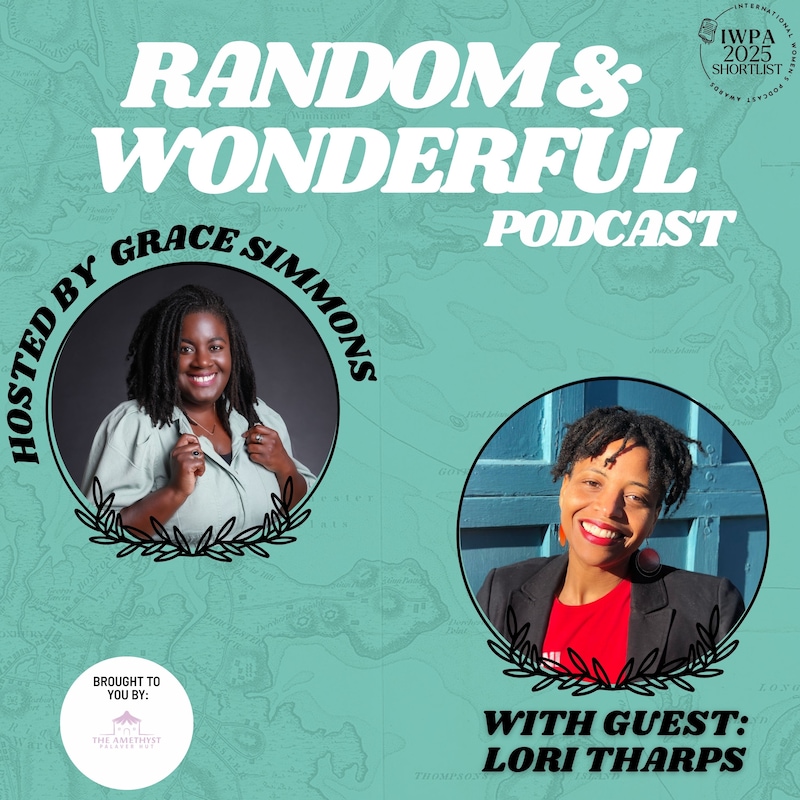
Lori Tharps is all about shaking up the storytelling scene and spreading the good word about BIPOC voices. In our chat today, we dive into the transformative power of travel and how it can reshape our perspectives on identity and culture. Lori shares her journey from a storytelling-loving kid with a typewriter to becoming an award-winning author and educator living in sunny Spain. We also get into the nitty-gritty of her creative writing community for BIPOC women, and how helping others tell their stories is way more fulfilling than endless diversity training. So, buckle up for some witty banter and insightful tales that’ll inspire you to pack your bags and seek out your own stories!
Takeaways:
Lori's journey into storytelling began with an antique typewriter at age eight, igniting her passion for writing.
The move to Spain allowed Lori to reconnect with her dreams of being a global storyteller, showcasing BIPOC narratives.
Understanding race and identity has shaped Lori's work, making her a powerful voice in storytelling and activism.
Traveling has transformed Lori's perspective, revealing the importance of cultural immersion beyond American experiences.
Researching destinations is vital; Lori emphasizes choosing places that resonate with personal interests and values.
Creating a travel journal helps Lori capture memories, ensuring she reflects on her experiences long after her trips.
Lori Tharps Bio:
Lori L. Tharps is an award-winning author, journalist and educator. A self-described storytelling evangelist, Tharps is a recognized voice in the areas of race, identity politics and African-American culture. She is the author of three critically acclaimed nonfiction books including, Hair Story: Untangling the Roots of Black Hair in America (St. Martin’s Press) and Kinky Gazpacho: Life, Love & Spain (Atria). Lori She has also written for The New York Times, The Washington Post, The Philadelphia Inquirer, Glamour and Essence magazines.
In 2021, Lori moved with her family to the south of Spain, where she launched Reed, Write & Create, a podcast and platform that celebrates and supports BIPoC stories and storytellers. The Reed, Write, & Create podcast was named Best Literary Podcast by the Black Podcasting Awards in 2023.
My name is Grace Simmons, and this is the Random and Wonderful podcast.
Speaker A:
Settle in and listen to stories of wanderlust and transformation as you gain tips to inspire your next travel experience.
Speaker A:
The Random and Wonderful is brought to you by the Amethyst Palava Hut, llc.
Speaker B:
Well, hello, Lori.
Speaker B:
Welcome to the Random and Wonderful.
Speaker B:
I'm excited to have you on as a guest.
Speaker B:
Please introduce yourself, and let's get started.
Speaker C:
Thank you.
Speaker C:
I'm very happy to be here.
Speaker C:
My name is Lori Tharps, and I am a writer, a writing coach, a literary activist, and a storytelling evangelist.
Speaker B:
Hmm.
Speaker B:
I like it.
Speaker B:
So we met at the Afros and Audios Podcast conference, and I think the storytelling evangelist is kind of what stuck into my head.
Speaker B:
And I was like, I need to talk to her.
Speaker B:
And then someone was like, oh, and she travels.
Speaker B:
I was like, oh, I definitely need to talk to her.
Speaker B:
So could you.
Speaker C:
We'll start.
Speaker B:
We'll get to travel in a bit, but could you just give me a little bit about your journey through storytelling?
Speaker B:
How did you become an author?
Speaker B:
What led you on that path?
Speaker B:
And how did you become a storytelling evangelist?
Speaker C:
Well, let me tell you a story.
Speaker C:
So, okay, I'm going to try to make this concise because it could be a very, very long story.
Speaker C:
But basically, When I was 8 years old, my mother bought me an antique Remington typewriter.
Speaker C:
She found it at a rummage sale.
Speaker C:
I'm from Wisconsin originally.
Speaker C:
We say rummage sales.
Speaker C:
Other people say stoop sales, garage sales, whatever it may be.
Speaker C:
But she loved going, you know, treasure hunting, so to speak.
Speaker C:
And she'd come home with all manner of things.
Speaker C:
But When I was 8, she bought me a typewriter.
Speaker C:
And I don't remember ever saying I wanted to be a writer when I was 8 or 7 or 6.
Speaker C:
But I did have a habit of telling a lot of lies.
Speaker C:
Like, I told a lot of lies.
Speaker C:
Like, lies that weren't even necessary.
Speaker C:
Like, not lies about, like, you know, did you eat the last cookie?
Speaker C:
But, like, my parents were both dead, burned in a fire, and I was an orphan, you know, like, crazy lies.
Speaker C:
Yeah, insane.
Speaker C:
Because I liked.
Speaker C:
I watched all those, like, Disney TV shows where there was always an orphan.
Speaker C:
Like, kids were always becoming orphaned and things.
Speaker C:
And I thought in order to have an exciting life, you know, you had to start out as an orphan or something.
Speaker C:
And so, like, I would lie for no reason.
Speaker C:
Like, these weren't lies that.
Speaker C:
To get myself out of trouble.
Speaker C:
And my father was very upset about that.
Speaker C:
You know, he was like, that girl needs to learn what the truth Is.
Speaker C:
And my mom was like, oh, she's a storyteller, and bought me a typewriter.
Speaker C:
So she said she always knew I was a storyteller.
Speaker C:
And so as time went on, I really fell in love with the written word once I had that typewriter at disposal.
Speaker C:
And so from a pretty young age, I knew that I wanted to be an author and I wanted to be a mother.
Speaker C:
Those were, like, my two goals that have kind of been with me since I was little.
Speaker C:
And I played it being a writer, and I played it being a mother.
Speaker C:
I mean, that was my kind of imaginary play with my typewriter and my dolls and stuffed animals.
Speaker C:
And I gave birth to my first child, and I became an author, published author, in the same year.
Speaker C:
So I stayed pretty consistent with my dreams and my goals.
Speaker C:
I basically started my career as a journalist.
Speaker C:
I went to journalism school because that was a writer with a job like just being a novelist, which is what I really wanted to do.
Speaker C:
Didn't have, like, a paycheck attached to it.
Speaker C:
So being a journalist felt like the next best thing.
Speaker C:
You know, I would backdoor my way into becoming a novelist.
Speaker C:
And actually, I always was interested in current events and the way journalists can shape the world.
Speaker C:
That appealed to me also the way that being a journalist allowed you to just dip into all these different aspects of life, because I was interested in everything.
Speaker C:
I never knew what I wanted to be, or I should say I wanted to be.
Speaker C:
So many different things.
Speaker C:
Yes.
Speaker C:
You know, one day I wanted to be a doctor, and next day I want to be a fireman.
Speaker C:
The next day I wanted to, you know, be a movie star.
Speaker C:
Like, all of it sounded interesting to me.
Speaker C:
So one of the things that appealed to me about being a journalist was that it allowed me to dip my toe into all of these different things that I found interesting.
Speaker C:
And so being a journalist gave me that access to the world, if you will.
Speaker C:
And I always had the dream of being the type of writer that traveled the world telling stories.
Speaker C:
That was my vision for myself was to be a kind of a global journalist, an international journalist of some sort.
Speaker C:
And so, yeah, that's where my career began, was as a journalist.
Speaker C:
I got a master's degree in journalism.
Speaker C:
I worked in the magazine industry for a long time, mostly in entertainment and then lifestyle publications in New York City for, like, almost 15 years.
Speaker C:
And then when I had children, the lifestyle of being a entertainment journalist didn't really gel with being a mother in New York City.
Speaker C:
So that's when I kind of transitioned into more parenting and lifestyle journalism and Then we moved from New York to Philadelphia.
Speaker C:
I had two children at that point, and I actually transitioned into academia, where I taught journalism.
Speaker C:
But I still maintained my freelance journalism career.
Speaker C:
And I also started writing books, although I wrote my first book when I was still working at Entertainment Weekly magazine, which was my.
Speaker C:
One of my earlier jobs.
Speaker C:
And so the way I kind of made my career make sense to me was that I worked in the magazine industry, often telling pop culture stories.
Speaker C:
And as a black woman, I always felt that as a black woman with a lot of privilege educationally, I felt that I had to use my privilege to make the world a better place for black people and other people of color.
Speaker C:
And so I thought that my.
Speaker C:
I would write books that were more serious and that would be more useful in the kind of cause for justice, if you will.
Speaker C:
So while I'm writing about celebrities at Entertainment Weekly, that's when I wrote my first book, Hair Untangling the Roots of Black Hair in America, which is a chronological history of black people and their hair from 15th century Africa to contemporary America, United States.
Speaker C:
And then the second book I wrote was a memoir called Kinky Gazpacho Life Love in Spain.
Speaker C:
And that talking about travel was about how travel allowed me to get out of my Wisconsin upbringing and discover what kind of black girl I really wanted to be in the world.
Speaker C:
And part of that was meeting my husband, who's Spanish, and traveling back and forth to Spain and really interrogating Spain's black hidden black history.
Speaker C:
And then I finally wrote my first novel.
Speaker C:
You know, I.
Speaker C:
Like I said, I backdoored my way into writing fiction by writing creative nonfiction, straight nonfiction.
Speaker C:
And then I wrote a novel called Substitute Me.
Speaker C:
And then I wrote one more book called Same Family, Different Colors Confronting Colorism in America's Diverse Families, which after writing about hair so much, the like accompanying conversation would always be about skin color politics, because hair politics, it's all about the politics of appearance, right?
Speaker C:
So colorism often goes hand in hand with those conversations.
Speaker C:
But I wasn't just talking about colorism with black Americans.
Speaker C:
I was also talking about colorism with Latinos and with Asian Americans, because colorism is a global problem.
Speaker C:
And yeah, so those are the books that I've written.
Speaker C:
And I love writing in all aspects.
Speaker C:
But I did find that in the last, like, I'd say the last seven to ten years of my academic career and in my writing career, most of my work, because I write about race and identity, that I was being called upon to step into DEI spaces and do a lot of anti racism Training and diversity training, which I liked.
Speaker C:
Sort of like I was good at it, but it didn't bring me joy.
Speaker C:
I was gonna.
Speaker B:
That was gonna be my question.
Speaker B:
Yep.
Speaker B:
How did you balance that?
Speaker C:
And because I wanted to be a writer again.
Speaker C:
When you become a writer and you write about the same topics, you do develop an area of expertise, but that doesn't mean that you want to be responsible for helping other people develop an expertise in diversity and racial, like understanding racial differences, et cetera.
Speaker C:
So in:
Speaker C:
And that move was precipitated by the pandemic because we were.
Speaker C:
I had actually won a.
Speaker C:
Not one, but I had gotten a sabbatical from my teaching position.
Speaker C:
We were supposed to go to Spain for just a year and I was actually going to do some more research on the Spain's black history.
Speaker C:
But that sabbatical year was:
Speaker C:
And that again, combination of the pandemic as well as the Black Lives Matter 2.0, that's what I call it movement, the, the murder of George Floyd, it really made me reassess what I was doing with my life.
Speaker C:
I was about to turn 50 and I was thinking, I mean, it wasn't that I was thinking it.
Speaker C:
It's like life was showing all of us that tomorrow is not promised.
Speaker C:
And I know that's cliche, but it was really showing us in so many different ways that tomorrow is not promised.
Speaker C:
And so I said to my husband, rather than like tippy toeing towards this idea of maybe one day we'll retire in Spain or move to Spain, why don't we just do it?
Speaker C:
Like, let's not baby step it, let's just do it.
Speaker C:
And in addition to just fulfilling a dream that I had of myself as being this global storyteller, this global writer, I also was really burnt out on being responsible for trying to teach people not to be racist.
Speaker C:
And my original dream was to be a writer, was to be a novelist.
Speaker C:
And so because Spain has universal health care, because the cost of university isn't astronomical, I felt confident that I could pursue my dreams of being a storyteller in all those different variations of creative storytelling, whether that was fiction writing, oral storytelling, or what have you in Spain.
Speaker C:
And that's what I'm doing.
Speaker C:
And that's has proven itself to be so.
Speaker C:
And the way I became a storytelling evangelist and a literary activist is that since dedicating myself to leading a creative writing centered lifestyle, I have also created A community for other bipoc women writers called the Read, Write, Create Sanctuary.
Speaker C:
And I realized that doing the work of helping other bipoc women tell their stories is just as, if not more impactful on changing the world by making the world more aware of the stories and contributions and magic of people of color that has been suppressed and ignored for so many hundreds of years.
Speaker C:
So I think that the work I'm doing now as a storytelling evangelist and literary activist is like helping one person of color get their story published, read and Promoted, I think has so much more impact in making changing the sorry, but changing the hearts and minds of the world as it relates to people of color than endless diversity trainings and trying to hit people upside the head with making them rethink what they thought was real and just so that's how I got to becoming a storytelling evangelist and literary activist.
Speaker B:
I'm happy to hear that that transition of trying to incorporate more diverse stories into the world, like you felt kind of pulled into that DIA education space, which I love the way you phrase that.
Speaker B:
I don't want to be responsible necessarily for teaching someone to not be racist.
Speaker B:
And the way that you're doing that is then sharing these stories, which it is more meaningful and impactful, especially for the storyteller that you are encouraging along the way.
Speaker B:
So I'm happy.
Speaker B:
I'm glad that you found that path.
Speaker C:
I am too.
Speaker C:
My blood pressure has gone down.
Speaker C:
Not pre diabetic and pre diabetic anymore.
Speaker C:
I'm much happier with the way my day to day life looks.
Speaker C:
And it's when I have a happy client.
Speaker C:
In other words, when a woman that I have helped get her story out of, you know, published or promoted or whatever it might be, that feels so much better than the white man who I was like, white supremacy is real.
Speaker C:
No, it's not.
Speaker C:
Stop calling me.
Speaker C:
Like there was just none of that kind of.
Speaker C:
It just didn't have the same kind of benef like happy feeling at the end of the day.
Speaker C:
Right.
Speaker C:
The level of thanks and gratitude, just wasn't there.
Speaker C:
And the benefit for me helping other bipoc authors get their stories out is I just get more good stuff to read, which is ultimately all I really want out of life, more good stories.
Speaker B:
So in relation to you becoming this global storyteller, how has your relationship changed or maybe evolved when it comes to travel?
Speaker C:
Funny you should ask that.
Speaker C:
So growing up in Wisconsin, I grew up in Milwaukee, Wisconsin.
Speaker C:
And for those who don't know, Milwaukee, Wisconsin is a very segregated city.
Speaker C:
Wisconsin does not have a Lot of black people in it.
Speaker C:
So I, from a very early age, was attracted to travel.
Speaker C:
So because, like, I got to see the way other people lived.
Speaker C:
That seemed better to me than Wisconsin.
Speaker C:
And Wisconsin is a very white world.
Speaker C:
It's very homogeneous.
Speaker C:
And even the, like, topography of the landscape was very flat.
Speaker C:
And I just was a person who, like, gravitated.
Speaker C:
I think, you know, you're just probably born this way, but I just gravitated to color and drama.
Speaker C:
And so my father was in the Navy, so he was in the Naval Reserves, though.
Speaker C:
So that just meant once a year he was shipped off to someplace and we would usually go with him.
Speaker C:
That was our vacation.
Speaker C:
You know, practical, efficient parents.
Speaker C:
It's like, if we're gonna go anywhere, we just gotta tag along with dad.
Speaker C:
And sometimes those trips were just not that exciting.
Speaker C:
But we ended up going to Hawaii when I was, like, 4.
Speaker C:
We went to Puerto Rico when I was 7.
Speaker C:
And those trips were so, first of all, I loved flying.
Speaker C:
We got that, you know, I'm old enough that we still got the wings when we flew.
Speaker C:
And you still dressed up on airplanes.
Speaker C:
The food was still good.
Speaker C:
So traveling was always exciting to me.
Speaker C:
And when we went to Puerto Rico, I remember, and Hawaii, like, you know, those were such different locations.
Speaker C:
I mean, those were islands, and the food was different, the people looked different, the language was different.
Speaker C:
So that was exciting to my little self, even at that young age.
Speaker C:
But other than those two big trips, most of our trips were cross country, you know, somewhere in the United States.
Speaker C:
And When I was 17, I was an exchange student to Morocco.
Speaker C:
And that's the trip that changed my whole, like, blew my mind open and made me realize that I wanted to just travel and see as much of the world as possible, because I, again, never really leaving the country before that time.
Speaker C:
Morocco was a crazy first trip to go on, coming from Wisconsin.
Speaker C:
And it was.
Speaker C:
I lived with a family.
Speaker C:
I lived with a host family.
Speaker C:
So I was really immersed in.
Speaker C:
In the culture.
Speaker C:
It wasn't like a tourist trip.
Speaker C:
It was truly lived with the family, ate with the family, spoke Arabic and French.
Speaker C:
Not that I speak Arabic or French.
Speaker C:
So mostly I was silent, but learned a little bit of Arabic and French, but really was fully immersed.
Speaker C:
That was the point of the program, is immersion, right?
Speaker C:
Immersion into the culture.
Speaker C:
And so what I learned and took away from that trip was how different the world is than what I thought being in the United States.
Speaker C:
Like, I thought the truth was defined by the experiences that I'd had.
Speaker C:
And then I'm in this new country where things are so different in terms of, obviously the language, but, like, even what was considered good table manners, like, we ate with our hands.
Speaker C:
One hand, your right hand.
Speaker C:
It was okay to burp at the table.
Speaker C:
These are little things.
Speaker C:
But it's like, that's not bad manners.
Speaker C:
That's not gross.
Speaker C:
That's really.
Speaker C:
That is their reality.
Speaker C:
Right?
Speaker C:
And it just blew my mind wide open.
Speaker C:
And also, like, from a racial perspective, because, again, by this point, my whole life had been defined by my blackness in contrast to the whiteness all around me.
Speaker C:
And in Morocco, it was my American ness that was the most important thing.
Speaker C:
It wasn't like people saw me as that black girl, which is literally like my subtitle in Wisconsin was like, you know, Lori, the black girl, you know her, the black girl.
Speaker C:
Like, that was part of my name.
Speaker C:
Whereas in Morocco, it's just one more American.
Speaker C:
And that also was mind blowing because I thought race trumped everything.
Speaker C:
Because in America, it does.
Speaker B:
It does, right?
Speaker C:
I mean, I thought that because it does.
Speaker C:
But guess what?
Speaker C:
America is not everything.
Speaker C:
That is not the only way to be.
Speaker C:
So that trip made me realize I needed to get out of the United States more often.
Speaker C:
I needed to see more of the world, and I needed to not let America's limitations define me.
Speaker B:
Can you share a surprising lesson that you may have come across in addition to learning about the culture of Morocco?
Speaker B:
Was there something else that you've carried with you on your other travels?
Speaker C:
Yeah.
Speaker C:
One of the things that really has almost defined my career as a writer is.
Speaker C:
Is the discovery of Spain's hidden black history.
Speaker C:
So that was.
Speaker C:
I'm laughing because I'm so shameless.
Speaker C:
Sometimes it strikes me, but things work out for me.
Speaker C:
I'm lucky.
Speaker C:
So I was with my husband.
Speaker C:
We had recently been married, and we would always go and visit his family, like, once a year in the south of Spain.
Speaker C:
And I was trying to figure out how I could write off this trip as, like, a tax expense by writing a story, you know, and calling this a business trip.
Speaker C:
And at the time, I didn't really write travel stories.
Speaker C:
So I was like, ah, what could I do?
Speaker C:
What could I do?
Speaker C:
I knew this one editor who worked for a magazine, a new black magazine, like a black travel magazine.
Speaker C:
And so I was trying to figure out what.
Speaker C:
What story could I tell?
Speaker C:
And we were traveling.
Speaker C:
We were like, touring some, I don't know, some ancient structure in the south of Spain.
Speaker C:
And this place, this building we were in had a false floor.
Speaker C:
Like, not a false floor.
Speaker C:
It had a.
Speaker C:
They had discovered as they Often do in Spain, because it's such an old country.
Speaker C:
They had discovered, like, a dungeon or something underneath the floor of this store.
Speaker C:
I mean, it was like a store selling, like, any random things, but they found that they were on top of.
Speaker C:
And so they had put a glass.
Speaker C:
Like a glass.
Speaker C:
The glass floor, so you could see into the dungeon as you're walking around the store.
Speaker C:
And.
Speaker C:
And again, I don't know how or why I thought this, but I was like, I bet they kept slaves in that dungeon.
Speaker C:
It could be.
Speaker C:
And nobody said that.
Speaker C:
They probably kept lying down there.
Speaker C:
But I was like, no, I bet there were slaves down there.
Speaker C:
That's why it was hidden.
Speaker C:
Again, it makes zero sense.
Speaker C:
But I did convince myself we were in Cadiz at the time, which is the very same southwest tip of Spain.
Speaker C:
And I was like, well, you know, Spain did have most of the slave ships, and a lot of European slave traders had to pay a tax to the Spanish crown.
Speaker C:
So it wouldn't surprise me if there were black slaves in Spain.
Speaker C:
Like, I'm sure some of them got dropped off here for one reason or another.
Speaker C:
This was pure speculation.
Speaker C:
I was like, I'm gonna just go with this pitch.
Speaker C:
It's.
Speaker C:
If anybody will let me write it.
Speaker C:
I was like, this fake dungeon lets me think that there's probably more to this story, even though I made the whole thing up in my head.
Speaker C:
But they pitched.
Speaker C:
They let me do the story, and so then I had to prove I had to find something, and that made me start digging.
Speaker C:
And what I did discover the dungeon part, again, way off base, but it's actually true that there were a lot of West African people who were enslaved in Spain who were, for the most part, I don't want to say dropped off, but if the Spanish ships are going to West Africa, they're going to come refuel in Spain, particularly southern Spain, and then continue on to the Caribbean in the Americas.
Speaker C:
And discovering that really felt like I was, you know, history detectives.
Speaker C:
And I had had such a hard time in Spain.
Speaker C:
The first time I went, I went in college.
Speaker C:
I'd spent my junior year of college in Spain, and that was in the early 90s.
Speaker C:
And when I was there, I was really.
Speaker C:
I didn't experience what we would consider, like.
Speaker C:
They would be, like, microaggressions.
Speaker C:
That word didn't exist in the early 90s.
Speaker C:
But, excuse me.
Speaker C:
Lots of pointing, lots of staring, lots of asking stupid questions, lots of blackface, you know, just over and over again, just feeling like, how can we be in the early.
Speaker C:
How can we be in the 90s, and people are still making these kinds of, like, racist humor and kind of ignorance around what being black actually means.
Speaker C:
And if I hadn't married my husband, I highly doubt I would have come back to Spain at any point.
Speaker C:
But I did marry my husband, and we did have children.
Speaker C:
And so I was struggling with this idea of, like, how do I bring up my children to be proud of both of their lineages when they seem to be in conflict with one another.
Speaker C:
And so discovering that there was actually a long history of black people in Spain or who made cultural contributions to the country, to the culture was one of the biggest and happiest surprises of.
Speaker C:
I mean, I'm not happy that people were enslaved in Spain, but that there's a part of my history in this country that now I live here even more.
Speaker C:
So it's something where that discovery made me realize black people are.
Speaker C:
Have been everywhere.
Speaker C:
And we joking.
Speaker C:
I mean, some people joke like, yeah, we everywhere, but.
Speaker C:
But we really have been historically.
Speaker C:
And not just that we've been places, but we've been places and left our mark and contributed to the creation of pretty much everywhere.
Speaker C:
And so that's a new way that I travel.
Speaker C:
Like, I am that person who's like, and where were the black people?
Speaker C:
I know they were here.
Speaker C:
I know this might be the most random place in the world, but, like, I'm always looking in the churches for black snake saints.
Speaker C:
I'm always looking for, like, a hint of blackness, and I'll make it up if I don't see it, like, blatantly.
Speaker C:
But I really do try to find that, and that is my storytelling self, is that I want to keep telling these stories.
Speaker C:
I want to keep finding these stories.
Speaker C:
And I'm getting pretty good at it.
Speaker C:
Like, that's what I do when I travel.
Speaker C:
I look for bookstores and black people.
Speaker C:
I love that so much.
Speaker B:
As a tagline, that's gonna be your title.
Speaker C:
I think I'm gonna write that down.
Speaker B:
I look for bookstores and black people.
Speaker B:
Introducing Lori Tharpes.
Speaker B:
I like that so much.
Speaker B:
Okay.
Speaker C:
It's the truth.
Speaker C:
It really is.
Speaker C:
I'm gonna get that on a T shirt.
Speaker C:
I'm looking for bookstores and black people.
Speaker B:
Blackstars and black people.
Speaker B:
Yeah, I like it.
Speaker B:
I like it.
Speaker B:
I'll buy the shirt.
Speaker B:
For those who are listening, and maybe they're kind of hesitant about their first trip and their first solo trip.
Speaker B:
What advice can you give them?
Speaker C:
I mean, I think the most important thing, and that's deeply overlooked, and I'm so glad you asked this question is that people need to do their own damn research.
Speaker C:
There's too much following the herd, if you will, about places to go.
Speaker C:
And there's two big reasons why this doesn't bode for a good travel experience.
Speaker C:
One, if you're following where everybody else is going, it's not even nice anymore because everybody ruined it.
Speaker C:
Like, it's not great when everybody else has already been there.
Speaker C:
The locals are mad.
Speaker C:
Things have gotten more expensive.
Speaker C:
Like, it's just not the great place that people have been talking about for insert time period here.
Speaker C:
So that's one.
Speaker C:
But the second thing is you aren't everybody else.
Speaker C:
You need to look.
Speaker C:
And when you're going to travel, you want to make sure you're going someplace where you're to going.
Speaker C:
You will actually have the things that you like.
Speaker C:
A good example, like I said, if I like bookstores and black people.
Speaker C:
So I'm not necessarily going to Poland.
Speaker C:
Like, people are talking about Poland as a great place for digital nomads and things like that, but it's probably not going to have what I'm looking for as a person who, you know, where black people is a really big thing for me.
Speaker C:
Although they do have the black virgin.
Speaker C:
They have a very important black virgin.
Speaker C:
So let me take Poland.
Speaker C:
Maybe I will go to Poland.
Speaker C:
But the point is, you need to look up the things that are going to make you happy.
Speaker C:
And there have been trips that I've taken.
Speaker C:
Like I did take a trip to Morocco, for example, because everybody was talking about go to Morocco.
Speaker C:
Everybody was going to Morocco at a certain point.
Speaker C:
And I planned a trip from Morocco by myself.
Speaker C:
I mean, I was actually with my family members and I didn't not like it.
Speaker C:
Again, I've been to Morocco, I lived in Morocco, but this was a different city in Morocco.
Speaker C:
We went to Marrakech.
Speaker C:
And I won't say that I didn't like it, but I didn't have the time that I wanted to have because I wasn't really prepared.
Speaker C:
I was going more on.
Speaker C:
Everybody's been to Marrakesh and it's been wonderful.
Speaker C:
And this, that and the other thing.
Speaker C:
And the type of trip that we had wasn't the type of trip that I enjoy now.
Speaker C:
I went back to Marrakesh a second time with a literary organization and I had a wonderful time because it was done in a way that centered the things I love black people in bookstores.
Speaker C:
Like it was a whole literary experience and it was done in a different way.
Speaker C:
And so I think people do themselves a disservice when they, quote, unquote, jump on the bandwagon and go places because everybody else is going, like everybody's going to Mexico.
Speaker C:
Do you speak Spanish?
Speaker C:
Do you like beach trips or wherever people are going?
Speaker C:
Ask yourself those questions and make sure you're going someplace where the place offers things that you actually like.
Speaker C:
I think that that is one of the most important things to do so that you can guarantee that you're going to have a good trip.
Speaker C:
And that does require research.
Speaker C:
But I think again, you'll have a much better time.
Speaker C:
And it requires a little bit of knowing yourself, of admitting, I don't like crowded places, or I don't like heat, or I don't like tropical heat or whatever it might be, or I don't like garlic.
Speaker C:
I probably shouldn't go to a culture where garlic is the main ingredient in all the food or vice versa.
Speaker C:
A lot of black people in particular have jumped on the move to Portugal bandwagon and then they're like, oh, the food is so bland here.
Speaker C:
It's like, well, that was something you could have researched, you know, like, what is the cuisine of this area?
Speaker C:
And that's a common complaint.
Speaker C:
So yeah, that would be my big advice.
Speaker B:
I like it.
Speaker B:
That's pretty solid advice.
Speaker B:
Know yourself, know where you want to go so that you can ensure at least there's going to be something there that you like.
Speaker C:
Right?
Speaker C:
I mean, why spend your money and your time on a place?
Speaker C:
I mean, you can't anticipate maybe something going wrong or something.
Speaker C:
But sure, if you're going to take the time and spend the money to go someplace, there's no reason you have to go where everybody else is going.
Speaker C:
Like research what makes sense for you.
Speaker C:
And I think even the idea of going abroad, that's even a bigger question of like, do you have to even go abroad?
Speaker C:
You know, there might be a place in this big old United States that could be the best trip for you ever.
Speaker C:
And just because everybody's, oh, I have to go here, you know, I got to go here, got to go to Greece.
Speaker C:
Like maybe there's, you know, some of the Geechee islands that would be amazing to go to or, or go up to Alaska.
Speaker C:
Like there's just a lot of different parts of the world that you would, might be a better fit for you.
Speaker C:
So do for you not what everybody else is doing.
Speaker B:
I like that.
Speaker B:
Before we go, one of my favorite questions to ask as I make so much noise, one of my favorite questions to ask is what is a self care practice that maybe you've acquired during your travel or that you practice that you could share.
Speaker C:
Well, not surprisingly, as a writer, one of the things that I always do when I travel is I, I have a travel journal and it's separate from all of the other journals and writing that I do.
Speaker C:
And I, on the last day that I'm there, before I leave, I sit down and I literally write the line I remember and I go back through my, from my trip and just write down everything that I can remember.
Speaker C:
Because that's the worst thing is, you know, you go back to your regular life and you don't remember how wonderful it felt, the things that you ate, the sunrise that you saw, the smell of the jasmine in the air at night when you were walking.
Speaker C:
So I have this lovely travel journal that I did get in Morocco and I, you know, I deputized it as my official travel journal and so I can just look through it again.
Speaker C:
It's just for travel, so it's not like it's a regular journal.
Speaker C:
I can look at it and be like, oh, this was from my trip to this place and this was my trip from this place.
Speaker C:
And when I read it, I just read all these delicious memories from the experience.
Speaker C:
And because it's still fresh when I write it and I'm still usually there, I usually, you know, it's January 15th and I'm sitting here in my hotel room in place X, place Y.
Speaker C:
And this is what I remember, blah,
Speaker B:
blah, blah, blah, blah, blah.
Speaker C:
And so I can look back on it when I'm feeling kind of glum or sad, I'll go back and look through that journal.
Speaker C:
I also, again, it reminds me of the feelings that I had when I was there or it reminds me of actual places.
Speaker C:
You know, sometimes I even just record the name of this restaurant or this beach or whatever it could be.
Speaker C:
So it's also a good record.
Speaker C:
And so if anyone says, oh, I'm going to this place, do you have any suggestions or recommendations?
Speaker C:
So as a writer, writing coach, and somebody who believes in the power of storytelling, of course my self care involves recording and writing down capturing these travel moments in one place so I can always look back on them.
Speaker B:
Nice.
Speaker B:
Laurie, thank you so much for being here and being a guest.
Speaker B:
Could you tell us what's next for you?
Speaker B:
And then also how can people get in contact with you?
Speaker C:
Sure.
Speaker C:
And it's been so great talking.
Speaker C:
I love talking about travel.
Speaker C:
So anybody can find me and my work at my, on my website, readwriteandcreate.com and that's R E E D writeandcreate.com and they can find information there about my private community.
Speaker C:
For bipoc women writers who take their writing seriously, everything is there@readwriteandcreate.com you can also follow me on Instagram at Loril Tharps and that's L O R I the my middle initial l tharps.com which I'm sure all this will be in the show notes, but that's how you can find me.
Speaker C:
And I just want I as a storytelling evangelist, I just want people to keep telling their stories and sharing their stories with the world, particularly people of color and women whose stories have often not been given the respect that they deserve.
Speaker B:
Thank you, Lori.
Speaker C:
Thank you.
Speaker A:
Hey there Grace here.
Speaker A:
I hope you enjoyed today's episode and gained some useful takeaways.
Speaker A:
Thank you so much for listening and staying until the end.
Speaker A:
Don't forget to rate the show or share it with some friends.
Speaker A:
Have a wonderful week.
Speaker A:
Take care and remember, be bold, be curious, Be ready to tell your story.