Shownotes
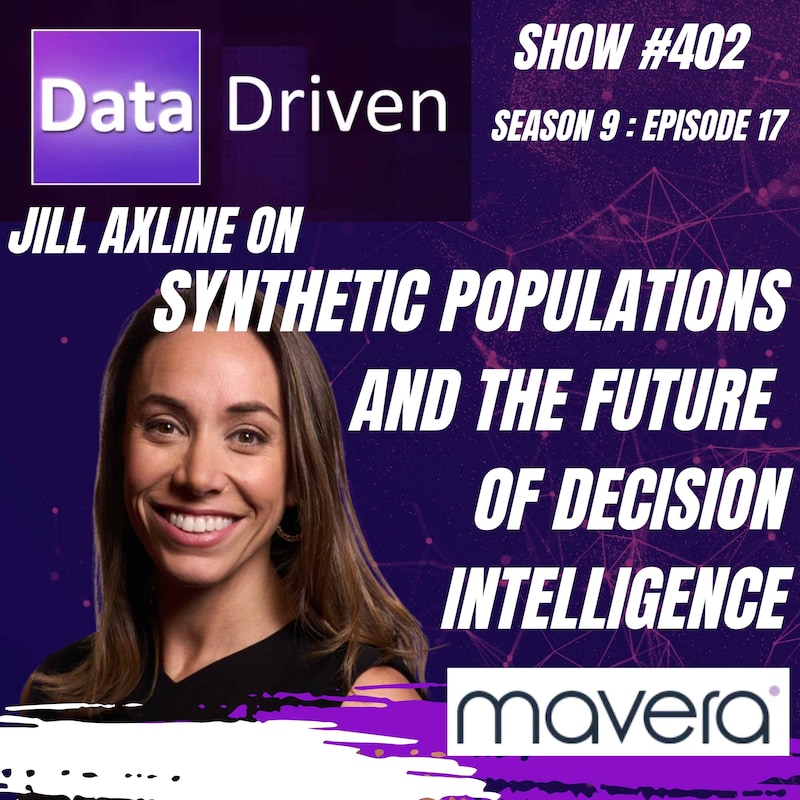
In this episode of Data Driven, Frank and Andy dive into the future of market intelligence with Dr. Jill Axline, co-founder and CEO of Mavera—a company building synthetic populations that simulate real human behaviour, cognition, and emotion. Forget Personas. We're talking real-time, AI-driven behavioural modeling that's more predictive than your horoscope and considerably more data-backed.
Dr. Axline shares how Mavera’s swarm of AI models situates these synthetic humans within real-world business contexts to forecast decisions, measure emotional resonance, and even test marketing messages before they go live. From governance and model drift to the surprising uses in financial services, political campaigns, and speechwriting—this is one of the most forward-looking conversations we’ve had yet.
If you've ever wanted a deeper understanding of how AI can augment decision-making—or just want to hear Frank admit asset managers love ice cream—this one’s for you.
Links
- Learn more about Mavera:https://mavera.io
- Connect with Jill Axline on LinkedIn:https://linkedin.com/in/jillaxline
- Morningstar:https://www.morningstar.com
Time Stamps
00:00 - Introduction & AI Swarms Explained
03:30 - Forget Personas: Contextual AI Models
07:00 - Evidence vs Inference & AI Governance
10:20 - Simulation Scenarios & Model Drift
14:30 - Synthetic Audiences in Action
18:00 - Evidence Feedback Loops & Small Data Challenges
22:00 - Industry Applications & Use Cases
27:00 - Analyzing Speeches & Emotional Resonance
30:45 - Sentiment, Social Listening, and Real-Time News Reactions
34:00 - Adversarial Models & Strategic Pushback
38:00 - The Cartoon Bank Portal That Failed Spectacularly
41:00 - From Skeptic to CEO: Jill’s Journey
45:00 - Data Privacy, Compliance & Synthetic Ethics
48:00 - Reflections on Empathy, Engineers, and Selling Without Selling
Support the Show
If you enjoy Data Driven, leave us a review on Apple Podcasts or your favourite pod platform. It helps more people find the show—and fuels Frank’s Monster Energy habit.
Transcripts
Essentially, it's a swarm of models, AI models that
Speaker:emulate human cognition and emotion and become highly
Speaker:predictive of behavior across populations. So you're
Speaker:creating synthetic populations of people that are then situated
Speaker:in context. Forget Personas, Jill Axline is building
Speaker:synthetic populations that predict real human behavior and that changes
Speaker:everything. Keep watching to learn how.
Speaker:Foreign.
Speaker:Hello, and welcome to Data Driven, the podcast. We explore the
Speaker:exploding world of artificial intelligence, data science, and of
Speaker:course, none of this would be possible without the underlying data
Speaker:engineering. And with me on this road trip down the information
Speaker:superhighway of the future and Buzzwords
Speaker:is my most favorite data engineer in the world. How's it
Speaker:going, Andy? Hey, Frank. It's going pretty good. How are you? I'm
Speaker:doing all right. I'm still wearing the hipster glasses because they
Speaker:were recording this about post 3 weeks since my concussion.
Speaker:And as we were telling our guest in the virtual green room that
Speaker:we kind of owe the show's name to a concussion.
Speaker:So true, folks who, longtime listeners, know
Speaker:the lore, so we won't bore them or waste any of our guests precious
Speaker:time. With us, we have Jill axlein, who
Speaker:is Ph.D. and is the co founder and
Speaker:CEO of Mavera, which is an
Speaker:interesting company and Maverick Era is what I'm told it's short for.
Speaker:So welcome to the show, Jill. Hey, thanks. So happy to be here.
Speaker:Yeah. So you also have three kids and. I
Speaker:have three kids. Andy has three. Three plus two.
Speaker:Yes, that's. I think,
Speaker:I think there's a correlation between number of kids and gray hairs.
Speaker:I know I have kids and five grandchildren, so there you go. But
Speaker:I'm old. I'm just saying you have an age today,
Speaker:you know. So
Speaker:what does Mavera do and
Speaker:what is brand and business meaning for? What does that mean in
Speaker:high growth. Companies, brand and business.
Speaker:I totally botched that. I'm sorry. I'll blame the concussion because I can do that
Speaker:for another week or so. So what exactly does Mavera
Speaker:do? Sure. So essentially it's a swarm of
Speaker:models, AI models that emulate human
Speaker:cognition and emotion and become highly predictive of behavior
Speaker:across populations. So, so you're creating synthetic populations
Speaker:of people that are then situated in context.
Speaker:So as opposed to a model that's trained six months ago and
Speaker:then is rapidly trying to iterate, it actually
Speaker:pulls its synthetic database will update on a
Speaker:second to second basis. So you always look at your population in
Speaker:situ. Additionally, I would say
Speaker:it provides a really strong pulse of what that population
Speaker:looks like within the context of your business or your vertical.
Speaker:Because we support a foundation with deep business context
Speaker:that takes into account not just your business from the time that it
Speaker:was instantiated, but it also is updating
Speaker:temporally and it creates relational,
Speaker:like relational connections across your business. So for instance,
Speaker:if there's a marketing spend five years ago or about
Speaker:the same time that you launch your flagship product or a secondary product,
Speaker:it's going to show a lot of data on how the context
Speaker:around that might have influenced your outcomes.
Speaker:So I guess like long and short of it is you have
Speaker:populations situated in context and wrapped around your business,
Speaker:and you can use that pretty expeditiously to make
Speaker:decisions in a much less expensive way than most market research
Speaker:or, you know, strategy research, strategy based research.
Speaker:It's almost like you're taking kind of like the SIMS
Speaker:approach of having these individual entities, I wouldn't call them
Speaker:agents because it doesn't sound like they're agents. It sounds like they're simulated entities, like
Speaker:you said. Right, exactly. That's interesting. Is there like a.
Speaker:That. That's an interesting approach because that does,
Speaker:it probably doesn't completely insulate you from model drift, but it
Speaker:probably does a good job of, well,
Speaker:we're having a massive windstorm and it's like, you know, negative, whatever. Outside in your
Speaker:Chicago, it's really cold. It's always sunny and it's always sunny in farmville, as
Speaker:I like to tell Andy. But, but I mean, you can
Speaker:insulate against a certain amount of cold, but you can't really stop it.
Speaker:That's right to think about it. So you can't really stop model drift, but you
Speaker:probably can prolong how, how, how long your
Speaker:models are valid for this by this approach. So that's correct. In
Speaker:addition to that, something that I've pushed on because I've been an
Speaker:advisor with this team for well over a year. And
Speaker:since I'm a ph dork and I, you know, I'm always looking at evidence.
Speaker:Evidence Ev. I was the original skeptic to synthetic
Speaker:populations. In my last role at Morningstar, I built our market research
Speaker:team. And when I was first introduced to the idea of
Speaker:synthetic populations, I was like, you know, tons of skepticism.
Speaker:I think the big thing here is they've built in a level of AI
Speaker:governance around things like drift, but also to
Speaker:model the difference between evidence and inference. And so
Speaker:they're looking for confidence scores. They'll gather first party data
Speaker:around your population and then create a synthetic data layer on top
Speaker:of that. And a good example would say
Speaker:asset managers like ice cream. Asset managers like cold
Speaker:things. They like cold, wet things, they like cold, wet, sweet things. And then a
Speaker:coefficient is that assigned to each of those new synthetic data points. And so
Speaker:while it makes a more robust data set in the
Speaker:billions that allows it to draw inference, it's also accounting
Speaker:for again, what, what's based on evidence and what's based, what is
Speaker:inference of the machine. And then there's also a governor across
Speaker:this swarm of models. So it's going to call on the right model
Speaker:for the right facet of human thinking or
Speaker:feeling that it's trying to construct. And so
Speaker:I think in doing that it creates safeguards around confidence. So
Speaker:we, we produce confidence scores, it will give a spread of opinion across
Speaker:a population. So unlike a custom GBT or
Speaker:a Persona and some pre existing platforms that are emulating
Speaker:language, it's actually taking a look at
Speaker:where's their entropy across emotional response and cognitive
Speaker:response in this data set and what does that look like in the spread of
Speaker:opinion for that audience. So it'll tell you the nature of the spread
Speaker:and where that spread is happening. So now you can account for almost,
Speaker:you know, sub segmentation within the population. And that might
Speaker:look very different at the top of the funnel when we're looking at thought leadership
Speaker:topics versus the bottom of the funnel in marketing where we're thinking of features,
Speaker:functions, benefits, et cetera. And so
Speaker:that allows at least marketers, but I think others,
Speaker:anyone go to market to really think about what is their message for the right
Speaker:audience at the right time based on, you know, where they are in their
Speaker:buyer's journey. And so that to me is a little bit
Speaker:different because I would say the last facet of this is
Speaker:the response stability. We're also providing a level of
Speaker:test retest reliability. If you go into ChatGPT
Speaker:recently, someone was flaming me because I've never made
Speaker:caramelized onions. And so, you know, as a joke, he kind of went in and
Speaker:said how many people who are 40 something, you know, like know how to make
Speaker:caramelized onions? And these percentages swung
Speaker:quite significantly from the first time he queried to the second time to the
Speaker:third time. Whereas we're looking at population response stability
Speaker:and modeling that, projecting it into the future and looking at the trend
Speaker:line from the past on how this population would continuously
Speaker:answer the question. So I kind of guess like when we think about model
Speaker:drift, I think that's likely inevitable. But if you're
Speaker:situating and updating with minute to minute context and then you're surfacing
Speaker:some of these governance factors around what the Outputs are,
Speaker:we're getting to a closer place where we can actually be collaborate collaborators
Speaker:with the AI and govern it and then build,
Speaker:you know, a greater level of trust is the hope.
Speaker:That's interesting. I'm glad you addressed the skepticism because that was going to be my
Speaker:next question. Like, how do you know this is real? How do you know that
Speaker:it's accurate? The other question I had, and sorry, Andy,
Speaker:I had a bunch of monster energy drinks today.
Speaker:You could probably run different simulations, like in
Speaker:parallel, right. Assuming you had the compute. So
Speaker:you can see if this happens, if that happens, right. If there's
Speaker:a recession, people are going to do this, go this way. If there's a boom,
Speaker:if it kind of meanders somewhere in the middle, you could probably run
Speaker:only limited to what compute you have, right? I mean,
Speaker:yeah, I mean, it's a credit based system. So, you know, you buy
Speaker:credits like a tank of gas and it's going to, you
Speaker:know, give you enough gas to, to build whatever it is you
Speaker:want within limits. But I would say,
Speaker:yeah, I don't think you're really, yeah, I don't think you're really
Speaker:restricted in terms of what outputs look like on, on a scenario
Speaker:analysis. I think obviously if the more
Speaker:data we have, let's call it for a specific company, when I was working at
Speaker:Morningstar, that's 40 plus years of data on the back end in
Speaker:that deep business context, that makes that prediction that much easier.
Speaker:And so I think it also depends on what's coming into the model and
Speaker:what its power is and its ability to be predictive. I
Speaker:guess I should say that's cool. Because I think this is an interesting, it seems
Speaker:like it's an interesting mix of kind of predictive modeling and
Speaker:LLMs. Right. Because predictive models, I mean, they're not
Speaker:new. Right, but they're not. But they do. I think
Speaker:they're, they're traditionally, they're
Speaker:very susceptible to drift. Right. But
Speaker:I think also by simulating the individual actors, because a society
Speaker:and economy, a customer base is, consists of, you know,
Speaker:X number of, you know, not sovereign
Speaker:but unique individuals that are going to have certain
Speaker:personality traits. And some of those you kind of can
Speaker:guess from. Like you said, you know, asset managers. Asset
Speaker:managers, everybody likes ice cream, but asset managers probably really
Speaker:like luxury cars. I'm going to go out on a limb. Right,
Speaker:right. And probably how much the, how many luxury cars they have and which model
Speaker:of luxury car they have is probably going to determine, is probably not, not
Speaker:determine how successful they are. But it's probably a correlation between
Speaker:how successful they are versus like how not. You know, I don't
Speaker:know. I. If you're an asset manager and you're driving around the Hyundai,
Speaker:there's gotta be a good story behind that. That's right.
Speaker:I agree with you. And I think again, when
Speaker:you can ask the synthetic audience and pull them, you can start to get into
Speaker:further nuance whether those are B2B
Speaker:dimensions of, you know, like firm type, role type,
Speaker:etc. AUM or it can get into that more
Speaker:psychographic or it can get into start, start to break down
Speaker:archetypal differences and you know, all of those
Speaker:then can be mapped into attributes that are built into the channels where we
Speaker:communicate with them.
Speaker:Go ahead, Andy. I don't want to hog the mic. No, no, it's all good.
Speaker:I'm fascinated and
Speaker:kind of playing off your, your idea of model drift, Frank,
Speaker:and your questions along those lines. I
Speaker:mean, in one sense I would say, you know,
Speaker:a synthetic audience or you know, a synthetic sample
Speaker:or cohort, however you want to classify that. Is
Speaker:model drift happening in that
Speaker:context is probably not unheard of because
Speaker:there's cultural drift. And if you're looking for
Speaker:ways to effectively simulate that
Speaker:and run marketing campaigns against, you know, the
Speaker:synthetic cohort, it doesn't strike me
Speaker:as out of the realm of possibilities that you may want
Speaker:some of that you may want to even tune for, especially
Speaker:if you're looking at a younger audience.
Speaker:There are emerging trends that come out of
Speaker:those demographics. It's just part of the nature of those
Speaker:demographics. I mean, I'd love to hear your thoughts on. On that.
Speaker:Yeah, I mean, I don't know that it's a function of.
Speaker:I don't want to make it like a generational distinction, but I do think
Speaker:that anything that's current to context is going to
Speaker:impact on a minute to minute basis in some cases how
Speaker:the population is going to make decisions and what level of like
Speaker:arousal they have. And I don't mean that in the, you know, cheeky
Speaker:sort of way, but I would say like we're working with
Speaker:an index team in financial services and they asked me on the spot,
Speaker:can you please model a high net worth investor in Denmark?
Speaker:You know, and this was last week just to, just to say, are you thinking
Speaker:about, you know, rebalancing out of blah, blah,
Speaker:blah, US broad index? And you know, the
Speaker:answer was not immediately, but here's my thinking on that
Speaker:and here's what I would be investing in instead. So now they're trying to think
Speaker:through what's their messaging around outflows in that
Speaker:predominant US broad index? And then how are we
Speaker:surfacing the rest of our family of indexes in its
Speaker:stead? And then he asked, how does this, does
Speaker:the audience, is there a large spread here? And if so,
Speaker:you know, what is the nature of that? So now we can think about
Speaker:discrete campaigns across this population, which
Speaker:is pretty narrow of, you know, ultra high net worth investors in
Speaker:Denmark. Right. So I think it's
Speaker:applicable depending on what, what is that trigger, you know, that what
Speaker:is that zero moment of truth for any given population that is going to be
Speaker:influenced by their immediate context. And
Speaker:you know, with that responsibility score, we can then tell them this is something
Speaker:we think will persist over time versus this is ephemeral. And based on what's
Speaker:happening in the news around tariffs today. So here's something to push out in
Speaker:your channels today versus here's something to build into,
Speaker:you know, a long tail campaign and how to think about product strategy in
Speaker:a different sort of way. That, that's pretty fascinating.
Speaker:So pivoting just a little bit, you,
Speaker:you mentioned quite a few instances of
Speaker:incorporating evidence into this. And I would
Speaker:imagine that I'm an engineer. Okay, that's a warning.
Speaker:So, so is our cto. I'm getting used to it.
Speaker:I think about open and close loops all the time. It's just, you know, I
Speaker:don't even have to think about thinking about it. It just happens. But
Speaker:being able to, to become predictive
Speaker:and have that feedback where you, you
Speaker:made some, you know, you made some prediction, some predictive
Speaker:analytic, and then you collect evidence on
Speaker:how accurate you were and not just, you
Speaker:know, percentage wise, it doesn't really apply that much, especially in
Speaker:marketing type
Speaker:and especially in the age of AI where you can collect information and feed it
Speaker:back into the system as training data,
Speaker:effectively as responses to prompts. So the
Speaker:prompts themselves become part of the data
Speaker:that goes in and then the outcome that was
Speaker:predicted, that's very easy to see. That
Speaker:part happens. But then supplying the evidence
Speaker:you predicted this, the delta between the
Speaker:predicted and the actual, that's evidence. And
Speaker:so being able to quantify that, being able to
Speaker:feed that back into the engine, I think in early
Speaker:2026, as we're talking about this, we've not
Speaker:had the ability to,
Speaker:I'd say in, you know, in, in natural language, to provide that
Speaker:sort of information with any sort of confidence that
Speaker:the algorithm that we're supplying that information to, that feedback,
Speaker:closing the loop on the evidence, supplying the
Speaker:evidence, we just hadn't had the confidence that the
Speaker:machine was going to understand what we meant. And one of the
Speaker:things that sort of slipped into invisibility over the
Speaker:past, gosh, what's it been, three years and a few
Speaker:months since Chat GPT was released?
Speaker:Is that the model mostly understands what you're
Speaker:saying now. And I mean by, by mostly some number well above
Speaker:90%, you know, it's going to get what you mean
Speaker:and when it hallucinates, you know, it's going to be because it
Speaker:misunderstands what you said, not because it went off, you
Speaker:know, and started interpolating what you said and
Speaker:made something completely different out of it. It's the way it was
Speaker:stated, wasn't quite clear. And nowadays
Speaker:I hang out mostly in Claude and Claude code.
Speaker:So when I'm going back and forth with, you know, with the engine,
Speaker:it's, especially in Claude code, it very often
Speaker:will pause the conversation and stop and say, hey, I have this question,
Speaker:you know, and here's the options. I think you're, you know, based on what you
Speaker:said, I give you 1, 2, 3. And then number four is you just type
Speaker:and tell me if I completely missed it. And I rarely find myself
Speaker:on that bottom option. Most of the time I'm picking the, the
Speaker:top option, which the one it thinks is most likely. And
Speaker:so having having that sort of evidence based
Speaker:feedback, number one, be so much easier
Speaker:than it is before. And so I can see that limiting model
Speaker:drift. I can also see it kind of making
Speaker:your predictions align with
Speaker:the timescale that you mentioned. So not just the population
Speaker:being so, so small, which is
Speaker:infinitely harder than dealing with big data, right? Dealing with a
Speaker:small set of data. How do you predict in all of that? And before I
Speaker:ramble anymore, I'll just stop and let you respond. How about that?
Speaker:Well, it's interesting and I don't want to get over my skis
Speaker:because this is really where our CTO shines.
Speaker:He has the ability to create
Speaker:some audiences out of what he would say he would call dark
Speaker:matter. The best way for me to think that through is when I look at
Speaker:a tree and I see its various branches. I'm looking at the
Speaker:tree to define the tree, but there's so much more sky
Speaker:and negative space around that tree that also defines it.
Speaker:And so he's starting to look at data and how it affects other
Speaker:data and then putting that in context and using that
Speaker:kind of negative space to then define the audience that's
Speaker:so small. So that is, you know, in the case
Speaker:of when I was at Morningstar, Acid owners, really small group of
Speaker:people, but one that Morningstar really wanted to understand a
Speaker:lot better. And so that institutional audience, they're
Speaker:regulated. It's hard to, you know, get permissions because they're so small.
Speaker:Their time is worth a lot. So it's an expensive panel to construct.
Speaker:And here he was able to build from again, like that negative
Speaker:space to then recreate the audience. And, and he is
Speaker:surfacing that confidence variable. And if there is a hallucination,
Speaker:hallucination risk, it's tagged and it will prompt you for what sort of
Speaker:data it then needs. Or it's going to say, actually have to refractor the
Speaker:audience a little bit differently. There's too much entropy for me to continue and
Speaker:it will go and run it again. So. And again, I don't want to get
Speaker:over my skis because I'm the social scientist in the mix, but that's how it's
Speaker:been described to me that I can, I can best understand it. That makes
Speaker:a lot of sense actually. And like you can kind of, I think there's a
Speaker:lot of inference here in terms of what you can infer. Right. So
Speaker:my, my kid, my
Speaker:middle kids, my two younger kids are really into and really the three
Speaker:year old just likes hanging out with his big brother. They watch Dragon Ball Z,
Speaker:they watch the Jujutsu Kaizen, like all the crazy anime that's
Speaker:very popular now. I bet one of the things you could do, I,
Speaker:I've actually gotten into it. I was never much of an anime fan, but like,
Speaker:you'd say, like say Dragon's Ball Z. Right. Dragon Ball Z has been around
Speaker:that I'm aware of, maybe 20, 30 years. Right. But. So you can probably,
Speaker:you could probably make a solid assumption that there might be some Gen X folks
Speaker:that are Dragon Ball Z fans, probably a lot of millennials, a lot of Gen
Speaker:Z, Gen Alpha, whatever they're calling them now. But there's probably not a
Speaker:lot of people in retirement homes, boomers and
Speaker:up there are big fans of it. Is it because they wouldn't like it?
Speaker:I don't know. Maybe. But it's just, it tends that since that demographic
Speaker:skew is kind of small, you're probably not going to find
Speaker:a lot of them that are going to be into that in the retirement. I
Speaker:don't know that that's just me just firing an analogy.
Speaker:I mean, my parents liked K Pop Demon Hunter when my kids made them watch
Speaker:it, but I have girls, so I don't know,
Speaker:they're just really cute though. That's really
Speaker:cute. It's a very well done kind of cross genres, but yeah, yeah.
Speaker:And K pop is very, very, very
Speaker:addictive. Yeah. You know, so like it just
Speaker:sticks in your head. I don't know how they did it, but
Speaker:who, who are the industries? What are the industries that are really interested in this?
Speaker:You obvious, you mentioned Morningstar, obviously, I would imagine financial
Speaker:services. And
Speaker:Morningstar is asset management. Right. Is that what it is? Or a hedge
Speaker:fund or it's, I'm. Not exactly sure, data and research. So I mean, I think
Speaker:primarily they're known for their research and data and how they've rated
Speaker:funds over the years and they've expanded from there by way of acquisition.
Speaker:So PitchBook is a part of it. DVRS is an index business. So
Speaker:they, they have seven different pianos that really like traverse
Speaker:financial services. At this point I
Speaker:think financial services has been interested partially because I'm in financial
Speaker:services and I'm literate and being able to discuss it and showcase its
Speaker:benefits. Right, right. I would say this is more like
Speaker:functionally, like accurate for any
Speaker:place that needs human intelligence. Right. So I've worked with
Speaker:private equity teams that are helping to arm their
Speaker:portfolio companies with a marketing tool that doesn't
Speaker:have them, then looking to boutique agencies to do this level of market
Speaker:research and understand their ICP and find product market fit or message
Speaker:market fit. So there for them, it's very easy to kind of get in
Speaker:there, even the technical founders, and try to augment maybe a gap in
Speaker:their marketing acumen. I would say marketing
Speaker:agencies, creative performance, et cetera, they have taken
Speaker:to it really easily because they're already wizards who
Speaker:wield, you know, traditional wands on doing this kind
Speaker:of work to understand a market, to understand the message that's going to
Speaker:fit with that market and then to make sense of what the real results were
Speaker:when the market either engaged or didn't. Right. So and
Speaker:building the creative around that. So the ability to pre test all of that with
Speaker:the audience gets them to the starting line before they put money behind it
Speaker:or have their client put money behind it with the best possible set of
Speaker:options. So I think agency has been pretty prolific there too. And then
Speaker:the last. And again, I'm kind of biased because I came out of enterprise.
Speaker:Enterprise marketers who are finding gaps
Speaker:in the kind of the traditional products that are, have easy distribution
Speaker:within the enterprise are looking to a tool like
Speaker:Movera to try to get more
Speaker:what decision intelligence that's human based in what they're doing
Speaker:and so that's, that's where we're seeing a good amount of traction would be
Speaker:like in that mid market and enterprise level marketing team,
Speaker:whether that be product marketing or demand gen or market
Speaker:intelligence. And I came out of brand strategy so I found great
Speaker:utility for it there in corporate comms. So again I think
Speaker:it's really that go to market team where human intelligence becomes so
Speaker:important to decisions and current like traditional research methods
Speaker:are really slow and they're quite expensive and
Speaker:not everyone can do them, you know, or they think to just grab
Speaker:the information from within the four walls of the firm and
Speaker:anecdotes of talking to customers. Right. So this is a good
Speaker:way to augment an expensive way to augment some of that decision
Speaker:support. So you can like throw together like a,
Speaker:what's the, like a test market simulations and you can probably,
Speaker:there's probably knobs and dials you could do. So you can kind of like get
Speaker:multiple answers and I, I get it. So you can kind of, you can hit
Speaker:your, whatever your campaign is going to be with the running start as opposed
Speaker:to it's a little bit more guided than just throwing
Speaker:stuff at the. Wall and seeing what sticks. That's right. You know what to throw.
Speaker:You have better idea what to throw and where to throw it. That's right. And
Speaker:I mean we had, even when I was still at Morningstar, pre
Speaker:tested like the first time ever they built commercials. You know, they
Speaker:didn't, they don't really do brand level, you know, television commercial.
Speaker:They were deploying in Chicago, New York and London. And it was
Speaker:shown that in London it wasn't, whatever it was, the voiceover, the
Speaker:creative itself wasn't going to resonate with that audience as well.
Speaker:And so that gave us the foresight to take a look at what the voiceover
Speaker:is, what channels we might use, how much money we would put behind it before
Speaker:we deployed in that market. And so that, that kind of helped with channel
Speaker:strategy, it helped with content strategy. It certainly helped to
Speaker:evaluate that creative before any money
Speaker:changed hands. And so I think that was a super helpful thing. And now it's
Speaker:an award winning campaign. I'd love to feel like Movera had something to do with
Speaker:it along with all the brilliant minds that worked on it.
Speaker:That's cool. So you can get down to the macro, not macro, micro level of
Speaker:like the voiceover may not work in this market and things like that. That's
Speaker:cool. Yeah. In fact there's a. So we're in multiple modalities.
Speaker:We had used, I helped to co author
Speaker:the CEO's speeches for multiple years. And so we made him
Speaker:pract again and again and again, and we would. We would record
Speaker:them. And so the video analysis tool would look at the
Speaker:substance of what he was saying, the creative that was behind him on the
Speaker:deck, and then also his performance. So as it evaluated him,
Speaker:it said, you know, you're not taking time to pause for emotional
Speaker:resonance. And it gave all the timestamps across his speech where he
Speaker:should pause and why, and potentially even for how long.
Speaker:So it was looking at audience engagement and emotional connection. Then it started
Speaker:to take a look at, well, your message isn't that highly differentiated. And because we
Speaker:have this deep business context, we know that X, Y and
Speaker:Z are also talking about the convergence of public and private markets. This
Speaker:is what they're saying, here's what you should say so that it sounds uniquely
Speaker:Morningstar. So it now is helping to differentiate the message.
Speaker:And then when we got down to the creative, it's saying, you should do things
Speaker:that are a little bit more dynamic. You should back up what you're saying here
Speaker:with, you know, more data, graphs, charts, et
Speaker:cetera, less imagery. And so it was giving us guidance on three
Speaker:dimensions of that speech. And as we did it over time and recorded
Speaker:him, we saw his scores go up and up and up. And then
Speaker:it ended up being a really successful speech at
Speaker:the flagship conference that spring. So, you know, I
Speaker:had even said to him, like, maybe we should use this before earnings calls. You
Speaker:know, you never know.
Speaker:I could see the. I could see the applications and, you know, in fintech,
Speaker:I could also see applications of this in political campaigns.
Speaker:Yes. I was just thinking that. I'm like, you know, yeah, they
Speaker:would eat this up. Yeah. So we have been in
Speaker:some conversations, and I obviously can't talk about it with someone in the House
Speaker:of Representatives because we also have a news digest that
Speaker:will metabolize the news and give you the perspective of specific
Speaker:audiences. So he wanted to look at the two counties, you
Speaker:know, that he. That are part of his constituency. But then he was
Speaker:also looking at the committees, you know, so he's on two
Speaker:different committees and how are they responding to the news and what is it that
Speaker:they're doing? So it was doing this kind of social listening and moderate, you know,
Speaker:modeling of the audience. And then he could say, well, this is what my response
Speaker:would be to it and get them to vet it before he, you know, would
Speaker:push send on a communication. So, yeah, that was. That was
Speaker:something that. It's so timely Particularly with that news
Speaker:digest. Yeah, sure. And you know,
Speaker:particularly in it's, you know, the sentiment
Speaker:analysis angle on that's huge. And
Speaker:being able to do that in near real time,
Speaker:I think has, you know, applications across not just those two markets,
Speaker:but a bunch of different verticals as well. Because you
Speaker:almost. The perception is if you don't
Speaker:respond or react, that's a response or
Speaker:reaction, you know, so.
Speaker:Yeah, that's right. So I, I'd say between access
Speaker:to news content and then also connection with APIs. So
Speaker:we have Bloomberg flowing through the platform Pitchbook. We've got it
Speaker:for marketers, Ahrefs and Semrush data. If you're looking at SEO and you have
Speaker:thoughts towards what does it mean to show up in answer engines, all of
Speaker:this data flows and could be called through the platform so that you're
Speaker:looking at real data again, we leave a receipt of like this is where we
Speaker:drew this data from. You can see it. And here's where we
Speaker:inferred. So now you can use your own best thought
Speaker:and strategic thinking on. Okay, do I need to get that
Speaker:inference score down or do I feel good about this
Speaker:and I can build it into my argument in a really defensible way?
Speaker:So just curious. That's cool. Yeah, I'm, I'm down
Speaker:with it. I'm just curious how,
Speaker:in your experience, how have the, how's
Speaker:the opportunities presented themselves for someone to kind of step
Speaker:out and be creative is probably a nice way to
Speaker:say it. Or, and, or controversial. You know,
Speaker:there's, there's value in that some of the time. I mean, from a. If you're
Speaker:talking about marketing a product or service, you
Speaker:definitely want the differentiation. You mentioned that earlier.
Speaker:If you're talking about a campaign, whether it's a marketing
Speaker:campaign or a political issues type
Speaker:campaign, the opportunity to
Speaker:either be portrayed as a maverick or see what I did
Speaker:there or to, or to be, you
Speaker:know, just portrayed as somebody kind of breaking the mold, stepping outside
Speaker:the talking points. You know,
Speaker:how's, you know, how's your, how's your product and service
Speaker:addressing that. But also too, there might be some. I'm sorry, I
Speaker:didn't mean to cut you off. No, that's trying to cut off Andy. And then
Speaker:I cut you off by mistake. But also to the
Speaker:inverse of that. Like maybe there's some things you people, you don't want
Speaker:Mavericks, you don't. We want stability. Financial services kind of comes to mind.
Speaker:So sorry, I'll shut up. Yeah. So I mean, you can
Speaker:construct your own Brand identity that's going to say, you
Speaker:know, typically, here's our brand standards and here's our
Speaker:brand expression, which can come across creatively or tone or
Speaker:what have you. So that can be constructed and put on the back end so
Speaker:that everything is then scored against that and can tell you how far away from
Speaker:that you're drifting. Then you can put it in front of the audience.
Speaker:Typically, anyone who's working with is going to have their own framework for
Speaker:understanding. You know, how do I evaluate whether this message, message can go to market
Speaker:under my brand and how much risk am I willing to take? You can ask
Speaker:it even to assess the risk given the audience response.
Speaker:And as it splits that audience where people are having a difference of
Speaker:opinion, you can isolate that and say, is this my most
Speaker:likely buyer or is this the part of the audience that maybe there's a huge
Speaker:population that would like this more provocative
Speaker:message, but it's a, it's an audience, as it's described, that would churn.
Speaker:So, like, it allows you to make a little bit like, more strategic business
Speaker:decisions based on like, what. What are the attributes of that
Speaker:audience that are going to resonate with that more provocative message.
Speaker:The other thing I would say is just, oh, no, it's okay. This is built
Speaker:on a gan. So it's an adversarial network. And I
Speaker:would say, as opposed to being sycophantic, like so many models that
Speaker:are like, oh, yeah, I agree with you. And then you're like, no, don't agree
Speaker:with me. Be like adversarial. You know, push back. It's built
Speaker:to push back. In fact, we have a Persona specifically meant to
Speaker:poke holes and ask you questions and get you to question your assumptions. And
Speaker:I always start there. It's called Osprey. And I, like, that's my number
Speaker:one first stop on the bus is here's how I'm thinking about
Speaker:this competitive analysis. Let's like sort through what.
Speaker:What is wrong with that or how I can improve it. Same thing with a
Speaker:market sizing exercise. It feels like that should be wrote, but as you lend
Speaker:more specificity to it, I might be market sizing against not just
Speaker:a product, but a specific use case that I want to build up, campaign around.
Speaker:And now it becomes like a much more nuanced way of modeling
Speaker:an audience. So I always, again, start with that
Speaker:adversarial model to get me to think better, you know, like, really improve
Speaker:my strategic critical thinking. Kind of like the
Speaker:10th man in world War Zone. Okay, I don't know what that is,
Speaker:but should I watch it? I'm sorry, Andy. Andy, I cut you off. Yes,
Speaker:it's an interesting concept. I don't want to spoil it for you, but, like. And
Speaker:it's based on a real, real army unit where
Speaker:they basically become their contrarian. If nine people agree
Speaker:on something, then it's. They randomly will.
Speaker:If 9 out of 10 people agree on something or something like that, or 10
Speaker:out of 10, they will randomly pick one to. You have to
Speaker:poke holes in it. Oh,
Speaker:sorry. Encountered. That's okay. I first encountered that in World War
Speaker:Z. So. Yeah, that. That was where I saw
Speaker:that. The. It sounds what I
Speaker:was thinking as you were describing that. I guess the phrase that popped into my.
Speaker:My mind was, you know, there's no such thing as bad publicity.
Speaker:And if you are peaking interest, whether it's
Speaker:positive or negative interest, if you're provoking some sort
Speaker:of reaction in that, and I think a lot of the social media
Speaker:algorithms are tuned around being able to do that very thing,
Speaker:you know, to. To get a reaction, either an agreement or a
Speaker:disagreement, then that can lead to
Speaker:engagement. And if that's the goal, that makes perfect sense.
Speaker:That's right. I. In fact, I have a book right here called Filter World.
Speaker:I think that's what it's called. Yeah, Filter World. And it's really all about
Speaker:how algorithms can. Can do that, feed you back things that are more
Speaker:sensationalized, kind of like yellow journalism going back to Hunter S. Thompson.
Speaker:Right. That are meant to create some sort of response, whether good, bad,
Speaker:or ugly. So, yeah, I think that's right. But at least
Speaker:you could test. Yeah, at least you can test some assumptions first
Speaker:prior to taking it to market and getting slammed for it and
Speaker:having unintended consequence, potentially. Yeah, Well,
Speaker:I mean, if you think about it, I'm just basing this on my
Speaker:experience, because I have the most experience with my experience.
Speaker:I love a comeback. Right. I just. I love it. And
Speaker:often the way that that comeback begins, the. The arc
Speaker:starts with me first
Speaker:noticing something and having a negative reaction to it.
Speaker:And then as I get more information, I go, well, yeah, I could kind of
Speaker:see where they're coming from and, you know, begin to identify with it and
Speaker:empathize and. And then every now
Speaker:and then it's rare, but when it happens, it happens huge. And I
Speaker:think part of the reason is because I started so negative with it, my support
Speaker:skyrockets, you know, a little. It's not a line, it's an
Speaker:exponent, you know, very exponential curve of
Speaker:support that Grows out of that. And like I said, I think it's powered by
Speaker:stretching that rubber band in the opposite direction to start with.
Speaker:Yep. Although I would say some people are built that way because my
Speaker:dissertation looked at processes of empathy and processes of
Speaker:perspective taking and how counter. Counterargumentation happens.
Speaker:Right. What are the various factors, either in an environment or in a
Speaker:message that are going to create that? But there are also some things just in
Speaker:you that might have that approach to say. I would say
Speaker:my 7 year old, my little guy has like, he comes from a space of
Speaker:no. We always start with no. He's also like
Speaker:in the 99th percentile for math. I think he has like an engineering mind. Like,
Speaker:I just, I was gonna say. He sounds like an engineer before you even
Speaker:mention math. Yeah, yeah, yeah. Likes to take things apart
Speaker:and put it back together. So that's it. No is a good spot. Yeah. Yes.
Speaker:That's funny. It reminds me
Speaker:of. Here's a story from way back when. Once upon a
Speaker:time, I worked for a fintech startup. We'd call it. It wasn't called
Speaker:fintech then, but it was basically in early
Speaker:2000s. And it was a banking portal, but it was meant to be kind
Speaker:of banking for people who
Speaker:weren't comfortable with finance. Right. But the,
Speaker:the rationale was they wanted to make the site really friendly. And one of the
Speaker:things they did was they put little cute cartoon characters
Speaker:on every page, which people.
Speaker:And this was in Germany. So like it was a, you know, banking
Speaker:culture in the US is very conservative. Even
Speaker:Germany is even more so. And
Speaker:that's being kind of. Turns out
Speaker:people didn't want to put their money into a website.
Speaker:Which again, early 2000s. Right. Still, that was already a stretch
Speaker:with cute little cartoon characters. They wanted serious, they wanted stable,
Speaker:they wanted boring, they wanted, they wanted the suits, they wanted that.
Speaker:And it was kind of like when I saw the website, the design rolled
Speaker:out, I was like, I don't think this is gonna work. I better have my
Speaker:plane ticket home just in case. And
Speaker:you know, it turns out I was right. You know, trust me,
Speaker:I, you know, I didn't want to be right because I would have, you know,
Speaker:had dot com dreams and, you know, all that. But.
Speaker:But I mean, you're right. Like sometimes it would have been helpful
Speaker:if they were to test out, if they had the capacity to test out.
Speaker:Hey, what if we went for a cutesy K pop kind of demon hunter thing
Speaker:for a banking portal. It might fly today maybe,
Speaker:but probably not.
Speaker:Just depends on the audience. Again, yes, Exactly. Know your audience. Right.
Speaker:That seems like a tough sell. It, you know, in Germany in the late
Speaker:90s, early 2000s. I don't know. Right. It definitely was.
Speaker:I think after half a billion euros
Speaker:were spent, I think they acquired 120 new customers.
Speaker:So, yeah, it was br. It was bad
Speaker:right there. It was bad. And I might be rounding
Speaker:up ratio right there. I can do that.
Speaker:Yeah. So, I mean, again, I think
Speaker:audience, you can't really replace, like human response to something. You have to
Speaker:get something out into market and see if trust is established and people engage
Speaker:and ultimately make a decision to purchase. But I think getting
Speaker:to the starting line with the best set of options, with
Speaker:defensible reasons behind why he went with those options,
Speaker:is kind of a better spot than we were a year ago or two years
Speaker:ago. Right. And so I think,
Speaker:I mean, we can only go up from here, but I think, you know, I'm,
Speaker:I'm optimistic that if people were to start integrating this, it doesn't have
Speaker:to take them out of the job force. It just can help them do their
Speaker:job a lot better, you know. No, absolutely.
Speaker:Yeah.
Speaker:How did you get into this? How did you get into this? Because your background
Speaker:is in. Your PhD is in communications.
Speaker:You're getting used to dealing with engineers. Yes.
Speaker:How did you. How did you end up at a company that is largely driven
Speaker:by engineers? That seems. Yeah, this is a great question.
Speaker:So again, I was kind of that skeptic who was running a market research
Speaker:team and always being pressed on my budget. So the budget was,
Speaker:you know, in the high six figures. And it's like that's the
Speaker:first place everyone wants to cut when everyone's looking at margins. But
Speaker:it's also such an important place to make sure that product
Speaker:strategy, message strategy, all these things are kind of coming together in the right sort
Speaker:of way instead of wasting money downstream. And
Speaker:so I was trying to, you know, A, look for a way to
Speaker:cut cost, but B, I also really wanted to understand
Speaker:what was coming with this whole, like, generative AI thing, you
Speaker:know. So when I heard about let's scan LinkedIn,
Speaker:LinkedIn profiles and create synthetic Personas, I
Speaker:really started to pound the pavement to try to understand who's approaching this in
Speaker:the right sort of way aligned to how I think about modeling human
Speaker:populations, which is what I was studying. So when
Speaker:the strategist I was working with kind of heard me thinking out loud about it,
Speaker:he introduced me to the co founders at Marvera and,
Speaker:you know, I think I asked some hard questions. They could see that I was
Speaker:nerdy and skeptical and willing to try. And
Speaker:so they gave me access to it for almost a full year.
Speaker:I took it through the compliance process, which was helpful for them, and it was
Speaker:good to see how Morningstar was thinking about this progressively
Speaker:and then just hammered it and, you know, brought it into the C suite and
Speaker:brought it across the firm in my presentations. And I
Speaker:think through that, it really helped me to understand what the true value
Speaker:of it was. And after seven years at an enterprise, I, you
Speaker:know, I was definitely someone that liked to make decisions quickly, thoughtfully,
Speaker:but quickly. And I was kind of looking for, you know, maybe
Speaker:there's another opportunity to take my expertise and apply it in a different
Speaker:way. So I had a sabbatical. It was like
Speaker:a, you know, six weeks every four years. Thank you, Morningstar.
Speaker:And during that time, I just spent some time with them to really understand
Speaker:the technology, really understand the go to market motion
Speaker:and look at their capital raise and try to get involved in that
Speaker:process. And then six months later, they asked me to join
Speaker:them. Oh, that's cool. Yeah, that's cool.
Speaker:It was cool. I have to say, I'm drinking from the fire hose because
Speaker:working with the AI engineer, Full Stack
Speaker:developer and. And looking at operations and looking
Speaker:corporate taxes and all these things. No, that was not really. I carried
Speaker:my. You didn't wake up and you were like, I didn't want to do that.
Speaker:Like, that's interesting.
Speaker:The first thing that comes to mind, and I totally lost my train of thought.
Speaker:So if, Andy, this is an opening for you while I kind of reboot my
Speaker:blue brain blue screen. So give me a second.
Speaker:Oh, now I remember. You're welcome
Speaker:anytime, man. Having
Speaker:you mentioned regulations, this is what kind of. True. I was very
Speaker:skeptical of synthetic data, just in general, just
Speaker:because, you know, you're basically feeding machines into machines. And I'm old enough
Speaker:to remember when you took it like a tape cassette and you copied it and
Speaker:you did that enough generations, whether it was VCR or audio cassette,
Speaker:you had an issue. Right? You would get some kind of degradation. However, in
Speaker:reality, I've seen synthetic data do amazing things in the AI
Speaker:space, in the data space, more than it has any right to,
Speaker:basically. So that's why I was not skeptical when you mentioned synthetic
Speaker:crowds, because it's one of those things where it's worked better.
Speaker:But one of the upshots of synthetic data is that
Speaker:the reg, particularly around generating synthetic
Speaker:health data and things like that, you don't quite have the same
Speaker:regulatory constraints. Right? There is no PII
Speaker:to speak of. And you mentioned that there were regulatory hurdles for, for this.
Speaker:Like what, what were the regulatory hurdles in
Speaker:this case? I'm curious. Well, how, how could
Speaker:you use the outputs? Where would they be applied? If you're reconstructing
Speaker:the brand voice, what are you basing that off of? Is that, you
Speaker:know, is that considered for them proprietary information that would
Speaker:then feed the system for other, you know, competitors or
Speaker:just writ large? I think that was something that they were looking
Speaker:at. They were of course looking at data privacy. So
Speaker:you know, I was uploading not just our creative,
Speaker:but I was looking at our business strategy across the P Ls and trying to
Speaker:get it to incorporate when things are launching and where is their convergence.
Speaker:So that if I'm trying to create an umbrella level message at the brand level,
Speaker:it can render really strategically down to the different business units
Speaker:and create continuity and coherence in the message.
Speaker:So but that's, you know, that's their strategy.
Speaker:So they're really worried about like, you know, at what point
Speaker:can we feel like this is safe? And so, you know, in earnest,
Speaker:the team approached the ISO
Speaker:42001. They had a SoC2, the
Speaker:ISO37000 something because I'm never great at
Speaker:remembering all the numbers but like they really did like get after it in terms
Speaker:of, of ensuring that enterprises specifically would feel,
Speaker:you know, really like safe in this environment and
Speaker:everything. It was abundance of caution. What's that? It was, I'm sorry.
Speaker:Okay, that's fair. Yeah. Because one of the big selling
Speaker:points I've seen is it's not real. Right. So I'm sorry to cut you off
Speaker:again, but. Yeah, no, because it's not. But it's a synthetic data layer
Speaker:that sits on top of proprietary data and data gathered
Speaker:from like first party sources externally. So I think
Speaker:once you have the mix of multiple things, they just have to ensure that
Speaker:whatever's put in there is proprietary, is protected.
Speaker:That makes a lot of sense. Cool. Yeah.
Speaker:This is the world we live in, you know, that's cool.
Speaker:So any other questions Eddie or. I didn't mean to hog them up.
Speaker:I'm just fascinated by,
Speaker:is fascinated by the discussion. It's, it's one of those other.
Speaker:Well there's other discussions and topics where we see
Speaker:the kind of the real world interacting with the
Speaker:artificial and I don't say artificial in any kind of
Speaker:negative way, you know, in the sense of
Speaker:synthetic and, and to me it feels a lot more like art
Speaker:imitating life, you know, and
Speaker:as we, we find more and, and
Speaker:better ways to have technology enrich
Speaker:our ability to do our jobs well. I just. I find it fascinating.
Speaker:So. And it's. It's cool. I can tell
Speaker:that you found a real. A real fit
Speaker:for your education and your skills and it sounds like your
Speaker:personality and, you know, and kind of likes
Speaker:and that. That's always good, you know, when. When you can do what
Speaker:you are. Yeah, it's so true. I love nerding out
Speaker:every day on this stuff. Plus, like, I'm. I don't. I'm
Speaker:just. I can't naturally sell anything. I have no selling
Speaker:ability. But I can talk about it from the perspective of, like,
Speaker:a practitioner, you know, and a skeptic one at that. So
Speaker:that's really where I'm coming from in any conversation is like. Like, tell me
Speaker:why you don't buy it. Because I, like, I'm gonna get in your bandwagon
Speaker:and not buy it with you until we can figure out how it actually, like,
Speaker:works and fits into this process, you know? So.
Speaker:That'S a good way to look at it. That's. That. That's really not just selling
Speaker:with empathy, but selling with, like, sympathy, I guess. Right? Like, yeah,
Speaker:yeah, that's cool. That's cool. Where can folks find out more about
Speaker:you and Mavera? Yeah. I love talking to everyone, so please
Speaker:connect with me on LinkedIn. My name is Jill Axlide.
Speaker:Again, Mavera IO is where you can go and check it out.
Speaker:We liked people to kick the tires, so there's a free trial for everyone for
Speaker:14 days and you can connect with anyone on our team to
Speaker:walk through how to use it. Cool. Awesome. And we'll let our
Speaker:AI finish the show. Awesome.
