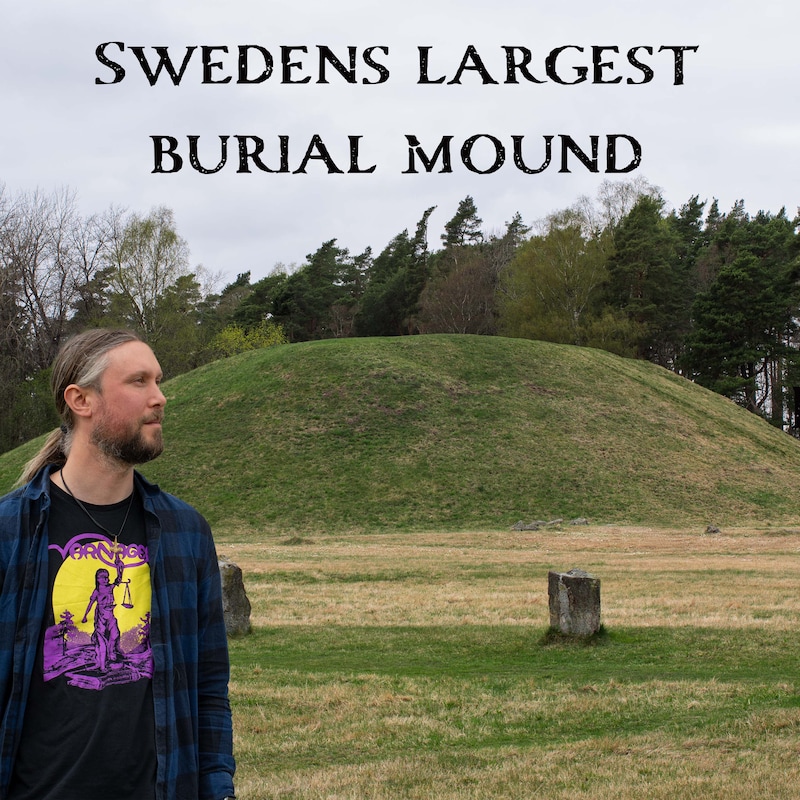
In this episode, we embark on a profound journey through the annals of Swedish history, as we explore Arnunshug, the nation's largest burial mound. Our discussions illuminate the significance of this site, not merely as a burial ground but as a locus of social, legal, and cultural interactions during the Viking Age. We delve into the architecture of the mound itself, noting its royal classification and the implications of its dimensions, which underscore its status within the burial hierarchy of the time. The episode also features a nuanced examination of the archaeological methodologies employed in studying such a site, emphasizing the necessity for rigorous academic training to avoid the pitfalls of misinterpretation prevalent in pseudoarchaeological discourses. Furthermore, we analyze the interplay between burial practices and societal structures, drawing connections between the physical remnants discovered at Arnunshug and the broader narrative of Viking Age life, including the roles of women in burial customs, which have often been overshadowed in historical accounts. Throughout this exploration, we aspire to enrich the listener's understanding of the complexities inherent in archaeological investigations and the rich tapestry of history they reveal.
You're listening to the Archaeology Podcast Network.
Speaker B:
Welcome to Digging Up Ancient Aliens.
Speaker B:
This is the podcast where we examine alternative history and ancient alien narratives in popular media.
Speaker B:
To these ideas hold water to an archaeologist.
Speaker B:
Are there better explanations out there?
Speaker B:
We are now on episode 82, and I am Frederick, your guide into the world of pseudoarchaeology.
Speaker B:
And we are back.
Speaker B:
I have been struggling with some health issues that seems to have gotten stuck in my lungs and throat.
Speaker B:
So if I sound a little bit hoarse, it's not that I've started a Motorhead cover band, it's just how things are at the moment.
Speaker B:
But today, we will get back into the show and I'm going to take you on a little treat.
Speaker B:
Instead of pseudo history, we will look at a real archaeological site here in Sweden.
Speaker B:
Why?
Speaker B:
Well, we sometimes need a break, I think.
Speaker B:
And this is also a good example of archaeology done both wrong and right.
Speaker B:
And we can also see the importance of, well, having an education in archaeology before or, well, coming up with theories.
Speaker B:
You will see an example of this later in the episode more clearly.
Speaker B:
So join me at Sweden's most enormous Greymount and explore this wondrous area together.
Speaker B:
This will also be a video on YouTube.
Speaker B:
It will drop next week, however.
Speaker B:
And also this was recorded on site, so we will have a bit of background noises from time to time.
Speaker B:
But it shouldn't be distracting, really.
Speaker B:
And I want to thank all of you who still support the show.
Speaker B:
You're really helping out producing this content, and I'm humbled and grateful that you're still here.
Speaker B:
And if you want to help out, I'll tell you how to do that and get some bonus stuff at the end of the episode.
Speaker B:
And remember that you find sources, resources and reading suggestions at our website, diggingupantanians.com there you can also find contact info if you notice any mistakes or have any suggestions.
Speaker B:
Now that we have finished our preparations, let's dig into the episode.
Speaker A:
Welcome to Arnunshug.
Speaker A:
So, I'm currently standing at a very important site for, well, Medieval and Viking Age Sweden.
Speaker A:
And we will explore this location together, see the history of the site, what it was used for and how it was used, and look at the different burial types we can discover here.
Speaker A:
And talk a little bit about Sweden's biggest burial mound.
Speaker A:
So where am I?
Speaker A:
As I said, I'm at a location today known as Arnunzhog, and it's a location that's about an hour's drive away from Stockholm, the capital of modern Sweden.
Speaker A:
The site is also close to the Modern city of Westeros.
Speaker A:
And this site has had several different functions throughout the ages.
Speaker A:
As we can see, it was clearly a site for burials, with several smaller mounds scattered across the field.
Speaker A:
And we also have several stone ships.
Speaker A:
But this was also a place where people came to hold things.
Speaker A:
And the medieval things were a place where you could go to settle legal matters, you could vote on legal questions and make your voice heard in front of your equals.
Speaker A:
And we know for sure that this site was used as a place of things, at least during the Middle Ages.
Speaker A:
ow this place was used in the:
Speaker A:
But why is this called Arnunsherg?
Speaker A:
Well, to explore this, we will have to move a little bit so we can see, well, the mound more clearly.
Speaker B:
The mound.
Speaker A:
So here we have Sweden's biggest burial mound.
Speaker A:
And as you can see, it's rather impressive.
Speaker A:
It's 9 meters tall and 36 meters wide.
Speaker A:
Now, this makes it a royal mound.
Speaker A:
And these tumuli in Swedish archaeology comes in three well, models.
Speaker A:
So to say we have an ordinary mound.
Speaker A:
It can be a small hill, not very fancy at all.
Speaker A:
Then we have the large mounds, Stubburh, the big mounds.
Speaker A:
And these are mounds that measures at least 20 meter in diameter.
Speaker A:
What we have beside us here in the back, you see four of them.
Speaker A:
There are royal tumuli, and these are tumuli that's larger than 30 meter in diameter.
Speaker A:
And it has not been excavated yet, or rather it has not been completely excavated yet.
Speaker A:
There's been some test excavations on the pile.
Speaker A:
And when they did this the last time, they did find a layer of charcoal.
Speaker A:
CE to the latest:
Speaker A:
Why the latest:
Speaker A:
Well, it's the latest date we have where we know that these type of mounds were constructed.
Speaker A:
Sure.
Speaker A:
Without further excavations, we can't precisely date this mound, unfortunately.
Speaker A:
And while it's never been excavated by archaeologists, there has been some, well, plundering attempts through the ages.
Speaker A:
plundering attempt was in the:
Speaker A:
So they started digging on top of it and they tried to be clever about this crime of the century.
Speaker A:
So they hid the dirt that they dug up in the trees that were growing on top of the mounds, trying to hide their little crime that way.
Speaker A:
Unfortunately, they, well, they gave up after a while and were discovered.
Speaker A:
And it seems as they didn't reach the burial of the mound, which means that it's most likely still there intact in the bottom of the mound.
Speaker A:
So most likely we have a cremation here at the bottom.
Speaker A:
And they most likely also cremated the body and the grave goods here at the site, and then went on to build up the mound with stones, maybe a stone fist even, and then piling up the stones, adding dirt and constructing these large mound.
Speaker A:
And this was not a simple effort.
Speaker A:
This was not for your common person type of burial.
Speaker A:
This would have taken resources from the society, meaning that the individual who lays there most likely had a great importance to the people that lived and operated here.
Speaker A:
And since this large mound has never been excavated, we don't know who actually lays there.
Speaker A:
The name Arnund is an idea that originally stems from a runestone that we can find here.
Speaker A:
And we will look at that one closer.
Speaker A:
But the name Arnunshug comes from the runestone itself.
Speaker A:
The idea was that, well, the runestone is for a guy named Arnold.
Speaker A:
So maybe it's that person who lays there and the name kind of stuck.
Speaker A:
And while this mound survived the plundering attempt, this is not the case for, well, other smaller mounds in the area.
Speaker A:
If we would go up on them, we will see a large crater in the center, indicating that these has already been plundered by people throughout the ages.
Speaker A:
But mounds are not the only burial type we find here at the site.
Speaker A:
Let's go and look at some other burial earlier excavations.
Speaker A:
So what aspect has excavations that's been done focused on?
Speaker A:
Well, mainly the usage of the site as a social construct.
Speaker A:
As I mentioned, this was a location where people gathered to make legal decisions, settling different disputes that's risen throughout the people living here.
Speaker A:
It was a social meeting place.
Speaker A:
And most of the excavations that's been done has focusing on this particular aspect.
Speaker A:
And what they have discovered so far is that the site is more complex than we previously thought.
Speaker A:
First of all, this place has been in use for far longer than we first imagined.
Speaker A:
And we also learned that the site was to a degree, fenced or off.
Speaker A:
We find these holes in the ground where big poles have been rammed down.
Speaker A:
And these post holes are a bit mysterious.
Speaker A:
We're not really sure what purpose they serve or they placed off just to fence off the area.
Speaker A:
More of a, well, symbolic way.
Speaker A:
You came here, you passed a post, then you entered a special sphere.
Speaker A:
Were they part of a rampart or a fortified wall or what was they for?
Speaker A:
We're not sure.
Speaker A:
Here it's part of A little mystery.
Speaker A:
There's no aliens, that's for sure.
Speaker A:
No aliens as usual.
Speaker A:
But again, it's a little mystery.
Speaker A:
And we're not really sure on what social level and we're not really sure what their function were.
Speaker A:
We just know that they exist.
Speaker A:
And for the people who gathered here, they served an important function in one way or another.
Speaker A:
Because it would have been a lot of work to put these posts up.
Speaker A:
Because these are not just small posts, a small fence.
Speaker A:
No, these are quite large post hole that we found.
Speaker A:
And what's interesting is that we have similar post hole in Gamna Uppsala again about an hour away by car from here.
Speaker A:
But yeah, most of the excavation so far has been focusing on this social idea, not the burials themselves.
Speaker A:
Now that is true for this particular site.
Speaker A:
When we go and look at the other things we can find here, we will discuss more about the other excavations that's taking part in locations close to this and see what we can learn about the burials themselves from that.
Speaker B:
Stone ships.
Speaker A:
So I'm currently in the center of one of the stone ships that we can find here at Arnenz Hoag.
Speaker A:
And today only four of them has been reconstructed.
Speaker A:
The fifth one is laying somewhere over there, still waiting to be reconstructed.
Speaker A:
At one point in the history of the site, someone came here and started to topple over the stones and in some cases even smashing them or dragging them off into a construction project of their own.
Speaker A:
And what's interesting here is that the stone ship I'm currently sitting in is one of the few examples in mainland Sweden where it actually has a twin.
Speaker A:
So you can see behind me we have stones continuing.
Speaker A:
It's part of another stone ship.
Speaker A:
And we can see this more clearly if we stand on the top of the burial mound behind us.
Speaker A:
So the stone ship I'm currently sitting by, the mast stone of probably this was a marker for where the mast would be in the ship is.
Speaker A:
This ship is 51 meter long and 25 meter wide.
Speaker A:
The one we see there in the background is 52 meter long and 16 meter wide.
Speaker A:
And most likely these were constructed during the Viking age.
Speaker A:
And these stone ships have not really been excavated earlier.
Speaker A:
Closer to the mound there is.
Speaker A:
There seems to have been a grave that was found during a very old excavation and restoration of the sites.
Speaker A:
But these seem to date to somewhere in the Viking age.
Speaker A:
It's important to remember, however, that stone ships has been used in Sweden for a long time.
Speaker A:
The first time you start to see them is during the Bronze Age.
Speaker A:
But in a moment we will look at how we can tell the different stone ships apart.
Speaker A:
The ones constructed during the Wendel and Viking period and those constructed during the Bronze Age.
Speaker A:
Now this has not been excavated, but other burials in the area has been excavated.
Speaker A:
And again, this would not be a burial for a person, again in the lower classes in the society.
Speaker A:
It would be someone in the upper part of the society.
Speaker A:
As I mentioned, there's been other burial locations in this general area and a few of them actually has been excavated.
Speaker A:
And when we talk about burial burials, we tend to associate the richer or more impressive burials with men for some reason.
Speaker A:
Well, maybe because it's been a bit of a male dominated profession, archaeology in general, but there's a location called Tuna quite close by and it also have this very massive burial field.
Speaker A:
And what's interesting there is that we have found several ship graves where people have been buried in actual ships.
Speaker A:
And what's more interesting, of the eight ship graves that's been found in Tuna, all of them contained a female burial.
Speaker A:
And these are among the richest burials with gold that we found in Sweden so far.
Speaker A:
In total, they found over 300 kilos of gold in these burials.
Speaker A:
The riches of these burials was a chamber tomb, again containing a woman.
Speaker A:
And what's impressive is that we found a lot of gold there.
Speaker A:
And what's more interesting is that all the gold that we found in this grave seems to have been imported from Denmark.
Speaker A:
And among the golden objects that we found was two arm rings, large neck ring, there's some sewing objects and spoons, pearls, and a lot of very fine and valuable things.
Speaker A:
The woman must have been an important person or part of an important family.
Speaker A:
CE to around:
Speaker A:
So it was more or less in use simultaneously as the field we're currently sitting in.
Speaker A:
And who knows who was buried here.
Speaker A:
It can be a man, it can be a woman.
Speaker A:
What we can say for sure at least, is that the person had a very important position within the Vandal or Viking society.
Speaker B:
How to identify a stone ship?
Speaker A:
As I mentioned before, stone.
Speaker A:
Stone ships has been used since the Bronze Age and during the Viking Age in Sweden.
Speaker A:
But how can we look at a stone ship and try to figure out from what period it belongs to?
Speaker A:
Well, according to a doctoral thesis by Joachim Valin, we actually don't have to excavate a stone ship to know from what period it belongs to.
Speaker A:
We can actually look at at how it's constructed and the shape of it.
Speaker A:
By doing this, we can somewhat determine from what period the stone ship belongs to.
Speaker A:
Now, Verlin's thesis is mostly focused on the island of Gotland that is very rich in stone ships and burials in general.
Speaker A:
But his thesis can be applied to mainland constructions as well.
Speaker A:
And the main idea here is that we can look at how the ship is constructed.
Speaker A:
As we see, we have these larger gaps between each of the stones.
Speaker A:
And this would indicate that this is a ship that was constructed during the later Iron Age or the Viking period here in Sweden.
Speaker A:
If this would have been a bronze ship, it would have looked a bit different, not necessarily smaller, but the stones would in most cases not be as big as we see here.
Speaker A:
Now, this is a bit of exception because this is a very big stone ship.
Speaker A:
But the Bronze Age ships are built much closer.
Speaker A:
They are more resembling of an actual boat, in a sense.
Speaker A:
Here we have this gap between each stones.
Speaker A:
We don't see them in the Bronze Age stone ships.
Speaker A:
The stones are more compact and in a sense, really more resembling of a ship in that sense.
Speaker A:
If we would put this on the lake, it would definitely sink.
Speaker A:
You don't really get that feeling when you're inside a bronze stone ship.
Speaker A:
And what's interesting is that many of these stone ships that we do find are part of a social meeting place, social construct, in a sense, even during the Bronze Age.
Speaker A:
Joachim Walin even puts the Bronze Age ships into a larger social complex.
Speaker A:
A construct where people use these places to meet, to greet, to maybe talk, important things, not necessarily as places of law that we see during the Viking Age and later, but as a place to gather.
Speaker A:
They are associated with different fortifications.
Speaker A:
And the fortifications we also see here on mainland Sweden, the stone ships are not always, but many times they can be found close by an old hill fort.
Speaker A:
An example of this is, for example, the location of Runza Runsa is a location in Sweden.
Speaker A:
We have the.
Speaker A:
Well, second largest stone ship in Sweden.
Speaker A:
And just right by the stone ship, we also have this hill fortification that during the Viking Age, seems to have been a hall for important person, most likely.
Speaker A:
But what we do learn about these burial places is that they were not a place where you just came once a year to, well, greet your ancestors or dead relative.
Speaker A:
They seem to be part of a larger social construct that follows through history.
Speaker A:
As I mentioned, this was a place of things up into the Middle Ages.
Speaker A:
And we have even more evidence of this being a place of law and gathering.
Speaker A:
But to sum up, we don't really have to excavate a stone ship to see from what period it belongs to.
Speaker A:
We can look at the gaps in the stones and the form of the ship itself to place it in a specific period.
Speaker A:
And this is more easily done with the Bronze Age ship, especially on Gotland.
Speaker A:
Valine has done an amazing job categorizing each of the stone ships from the Bronze Age and put them in a context so we can actually look at them and see from what period they fit into.
Speaker B:
The royal road.
Speaker A:
So now we are at a different part of the site here at Arnunshoag, close to modern Westeros in Sweden.
Speaker A:
And what's interesting with these stones that we can see here behind me is that, well, they are part of a very old and interesting Swedish tradition.
Speaker A:
You see, these stones stands right by.
Speaker A:
What we see here is an old road.
Speaker A:
And it's not just any road.
Speaker A:
It's called the Erics Road.
Speaker A:
And it was part of a ritual procession that was supposedly taking part of newly elected kings in the medieval Swedish society.
Speaker A:
The idea was that when a king was elected, they would participate in this journey, this set road that took them through what was then the kingdom of Sweden.
Speaker A:
And it starts where, well, the election would have been taking place at a site called Mura Steenar, or the Stones of Mura.
Speaker A:
And while there is a city in Sweden called Mura, the association is not really there.
Speaker A:
This location is located just south of Uppsala.
Speaker A:
So this road would well, take them from Murastenar, through Sadamaland, throughout Kolmorden, to Vernen, up to Vettten.
Speaker A:
These are two big lakes in Sweden, and up north again, and then come here to Westeros, back to Morastenar, where the king would take his place on the throne, more or less.
Speaker A:
And we have a few examples of kings actually participating in this.
Speaker A:
This is not just legend or myth.
Speaker A:
They actually seem to have participated in this journey, a few of them at least.
Speaker A:
And the whole road would not be, well, have these erected stones along it.
Speaker A:
Now, this is a very special place in that sense.
Speaker A:
It's where we actually know that there is this stone standing along the route.
Speaker A:
We can see that it goes straight forward.
Speaker A:
And a bit further ahead, we will encounter, finally, the Runestone I mentioned in the beginning.
Speaker A:
And these are connected to this runestone.
Speaker A:
Actually, they are not set up as part of some sort of decoration for this royal route.
Speaker A:
No, these are to show the importance of the family that erected that runestone.
Speaker A:
They are even mentioned on the stone itself.
Speaker A:
But you can imagine traveling here on the royal road, seeing these stones and then seeing the runestone, reading it, reading the importance of the stones and the family who put all of this work in to erect these stones to honor their dead relative.
Speaker A:
Then at this massive grave field with this large royal stone, ships and this gigantic burial mound.
Speaker A:
And you can just imagine how even a king might feel that this is a place of importance and reverence and the people living here are actually people he wants to have on his side side when he rules Sweden.
Speaker A:
Now unfortunately, these stones has not been standing here without people messing with them since the Middle Ages.
Speaker A:
Now these were tear down at one point or another, but recently they were put back in their original places.
Speaker A:
What we learned then is that if we look down the line, we're noticing that the Runestone is actually about one and a half meter in front of the stones.
Speaker A:
And this was not how it would have looked back during the Middle Ages.
Speaker A:
No, this would have been a straight fine line.
Speaker A:
ted earlier in history in the:
Speaker A:
And when they erected it, they didn't put it in its original place because they didn't have the understanding of archaeology and excavation to figure out where it really belonged.
Speaker A:
And again, here's the importance of archaeology.
Speaker A:
We can tell things through context by looking in the ground at the dirt itself and figure out where things most likely were once upon a time.
Speaker A:
This is not something amateurs or armchair explorers can do, like Kimi Corsetti and others.
Speaker A:
This takes a lot of training and a keen eye to figure this out.
Speaker A:
And mistakes have happened.
Speaker A:
That's why reconstructions are not always a good thing.
Speaker A:
That's why excavation is not always something we must do right now.
Speaker A:
Right then it's something that actually most of the time is best left for a later occasion when we know more, when we have better technology, a better understanding of the site or how the geology of the site works, or there's a lot of things that go in here that most people don't really think about.
Speaker A:
With archaeology.
Speaker A:
We mostly think about the treasure, the riches, the artwork that we can find on the stones, not necessarily about the ground itself.
Speaker A:
That can actually tell us a lot of things.
Speaker A:
As I mentioned, the post holes that we found here, again, it's just a bit dark in most cases, a bit darker dirt in the ground.
Speaker A:
And these are very easy to miss if you haven't been in the field and actually looked at them several, several time and had someone there to actually guide you on what you are doing.
Speaker A:
And this is why, for example, metal detectors is something archaeologists isn't really impressed with because yeah, you find treasure maybe or a cool sword or a cool spear or arrowheads, but you destroyed the site.
Speaker A:
There's a lot more that we can learn about not only the object, but how it came there.
Speaker A:
Was it part of something bigger?
Speaker A:
Was it a planned burial?
Speaker A:
Or was it just dropped by someone out on a hike somewhere or.
Speaker A:
There's a lot of things that get lost when amateurs do things on their own.
Speaker A:
There's not to say that amateur has a place in archaeology.
Speaker A:
Excavations are costly.
Speaker A:
And I mean, most sites are happy to have people helping out if you ask.
Speaker A:
Not necessarily in all places, but if you talk with people, they're more than happy to have you on site, showing you around.
Speaker A:
And maybe you can help out.
Speaker A:
There's even summer courses or summer programs where you can participate in excavations under supervision by someone trained in the field.
Speaker A:
That can help you get a better understanding on how archaeology works and what we're really looking for.
Speaker A:
It's not just treasures and boulders rolling down from somewhere that we have to run away from.
Speaker A:
Poison arrows.
Speaker A:
It's a part of it.
Speaker A:
It's a part of it, but it's not all of it.
Speaker A:
But how about we go and look a bit closer on the Runestone itself?
Speaker B:
The Runestone.
Speaker A:
So finally we see the majestic runestone that I've talked a bit about already, or at least mention its existence.
Speaker A:
As we see it's rather special in several ways.
Speaker A:
And it's also here we get the name of the site or Anun's Hug.
Speaker A:
So first of all, we're noticing something rather interesting.
Speaker A:
The stone does not really have the classical serpent sling that goes around it.
Speaker A:
Instead, we have sort of a border that goes up into something looking like a knot up there and then comes down here.
Speaker A:
And the text is pretty straightforward.
Speaker A:
It says Folkvieth raised all of these stones after his son Hedon, Anund's brother Vred, carved these runes.
Speaker A:
And Folkvid is an interesting character in a sense.
Speaker A:
Anund and Hedden is pretty common name in Sweden, but Folkvid, it's a very rare name in general.
Speaker A:
And we don't really have other runestones mentioning these names at all.
Speaker A:
There's an idea that it might be a name that's imported.
Speaker A:
The person immigrated to Sweden from somewhere else.
Speaker A:
Or it's just very rare for one reason or another.
Speaker A:
Same with Vrijed.
Speaker A:
We don't really find that name often on runestones either.
Speaker A:
But Vriad seems to have been a skillful carver.
Speaker A:
As we see.
Speaker A:
The runes are very legible.
Speaker A:
They are nicely done.
Speaker A:
Since we miss the serpent sling that goes around, we can't really use that to date the stone himself.
Speaker A:
But Folkfield, he was an important character and we know him from history.
Speaker A:
He, for example, sponsored this road that this stone is associated with, the royal road that the Eric's road that the king when elected about the set out and travel upon in a procession.
Speaker A:
But what's interesting with this stone is the artwork itself.
Speaker A:
It must have meant something to the people during the Viking age when this runestone was carved.
Speaker A:
But today it is again one of those little mysteries that we find.
Speaker A:
There's suggestions that these symbols a man and a woman entangled in the center together.
Speaker A:
But who knows what do you see on the stone?
Speaker A:
The artwork must have been quite self explanatory to the people during the Viking Age and even maybe later in history.
Speaker A:
Why it's a woman?
Speaker A:
Well, you kind of see female forms up here.
Speaker A:
You see some male forms down here and they are entangled in these is not in the middle.
Speaker A:
But yeah, this is from where we get the name of the site, Anand.
Speaker A:
And it's most likely not Anand, that's located in the mound that we see straight behind us.
Speaker A:
But it shows that these people were part of a very prominent and important family in the early Swedish society.
Speaker A:
And it's a beautiful stone and you can just stand here and look at the artwork and try to figure it out yourself, what it might mean.
Speaker A:
Is it animals, is it people, is it a mixture of both?
Speaker A:
Or is it something else this is trying to symbolize.
Speaker A:
And here is where mysteries can come from in archaeology, that the imagery has a lot of meaning to the people making it.
Speaker A:
But the stories and meaning behind these images get lost through history because they weren't written down or the people who knew about them died out or they lost their importance and the sources that did talk about this got lost that way.
Speaker A:
But it's a beautiful granite stone.
Speaker A:
And as I mentioned before, this was toppled over.
Speaker A:
And in the early days when it was put back up, it was set about one and a half meter in front of its original location.
Speaker A:
We can see maybe partially if you look in that direction, we can clearly see that this stone is very much out of place.
Speaker A:
But it's a beautiful stone.
Speaker A:
And even if its readable message is very straightforward, very clear, it's who it was from, who it's dedicated to, who other relatives people might know to identify the people.
Speaker A:
Anon seems to have been an important son to folk with therefore he got a mention.
Speaker A:
And Vriad the carver, of course artists need to sign his work.
Speaker A:
But yeah, it's a marvelous stone and gives us and it gives us a chance to Actually connect with a few of the people who lived and operated here and who took pride in their community.
Speaker A:
Because Volkvieth, he did sponsor this particular part of the road.
Speaker A:
And it's marvelous construction in the road itself.
Speaker A:
It's heavily packed sand, there's stones.
Speaker A:
It's very fine work.
Speaker A:
And a lot of money, energy, labor has gone into making this a very special location.
Speaker A:
We have the connection to ancestry behind there, and we have connection to those who lived there and then.
Speaker A:
And he must have taken pride in being part of this society, even if he is an immigrant.
Speaker A:
Again, it's unclear where folk with the name originates from or what it really means to us today, according to the sources I did read before coming here.
Speaker A:
But yeah, it's a fascinating stone and again, makes you connect with history in a different way when you can actually read stuff.
Speaker A:
Something about those who lived and visited the thing here, who most likely stood and spoke to their fellow people attending the thing, deciding on legal matters.
Speaker A:
And yeah, it's interesting.
Speaker A:
Right.
Speaker A:
So let me know what you think this means.
Speaker A:
What could it be?
Speaker A:
Do you have any ideas?
Speaker A:
All suggestions are good suggestions at this point, but how about we go and see if we can find something more to discuss and look at at this marvelous site, Bronze Age settlements.
Speaker A:
So we are at another location here at Arnenshoe.
Speaker A:
And well, right now you see a lot of trees behind me.
Speaker A:
But if we would pass among them, we will come to a place called Jute Mir, or the Danish fern.
Speaker A:
Jute is an old Swedish name for people coming from Denmark and especially one of the islands in Denmark.
Speaker A:
But it's later in history became kind of a word that was used for all Danish people.
Speaker A:
So Jutar is Danes, more or less.
Speaker A:
Today we will call them Dunskaer Danes.
Speaker A:
But again, this is a swampland kind of situation.
Speaker A:
This name might originate from when the Danish people invaded Sweden and the Swedish king Gustavoza, according to legends, were supposed to have pushed Danish soldier down into this swampland where they most likely drowned, according to that story.
Speaker A:
Now, later excavations has not been able to confirm that story.
Speaker A:
no weaponry or Items from the:
Speaker A:
But they did uncover something else.
Speaker A:
You see, about 3,500 years ago, this would have been a much different area.
Speaker A:
We wouldn't see trees here behind me, but we would actually see water.
Speaker A:
A body of water was here 3,500 years ago.
Speaker A:
And what's interesting with that is that they found evidence of construction here.
Speaker A:
As I mentioned before, there is or was a Bronze Age settlement at this location.
Speaker A:
Long before Arnunsho and the mounds were constructed, people lived and operated here.
Speaker A:
And they seem to have built a location out of in the water with wooden pillars, and it can be a sort of a plateau.
Speaker A:
If they lived out on the lake is a bit unclear, but most likely it was used.
Speaker A:
In some cases, these places was used as ritual locations where you gathered to perform different rites or important rituals.
Speaker A:
And in some cases people actually lived out in the lake because it was more secure.
Speaker A:
But it's a place where at least we know that they gathered.
Speaker A:
And the site must have been important or been a very good spot to both live and have their rituals performed at, because building this wooden construction that we did find out in the lake must have taken a lot of time, energy and resources from the society.
Speaker A:
But it really shows how this place has again and again throughout history been a place of importance for people living, hunting and gathering here.
Speaker A:
It's not just in later time, medieval time or even modern times.
Speaker A:
It's already 3,500 years ago.
Speaker A:
The history of this site started.
Speaker B:
The labyrinth.
Speaker A:
We have wandered through a landscape scattered with history almost every part of the way.
Speaker A:
More burial mounds, more remains from both modern history and ancient history.
Speaker A:
But why are we at this particular location?
Speaker A:
It doesn't look much for the eye when you look at it, but if you look closely and a bit further away, you will notice that we can see a pattern here.
Speaker A:
What we're looking at is really one of the few prehistoric labyrinth in Sweden.
Speaker A:
And this is in connection with another field with burials from the late Iron Age.
Speaker A:
But most of these labyrinths can be found in coastal situation, so close to the coast.
Speaker A:
And almost half of the labyrinth we have preserved is located in actually the north of Sweden, more or less always close to some sort of water and especially fishing locations.
Speaker A:
Now, most of these labyrinths that we have preserved, or troja boria, if you're in the south of Sweden, also a bit of Gotland, are rather not modern, but they are medieval and as I mentioned, they are close to fishing villages.
Speaker A:
This is particularly true on Gotland, where we find quite a lot of these troja boriar in close proximity to old fishing villages similar in the north of Sweden.
Speaker A:
So the idea is that these more recent labyrinth that we have are connected to some sort of good luck ritual.
Speaker A:
So when you're about to go out fishing, you take a little trip through the labyrinth and hopefully you gain luck on your fishing expedition.
Speaker A:
Now, this is a theory.
Speaker A:
It's not 100% certain that this is the case because, well, the meaning of these labyrinth are not preserved to our day.
Speaker A:
Even from the medieval times, it's been lost to history what their actual use was.
Speaker A:
But what makes this particular Troiabori interesting is that it's from pre.
Speaker A:
It's pre medieval, it's from the Iron Age and it makes it a lot more unclear what it was for.
Speaker A:
They are quite narrow, they are very symmetrical.
Speaker A:
This particular Troiaborg or labyrinth is constructed out of about 2,000 to 3,000 stones carefully placed to form this pattern.
Speaker A:
What it was for, it's a bit unclear.
Speaker A:
One theory is that it's connected to some sort of spring ritual.
Speaker A:
And maybe according to this theory, you put a woman in the center of the labyrinth and then the boys try to get to her, maybe acting out some sort of play that's been lost.
Speaker A:
Or maybe whoever made it through the labyrinth without touching any of the stones.
Speaker A:
The passages are rather small, so it is quite tricky to get through here without accidentally touching the stones that make up this structure.
Speaker A:
So maybe if you made it through, you got a girl or it was the other way around.
Speaker A:
We are not really sure.
Speaker A:
It seems to be ritual.
Speaker A:
I know it's a bit of a joke that everything we can't explain in archaeology is ritual, but in this case it feels likely.
Speaker A:
The pre medieval labyrinth that we have still intact are almost always connected to burial fields.
Speaker A:
This is the case here too.
Speaker A:
It's not the same with the fishing idea, but maybe they tie into a much older tradition that's been lost to history.
Speaker A:
But it can be fun to walk through them trying to see if you can figure out the puzzle and you can imagine what they were used for.
Speaker A:
In that sense, it could be a connection to the Greek tales.
Speaker A:
Maybe there's more Scandinavian version of it that's unfortunately gotten lost.
Speaker A:
But it's interesting that we have this connection between the late Iron Age and the Medieval Age.
Speaker A:
And they seem to be used in completely different way, but they have a similar structure.
Speaker A:
And while most of the older labyrinths that we have are connected to the Iron Age, there are also examples of the labyrinth from the Bronze Age, the Scandinavian Bronze Age, making these a very old tradition.
Speaker A:
And they are more symmetrical in their patterns.
Speaker A:
They are not, as we would imagine, a labyrinth where you have dead ends.
Speaker A:
They are more symmetrical.
Speaker A:
You follow the line and you get to the end.
Speaker A:
Another theory is that they were used to tell a story.
Speaker A:
You follow the path through the story and you get to the end where the story of course has its finale.
Speaker A:
Or maybe it's Just used to as entertainment.
Speaker A:
A game.
Speaker A:
Again, the rules of the game is lost.
Speaker A:
But you can wonder sometimes, does everything have to have a religious connotation or.
Speaker A:
Or could they just be used for play?
Speaker A:
A place where children or young adults can go and have fun for a while.
Speaker A:
We often forget this part of our history, that it's not always survival and starvation or horrors war.
Speaker A:
There's also this aspect of fun.
Speaker A:
Board games is something we find from very early in history.
Speaker A:
The earliest game I think is about 5,000 years old.
Speaker A:
We humans have always had the need for entertainment and maybe these are a connection to this entertainment.
Speaker A:
We have to remember that while the burial sites were part of mourning and ritualistic and religion, it was also, as I mentioned several times throughout this video, a place for social gatherings, a place where you met, you participate in a social construct.
Speaker A:
And maybe these are part of the fun part of the social construct.
Speaker A:
It's not always serious and laws or crimes or punishment.
Speaker A:
It's also a place where you can interact and be playful for a little bit.
Speaker A:
So if you have the opportunity to visit one of these Troja Boreari, I highly recommend walking through them.
Speaker A:
Now these older ones maybe you can be very careful about.
Speaker A:
Now this one has a replica located just right side on a so where you can let your kids or yourself run around and play as much as you want.
Speaker A:
But remember, when visiting an archaeological site, always be careful.
Speaker A:
And this is where I'm going to say farewell for this time.
Speaker A:
I hope to see you again and I hope that you enjoyed this content and I hope to bring you another archaeological tour quite shortly.
Speaker B:
And that's all for this time.
Speaker B:
Please spread the word by leaving a positive review on platforms like itunes, Spotify or even better to one of your friends.
Speaker B:
Recommend an episode or two.
Speaker B:
For more information about me and my podcast, check out diggingupancientaliens.com and you will also find some sources over at that website and some reading recommendations.
Speaker B:
If you want to know more about Arnenshug and if you want to support the show, you can do that on patreon.com diggingupancientaliens or if you want another option than Patreon there's a members portal@ diggingupancientaliens.com support.
Speaker B:
Signing up will give you early episodes that are ads free and you will also get bonus content and extended episode.
Speaker B:
And if you want to contact me, it can be done through social media or you can send an email.
Speaker B:
My email is at the website and this show is created with the support of the Archaeology Podcast network you can find a lot of great shows like the CRM podcast or Dr.
Speaker B:
Kingella's pseudoarchaeology podcast if you want more of this type of content.
Speaker B:
And the producer of the show is Ashley Airey and I, Frederick Trusenham, wrote, edited and mastered the episode you're listening to.
Speaker B:
Sandra Martolor created the intro music, and our outro is by the amazing band called Tralsgru, who sings their song folj.
Speaker B:
Links to both of these artists will be found in the show notes.