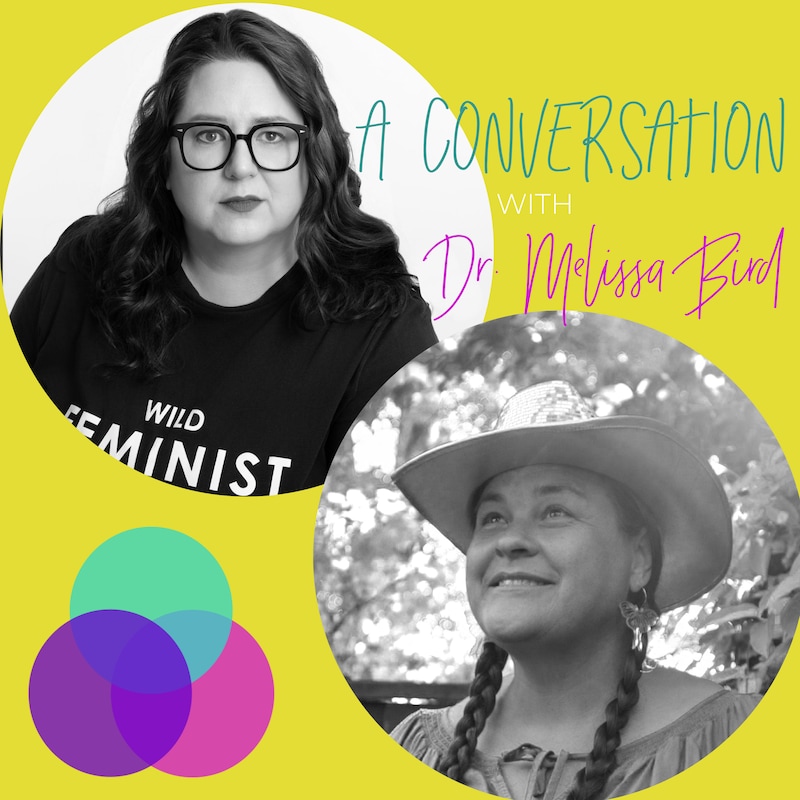
What does it look like when someone who actually lives the consequences of policy decides to run for office?
In this episode, I’m joined by Dr. Melissa Bird — a social worker, mother, small business owner, and proud descendant of the Shivwits Band of Paiutes who is running for Congress in Oregon’s 4th District. We talk about the exact moment she knew she couldn’t sit on the sidelines anymore, how lived experience shapes leadership, and why grassroots, community-rooted politics matter now more than ever.
This conversation isn’t about polish or political theater. It’s about intuition, accountability, and what happens when everyday people decide to challenge systems that were never built for them — or for most of us.
Podcast Episode Summary
In this episode, Michelle Lasley sits down with Dr. Melissa Bird, a PhD-trained social worker, former policy strategist, and first-time congressional candidate, to explore what it truly means to run toward public service rather than away from it.
Dr. Bird shares the deeply personal story behind her decision to run for Congress — from yelling at a virtual town hall while sitting on her couch, to receiving unmistakable intuitive nudges that it was her turn to step forward. Drawing on her experience as a lay preacher, wife of a veteran, and survivor of multiple broken systems, she explains why professional politicians often fail to represent the realities of working families, rural communities, veterans, Indigenous people, and those living at the intersections of identity and harm.
Together, Michelle and Dr. Bird unpack big questions about democracy, closed primaries, institutional power, and what it looks like to build a people-powered campaign inside a deeply entrenched political system. They talk candidly about healthcare access, reproductive justice, land stewardship, rural economies, and why listening — really listening — has become a radical act in modern politics.
This episode is an invitation to imagine a different kind of leadership: one rooted in lived experience, collective care, and the belief that democracy doesn’t have to crumble to evolve. If you’ve ever felt disconnected from politics but deeply impacted by it, this conversation is for you.
Quotables
“ … we were just talking in the campaign yesterday, like you can't just be against fascism. You have to be for something. And what I am for is introducing bills that help people survive in this economy.”
“So it's not just about fighting policies that attack us. It's also about introducing bills and using the tools of Congress to consistently and constantly have a dialogue about where we want CD4 to be improving, using the rural New Deal as a framework to improve economies in rural areas, thinking about our, our farmers and our ranchers and the forests and how are we balancing, how are we not extracting from the land, but really creating bills and policies that nurture the land while we are still keeping industry going.”
“I think that we need to bring our congressional leaders to the people so that the people know that they have access to their leaders.”
“Progressives in politics keep saying We need more women. We need more people of color. We need more LGBTQ plus folks. // We need more people who are concerned about the environment and sustainability We need. We need, but not you, Missy Bird, because you. You don't quite fit.”
“I am Native, I am bisexual. I am a woman. I am a Christian, and also a pagan. I am very deeply concerned about this planet and how we are caring for it.”
For more information about Michelle, Balance Shared, events, and projects, please visit www.michellelasley.com.
Mentioned in this episode:
Postcast Post Roll
Thanks for listening to Balance Shared.
If this conversation resonated with you, I invite you to keep going — you can find essays, reflections, and deeper dives into these themes on my Substack. That’s where I write about power, parenting, policy, and what it means to live inside systems we didn’t choose — while still choosing ourselves.
You can also support the show by subscribing, sharing this episode, or leaving a review — it helps these stories reach the people who need them most.
Until next time — take care of yourself, and take care of each other, especially the women in your lives. Because when we heal women, we heal the world.
Dr. Melissa Bird: Thank you so much for having me, Michelle. How are you?
Michelle Lasley: Doing all right. How are you?
Dr. Melissa Bird: I'm great.
Michelle Lasley: Listeners, it's been a minute since I've done a, a real live podcast and I was inspired to do so because my friend Dr. Bird, is running for Congress and I've interviewed a handful of elected officials in the duration of my podcast, and I thought, why not?
Let's have a conversation about why you're running. So thanks for saying yes.
Dr. Melissa Bird: Thanks for doing it again. Thanks for resurrecting your podcast.
Michelle Lasley: Yeah, you're welcome. I, uh, in the interim of not doing the podcast, I got into community organizing full on, and we, talk about a lot of different things and in our leadership development of community organizing, and one of the things we talk about is a jargony term called politicization or radicalization you might have heard.
o I'm curious, what were you [:
Dr. Melissa Bird: First of all, I've always been political. So like, I mean, even when I was in high school, I was very political. So it's been in my blood. I was raised by a political grandmother and a political aunt who were very involved in the League of Women Voters and the state legislature and all that stuff in Utah.
So, I've always been very political. And I've always wanted to run for office when I was little at preschool aged. Um, when my friends were like playing teachers and nurses and you know, the things we did in the eighties and the seventies. I wanted to be the president and so people would come to my Oval office and,
own hall of my opponent, and [:
So you get randomly robo dialed to be on the phone. And I'm screaming into my phone that isn't true. And I know this 'cause I'm married to a veteran and we've tried to use the VA home loan several times and have never been able to successfully buy a home using the VA home loan. And so I'm screaming into the phone and she continues on in the conversation and I'm sitting on my couch and I'm like, someone needs to run against this woman.
like, she, someone needs to [:
And I was like no, I do not. Nope, I am. I've got this business. I'm still trying to start a farm, right? Like I'm still trying to find property for the mermaids garden. No, no, no, no, no. And then I get off. Wait, let's just pause there for a
Michelle Lasley: second. Yeah. So, um, so I've known you for almost six years now.
Dr. Melissa Bird: Yeah.
Michelle Lasley: Which is just wild.
Dr. Melissa Bird: Yeah.
Michelle Lasley: And you. Walk the line between witchy and Woo and Christianity and being involved and a businesswoman, and a mother and a wife. You have a lot of hats and a lot of roles and the reason I led with the witchy piece is because to me that that's very easily like, um, linked to spirit intuition, et cetera, right?
Yep. So you got a clear.
ot a clear, clear, intuitive [:
I teach it. I, you know, I talk about intuitive leadership, like this is who I am as a human being. And it kept coming back. And I even talked to my husband about it. I was like, I was like, what would you think if I told you I wanted to run for Congress? And he was like, whatever. Of course you do.
r bodies and themselves, and [:
And I've been working on that for five, almost six years. And, um, there's a lot of things at the federal level that need to change in order for people to be able to do that. Um, and I was, you know, thinking about reproductive health is obviously a big issue. Reproductive justice is a huge issue for me.
I used to be the lobbyist for Planned Parenthood of Utah. Bodily autonomy is critical, I think, to our families, being able to not just survive, but to thrive. And um, about three weeks after that town hall, I was on a Zoom with a friend of mine in Portland and he said to me, have you ever thought about running for Congress randomly out of nowhere?
nd he is a political person. [:
And I'm like, oh yeah, there's plenty. Which is why I've never run for office before. You know, like, and then the election happened, so this is before the election and, uh, like summer fallish. Of 24. So then the election happens, and I'm still like figuring it all out and thinking about it. And then January happened and my husband's job was rescinded by order of the president On January 22nd, he'd find he's a veteran.
et, and I reached out to our [:
And, um, that continued to happen over and over and over again. And I don't know if you remember that first 60 days of the administration, but it was, it was really rough and I would reach out to my congressional delegation and was met very unsatisfactorily with a response from all of them, not just my opponent.
And it just solidified for me that we have got to have people in office, Michelle, who know what it is like to live under this administration. Who know what it's like to struggle with our kids who are, I have teenagers. They're like, what kind of world are you leaving us? And I'm like, I don't know.
all of these, I mean, like, [:
Like, and I grew up in Utah, so like, and my ancestral homeland is in, is in Zions and the Grand Canyon. Like, I just, I said to my husband, I was like, I have to go hike the Grand Canyon. I have to go in the canyon like. Before they destroy it. Like it was just so visceral to me and I just kept asking more and more people, what is your experience with our congressional delegation?
Have you reached out to them? Have you been met with a response? And they also had had the same experience. And so we put together a campaign, launched the pact on July 1st, announced my candidacy on August 23rd, and the ball's been rolling ever since.
Michelle Lasley: That's amazing. There's a lot of directions we could go.
So you are running against what I'm gonna call an institutional Democrat.
Dr. Melissa Bird: Yep.
Marianne Williamson. And so [:
For example, one of many things that she does, speaks to and she can't get a debate, right? Because she's so, however I don't actually fully understand how those mechanations work, but how it the rudimentary under my rudimentary understanding is because she's not an institutional Democrat. She doesn't get invited to be able to be on the stage.
So how are you getting your foothold in so you can have some recognition where, where it matters.
Dr. Melissa Bird: There's a lot of differences between me and her and one of them.
Michelle Lasley: Yeah, for sure.
Dr. Melissa Bird: That I, I very deeply understand the political process, 'cause I worked in it for so long.
Michelle Lasley: Mm-hmm.
Dr. Melissa Bird: Um, I think that the way the, I have built.
what you do when you run for [:
Do I also know how to play this game? Absolutely. Do. I want people to understand that it, even if you're giving $10 a month for the next five months, that actually sustains this campaign in ways that people can't possibly fathom. So I, the way I'm getting my foothold is that I am running, uh, you know, I am in community all the time um, I've spent a lot of time on the coast.
This district is huge. It goes from the border of California all the way up the coast to the top of Lincoln County, and then all of Benton County and all of Lane County. And it's a giant district and I've spent a lot of time in the district, particularly in the rural areas of the district, because I grew up in a rural town.
paign, is the erosion of the [:
And so what we're watching is. Our tourist economy on the coast is really taking a huge hit, and we need someone who under, I, like I, I spend a lot of time in Eugene. I spend a lot of time here in Corvallis, but I'm looking at the outlining areas of this district and asking questions like, what do you need from your congressional leaders?
shed Democrat. And what I am [:
Who are like, enough is enough. We can't afford any longer to have professional politicians representing us because they are, they've been doing this for so long, decades. That they don't know what it's like to live in this real world, but they're making policy decisions that directly impact us every single day.
Michelle Lasley: And then saying things like, this VA house loan benefit is good for everybody. Yeah. Everybody. Yeah. Yeah. So out of, we're comparable in age, right? So like, you and I have both heard about out of touch politicians our entire lives, likely. Sure. What would it look like if we had more people who, like you, were directly impacted by the systems that are quote unquote, supposed to support us actually in elected office.
What do you think the, what kind of decisions would be being made?
Dr. Melissa Bird: [:
I would absolutely day one introduce Articles of impeachment against the president. Like that. I've signed a com, a commitment to that. I'm part of a group called Citizen Impeachment. We, people like me would be using the tools of Congress to push forward policies that are actually for something.
ple survive in this economy. [:
me up with it literally on in:
So it's not just about fighting policies that attack us. It's also about introducing bills and using the tools of Congress to consistently and constantly have a dialogue about where we want CD4 to be improving, using the rural New Deal as a framework to improve economies in rural areas, thinking about our, our farmers and our ranchers and the forests and how are we balancing, how are we not extracting from the land, but really creating bills and policies that nurture the land while we are still keeping industry going.
Michelle Lasley: Mm-hmm.
Dr. Melissa Bird: And there is a way to do that.
e Lasley: Describe to me the [:
Dr. Melissa Bird: Uh, it would look like going to communities and asking them what policies would be beneficial for them.
overnment? And so it's about [:
Not just mentor them, but nurture them to be super engaged, not just in my campaign, but in their communities as a whole. And what has been really remarkable is that people are like, wait a minute, what are you, why are you calling me? You know, I'm I call voters every day, and I've talked to literally thousands of people since I started this, and they're all so surprised that a candidate is calling them.
At this level. And so for me,
Michelle Lasley: Right. If you were running for city council, maybe it would be different.
nection. And I think that we [:
Michelle Lasley: So in the thousands of conversations that you've had, what are people telling you they want the world to look like?
Dr. Melissa Bird: So they are very concerned about healthcare. They want someone who's gonna fight like hell to, so that they can continue to receive medical care. A lot of people are very afraid about ICE.
And about what it's gonna mean for our economies. They're very concerned for their own family members or their friends or the people that they work with. And then I think the other thing that people have consistently and constantly said to me is that they're very concerned about what's happening to reproductive healthcare.
ve been chatting so far, the [:
o bodily autonomy. You spoke [:
So again, not cutting off your nose to spite your face so that we can have, have these both things. The, these are gorgeous and beautiful goals. And running against an established Democrat, even though you've had years of political training starting when you, were wee, right. And your
Dr. Melissa Bird: mm-hmm.
Michelle Lasley: Um, mom and grandma being a part of League of Women Voters, what are you doing to prepare yourself?
le so that you're, you know, [:
Dr. Melissa Bird: First of all, I've built a really good team. So the people that are working with me, my field manager my event coordinator, my two campaign managers, which I've been criticized for having two campaign managers that shows you don't know what you're doing.
And I'm like, oh, please. Like, it actually shows that I have a policy wonk and a fundraising wonk. And that they both have talents and skills to bring to the table. And this is the thing that has really confused a lot of established political people, is that I am creating a community around this campaign which is a very decolonized framework.
on my socials. Progressives [:
We need more people who are concerned about the environment and sustainability We need. We need, but not you, Missy Bird, because you. You don't quite fit. And I've heard this dozens of times, multiple times. And progressive liberal people need to stop saying that because what they're doing, they're keeping doing is continuing to prescribe to the voter who is available.
concerned about this planet [:
And so I don't know if I'm answering your question, but I think this is really important for people that understand. The reason we don't have inspiring voters on the ballot or inspiring candidates on the ballot for the voters to vote for is because Oregon has closed primaries for both the Democratic primary and the Republican party, and the, the Democrats just voted to keep their primaries closed.
But I'm of the thousands of people that I've talked to, I can tell you that a good chunk of them. Have left the Democratic Party because they're so disillusioned with the party here in Oregon. And they're like, but I have to be a registered Democrat to vote for you, but I really wanna vote for you. And I'm like, yeah.
very candidly say, I totally [:
That is not democracy and that is why this system is so jacked up. And I will tell you, I am learning so much about this. I mean, I thought I knew, I've been in politics for 25 years, like I thought I knew. And wow, when you pull that curtain back and look behind it, what has happened? That the Republicans do so well is they'll put up anybody and they will put up anybody who will speak to the voters so they can win.
are you push up against that [:
Michelle Lasley: So one of the things I've learned in community organizing is that, or ha has been reinforced is, you know, one, one thing an an elected official wants is to maintain power.
And so what you're describing is these rules, right, that keep certain people, whether it's the good old boy or the precious person in power you know, so for example. While you're running for CD4, I live in CD3. CD three was long held by, uh, Earl Blumenauer.
Dr. Melissa Bird: Mm-hmm.
Michelle Lasley: And it was, it's considered a safe district.
th our current governor. Uh, [:
y. Uh, and then going back to:
Dr. Melissa Bird: Mm-hmm.
nd serving the people, what, [:
Dr. Melissa Bird: Mm. That's such a juicy question. Because it lives in a contradiction within me as a native person, right?
Michelle Lasley: Mm.
Dr. Melissa Bird: So I believe in this democracy deeply. I love this democracy. As someone who has written in passed laws within the structure of the government, I find it to be deeply fascinating how a bill becomes a law and the processes by which, uh, we follow in order to create legislation and the action of legislation.
it really is. And it's, uh, [:
That was created out of slavery and genocide must evolve if it truly is going to be a government of the people, by the people and for the people. There's no such thing as the American Dream. And it's funny 'cause one of my staffers keeps writing these social media posts and putting the American dream in there.
It is a myth that caused my [:
There's a, there's another way, there's another way to create a better life for all of us. That doesn't involve us fighting with each other so much, but it involves us talking with each other. You know, I know a lot has changed since I worked in the Utah legislature, but if I can have full Republican, very conservative LDS Republican sponsorship of every piece of legislation I ever wrote for Planned Parenthood, I.
rise up that I believe that [:
And if that's what happens, I wanna be in there. I wanna be in there saying, hold on. Maybe we should try it this way. Maybe we should consider A, B and C. And I think that if we were willing to acknowledge that this is actually a evolution of our democracy, that we don't have to be afraid of what is hap.
then the millionaires, and I [:
Billionaires are, are very inflationary because they can never spend enough money. They can never, ever, ever spend all the money that they have. But millionaires can, they actually create a stronger economy. Because they employ people and because they actually go out to dinner. They go shopping.
They support small businesses because they have money to spend. And so we have to st Also, we have got to dumb down this conversation. I hate to say that, but like, we really do, like, we need to make it palatable to people. Democracy doesn't, it's not just D down, right? Doesn't mean shit if you don't understand how it works.
eminded way back when is our [:
Like we, we had lawyers creating our constitution, and so they did what, what they knew. And so on one hand, it's a totally beautiful process. You have to have all of these checks and balances so that it's weighted so that one thing doesn't have more power than another, so that we can have decisions made.
And then the flip side of that is it's very complicated. And
, oh God,:
onversation we're having now [:
Michelle Lasley: Yeah.
Dr. Melissa Bird: So I'm sitting there and I'm like, well, what can I do to help these kids? And I knew that you couldn't shelter a youth for longer than eight hours without parental consent or emancipation. 'cause I worked in child welfare.
So I understood how that worked. And I thought, well, we've gotta make it 40, 48 to 72 hours. We gotta change shelter law. But people aren't gonna go for that. But I knew we didn't have an emancipation process on the books because I'd worked in child welfare. And I taught myself how that works. Like I was like, oh, there's gotta be something somewhere that says how a bill becomes a law.
And I looked it up and there's a lovely infographic, right? Every state has that infographic. Sure. It is very simple to understand. In fact, the federal government also has an infographic. Well, they used to when you, they actually wanted you to know how the process works. I don't know if they still do.
Michelle Lasley: We created one for my work.
I can share it.
m is that. What has happened [:
And when I, when she complains about something, I say, well, you should totally call your legislator about that. Like that's a problem that you can fix. And she's like, I don't have time. And why would I do that? Because nobody cares. So I think we have also, people in power have spun a lie that nobody cares, you can't do anything.
And that this is complicated and it really actually isn't. Because if people who are holding office right now can figure it out, all of us can figure it out.
Michelle Lasley: I appreciate that hope. Uh,
elissa Bird: I do have hope. [:
To be hopeful that there actually is a way for them to have a problem and go to their elected officials with a solu, you know, and ask for a solution to the problem or with their own solution. Food access is a great example. If we actually regionalized our food systems and made it so much easier for people to have access to food from farms, our whole entire structure of how we eat would change.
But the USDA has created so many rules around whether or not you can have a, you know, farm stand and what can be in it and what's on it, and the rules like, it's ridiculous.
school civics class, but, um.[:
If you're listening to this and you're inspired to help Dr. Bird, how can people support you?
Dr. Melissa Bird: There's a couple ways. Go to my website at melissabirdforcongress.com, all spelled out. You can follow all my social media for my website. I am really interested in as many people as possible following me on social media, because that is how I get the most visibility to the most people.
We gotta play with the algorithm people. The more you engage, the more you like, the more you share, the more. People find out that I'm running for office. I hate that's the game, but that's the game, the other way that people can help is to volunteer. Whether you live in the district or not, if you wanna make phone calls from me, you can make phone calls from everywhere, right?
kind of stuff. Um. And then [:
And you can donate from the website or on my, so I have the links on all my social media. If you donate, like if you become a monthly donor for $10 a month for five months, so just January through January through May, if a hundred people did that — it would totally change this game for me. And so it doesn't take a lot of money.
I'm not taking corporate money, I'm not taking APAIAC money. I am, you know, this is a grassroots campaign. And I gotta tell you, Michelle, if Obama could do it, we can do it.
Michelle Lasley: Absolutely.
Dr. Melissa Bird: And I think that people need to remember that I am going up against the machine.
Michelle Lasley: Yeah,
Dr. Melissa Bird: but I don't need $2 million to go up against this machine.
hey can. And if a meaningful [:
I truly believe that we can do this. I know we can, because I've heard it in the voters that I'm calling. What's your name again? Melissa Bird. Oh, well it's, you know, thank you for calling me. Thank you for talking to me. We have to remember and, and I will say this last thing people can do to help me gossip about me, spread my name everywhere.
Have you heard about Dr. Melissa Bird? Have you heard about Melissa Bird? Did you know Melissa Bird is running for Congress? Gossip about me. Talk about me to every single person that you know, whether they live in the district or not, because that is how we get my name out to the masses.
Michelle Lasley: That's great. Uh, thank you for helping me resurrect my podcast.
, uh, some level of snippets [:
Dr. Melissa Bird: I'd love it.
Michelle Lasley: Yeah. Thank you you so much for being here. You're welcome. Thank