Shownotes
It’s the question we all ask ourselves. How do you plan for Q4? And how do you make the most of the upcoming seasonal sales opportunities and manage your workload?
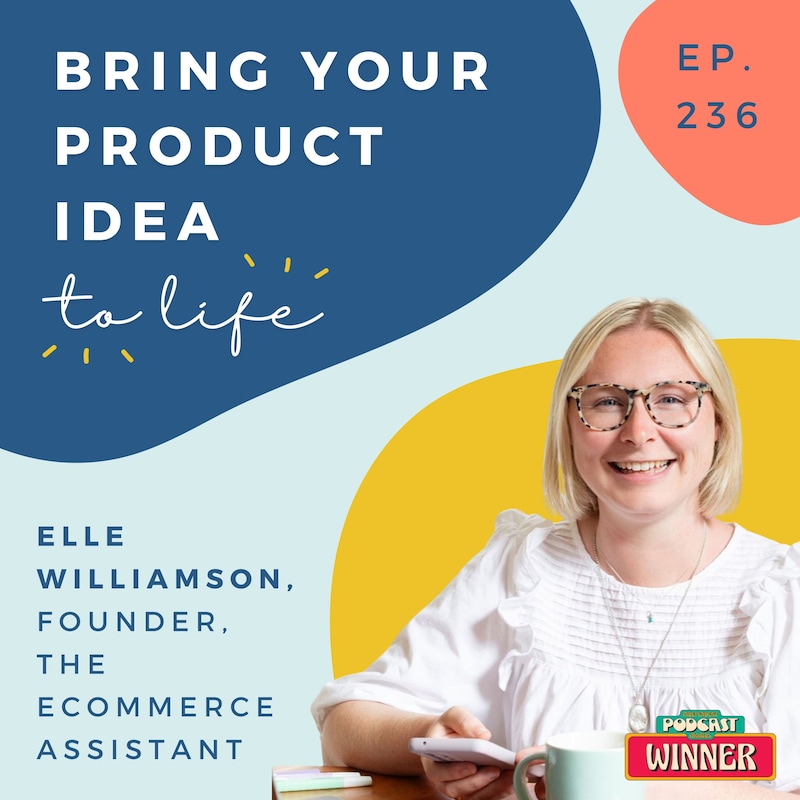
I asked Elle Williamson of The Ecommerce Assistant to join me to discuss this and more. Elle helps people build and grow their online businesses with the power of Shopify + Klaviyo to sell more online. Ella has made it her mission to teach everything she knows about ecommerce to founder-led businesses looking to thrive online.
We talk about when you should launch your Christmas ranges and how to manage your messaging whilst also juggling Halloween and Black Friday. We also cover the steps you can take to plan ahead, manage your workload and focus your marketing efforts in the right areas. There are so many good tips that you can implement right away.
The Bring Your Product Idea to Life Podcast - Best Business Podcast Award, Independent Podcast Awards 2023
USEFUL RESOURCES:
The Ecommerce Assistant Website
The Ecommerce Assistant Instagram
Podcast 162: How to get the most out of Shopify with Elle Williamson
Podcast 178: Email Marketing & Klaviyo - with Elle Williamson
This episode is sponsored by Therese Oertenblad & Small Business Collaborative
Therese Oertenblad (Ørtenblad), works with purpose-led, product-based business owners who want to grow their wholesale and create a powerful, consistent income stream for their business. Therese’s mission is to help you find joy, ease and confidence in selling so you can build a profitable business that works for your lifestyle.
Small Business Collaborative Website
Small Business Collaborative Instagram
Small Business Collaborative on Facebook
Let’s Talk Wholesale Facebook group
LET’S CONNECT
Join my free Facebook group for product makers and creators
Buy My Book: Bring Your Product Idea To Life
If you enjoy this podcast, and you’d like to leave a tip, you can do so here: https://bring-your-product-idea.captivate.fm/support
Mentioned in this episode:
Amazon Made Easy is now open
My membership, Amazon Made Easy is now open. It’s a membership for people who are selling on Amazon (or planning to) and want regular access to support, somewhere to ask questions and talk things through, and a bit of structure and accountability as they grow. Inside, there are live Q&A calls, optional co-working sessions and a small, supportive community. Find out more: https://vickiweinberg.com/membership
Transcripts
Welcome to the bring your product idea to Life podcast. This is the podcast for you if you're getting started selling products or if you'd like to create your own product to sell.
I'm Vicki Weinberg, a product creation coach and Amazon expert. Every week I share friendly, practical advice as well as inspirational stories from small businesses. Let's get started. Hi.
So today on the podcast, I am speaking to Elle Williamson, all about planning for Q Four. So this is a different type of podcast? Well, actually, you probably won't hear any different, but it was actually recorded differently.
We actually recorded this back in July as a YouTube live, and this is something I'm looking at doing going forward is recording some of my podcasts in live time so you can watch them along in real life if you'd like to. But of course, they will also all be available as podcast episodes.
As I say, you shouldn't notice any difference in this episode, but I thought it's always nice to have a bit of background. And of course, I'm hoping that some of you will have this already. Whether you have or you haven't, do listen. It's a really good episode.
Elle really knows her stuff. We talk so much about Q four and specifically the changes you need to make to your website, your emails to get the most sales during this period.
And you'll hear from our conversation that the key here is planning.
So listen to this episode, and whenever you're listening, it's a great time to go away and plan out week by week, what are you going to be doing with your website, what emails you're going to be sending to make the most sales possible for the last quarter of the year. Really hope you enjoyed this episode, as always. And I'd love now to introduce you to Elle. Hi, Elle. Thank you so much for being here.
Elle Williamson:Good morning. Thank you for having me again.
Vicki Weinberg:Oh, you're so welcome. Thank you. I think this is the third time you're on the podcast, so thank you so much for sharing even more of your time with us.
So I've invited you here today to talk specifically about Q Four, which, as we record this is a while away, unless you're watching if you're watching it live. However, if you're listening to the podcast version of this, then it's actually just about to begin.
But before we jump into that, Elle, I'd love to, you know, for you to quickly give an introduction to yourself, your business, and what you do.
Elle Williamson:Hi, I'm Elle. I founded the e commerce assistant.
And what I do is I help small businesses to sell more of their lovely products online by using Shopify and Klaviyo. So they're the two platforms that I specialize in now.
And I, after many, many years working in e commerce, know are the best two for selling online, the two that you need.
And I do that through one to one training, some project work, but much less these days because I also have a lovely community of online business owners who can learn from me and learn from each other. So I'm really passionate about, you know, learning, but also teaching and also, like, learning from each other is a really big thing for me now.
Vicki Weinberg:Amazing. Thank you.
And I should also say thank you to your wonderful community for coming up with some of the questions for today as well, because that's been so helpful when preparing this episode. So thank you to all of you. So let's start talking about Q four. As I say, we're recording in July.
It feels like a way off, but when do we need to start thinking about Q four? How early is too early or can you never be too early?
Elle Williamson:I don't think you can ever be too early. And I'm sure if people are watching live or thinking about it now as we sit in early July, there's already talk online.
There's already a bit of noise about, oh, it's now the start of Q three. Quick start thinking about Q four. You know, we hear about Christmas in July, which is a traditional, a sort of bigger retailer.
Press this when all the press is prepared. Actually, bigger retailers are preparing earlier, aren't they? Because they're buying.
I'm not a buyer, but I know that the buying happens even earlier in the year. However, I think for small businesses, it's important to be realistic.
And a lot of the time you may plan your marketing, but you're slightly more reactive. You probably time poor. I work with solo founders, so it's just them doing everything.
So I certainly wouldn't be stressing that you haven't started yet. If you're, if you're listening now in July, if you're listening and it's late September, then, yeah, you might want to, and you haven't started.
You might really want to set this time, you know, this next week aside to really plan. Because I think without that plan, that's when you, you know, you can't, you don't want to be winging it. You really want that plan ready.
So I don't think there's a too early, but I also, yeah. Wouldn't want anyone to be sitting there thinking, oh, I haven't done anything yet. You've still got time.
Vicki Weinberg:Amazing. Thank you. So, yeah, listen to. If you listen to this in July, you've obviously got a bit longer.
But if you're listening to this as it's released as a podcast, end of September, as Elle says, do not panic. This is a great time.
In fact, it's the perfect time because if you're time poor and you don't have the luxury of planning months in advance, which lots of us don't, let's face it, get your planning done now. It's all good. Before I ask you more specific questions. Okay, so July, bit early, maybe, to think about Q four.
Possibly early to start talking about Christmas. Well, I don't mean planning for Christmas, but I'm just going to throw this question out there because obviously that's the big event in Q four.
How early can we start talking about it?
Elle Williamson:What I see is that people don't. Small businesses don't talk about it early enough. There's this fear of saying Christmas. I think September for most people is the best time.
And I know people feel like that's too early. The kids have just gone back. I'm still talking about other things.
And obviously there'll be other things happening in your, in your business and marketing if your stationery business, that back to school is huge for you. So obviously there's other things happening. You might have a big Halloween, you might have a big bonfire night. There's all these events happening.
But people are Christmas shopping in September. People actually start Christmas shopping even earlier. I know people that start in the summer, so it's not crazy.
And I also think it's a really good idea to start looking at, like, the supermarkets because they tend to go, what we think is really early. We always laugh, don't we, when Easter's over, there's something else in the shop straight away, or the Easter eggs are out in January or something.
You know, there's always this, like, well, I always think, gosh, that's early. But actually they're doing the right thing because a lot of people like to be really prepared.
And if you're not, if your Christmas range isn't online, not necessarily being screamed about, but if it's not online in September, I do think you're missing sales because some people will buy in September and be done by October. So I think it's. I don't. I don't actually think you can put your Christmas products up too early. Obviously, the caveat is you're a small business.
Your time poor, you might not be ready, so don't stress. But if it's sat there ready to go get it online, like, people are definitely shopping.
You're not going to necessarily make your website suddenly full on Christmas. But I do often see people in October and I'm like, oh, they've still not got their Christmas range out.
They're still not sort of Christmas ified their website.
So I know we're talking in the end of September, if you're listening now, but if you're thinking of next year and years to come as well, there is no harm going in September. I've worked with businesses that they get a huge amount of Christmas sales come through in September.
So, yeah, September is a really, really important month in my opinion.
Vicki Weinberg:That's really useful. Thank you.
And I mean, speaking as a consumer, I always start my Christmas shopping in September partly to spread out the cost because, let's face it, it's expensive. You've got a lot of people to buy for. And I'm sort of, by the end of August, I'm already starting to think ahead.
Elle Williamson:I think that's quite common with most consumers.
And actually, the cost is a really important thing because if you don't shop in September and you think about, you know, paydays, you've only got October and November because December is too late. So you've only, you're only really letting people, allowing people to shop for two paydays.
And it's really important to consider your consumers in that way, isn't it?
Vicki Weinberg:Absolutely.
And if you're listening to this as we record it, also over the summer, hopefully, maybe not always, but hopefully, if you get a little bit of downtime over the summer, it's also a good time to make those changes to your website as well, perhaps.
Elle Williamson:Yeah. Or you could do things in the background like, it's not necessarily, you know, some people, you might want to do a big launch, and that's fine.
Obviously, you need to plan that date and then work backwards. But also you can do a big launch, so, and have things online. So I've sort of seen people do it both ways.
And I think it just, it does depend on your business, whether you, you know, if you're making everything from scratch, if you're a handmade business, that's gonna, you're probably gonna want to put things up early because you've got, you've got a deadline in terms of actually your handmade products. So I think it does hugely depend on what you sell and what type of business you've got. But I think people miss that September selling month.
So I just think if you're sort of sat there twiddling your thumbs now thinking, oh, when should I launch Christmas? And it's, and you're listening in late September. Get it on the website now. Like, that's my biggest tip.
Vicki Weinberg:That's really good advice. Thank you.
And as you said, as well, there's no reason you can't have your Christmas range on your website in August, September without shouting about it. There doesn't need to be a big banner on the homepage. Doesn't need to be a big, you don't need to make any other changes. They can just be there.
Which leads me on very nicely to my next question, which is when we're thinking about our websites going into Q four and during Q four, what changes do we need to make to our websites to make them relevant and how soon is too soon for that? So we've spoken about the fact, okay, you can get your Christmas products up August, September. What else do we need to be doing?
Elle Williamson:And ideally, when I think, again, it does depend on, like, if you're doing a big, if you're like, I can think of a few kids brands that do quite a big Halloween push, you know, you're not, you don't want a conflicting message, do you?
So if you're going to go, if you've got a big seasonal event that comes before the sort of Christmas gifting, you don't want to have that confusing message on your website. So that might affect when you sort of go big with Christmas.
But I think in terms of then promoting things on your website, you need to be doing that in October. Like November is too late because, I mean, we have Black Friday and I know we're going to touch on Black Friday.
And I know consumers now wait, you know, wait for that weekend, week, month, whatever it is. But I, as we've just said, there's people who are preparing earlier who are spreading the cost.
And I think in October, if your website is still sort of, I mean, it's hopefully not talking about summer, hopefully you've removed that. But if it's not really got that specific focus of what time of year it is, then you are missing a trick.
And it goes back to, you know, going into shops, going into supermarkets. Do they have Christmas stuff out in October? Yes, they do. So people are thinking about it.
And if you want to capitalize on Q four, if you want to sell big, give yourself a bigger window almost, isn't it? Rather than just focusing on November and focusing on the Black Friday and all this, having it on the website, making it easy to shop in October.
So you might do it gradually, you might update your menu. So on your website, in your main navigation, you might have a Christmas collection added to the end of your menu to begin with.
And then that might, after a few weeks or once you hit late October, early November, that might move to the front of the menu. You might not put it straight onto your homepage in that lead banner, like we were just saying, that hero banner. You might have it further down.
Like shop for Christmas early. Like your messaging will change as we get closer to the big day, if you like.
So I think it's maybe breaking it down in those little tasks is easier, isn't it, for small businesses who are time poor? Because actually you don't have to do this huge, big website change. You can do it gradually.
I also think it's important to say some people won't have specific Christmas products launching. They will have products. And I know in my community a few people said this, like, oh, I don't have a Christmas range, but my products are giftable.
If that's the case, then it's then you really need to think about changing the copy and changing the way your products are presented. So if you sell a bath and body gift set, that's an all year round product that people could buy.
It's then about really reframing it in these Christmas months to say, you know, to be like gift, gift, gift. It's just really going quite big on the gifting. It's changing that message. Like, who could it be for?
So do you maybe create collections for different people? Do you, you know, you need to do the hard work for your consumers. You need to direct them.
Whether that's with your menu, whether that's with gift guides, you need to send them to the right products, tell them who it is good for and then make it easy to shop and buy for Christmas. So also considering things like your gift wrap. So that's a lot. Oh, my God, that's so much I've just gone through.
But I think it is thinking of all these things, this is all the things I could do and then maybe breaking them down into those smaller tasks and actually going, I cannot do this all at once. That's fine. You know, then, then just doing them little, you know, little and often, if you like, until you get into that peak November month.
Vicki Weinberg:That makes a lot of sense. Elle, thank you. And I think breaking it down into small tasks definitely makes it more manageable.
And also, I think while you're doing that, you can also consider what else is going on in Q four. So, for example, you mentioned earlier some businesses might have a Halloween range or they might sell products that are just good. Oh, I don't know.
Maybe they sell sweets, vegan sweets or something. I don't know. Just throwing that out there might sell something.
They think, oh, actually, this would be great for Halloween or maybe something Halloween specific.
And I guess if you know you're going for Halloween, you're not going to want to be putting up Christmas messaging and then Halloween and then back to Christmas. I really like the idea of breaking it down and saying, okay, this week I'm going to update my menu.
This week I'm going to put a Halloween banner on, then I'm going to whatever it is. And just planning out like that definitely makes it more manageable. Also, it keeps your website up to date, doesn't it? Which Google loves.
Elle Williamson:Exactly. And it's, and your consumers love because they're seeing something different.
You might have, you know, you might want to hero different products each week.
I think it's just really like planning it through and thinking, thinking whether you have a Christmas range or you don't go thinking, how do my products, how are they giftable? Who are they going to be gifted to?
And then kind of doing all that prep work in terms of, like I said, gift guides and gift collections, gifts for her, gifts for him, like people. That is how people shop still, you know, we want to be directed to the gift.
I mean, last, last Q four in:That didn't mention gifting, you know, that didn't mention, didn't direct me where I wanted to go. And I just, you know, I can't obviously help everyone.
But it was just like, it's so frustrating because I'm like, it's, it is easy for easy small changes that you can make to help your consumer. And always think of it like that. Always just think of it. You're not pushing it on them. You're not being sell, sell, sell.
Because I know there's a huge mindset block with some small businesses and selling and it is difficult. But if you can always think you're helping people, it really does help you to then do this work that is going to benefit your sales.
Vicki Weinberg:Absolutely. And also, I think nothing to remember is if someone's coming to your website, they're there for a reason.
So chances are they do want to buy from you, or at the very least, they want to know what you're selling.
Elle Williamson:Tell them.
Vicki Weinberg:Yeah, tell them and put it in front of them and make it, like you say, make it as easy as possible.
Because I think there's nothing that makes me personally click away from a website than when I can't find my way around, I can't find what I'm looking for. Women, there's lots of things, aren't there? But I think make it as easy as possible for people.
Elle Williamson:Yeah.
And even more so with that mindset of some people have products, actually, that all through the year they might, they might be gifting, but they might actually be being bought for the person buying, you know, for themselves. So there might be quite a big shift in your, in what you sell from people buying for themselves to people buying for others.
So then you do need to do a bit more work in terms of changing the copy, changing your collections, really changing all that homepage to direct people to the gifts rather than buying for themselves. It can be quite a change, you.
Vicki Weinberg:Know, that makes sense. Thank you. So let's move away from websites and talk a little bit about Black Friday.
And I shall caveat this right at the beginning by saying that I don't believe, and I'm sure you don't believe either, that you have to do anything for Black Friday. You can. I think you can totally ignore Black Friday if you want to. I don't know if you feel the same, Elle, but it is a thing.
And some people will want to take part in Black Friday.
And I know it's talked about loads, but I think we can't really talk about Q four without touching on it because it does exist in it and it is a thing. So what are some things el that you think people might want to think about when it comes to Black Friday?
I mean, I guess the first is, do you take part or not?
Elle Williamson:Because.
Vicki Weinberg:Absolutely don't have to. Because I think for small businesses, it can be hard, can't it, to suddenly put on huge discounts.
Elle Williamson:I think that's where the planning comes in, though.
I think there was definitely a lot of small businesses, if I just think back to last year and previous years who come mid November are starting to panic and think, should I, oh, I don't know, should I do it or not? And I think you just need to make that plan and make that decision if you're going to partake, if you're not, if you're going to do something else.
And whatever you decide, it's like committing to it and going all in.
So rather than last minute, you know, the day before going, oh, I've just put a discount up and quickly, you know, doing, sending an email and quickly changing the website, you're not going to see as good results from that, as if you've planned out a really thoughtful, you know, promotion and campaign. So I think it, again, it comes back to that planning, which you can absolutely do right now in late September. You've, you've got plenty of time.
You know, Black Friday isn't the end of November. I actually know what date it is this year. I haven't checked. But some people, obviously, it's black month. You know, it's black, black November.
It's a week, it's two weeks. Whatever it is, it definitely has stretched through November, but it's making that decision whether you're going to do it, what you're going to do.
Like, you don't have to just do a discount. You don't have to discount your whole website.
I think you can be, you can offer something without feeling like you just have to put up 20% on your whole website. I think that a few years ago, that is what everyone did. And now I think you can be far more strategic, a bit more clever.
You can do gifts with purchase, you can reward your customers. You can. I've seen someone who was it last year did. If you ordered during this period, you'll get like a ten pound off code for your next order.
So that's obviously great for you get an offer, but you're actually getting them to come back and buy again. Like, there's loads of things you can do.
It's similar to, like, when you think about your, your pop up, your sign up discount, you don't have to offer the standard 10%. So I think it's, you know, you might have a bit of dead stock that you're like, I don't know how to get rid of this stock.
And it could be a free gift with every order. Like, I think just again, do the plan. Sit down. If you want to partake, if you want to offer something, what are you going to offer?
And it doesn't have to be 20% off everything. It could be a specific product, it could be a collection and then work backwards and plan for it.
And also what I've seen some small businesses do is instead of doing Black Friday weekend, that late November, which is going to get really busy in people's inboxes, if we think about email, I'm really busy on Instagram and other marketing channels. You could do something earlier in the month.
I've seen small businesses do like, they don't even call it Rat Friday, but it is their sort of Black Friday Friday offer. But they do it early November because actually they want to get the sales in early and have less sort of competition, if you like, in, in inboxes.
So, um, I would, I certainly wouldn't go any later than the end of November because that's then very tight, isn't it, with the Christmas sort of postage deadlines. But you can still offer something, but do it early. But then I also, again, big caveat. You don't have to do it at all.
People are shopping for Christmas.
So if you have a product that's Christmas giftable, whatever it is, and you do all these things on your website and promote it and have your email plan, you don't have to offer anything. You certainly don't, but you might have to work a bit harder. I think that's the only caveat as well, isn't it?
You just need to be aware that you are competing with big and small brands who are discounting or putting on offers. So it's then like, well, how am I going to counteract that if I'm not offering anything? You've got a really kind of sell, haven't you?
Vicki Weinberg:That makes a lot of sense.
And I'm with you, though, as I said at the beginning, I don't believe you have to take part in Black Friday because I know that there was definitely, I can't remember when it was a few years ago, actually. I think a lot of businesses actually decided not to because it just felt like there was so much pressure. I think, as you said, al is to plan for it.
So plan that either you will or you won't, because I think you're right.
And I've definitely, when I was selling products, I've definitely done things where I've got to, like a few days before and gone, oh, just discount everything and hope for the best, but I won't really tell anyone about it. And if you're doing it not very well and it's not planned, I think you're never going to see the results that you might.
If you thought about it in advance and decided, okay, this is what I'm going to do, and this is when I'm going to tell people about it.
Elle Williamson:Or you're potentially giving away a discount that you didn't need to give away. That's the other thing, it's so hard to always know that because how can we track the sales?
I guess if you've done like a previous year without a discount, you could then, and you do it this year, you could then compare the two months. But even then, there's other factors, isn't there, that happening, whether it's external or internal. So it is always like, oh, did.
If you don't go for it fully and then you do it on a whim, it's like, did I need to do that? Would I have got the sales otherwise? Because I barely shouted about it.
So I think it is a hard decision to make and I know small businesses, they feel it is difficult for them to make that decision. But I think that's the most important part. Just, just making that plan, deciding what you're going to do and then execute that.
Vicki Weinberg:That's great advice. Thank you. And sticking on the topic of planning, because I think this whole episode really is about planning your Q four.
I would love to talk a bit about emails because we've had episodes before where we spoke just about emails and the kind of emails you send. And so we're not going to cover any of that today, Elle.
But I'd like to talk about Q four specifically when it comes to your emails and using your email list. And I guess I've got is one question, but I'm going to.
Well, it's actually two questions, but I'm going to ask it in one, which is, do we need to be sending more emails in Q four or do we need to send less? Because arguably there's a lot more email traffic in Q four.
So, yeah, I guess a simpler way of saying that is what about do we need to change the frequency of our emails if we're, for example, sending a weekly newsletter email to all our customers or monthly, whatever it is, do we need to change what we're doing for Q four or can we just stick to our plan?
Elle Williamson:I think most people this, this applies to would increase frequency. And that is because, like you say, it's busier. Inboxes are busier.
You will all know when we hit those November weekends, like, you'll just scroll and it's insane how many more emails we get. Now, I know as a consumer, that's quite, sometimes I get a bit overwhelmed and I love emails because it's my job.
But I know you might think, oh, I don't want to bombard people, but if you want your message to land with your customer, and like we've said, people are on your website because they want to shop with you. People are on your email list because they want to hear from you.
So if you want them to hear from you during these busy sort of, it's like an eight week, isn't it? Really busy eight weeks.
You need to email more because where there is that competition in the inbox or competition on with ads and, you know, people traffic increase. Like everything is just busier. You know, you go to the shops, they're busier.
So if you want people to hear from you, you should be thinking about increasing your frequency. So if you are emailing once a week over the next, over Q three, let's say, or the whole year, I would be suggesting you think about twice a week.
Like it's not doubling. Well, that is doubling. It's not going like five. You know, every day.
If you've got, if you are doing a campaign promotion, whether that's early November or Black Friday weekend or whatever it is, if you're sort of partaking in, like we've said, that Black Friday offer, then, then you might even increase it more. So if you have an offer for the whole weekend, you might, you might send a pre email about an offer.
You might say, look, we've got this good offer coming up. Keep an eye on your inbox, sort of warm up your audience.
Or you might do like waitlist sort of thing where you get people to actually opt in to get the offer.
So there's, there's lots of things you can do before an offer, but then you want to launch the promotion and then you want to send regular reminders and you might send a last minute email. So if you've got a promotion planned, I would expect your frequency to increase again. So you might end up.
There might be times when you do send one daily for a short period and again, that's fine. People want to hear from you. They want the reminders. Not everyone will see every email. You know, it's this, this time period is just so busy.
I've missed emails from people.
I always see their emails because my inbox has just got so busy or actually important emails from the school or something because of my inbox is so crowded. So your frequency will and should increase. And I think it then it's just then knowing what you do currently, isn't it? It's.
We're not going to sit here and say, you must email twice a week in November and December or whatever in Q four, it's more about what do you do now? And I know from, from my clients my community, some people are struggling to even email once a month. Obviously, I'm passionate about changing that.
So that's where if you're listening now in the summer months, it's really important to try and get that frequency up now. So you've got that baseline to then be able to increase. If you don't and you're just ready to increase in Q four, then just go for it.
But you definitely will see an increase. And that again, let's go back to the p, where that means more planning, doesn't it? Because suddenly you've got to fill.
If your aim is twice a week, you've got to fill that with content. So that comes back to your content planning and what your promotions are, what product launches. All this planning is so important.
Vicki Weinberg:Thank you.
And when we're speaking about content, I'm going to ask a question that I'm sure that at least half the people listening are shouting out, which is how can you send more emails without being too sales? You probably hear this all the time now with emails anyway. People say, oh, you know, don't want to come across too salesy.
So how can we increase our content without coming across? Or does it matter if all the other thing is, does it matter if we are coming across sales? Because at the end of the day we've got products to sell.
But I know that's going to be a question people will ask.
Elle Williamson:It is the question the question people ask all year round. But I think, and normally I will rather than say, well, don't be salesy.
It's about changing mindset and it's about mixing your content with specific sales content. And then there's sort of what I call serving selling and serving serving content.
So it might be that you send an email that's all new in products, but then the next email you send is the story about how you created a product. So that's sort of less sale. That's your serving content, that's your interesting content, that's not direct sales content.
But I do think, like, you ended that question with in Q four, people are buying. It's like this huge peak period for most brands.
There'll be a few brands that actually don't have a peak in Q four, but for most brands that you are customers, consumers are shopping. So I do think we do have to get over that mindset a little bit and, and do start to sell.
I think this is where plotting out your emails with any offers you're doing, like, pop them in any new products that are coming in any specific products you want to focus on that are timely. So if you sell, I know a lot of people now sell like advent calendars or advent products.
That's obviously going to come a lot earlier because people need them by the 1 December. So I think it's plotting out all those things in your sort of twice weekly emails. And I say this for the whole year as well.
Once you put in like seasonal events and new products and you don't, you're not usually left with much.
So it's fine to sell in every email, but there might be other bits of content you then sort of pop in that you've, maybe you've written a blog about something, maybe you've collabed with another brand, maybe you're running a competition, maybe you're sharing some behind the scenes stuff that's always really interesting. Maybe you're talking about just like how you gift wrap an order. Like, I just think it's fine to sell.
And also if you just give, do that plan with one focus for each email. So each email isn't, isn't a newsletter, it's not news news. It's just here's what this email is going to be about.
There might be a few extra points in it, but it's got one main focus. If you start planning like that, you'll find that you, you have plenty to say.
Like most people, it's like a revelation when they start, you know, actually plotting things out in that way. It's like, oh, I filled up all my emails, you know.
Vicki Weinberg:Well, that makes sense. Thank you.
And actually I'm going to refer anyone who wants going to emails a bit more back to your previous episode, which I'm going to link to in the show notes where we spoke just about emails and email lists and what to email because I remember we had such a great chat and you gave so many examples of the types of emails people can send, all of which are relevant year round. So do go and have a listen to that if you want to find out more about email in particular.
Although I do have one more email question before we move on, which is give, given that we've spoken about we're going to be spending sending more emails, everyone else is going to be sending more emails. It won't just be us.
Is there anything we can do to help our emails stand out a little bit, given that everyone is going to have a very full inbox for the eight week period?
Elle Williamson:Such a good question. I think the frequency is a point on that, isn't it? Because if you send one email in the whole of November, it's going to get lost.
So frequency definitely helps us stand out. I think also the timing of the email does matter.
So this is maybe where you go back and look, if you can, at either your last year's data in your email provider and see like when you sent things, what got better open rates, click rates. Like the timing, I feel like at the minute.
And again, I'm in my, I'm atypical because I'm in my inbox more because I'm using it for inspiration, see what brands are doing. But a lot of sends, Friday is a really popular sense and really early morning seems to be really popular right now.
So sometimes I wake up and I'll have like ten emails on a Friday morning.
So that would, and I know Friday is like often said to be the best day to send an email, the most popular day, but that isn't necessarily when I would then send my email if I had an online shop. So I think there's that research phase, isn't there, of like what did you do last year and what worked?
Also, what is sort of the trend at the minute, which I'm finding is this sort of early Friday morning and lots of early morning sense, but then it's also just sticking to like, what, you know, your customer and your consumer, what's right for them. So if they are up early and that works for you, then kind of stick to it. But also think about subject lines.
You know, going back to these basics, I think of email marketing to get your email opened, there's just the, yes, timing matters, frequency matters. But when it's in your inbox, in your phone, the one thing that, there's just one thing that's going to get us to open, isn't it?
And it's the subject line and the preview text. So if you are not making the most of that, if you're, you need to be spending time on that part.
And I think that's a part that small businesses struggle with. They rush, they maybe don't enjoy, they find really difficult.
So if you can compose your email, write your email, come back to that subject line and I, most of the time, you just need to shorten it. Most of them are too long. Most of the accounts I audit and look at, they're just far too long.
So they need to be short, they need to be concise, they need to, I think the hardest thing is tempting that open. It's like, don't say everything, don't give them all of what's in the email kind of. You're really that job.
The job of the subject line in preview text is to get them to open the email. And if you are saying everything in it, why would they open? It's like, it is, this is hard.
You know what, whenever you have to write few words, it's really difficult. It's really hard to be concise, but you really want to tempt that open and you definitely want to utilize the preview text as well.
I see lots of accounts that don't. So really important to use that. And the other thing with subject lines and preview text is just make it about the customer and not you.
So I'll see a lot that's like, I've been looking at welcome flows recently, so they're in my head. So like, it might be like, oh, our best sellers. That's the subject line. That's it. And you're like, okay, but what I don't, why do I care?
This your best sellers. It's turning it around to be relevant to the customer. So try and say our like me or I less and, and make it more about the customer and say you.
And say things like, you know, you'll want to see what's inside. You'll want to see this. It's, it's just, just making that shift to them, reading it and really feeling like it's directed at them.
You know, things like using names, you know, there's lots of personalization, but actually it's just, it's really shifting that language and using them and not you. It is about you, yes, but it's, how are they? How does it apply to them?
So I think if you can have a real focus on, and I don't plan my subject lines and preview text like I will, that comes after you compose the email and you sort of want to link it in, but be create, you come back to that at the end.
But if you can just start to maybe go back and look at some of your flows and see how you can improve them and get it is a skill you learn over time, for sure.
Vicki Weinberg:That's really helpful. Thank you.
I was just thinking, as you said, that I get lots of emails of things like you'll love this new whatever or your favorite products and think, you know, I think as you were talking, I was thinking, oh yeah, I see, I see this in lots of the emails that I, that I get. So I definitely. So I guess that's something else to do as well is have a look in your inbox at the kind of emails you're getting.
And I'm not suggesting for a minute copying, but I think they really help with inspiration. It's just to see what, what do other brands put in their email titles? Because I think the hardest thing is a blank page, isn't it?
And I think just a little bit of inspiration can be so helpful.
Elle Williamson:Yeah.
A lot of people don't do that sort of market research and email, you know, you have to almost consume email and consume content to get the ideas for your own content. And I think just scrolling through your inbox is a great place to start. Like you said, it's not copying, it's getting inspiration.
It's seeing what jumps out as well. So the, you know, using emojis, I love an emoji. I know some brands don't, but I do love an emoji in a subject line or preview text.
And you'll notice that as you scroll, they do stand out. So that market research is hugely important.
Vicki Weinberg:So something I would be doing whenever I'm listening to this, whether it's July or over the summer, even September, is sign up to it. Some more email lists.
You can always unsubscribe afterwards, but I think the more you're getting, and yes, it can be annoying because I sign up to email lists sometimes for research and then a couple of months later I'm unsubscribing from everything again. But it is really, it is really useful and I think you can get a lot of inspiration just by the seeing what others are doing.
So let's couple more questions before we finish off.
Elle, it's obviously you specialize in Shopify and Klaviyo, and I'd like to talk about those specifically just for a moment because we won't go into great detail because we've spoken about both these tools and people can go back and listen to those episodes. I'm going to link all of these in the show notes, by the way, because they're all worth listening to.
But what I would like to talk about specifically is how can you use Shopify and Klaviyo to help you perhaps with your planning, your seasonal website changes, emails? Maybe it's with sort of working out how effective things have been. Can you, what data can you get from each other? Can you get data?
I'm assuming you can get lots of data. But what can we be doing with these tools specifically to help us with our planning?
Elle Williamson:Okay, so, yes, you absolutely can get data.
And I know data is a yemenite, is a sticky subject for a lot of small business owners, you know, I might say to someone, what's your conversion rate in your website? And they say they don't know. And that, you know, I get it. It's overwhelming and it's scary. But I like to keep things really simple.
I'm not a huge data nerd at all. I'm not a spreadsheet person at all. So I do try and keep it really simple so that you can make decisions.
That's basically why we use data, isn't it, to say, well, that worked. Well, that didn't work, so we can then do something else.
So I would, on shopify, I would be going into analytics dashboard and looking, if you, if you are a brand that's, you know, been around long enough, look at last year's Q four and maybe the previous Q four. And the only thing with that is if you're not tracking on a spreadsheet, you might not know what things you did.
So there's always that, take it with a pinch of salt.
But if you roughly know, maybe in your head or if you've got a spreadsheet, right, I ran, first week in November, I ran a sale, a promotional campaign, and you'll see that spike in sales, so you'll be able to know, this is what I did that caused that. That's what really important, too.
But even if you just look at the data to see where did you have the peaks, where did you have the fall off, you know, do all your orders stop from, you know, first week of December, or did you actually get a little trickle, you know, throughout December? Did you, there's obviously that post post Christmas period as well. So look at that, too, because that can help with your plans post Christmas.
But you know, what, what was going on? When did you get the spikes in traffic?
If you wrote blogs, what blogs bought the most traffic, what marketing channels bought the most traffic, looking at that data to decide how you run this year's campaigns, like I said, it does help if you've got a list of what you did, I think in email it's almost easier to use that data because obviously you can look at the period as a whole. You can run reports and look at all of December, all of November, all of Q four, and again, see those peaks and chops.
But you can also look at, you know, look at download your campaigns or just look at them like you don't even need a spreadsheet. Just go in and look for Q four last year or the year before.
And what campaign did you send when a lot of email and a lot of website actually is just repeating what we did last year because you've got new customers, so they wouldn't have seen last year, even your regular customers, they probably want to see the same sort of thing.
You might have run the same sort of campaigns, but you've got new products this year, you might have a new branding this year, you know, whatever it is.
So a lot of the time we're doing what we did last year, and so you might even be able to go in and use some of those emails again, just tweak them slightly, improve them. So it goes back to that point you made, doesn't it, about the blank page. The blank page is the hardest part.
So actually going in specifically on your emails now and looking at the campaign history and what you did last year, taking what you're going to repeat from that, that gives you an amazing starting point.
And then you might have got started to get emails and you've got this inspiration of, oh, I want to do an email like that and I'm going to run this promotion, so use that data. And I also just want to mention on email that you can use data about your customers. So this is why Kaviyo is so great.
So we can look in Kaviyo and say, right, let's create a segment of people that ordered this time last year or ordered in this specific promotion or ordered a specific product. It works really well for anyone that's got an ad event product I've seen. So.
And then you can target those people with an email either before you run the promotion with an exclusive extra discount with your first to get, you know, first dibs on the advent calendars we're producing this year.
But when you have limited stock, these techniques work really, really well because you're using people that bought last year and might have bought for the last three, four, five years and you're targeting them and making them feel, like, really special. So that's something I really would love people to go and do, like, use. And I know segments is also a bit a part of email that scares everyone.
But like, if you can just set up some segments of, you know, that historical, what people have shops last year, you can really use them in your planning and your promotions this year.
Vicki Weinberg:That's so helpful. Thank you. And you also asked my next question. You've already answered it well, which is amazing. Take a sip of water.
Because you answered it, which was, I was going to ask if you could just reuse things because I'm with you. I would not remember you could send me the same email every November and you could use the same title, email heading, maybe slightly tweaked.
I would never know. No one is going back to check that kind of thing ever. Ever, are they?
So I'm so pleased you said that because I was hoping that was going to be the answer. So I guess if you've got data and, you know, something worked, I don't think there's anything wrong with just doing it again.
I mean, if anything, you know, it works and it will save you time.
Elle Williamson:So anything.
You might even have emails throughout the year that have worked or like summer emails or that you can either just use or change into a more christmasy, wintery promotion. You might have things that you do each quarter. You might have. Yeah, there's that repetitive repetition. We all. And that repurposing.
We all sort of don't. I don't. There's a real. There's a resistance to doing that. Even as a service provider, I've. I've felt that resistance. And I'm like, why?
Because not everyone sees my email. Not everyone sees my instagram. Not everyone sees everything. We are the only people that see everything.
And like you say, even if someone did get an email last November, that's your Christmas range launch. They're not going to remember. And there will be differences because inevitably you might have something new this year. But also, it is.
It's treating those regular customers really well, isn't it? Because that's what you want. That's why we use. That's what we all want. Return customers are just the best.
So it's like, actually, how can you treat them? Treat them to something, make them feel special. And I just think Klaviyo makes that so easy to do.
Vicki Weinberg:That's brilliant. Thank you.
And I'm sure I've said this already, but I'll be linking to the Klaviyo and Shopify episodes we've done previously so people can go and get more information if they need it. Well, thank you so much. We've covered an awful lot, which is amazing in a relatively short space of time. I have one more question before we finish.
You know what this one is? You've done this before. What is your number one piece of advice when it comes to your q four planning?
Elle Williamson:Well, the plan is the number one piece of advice. I think it's making that plan. It's not. It's just accepting whenever you're doing it is absolutely fine. It's, you know, everyone is unique.
We all have different businesses and different ways of working, but it's sitting down. It's planning the time to plan it, isn't it? It's going, I'm going to do this on this day and I'm going to plan.
It's such actually a short period of time. It is literally like eight to ten weeks, isn't it, of peak selling.
And I know you're also potentially making your order, shipping your orders, you're doing all the jobs.
But if you can find that time, whenever it is now, July, August, September, even if we're in October and you're listening, make that plan and literally plot out weekly, do it weekly, break it down. Break down the bits you needed on the website and then the emails.
Because I just think if you have that plan, you're more likely to execute it even if you miss a week. Like, don't stress, but if you've got that, we all love a to do list to tick off.
And if you've got that, whether it's on a, you know, a wall planner or just your diary of what this week's gonna hold, I think just, you've just got to really go all in, haven't you? And just have that plan and really just try and stick to it. And I think then is that's when you reap the rewards of this Q four big selling season.
Vicki Weinberg:Oh, thank you. Thank you so much. And thank you for everything you've shared. I. Yeah. And everything will be linked up in the show notes. Thank you again.
Elle Williamson:You're welcome. Thanks for having me anytime.
Vicki Weinberg:Thank you so much for listening. Right to the end of this episode, do remember that you can get the full back catalogue and lots of free resources on my website, vickiwineberg.com.
please do remember to rate and review this episode if you've enjoyed it, and also share it with a friend who you think might find it useful. Thank you again and see you next week.



